Underbody Coating
UNDERBODY COATING
- Underbody Coating is a sprayable coating, which protects the undersurface of the vehicle from corrosion.
- Underbody coating provides long-term protection from corrosion to the car's underbody. It also protects parts like internal body panels, frame rails, and other inner cavities that are not physically accessible but are prone to corrosion.
- Protecting the underbelly of the car should be our top priority. Especially during monsoon when heavy precipitation causes the roads to become mini-rivers and our cars are left stranded there. This makes them prone to heavy corrosion in the underbody region.
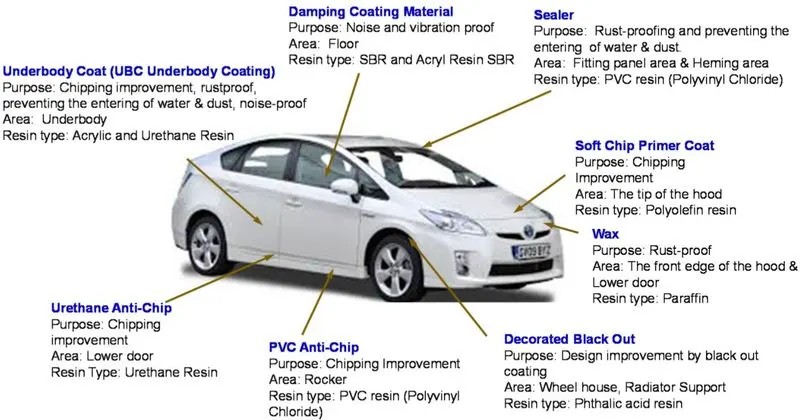
- We all are aware of the fact that the underbody of the previous models was made from durable metals such as steel, which is easily damaged and oxidized, forming rust
- While you are sitting on the driving seat enjoying the smooth ride, the underbody of your car is always exposed to muddy water, stones, rugged roads, and potholes. This makes it prone to wear and tear, which is often not in plain sight but could lead to serious issues
- So, therefore keeping this in mind, underbody coating is required.
- A protective coating composition for motor-vehicle underbodies and gravel guards, characterized in that it comprises, in percentages by weight of the total weight of the composition:
Types of undercoating
- Rubberized underbody coating:
This is generally thought of as the best underbody coating for your car. It preserves the underbody well, protecting it from scratches. Applying this to the undercarriage is not much of a hassle either.
- Wax Based underbody coating:
Wax-based undercoating puts up a big fight against moisture. It is also the most affordable option out there.
- Asphalt Based Automotive Undercoating:
This is best suited for Lorries, trucks, and large vehicles this provides a greater degree of protection compared to rubber-based coating. However, the asphalt-based coating contains little amount of rubber for sound-insulation purposes. The process of applying this coating is a bit time-consuming though.
- Polyurethane underbody coating:
This coating closes up splits and fractures on the underbody of the vehicle. It offers up good protection against corrosion and also bond with the metal. Unlike in the case of asphalt-based coating, you can paint over the polyurethane coating.
APPLICATION PROCEDURE OF UNDERBODY COATING
- Lift up the vehicle, take off the wheel and plastic wheel covering.
- Thoroughly clean the underbody of the vehicle with high-pressure water.
- Blasting with compressed air could accelerate the drying.
- Mask off the adjacent areas and parts with paper were not allowed to spray, such as exhausting pipe, brake system, engine, paint surface and etc.
- Shake the can approx. 40 times before use, connect the can with a spray gun
merits of underbody coating
The obvious pros of undercoating are the protection it provides to the carriage of your vehicle. If you live in an area where salt and sand are used on the roadways in cold weather, these materials can be corrosive to your vehicle. Undercoating gives you an extra layer of protection against rust and corrosion, protecting your car. Undercoating will eventually wear out, but you can get years of protection from it. Even vehicles in warmer climates gain protection as debris is repelled and kept away from eating at the vehicle.
Demerits of underbody coating
When examining the vehicle undercoating pros and cons, you do want to look at the potential downsides of getting undercoating. Undercoating will work best on new vehicles that have not been exposed to road conditions. A used vehicle may already have residue on the bottom of the car or even have spots of rust and corrosion. Undercoating will not help you if corrosion already exists and the corrosion needs to be removed first before it can be applied, which can be expensive for you