Underbody Coating
AIM: To Explain briefly about what is underbody coating and its types, process.
UNDERBODY COATING
INTRODUCTION:
Underbody coating is a thick cladding (typically made of rubber) that is placed uniformly to the car’s underside. when the automobile is fresh off the lot and spotless, it is usually sprayed or painted on. but it’s acceptable if you apply the undercoating after couple of years. This is because it might protect the undercarriage from additional harm.
Underbody coatings provides long term protection from corrosion to car’s underbody.it also protects parts like internal body panels, frame rails, and other inner cavities that are not physically accessible but are prone to corrosion.
Underbody coatings can also make it easier for you to clean the car. besides these the coating provides a bit of thermal insulation making travelling by road easier even during summer, risk of corrosion, because of effect of rain and salty grit used on roads to prevent icing in winter. Over time, this corrosion can cause significant damage to the vehicle.
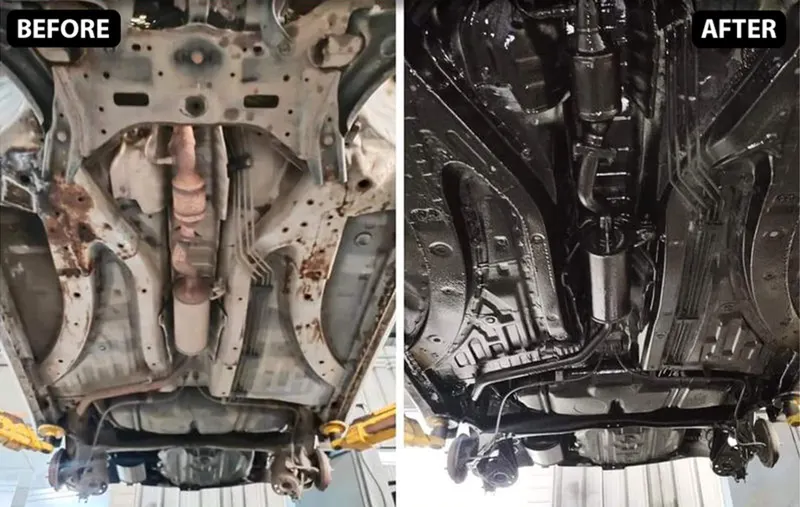
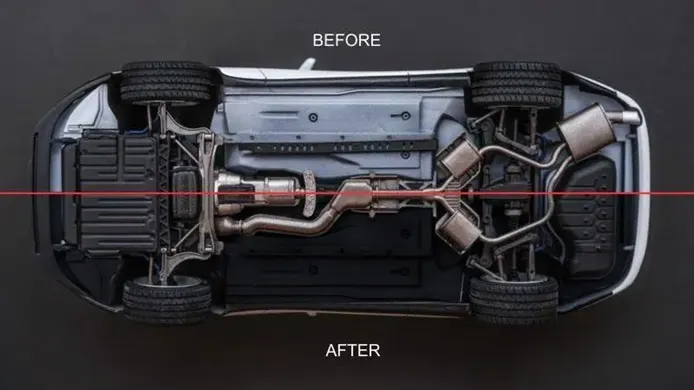
Figure: 1. Comparison between without underbody coating and with underbody coating.
PURPOSE:
- The main purpose of undercoating is to check rust especially in the body components like frame rails along with other exposed metal parts.
- Underbody coating can also reduce wear and tear.
- Reduces NVH (Noise Vibration Harshness) levels.
- Prevents paint chipping, scratches.
- Working as Heat insulation.
- It extends the lifespan of your car.
PROCEDURE OF UNDERBODY COATING:
Underbody coating consists of following steps:
- Pre treatment
- Electrodeposition
- Rustproof material
- Primer
- Topcoat
1.Pretreatment:
The first sequence in preparing the BIW for subsequent coating is pre -treatment sees. Pre treatment removes and clean excess metal and forms an appropriate surface structure enabling bonding of a corrosion protection layer. It consists of cleaning the body surface to remove remaining oils from the steaming process and welding residues through three primary liquid dip processes of degreasing, conditioning, and phosphating. Pre-treatment helps the primer to bond onto the metal. A phosphate treatment applies an inert layer of metal phosphate, providing resistance to corrosion spread. The degreasing solution is composed of alkaline salts & surfactants & can include caustic soda, sodium carbonate. The surfactants are types of detergents for emulsifying oils & lubricants on the BIW. In surface conditioner which creates nucleation sites for phosphate crystal growth. It increases the number of crystallization nuclei on the metal surface that enhance bonding mechanism for the subsequent phosphate sequence. Finally, the liquid dip phosphate ions, nitrate ions, zinc & hydrogen ions. The free acid etches the steel surface, causing hydrogen to be released while metal phosphate ions are precipitated onto the surface in a crystalline form.
ELECTRODEPOSITION:
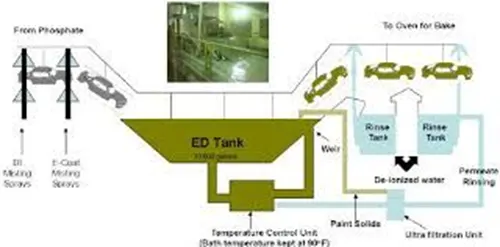
E-coating involves dipping automobile bodies into the coating solution and passing an electric current through the body & the liquid ED paint solution. Because of the charged nature of this coating process, the ED paint penetrates into places a spray would not reach.
During operation, a mixture of resin, binder, and a paste containing the pigments is fed into the ED tank. The automobile body is lowered into the tank, and an electric current applied, the solution in the tank consists of 80-90% deionised water and 10-20% paint solids. The resin is the backbone of the final paint film and provides corrosion protection. Durability, and toughness. Pigments are used to provide colour and glass. After E-coat, the automobile body enters a bake oven, in which heating and keeping at a temperature of 160C for 10 min causes film curing to promote maximum performance properties. The oven temperature and heating time primarily enhance chip resistance and film adhesion to the body, corrosion protected is affected less by these conditions. Because surface roughness influences the smoothness and brilliance of the topcoat, same sanding of the surface is usually performed to remove or eliminate defects before the body enters the next application step. A common challenge in the current E-coating process is that of water spots that contaminate coated surfaces. If water spots are present, they have removed by sanding. Hence, it is necessary to use well-deionised water and routinely monitor its conductivity. Alternatively. Operators also add surfactants or ultrafiltrates to the water rinse zone to eliminate or manage water spots.
Rust proof material:
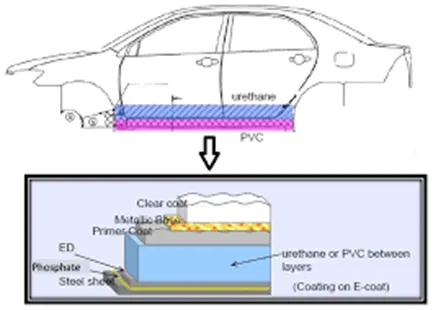
The third step is underbody coating and seam sealing using PVC and displays the lower door sections and rocker panel locations where PVC or urethanes are applied as an anti-chipping protection, and shows the cross section of this layer with respect to the other coatings on the body parts. During this third step, it is also typical to apply a soft tip primer coat that improves the chipping resistance. This layer is applied to the front edge of the hood, which is an area prone to chipping shock, using a high elastic resign that resides between the ed and primer coats. Also, during the third step, the radiator supports, wheel housing, and under rear areas of the body are coated with a relatively dull black pigment called a blackout coating.
Primer:
The fourth coating step is the primer. It can be water-borne, solvent-borne, or a powder. The primer fills and smoothens minor imperfections and scratches that may be created during prior steps and by the intermediate sanding or grinding used to remove small imperfections. It also provides additional protection against corrosion and maximizes adhesion between it and the E-coat and basecoat. There by, the primer increases paint durability. Primer coating operations in an automobile assembly plant are usually implemented in three stages: interior coating, exterior coating, and then cutting in an oven. Manual spray painting is used for the interior coating of the doors, engine compartment, and luggage or trunk space. Some of the areas are not sprayed with basecoat. It is important that are premier colour matches the basecoat to be able to impart uniform coating appearances between interior and exterior coats.
Topcoat:
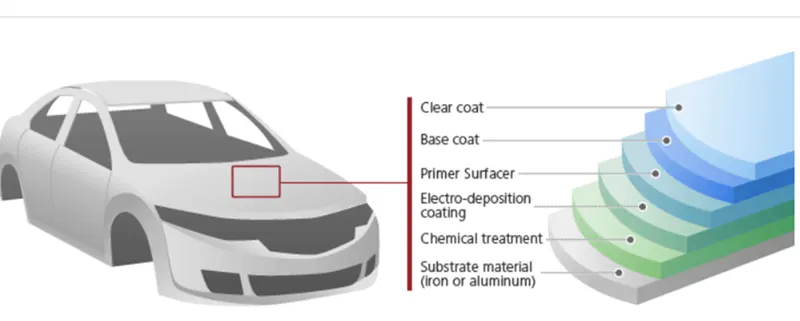
The final step in the body coating process is to apply the topcoat, which consists of two layers in the basecoat and clearcoat, Basecoat: it contains the primary colouring pigments.as part of the topcoat. the basecoat is the third layer added to the car after the primer and before the clearcoat, it in parts the automobiles colour; roughly 40,000 base coat colour are known today and approximately 1000 new cars are added to this list each year. Three different types of basecoats are used for automobiles, including solvent borne medium solids (MS) solvent -borne high solids (HS) and water borne, clearcoat: the final coating on an automobile surface is the clearcoat; it provides durability, environmental etch, and scratch resistance to the overall coating.it protects against damage such as fading that is caused by UV vivid. The clearcoat also makes repairs and maintenance easier. Environmental etch is an appearance issue associated with the formation of permanent water spots or nonremovable marks from bird droppings, tree resin, or other chemicals after contact with an automobiles surface. The physical damage resulting from etching is associated with a localized loss of material and deformation or pitting of the clearcoat surface.
TYPES OF UNDERBODY COATING:
- RUBBERIZED UNDERBODY COATING
- WAX BASED UNDERBODY COATING
- ASPHALT BASED AUTOMOTIVE UNDERCOATING
- POLYURETHANE UNDERBODY COATING
1.Rubberized underbody coating:
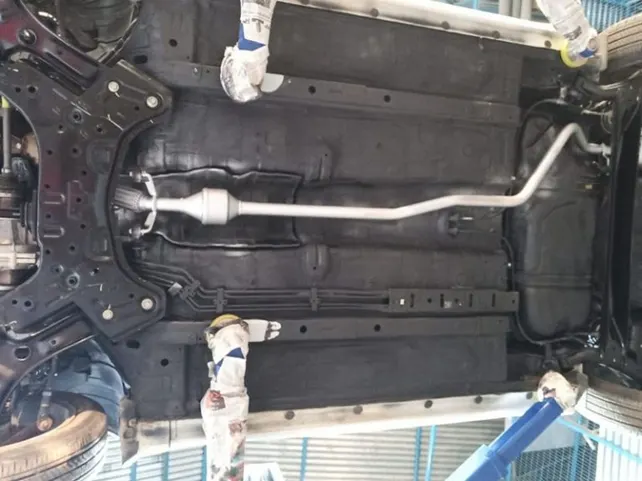
This is widely considered to be the best underbody coating for your car. It protects the underbody from scratches and keeps it properly. It’s also not difficult to apply this to the undercarriage. This can be done at the authorized service centre or by the local repair shop at a reasonable price. Rubberized coating is ideal if you want to keep the road noise to a minimum and rust and corrosion away.
2.Wax Based Underbody Coating:
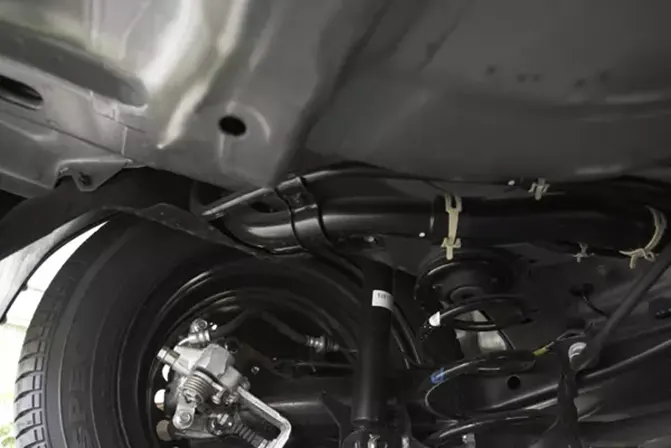
This transitory undercoating will, on the whole, fade away after a few months. On the plus side, wax-based undercoating is resistant to dampness. It is also the most cost-effective alternative.
3.Asphalt Based Automotive Undercoating:
Best Suitable for lorries, trucks, and other heavy vehicles. In comparison to rubber-based coatings, this gives a higher level of protection. Asphalt-based coatings, on the other hand, incorporate a small quantity of rubber for sound insulation. The application of this coating, however, takes some time.
4.Polyurethane Underbody Coating:
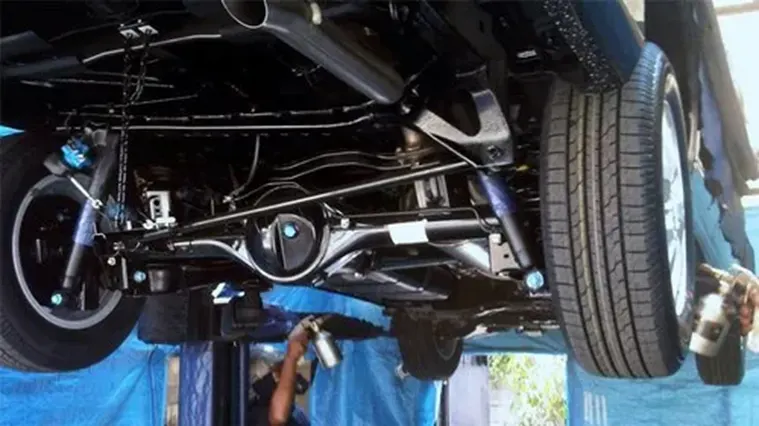
This coating closes up spits and fractures on the underbody of the vehicle. It provides strong corrosion resistance and also binds to the metal. Unlike an asphalt-based coating, the polyurethane coating may be painted over.
ADVANTAGES OF UNDERCOATING:
1.FIGHTS RUST:
It has a crucial function in preventing corrosion. Underbody coating is particularly useful if you live near the sea, where there is excessive humidity and rust is a common occurrence. If you live somewhere where it snows in the winter, you should seriously consider undercoating. During the monsoon season, cars are at high risk of getting corrosion. If you want to extend your car’s life you should get an underbody coating.
2.ABSORBS NOISE:
Very strong undercoating, realize it or not, can attenuate noises that enter the cabin. The undercoating, which is frequently made of rubber, absorbs part of the rackets. The car’s occupants could avoid the road sounds — at least to some extent. So if you want a quite ride and pleasant experience it is always a good idea to consider getting an underbody coating
3.Reinforcement:
If your automobile already has an underbody covering, applying another one on top of it will not harm it. It will provide further protection for the underbody from water, road debris, gravel, and tiny stones. The factory coat would also have a lower risk of flaking away.
4.Prolong Car’s Life:
A good undercoat protects not just the underbody from corrosion, but also the engine and gearbox! Less corrosion combined with slower wear and tear can extend the life of your car by many years. On the undercarriage, there would be fewer dents, dings, and scratches to worry about.
DISADVANTAGES OF UNDERBODY COATING:
- It is less helpful if corrosion is already present.
For an undercoating to be the most effective, it should be in place before the underbelly of your car begins to rust. If you apply it over corrosion, you will still isolate the metal from further moisture and airflow, which is good, but the existing oxidizing/rusting process will still continue to occur. After rust is already present, applying an undercoating will slow the continuation of the corrosion process and will make your vehicle look better… until the rust breaks its way through the layer of undercoating you’ve applied. If you have rust present, it is better to remove the rust and then apply the undercoating.
- It adds weight to the vehicle.
Although the amount of weight added to a vehicle with an undercoating is minimal (between 10 to 20 pounds for most vehicles), there is a small element of fuel economy to consider. When your vehicle weighs more, the distance you can travel on a single tank of fuel is reduced. The undercoating might reduce your efficiency by up to one mile per gallon, which creates a small additional fuel cost over time. Still, the effect on mileage of this additional weight is negligible compared to the effect a driver can have by the way they drive.
- It works best on new cars.
If you’ve purchased a used vehicle, then the cost of preparing the underbelly for an undercoating might be more than the value of the car. You must remove all the residue from the bottom before it can be applied. Failing to do so will seal in the debris that is present already, which can lead to more problems. The best time to have an undercoating applied is when a vehicle is purchased new because it offers a superior level of protection then.
- It must be reapplied every 3 to 5 years for the best results.
The only way for an undercoating to provide ongoing protection for your vehicle is to have the service repeated frequently. Most owners can have a new layer applied in about 5 years without worrying about their underbelly being compromised. In salty or destructive environments, however, you may need to have a new undercoating applied every 3 years for the best results.