Underbody Coating
UNDERBODY COATING:
When it comes to automobiles, the user’s experience and safety are given the prime importance. We change the interior colour and style as well as apply protective films to the paint outside to prevent any scratches or heat effects. Likewise, the vehicle’s components that are under the vehicle body are in open condition and most likely prone to corrosion and damages due to weather and road conditions. This can result in malfunctioning of components and might risk the lives of passengers. To prevent them from corroding, a vehicle underbody coating process is done after the production of the vehicle. Due to which, many components such as internal body panels, frame rails and other inner cavities that cannot be accessed physically remain safe for longer period not getting affected by outside conditions.
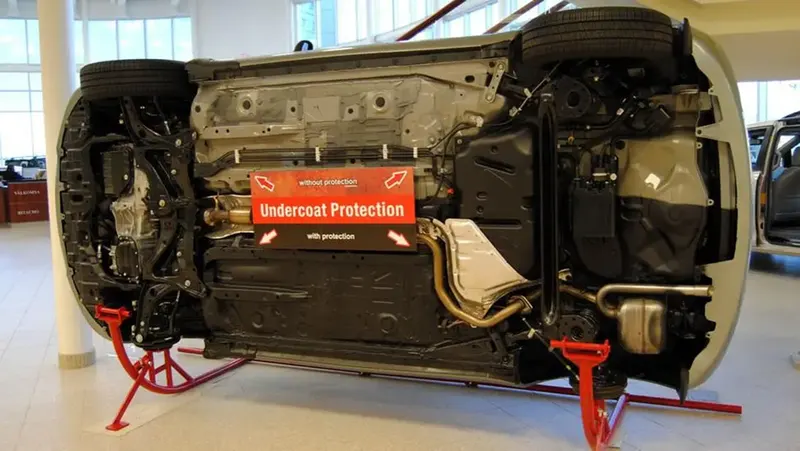
This underbody coating process has different types such as follows:
1. Rubberized Underbody Coating-
It is the most common and best option for protecting the underbody. The process creates a rubber barrier that seals the moisture that otherwise corrode the metal components. In addition to creating more sound proofing it also protects from scratches and dents from bad road conditions. Although it is an easy application process with benefits, it lasts only a year. As it is sometimes applied on the already corroded parts the coating does not get inside to stop the corrosion thus cannot prevent its spreading.
2. Polyurethane Underbody Coating-
This type of sealant closes splits and fractures on the underbody displacing salt and moisture. It also bonds with unoxidized metal. It can be sanded easily for bodywork and could be painted over. The process requires preparation on the surface like sanding and applying primer to bare metals.
3. Wax or Paraffin-based Underbody Coating-
A wax-based coating is the easiest and cheapest option available for undercoating. During the application the sealant drips into seams and cracks to provide protection. However, they wear off quickly that other types. The protection offered is not the best even in moderate climate conditions.
4. Asphalt-Based Underbody Coating-
For large vehicles such as lorries and trucks as well as heavy machinery, this type of undercoating provides extra protection against rocks and moisture. It contains a little amount of rubber to dampen the noise. However, it is a time-consuming process and cannot be painted over.
Pros of underbody coating:
- Providing layer of protection against corrosion.
- Extends the vehicle life.
- Can be applied to damaged areas.
- Reduces interior noise
Cons of underbody coating:
- Not much helpful if rust is already present.
- Best for new cars.
- Adds weight to the vehicle.
- Must be reapplied 3 to 5 years