Underbody Coating
Under-Body Coating:
Underbody coating is a thick cladding (typically made of rubber) that is placed uniformly to the car’s underside. When the automobile is fresh off the lot and spotless, it is usually sprayed or painted on.
Underbody coating provides long term protection from corrosion to car’s underbody. It also protects parts like internal body panels,frame rails and other inner cavities that are not physically accessible but are prone to corrosion.
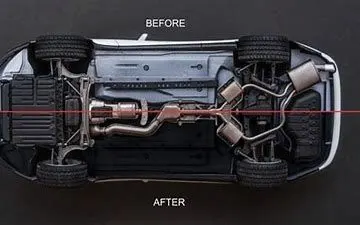
PURPOSE OF UNDERBODY COATING:
The main purpose of undercoating is to check rust especially in the body components like frame rails along with other exposed metal parts. Underbody coating can also reduce wear and tear.
TYPES OF UNDERBODY COATING:
1)Rubberized Underbody Coating:
Rubberized coating is ideal if you want to keep the road noise to a minimum and rust and corrosion away.
2)Wax Based Underbody Coating:
This transitory undercoating will, on the whole, fade away after a few months. On the plus side,wax-based undercoating is resistant to dampness. It is also the most cost-effective alternative.
3)Asphalt Based Automotive Undercoating:
Suitable for lorries, trucks, and other heavy vehicles. In comparison to rubber-based coatings, this gives a higher level of protection.
4)Polyurethane Underbody Coating:
This covering seals breaks and fractures in the vehicle’s underbody. It provides strong corrosion resistance and also binds to the metal. Comparing with an asphalt based coating, the polyurethane coating may be painted over.
PROS of Undercoating:
1)Fights Rust
2)Absorbs Noise
3)Reinforcement
4)Prolong Car’s Life
CONS of Undercoating:
1.The biggest drawback is the cost.
2. It adds weight to the vehicle.
3.It must be reapplied every 3 to 5 years for the best results.