Underbody Coating
Underbody Coatings
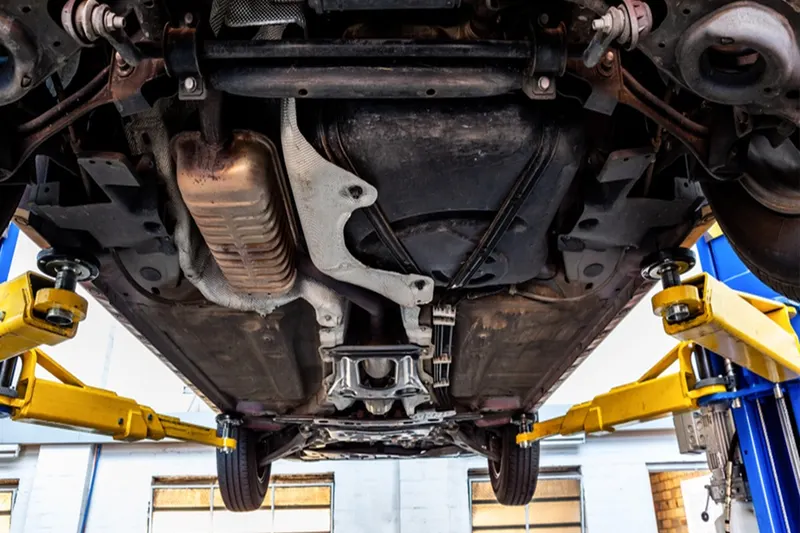
Underbody coatings are those which are used to prevent car bodies against rust & corrosion. This underbody coating helps in protection from dust and moisture also some other factors such as poor road conditions, rocks getting thrown from tires and denting the metal and salt from water during monsoon which plays an important role in damaging the underbelly of a car.
In Indian road conditions, a cars underbody is most prone to corrosion. Underbody coating provides long term protection from corrosion to car's underbody. It also protects parts like internal body panels, frame rails and other inner cavities that are not physically accessible but are prone to corrosion.
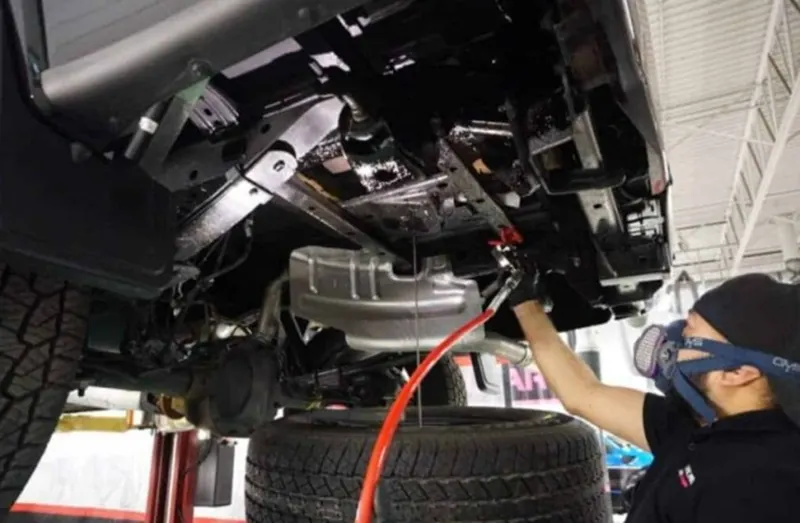
Underbody coating is usually a dense cladding (often based on rubber) applied uniformly to the undercarriage of the automobile. It is normally sprayed or painted on when the cars is just out of the dealership and is clean. But even if you are getting the undercoating applied after a couple of years, it's fine too.
Modern Automotive Coating Process
The modern automotive coating consists of five steps:
- Pre-treatment : Pre-treatment removes and cleans excess metal and forms an appropriate surface structure enabling bonding of a corrosion protection layer.
- Electrodeposition(ED) : Electrodeposition of the anti-corrosion or rust prevention layer.
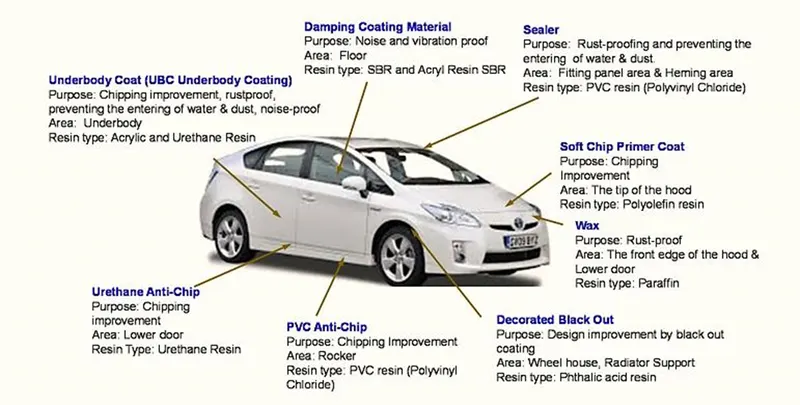
- A sealer like Poly Vinyl Chloride (PVC) is applied for anti-corrosion , elimination of water leaks, and minimization of chipping and vibrational noise.
- A primer is then applied to promote adhesion between the surface and the basecoat; it also imparts a smoother surface for subsequent layers and has anti-chipping properties.
- Finally, the top coats that are sought after, including color , appearance, glass , smoothness , and weather resistance.
Pre-Treatment
The first step in preparing BIW for subsequent coating is the pre-treatment process. Pre-treatment consists of cleaning the body surface to remove remaining oils from the stamping process and welding residues through three primary liquid dip processes of degreasing, conditioning and phosphating. The degreasing solution is composed of alkaline salts and surfactants and can include caustic soda, tri-sodium phosphate, and sodium carbonate. The surfactants are types of detergents for emulsifying oils and lubricants on the BIW.
Electrodeposition(ED)
The metal underbody and frames of automobiles are coated to prevent corrosion, whereas other areas like the roof are not rust-proofed. When not coated to prevent corrosion, the structural metals (or other materials) are primed before applying additional coatings. The ED processes are modified as per the BIW material property. This ED coating provides rust and corrosion protection.
Rust-proof materials: Sealer/PVC
The third step is underbody coating (UBC) and seam sealing using PVC and urethane. The sealant is applied around and inside the door, hood, trunk, and front dash and onto the exterior and interior of metal joints and outer area of the back wheel well.
Primer
The fourth coating step is the application of a primer surface or simply primer. It can be water-borne, solvent-borne or a powder. These primers are used to improve adhesion between the E-coat and topcoat, provide chipping protection, enhance paint appearance and also be environmentally compatible with emission regulations.
Top coat
The final step in the body coating process is to apply the topcoat, which consists of two layers—the basecoat and clear coat. The basecoat contains the primary coloring pigment and the clear coat provides a protective coating against environmental effects, corrosion, and UV light degradation promotes unmatched color retention and provides a smooth unblemished even finish.
Types of Underbody Coating
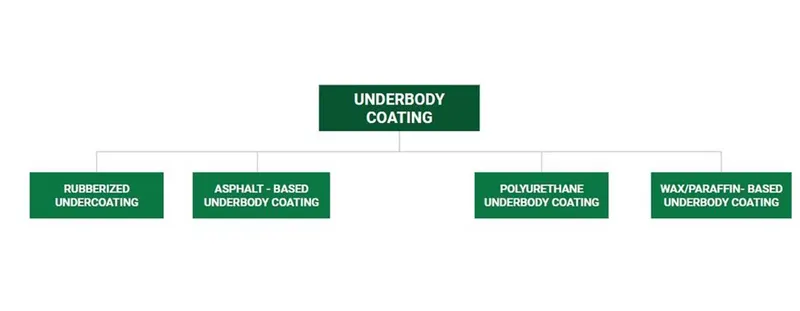
- Rubberized Undercoating
- Polyurethane Undercoating
- Wax or Paraffin-Based Undercoating
- Asphalt-Based Undercoating
- Rubberized Undercoating
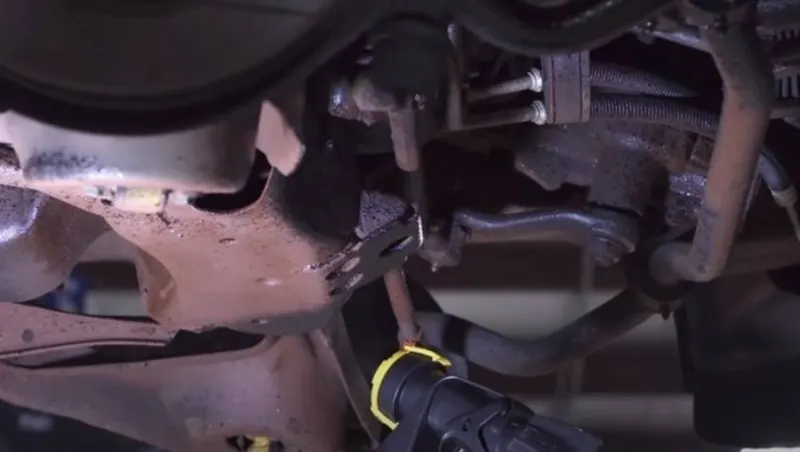
These coatings are easy to apply and offer sound-cushioning as well as protection from dust, moisture and dents. The coatings are safe even to use on wheel wells and quarter panels and when it is dried forms a soft rubbery finish that prevents further rust and moisture seep.
Polyurethane Undercoating
This type of undercoating is a lit a bit quicker and easy to apply. This type of undercoating often comes in a canister ready to preload into application gun. This type of undercoating always requires surface preparations before applying.
Wax or Paraffin-Based Undercoating
Wax-based undercoating never truly harden. During application, they drip or flow into seams and cracks to provide protective properties. They are usually available in a spray gun canister or in aerosol can and offer at least a base protection in moderately humid climates.
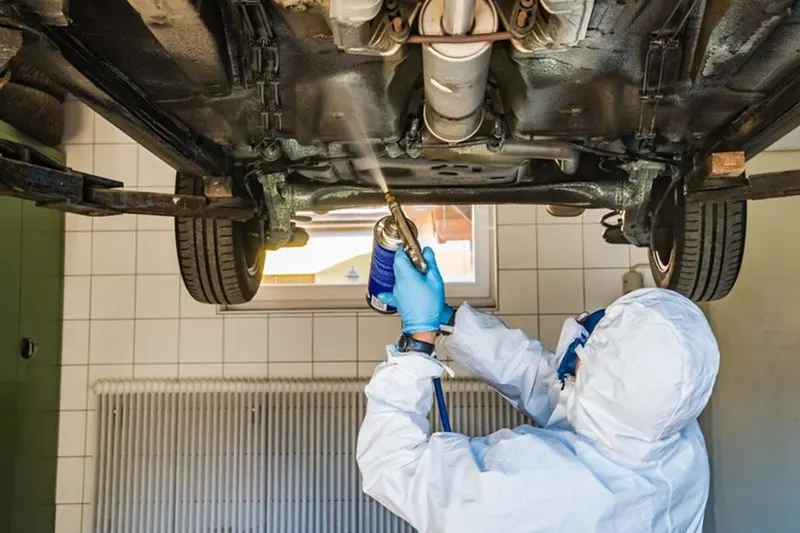
Asphalt Based Automotive Undercoating
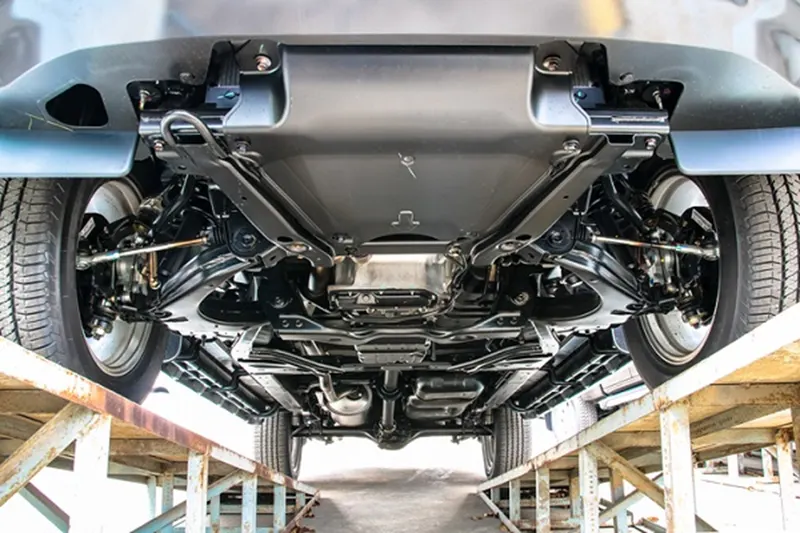
Asphalt Based Undercoating does provide some benefits over Waxed Based Undercoating. They both stick well to most any surfaces and do a great job sealing out moisture, road chemicals and oxygen. But mainly, Asphalt undercoating has the benefit of being less expensive. They protect anywhere up to 5 years and dry to a Firm to Hard coating.
Asphalt Based Undercoating does require a thicker film thickness meaning you will have to apply more product to the surface to be protected then if you use a Wax Based Undercoating. Additionally, Asphalt based products require more surface preparation because they can actually seal in rust and moisture allowing it to continue to grow. Finally, Asphalt based products continue to dry out over time causing cracks in the coating surface.
Advantages of Undercoating
- Fights Rust
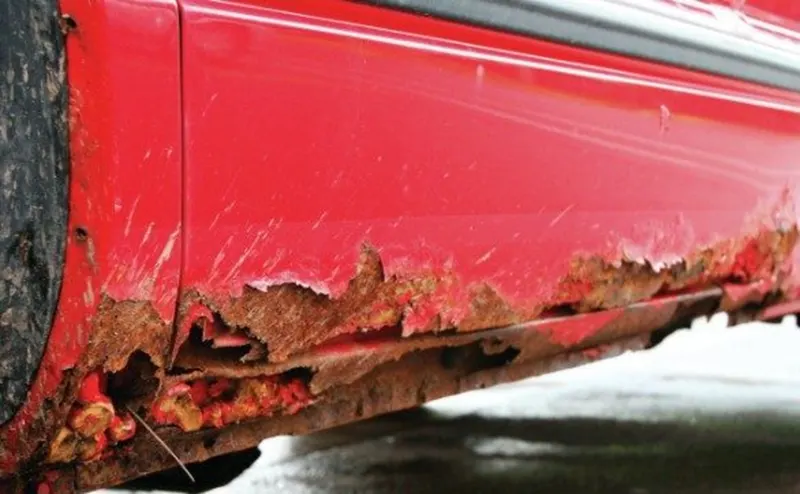
It plays an important role in keeping corrosion at bay. Underbody coating can come in handy especially if you live near the sea, where there is too much humidity, and rusting is just one of those everyday things. You should also seriously consider undercoating if you reside in a place where it snows in winter.
Absorbs Noise
Believe it or not, very thick undercoating can soften the noises that reach the cabin. Since the undercoating is often made up of rubber it absorbs some of the rackets. The occupants of the car could spare themselves of the road noises – at least up to a certain extend.
Reinforcement
If your car comes with stock underbody coating, using another coating on top of it, is not going to hurt. It will offer additional reinforcement, protecting the underbody from water, road debris, gravel and small pebbles. There would also be a lesser chance for the factory coat to flake away.
Disadvantage of Underbody Coating
- Underbody coating is costly and requires periodic maintenance.
- Underbody coating should still be visually inspected annually to ensure integrity.