Hood design-Week 2
Hood
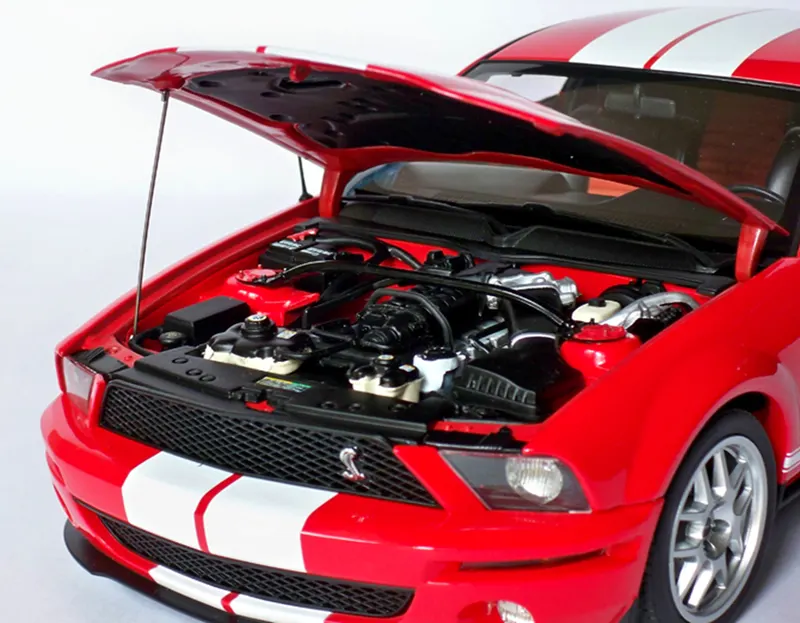
Hood is the front most BIW enclosure component it covers the engine compartment and other parts in the front engine mounted automobiles. It cuts the air drag by providing good aerodynamic shape for the smoother ride and also provides good aesthetic look to the automobile. It has a Hinge mechanism which is helpful for ease of access of engine compartment and other components.
Introduction
A car hood also referred to as a bonnet in some other countries, is the hinged cover that rests over the engine of a front engine vehicle. Its purpose is to provide access to the engine for repair and maintenance.
A concealed latch is typically used to hold down the hood. Car hood are typically constructed from steel and sometimes from aluminium. After market, car hoods may be constructed from various other material , including carbon fiber , fiberglass or dry carbon.
Body In White(BIW) is the stage in automobiles manufacturing in which a car body frame has been joined together, that is before painting and before the motor , chassis sub assemblies, or trim have been integrated into the structure . Assembly involves different techniques such as welding, riveting, clinching, bonding and laser brazing.
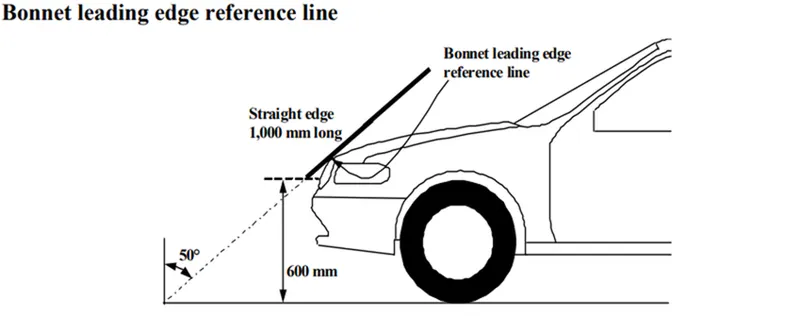
Hood Master Section
The master Section is provided is created based upon the requirements that are recived from the marketability team and the manufacturing requirements that we saw below image is the master section that is used to design the hood.
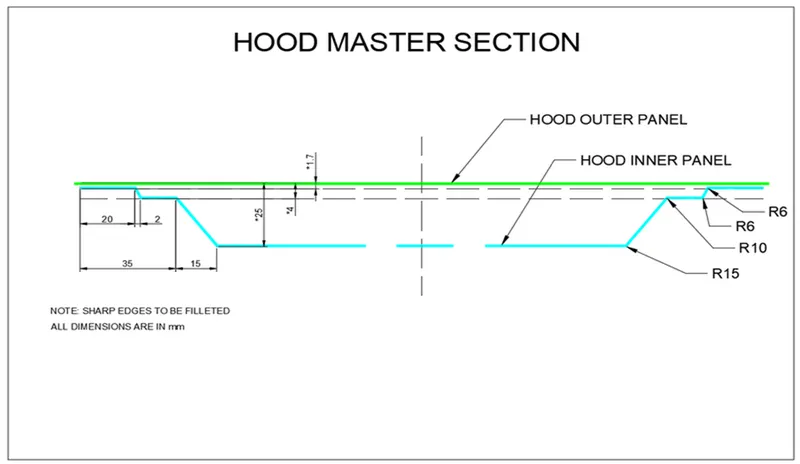
The main parts of the Automotive hood are Outer Panel, Inner panel Hinge assembly and the Striker. We will be provided with the Hood Outer panel.
1) Hood Outer Panel
The outer panel is actually called the skin of the vehicle which is designed by the styling team to get a good look for a vehicle by covering the inner panel and engine parts of the car. This part should not be welded to the inner panel but using the sealant and mastic points makes contact between the inner and outer panel which acts as a bond between both and makes the hood stiff.
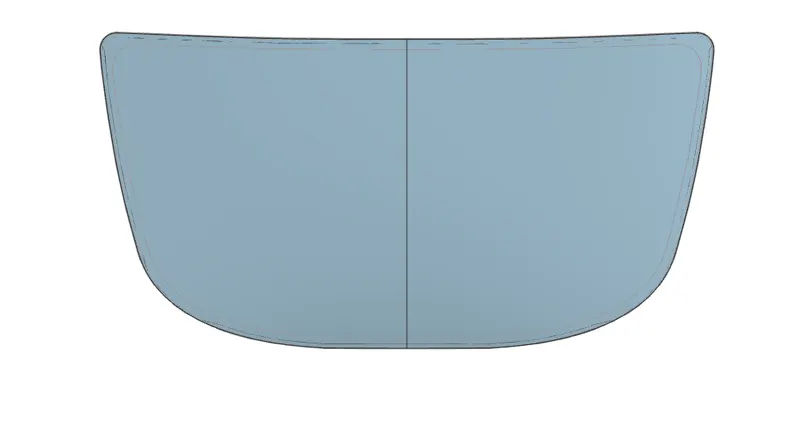
2) Hood Inner panel
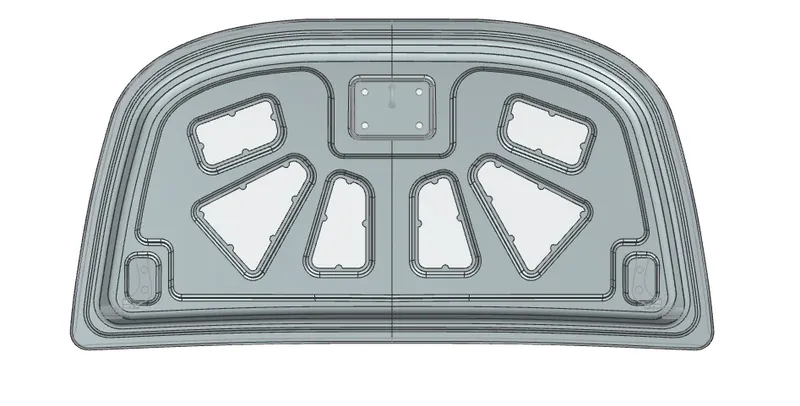
The main part of the hood which gives support to the outer panel of the car and with its embossing shapes dissipates the force in different directions when the vehicle takes crashes to not to injure the men in the car.
3) Hood Hinge
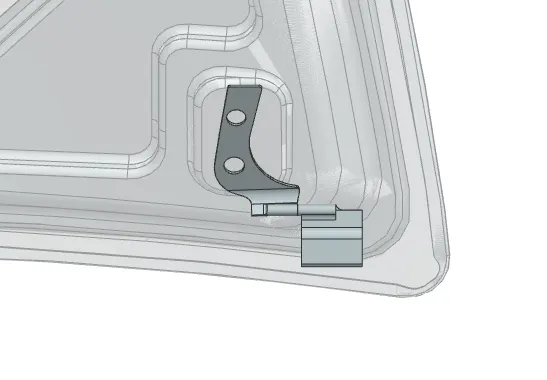
The hinge consists of two parts- hinge at the inner panel and hinge at the engine compartment. This coupling allows the hood to open and close, as well as makes contact between the engine block to the hood. It also controls the lifting of the bonnet mitigates the consequences of a collision between a pedestrian and a vehicle.
4) Hood Striker
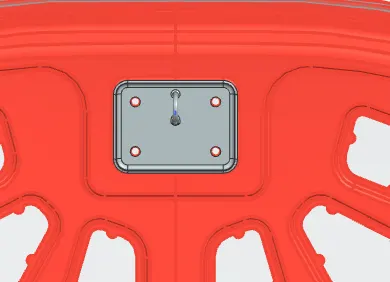
It is a locking mechanism of the hood attached to the inner panel and to the body of automobile.
Design Parameters
The main Parameters are
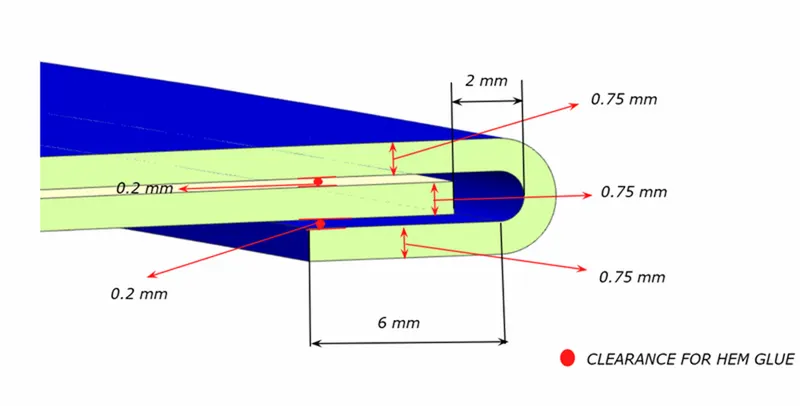
Design Dimension :- The thickness of the sheet metal should be 0.75 mm and the clearance for mastic data is 5mm , 0.2mm clearance should be provided for Hemming process.
Opening angle :- The opening angle of the hood is to taken care of while designing such that it should not hit the head of person .
Pedestrian Safety – The Pedestrain safety can be ensured by providing of the proper cutouts in embosses which will reduce the piercing effect which causes less impact to the head.
Passenger safety – The force distribution in the inner panel should be deviate into the hinge area by arranging the proper cutouts .
Joining Technique – The joining technique should be done by the Hemming process.
Hemming
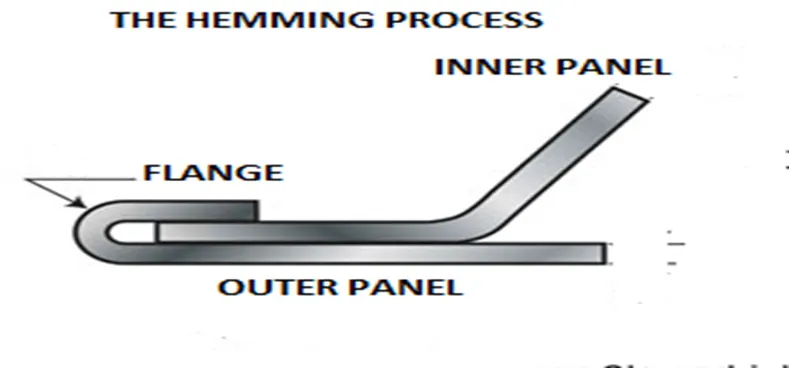
Hemming is a technology used by the automotive industry to join inner and outer closure panels together (hoods, doors, tailgates, etc.). It is the process of bending/folding the flange of the outer panel over the inner one.
Hemming Process - Hemming is a sheet metal forming process in which sheets are joined by bending it usually to 180°. Automotive body panels and automotive parts such as deck-lids, trunk-lids, doors, hoods and tailgates are formed by hemming process.
Purpose of Hemming
Hemming is a forming operation in which the edges of the sheet are folded or folded over another part in order to achieve a tight fit. Normally hemming operations are used to connect parts together, to improve the appearance of a part and to reinforce part edges.
Hemming Data
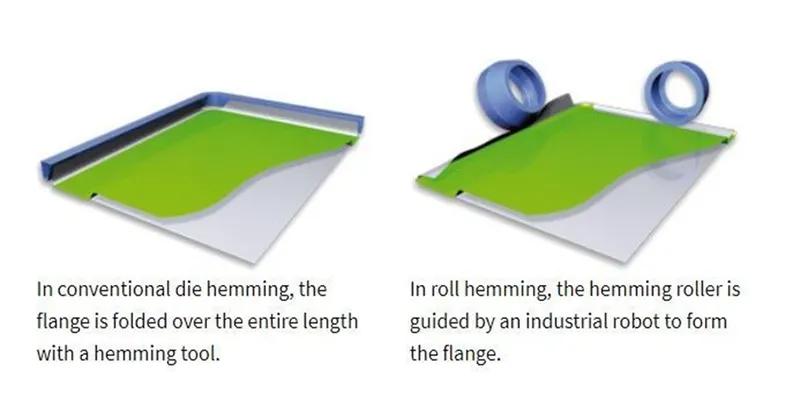
- Conventional Dia Hemming
- Roll Hemming
Mastic Sealant
The Mastic sealant or the Mastic point is an elastic compound that behaves like a rubber. The mastic points are defined on the hood inner panel where the hood can easily deform. They help the hood outer panel to come back to its original shape after it gets deformed. The mastic has an influence area of 80mm.
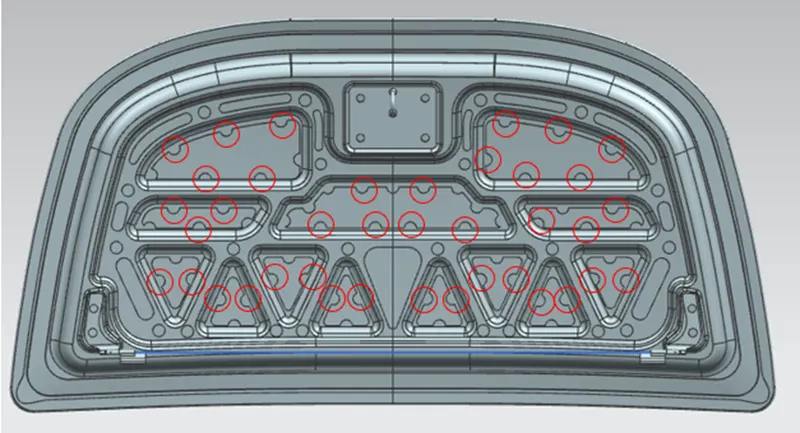
But the main function of the mastic point was to reduce the NVH (Noise, Vibrations and Harshness) created on the hood. The mastic point will reduce the NVH for the radius of 80mm. So providing many number of mastic point on the center area of the hood will increase the performance of the car.
Deep Drawing
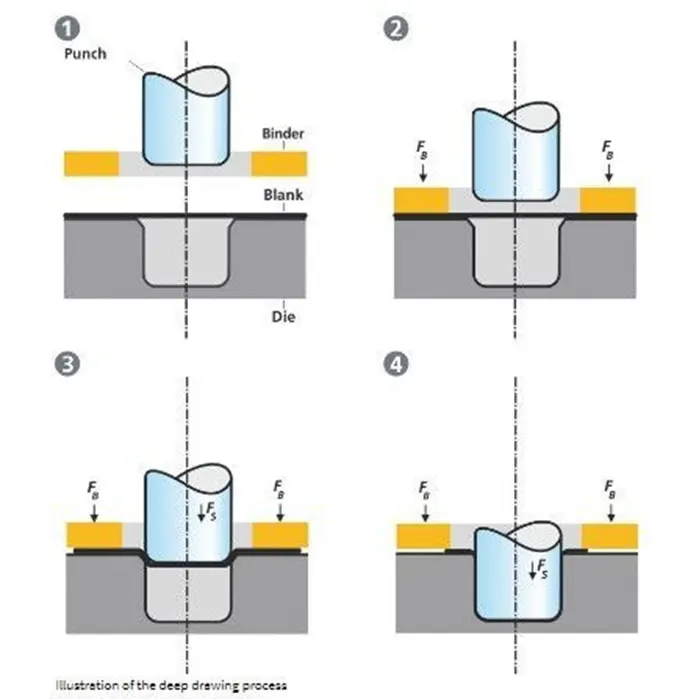
The deep drawing process is a forming process which occurs under a combination of tensile and compressive conditions. A flat sheet metal blank is formed into a hollow body open on one side or a hollow body is formed into a hollow body with a smaller cross-section. In the automotive industry, deep drawing is usually carried out using rigid tools. When drawing complex car body parts in practice, there is usually a combination of stretch and deep drawing involved.
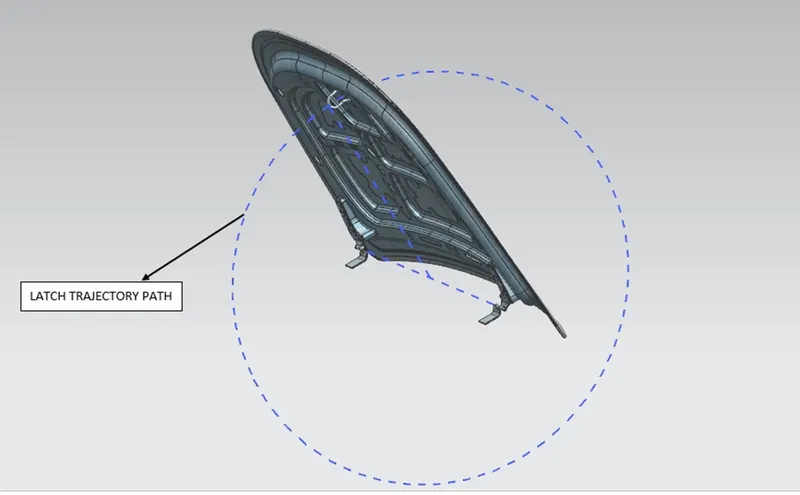
Latch Trajectory
Circle is drawn from the hinge axis center so we can finalize the position of latch striker. For proper mating, the tip of the striker should be tangential to the latch trajectory. The position of latch striker follows the path of this circle. Latch trajectory Circle is drawn from the hinge axis center so we can finalize the position of latch striker. For proper mating, the tip of the striker should be tangential to the latch trajectory. The position of latch striker follows the path of this circle.
Tools Used In The NX-CAD
Surface Tools – Offset surface , Trim sheet, Face blend, Edge Blend, Emboss, Through curve, law extension, Thicken, sew.
Curve Tools – Curve on surface, offset curve in face, Bridge curve, Trim sheet, Offset curve, Project curve.
Assemblies Tools – Move component, Assemblies constraints, wave geometry linker etc.
Conclusion
From this challenge I have learned to design Car Hood using Siemens NX CAD .I have been also learned more knowledge and features in it.