Underbody Coating
UNDERBODY COATING AND IT'S PURPOSE:
Underbody coating is usually a dense cladding (often based on rubber) applied uniformly to the undercarriage of the automobile. It is normally sprayed or painted on when the car is just out of the dealership and is clean. But even if you are getting the undercoating applied after a couple of years, it’s fine too. This is because it can prevent further damage to the undercarriage.
In Indian road conditions, a car's underbody is most prone to corrosion. Underbody coating provides long term protection from corrosion to car’s underbody. It also protects parts like internal body panels, frame rails and other inner cavities that are not physically accessible but are prone to corrosion.
Modern Automotive Coating Processes:
1) Pretreatment:
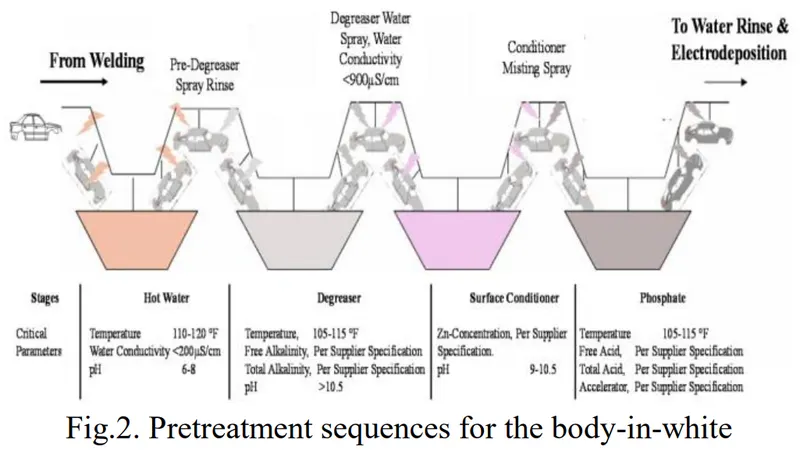
The first sequence in preparing the BIW for subsequent coating is pretreatment sees Fig.2. Preatrament removes & clean excess metal & forms an appropriate surface structure enabling bonding of a corrosion protection layer. It consists of cleaning the body surface to remove remaining oils from the staming process & welding residues through three primary liquid dip processes of degreasing, conditioning, & phosphating.
2) Electrodeposition:
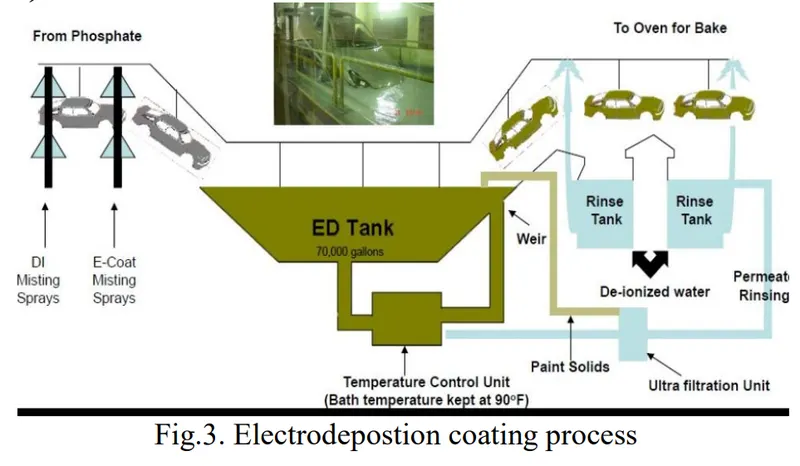
E-coating involves dipping automobile bodies into the coating solution & passing an electric current through the body & the liquid ED paint solution. Because of the charged nature of this coating process, the ED paint penetrates into places a spray would not reach.
3) Rust-Proof Materials: Sealer/PVC :
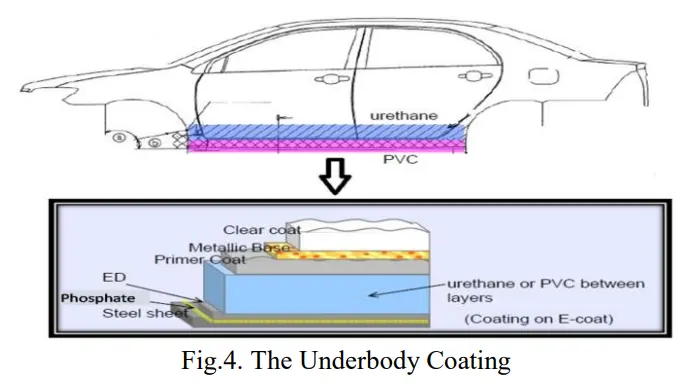
The third step is underbody coating & seam sealing using PVC. Fig.4 displays the lower door sections & rocker panel locations where PVC or urethanes are applied as an anti-chipping protection, & shows the cross section of this layer with respect to the other coatings on the body parts.
4) Primer:
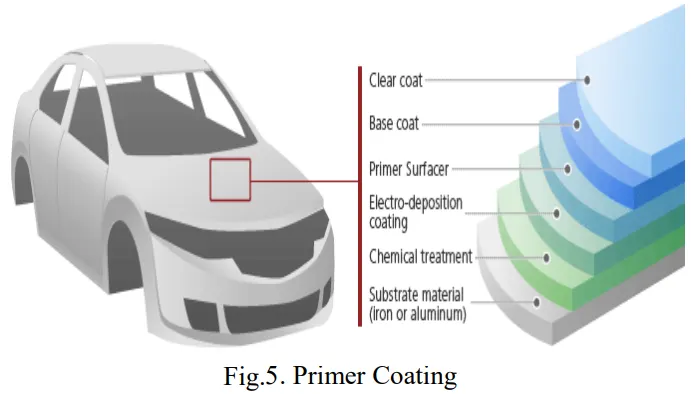
The fourth coating step is the primer. It can be water-borne, solvent-borne, or a powder. The primer fills & smoothes minor imperfections & scratches that may be created during prior steps & by the intermediate sanding or grinding used to remove small imperfections. It also provides additional protection against corrosion & maximizes adhesion between it & the E-coat & basecoat; thereby, the primer incrases paint durability.
5) Topcoat:
The final step in the body coating process is to apply the topcoat, which consists of two layers the basecoat & clearcoat.
TYPES OF UNDERBODY COATING:
1. Rubberized Undercoating:
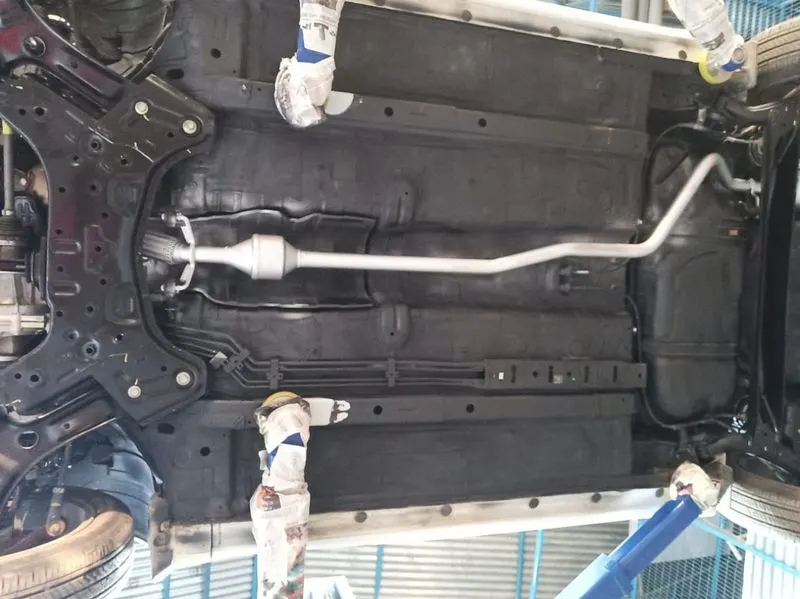
Rubberized vehicle undercoating is easy to apply and offers sound-cushioning as well as protection from dust, moisture, and dings or dents.
In addition to your undercarriage, rubberized undercoating is also safe to use on wheel wells and quarter panels, and dries to a soft rubbery finish that prevents further rust, damage, or moisture seeps. The coating can be painted over and, if necessary for bodywork, can be easily removed with an undercoating removal spray.
Overall, rubberized coating is generally the best option for protecting your vehicle's undercarriage, as it provides the simplest and best protective measures against rust and moisture.
2. Polyurethane Undercoating:
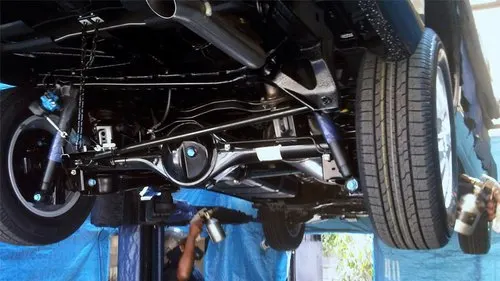
The other option for undercoating your vehicle is to use a polyurethane-based sealant. This type of vehicle undercoating is a little bit quicker and easier to apply.
Oftentimes, polyurethane undercoating will come in canisters ready to preload into an application gun. This type of sealant works by seeping into all cracks and seams, displacing salt and moisture and oozing around rusty areas to bond with and protect unoxidized metal. It also sands quickly in case you'll need to perform bodywork and can be painted over.
On the flipside, this type of car undercoating generally requires a little bit more surface prep work before applying -- sanding and applying an etching primer to bare metals before using are generally recommended.
3. Wax or Paraffin-Based Undercoatings:
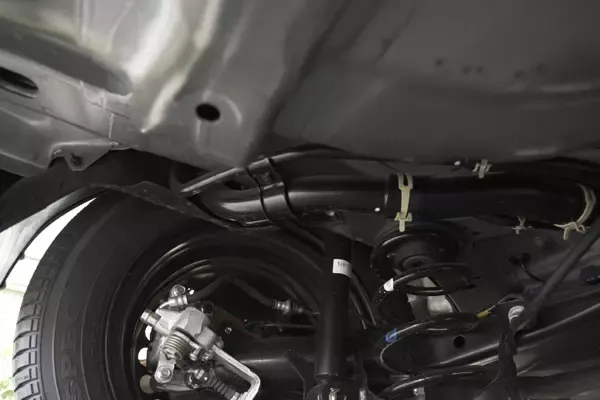
A paraffin-based undercoating will be the cheapest and quickest option available with which to protect the undercarriage of your vehicle. However, keep in mind that it will wear off quicker than other types of undercoating and will need to be stripped and reapplied at least once every year.
Wax-based undercoatings never truly harden. During application, they drip or flow into seams and cracks to provide protective properties. They are usually available in a spray gun canister or in an aerosol can and offer at least a base protection in moderately humid climates.
4. Asphalt-Based Undercoating:
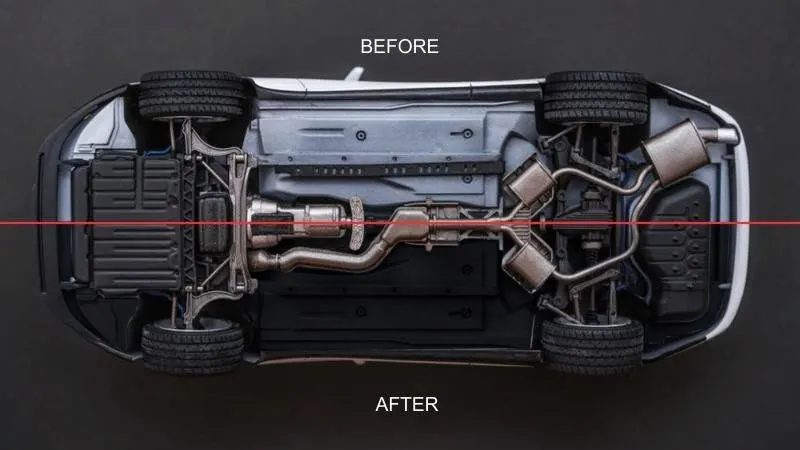
For standard vehicles, any of the aforementioned types of undercoating will provide sufficient protection. For large trucks and heavy machinery, asphalt-based undercoating provides a bit of extra durability against rocks, chips, and moisture.
Asphalt-based undercoating generally contains a little bit of rubberized material that sets up firmly and also helps soften noise. Generally sold in five gallon containers, this type of undercoating also needs more cure time than the other three, and is NOT paintable, making it best to use only for undercarriages.
VEHICLE UNDERCOATING PROS:
1) Protection Against Corrosion And Rust:
Undercoating offers a layer of protection against corrosion and rust. Any debris will be repelled by the undercoating.
2) Extend The Life Of Your Vehicle:
It will extend the life of your car. Undercoating stops rust.
3) Cover Small Damages:
You can undercoat damaged parts of the car such as scratches, chips and nicks caused by debris flying up as you drive.
4) You Can Do It Yourself:
You have the choice of undercoating your own vehicle or getting it done professionally.
5) Many Options:
There are different methods to choose from. One is electronic which is used to stop the corrosion of rust already present.
6) Reduce Noise Inside Your Car:
Undercoating your vehicle can reduce noise inside the car while you’re driving.
VEHICLE UNDERCOATING CONS:
1) It’s Not Effective On Cars With Corrosion:
If your vehicle already has some corrosion it isn’t as effective.
2) Doesn’t Work So Well On Old Cars:
Undercoating doesn’t work so well on old cars because the residue from under the car has to be removed before the undercoating is applied.
3) It’s Useless On New Cars:
Undercoating might not be wise if you tend to change cars every few years, since it takes between 3 and 5 years before rust starts to show.
4) Your Vehicle’s Warranty Might Be Voided:
Your vehicle’s warranty might be voided if you opt for a third-party undercoating treatment.
5) It Makes Your Vehicle Heavier:
It makes the vehicle 10 to 20 pounds heavier which affects fuel economy (how far you can travel on one tank of gas).
6) It Can Be Damaged:
Undercoating can be damaged.
CONCLUSION:
Although some vehicles can be benefitted with an undercoat, not ever car needs it. It’s important to figure out whether or not undercoating is a good idea.
Remember also that you can do your own vehicle undercoating. This is the cheapest way but it can also void the active warranty, so check the details first.
It is a good idea to inspect your undercoating, or have the dealership do it, on a yearly basis to check for any issues with the integrity.