Benchmarking
BENCHMARKING
Benchmarking is a process of comparison between the products, services or processes of a company with those of another company which is considered best in that industry. Benchmarking helps us to identify the areas where improvements can be made. By studying the and breaking down the processes of a company with superior performance regarding what makes that company superior and comparing them with those of our company, we can make some significant improvements by implementing required changes.
These changes can be-
1) Improving our product's features to closely match with those of a competitor: Adding some extra features which are very popular among the consumers and also adding new features by analysing/surveying the needs of different type of customers. Having features that are not available in the product of any other company in the market will make our product popular.
2) Changing the scope of services we offer: By establishing more service stations at different places depending on the demand, the revenue can be increased and also attracts more customers. In some places then demand maybe high, and less in some other places. By proper allocation of service stations (i.e. neither more nor less), optimum utilisation of resources can be achieved.
3) establishing a new customer relationship management (CRM) system to enable personalised customer cummunications. This creates a good relationship with customers and opens numerous ways for them to contact with the company and with more ease.
The two basic kinds of improvement opportunities are-
1. Continuous: Improvement is continuous, involving only small adjustments
2. Dramatic: Reengineering the whole internal work process.
Procedure for Benchmarking
1) Choose a product, or service, or a process for benchmarking.
2) Select a best-in-class company for comparing with your business.
3) Gather information about the parameter to be studied from the chosen company and the company we're benchmarking for.
4) Compare the data obtained from both the organisations to identify the areas with scope for improvements.
5) Implement the processes and policies within the bet-in-class performers.
Benefits of Benchmarking
1) Improves employee understanding of cost structures and internal processes
2) Encourages team-building and cooperation and become more competitive
3) Enhances familiarity with key performance metrics and opportunities for company-wide improvement.
Comparison between different cars found suitable for Mr. D.S. Pughazhyendhii
| PARAMETERS | 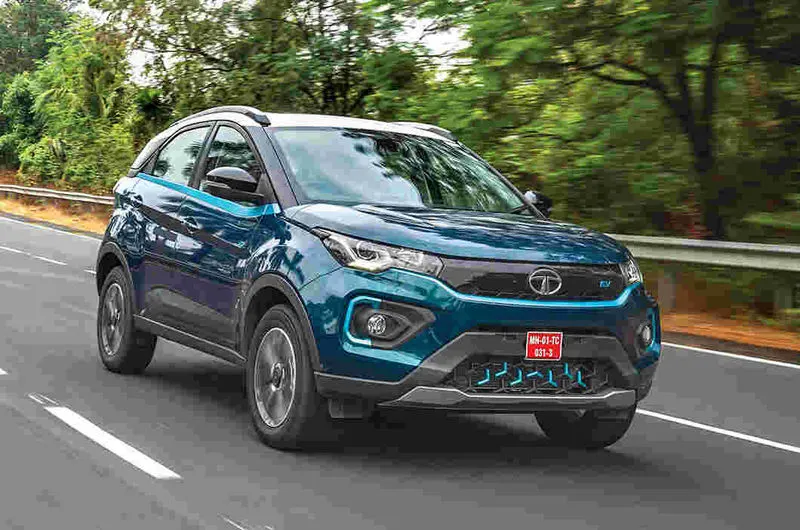 |
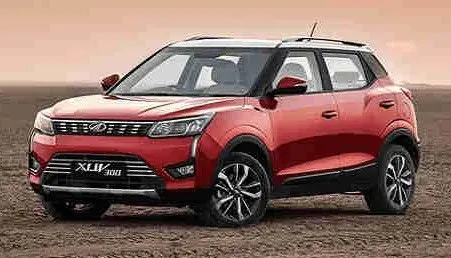 |
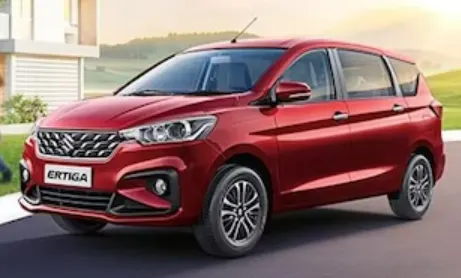 |
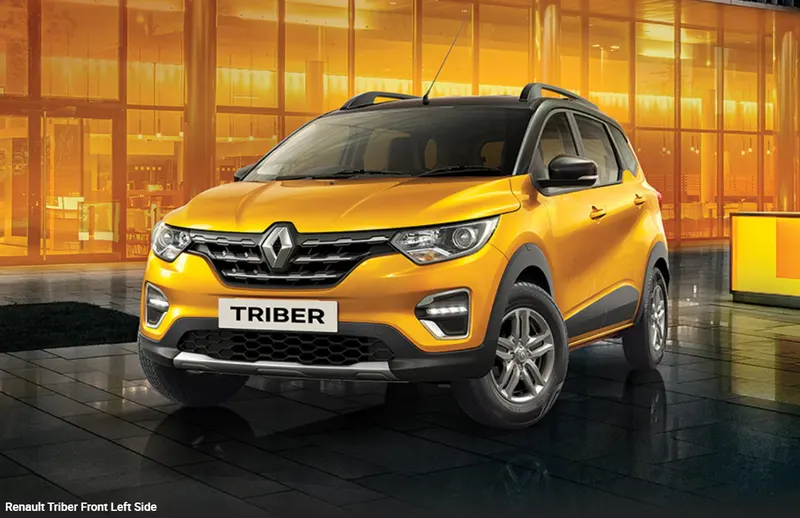 |
| BRAND and MODEL | TATA Nexon | Mahindra XUV300 | Maruti Ertiga VXI | Renault Triber |
| CAR TYPE | SUV | SUV | MUV | MUV |
| PRICE | Starts from 7.8 lakh | Starts from 7.95 lakh | 9.49 lakh | Rs. 6.33 - 8.97 lakh |
| SEATING CAPACITY | 5 | 5 | 7 | 7 |
| MILEAGE | 16 - 21.5 kmpl | 16.5 - 20.1 kmpl | 20 kmpl | 18 - 19 kmpl |
| SAFETY RATING | 5 | 5 | 4 | 3 |
| ENGINE VOLUME (CC) | 1199cc | 1197cc | 1462 cc | 999cc |
| TORQUE | 200 Nm @ 2000 rpm | 170 Nm @ 1750 rpm | 138 Nm @ 4400 rpm | 96 Nm @ 3500 RPM |
| BOOT SPACE | 350L | 259L | 209L-550L(by tumbling down the third row) | 625L |
| BHP | 118bhp @ 5500rpm | 109bhp @ 5000rpm | 103 bhp @ 6000rpm | 71bhp @ 6250rpm |
| NO. OF CYLINDERS | 3 | 4 | 4 | 3 |
Since Mr.D.S.Pughazhyendhii is fond of big cars I have selected two cars of SUVs and two of MUVs whose price fall within the given price range. Both the SUVs have 5 seats which are enough for his family and both the MUVs have 7 seats which is more than enough for them but those two extra seats might be useful in case of family gatherings or when they had to receive guests. All these four cars have decent mileage as he has to travel 500kms in one go every month. Since the consumer has a five-year-old boy, safety comes first. Despite of having a good average mileage, both the MUVs do not possess a five-star safety rating. So I would not recommend them. Now both the SUVs i.e. TATA Nexon and Mahindra XUV300 are subcompact crossover SUVs. They make you sit at a higher height, which makes them a better choice to drive in a crowded city like Bangalore. They both also have a five-star safety rating. So both of them are ideal for the consumer. Both the cars also have child safety locks. But if we have a look at the safety rating scores of both the cars, according to NCAP Adult Safety Rating of Nexon is 16.06/17 and that of XUV300 is 16.42/17. And Child Safety Rating of Nexon is 25/49 and that of Nexon is 37.44/49. Clearly Mahindra XUV300 fares better in both type of ratings and scores significantly higher than TATA Nexon incase of Child safety rating. Keeping in mind the safety of the consumer's child, I would recommend him Mahindra XUV300.
Conclusion:
The SUV, Mahindra XUV300, which falls well within the price range of Mr.D.S.Pughazhyendhii, has the best safety norms for his family especially for his five-year-old boy. It also has 5 seats, just enough for his family members. Being an SUV it provides better elevation to see far through the road, so it is easy to drive in a crowded city like Bangalore. So that he can daily drive it comfortably from home to his office. With a mileage varying from 16.5 - 20.1 kmpl, it is also capable of travelling long distances like 500Kms in one go for visiting his native place. It has 1197cc 4-cylinder engine with a torque of 170 Nm @ 1750 rpm and power of 109bhp @ 5000rpm, which makes the car able to drive uphill with ease.