Underbody Coating
UNDERBODY COATING
Underbody coating is a dense cladding applied uniformly to the undercarriage of the vehicle and is often based on rubber cladding.It is usually spread or painted.
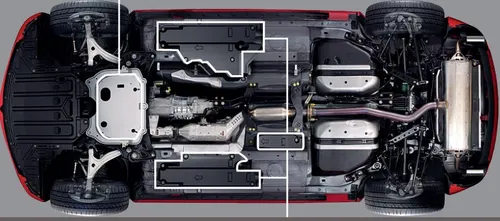
Purpose of underbody coating
The main purpose of underbody coating is to prevent corrosion in the body components like frame rails along with other exposed metal parts as the underbody of the vehicle is always exposed to water and dirt from the roads which leads to corrosion and finally to the failure of the components.
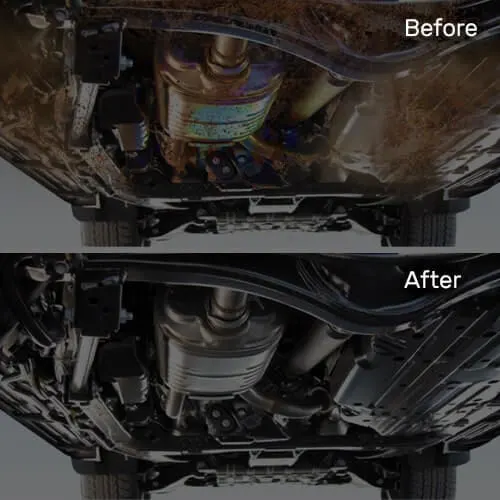
Composition of the Coating
The undercoating includes ingredients such as Fiberglass, ceramics, rubber, asphalt and silicone.each of them has different properties in terms of heat resistance and retention.
Types of underbody coating
1.wax or paraffin based undercoating
This is the preferred undercarriage coating for cars often driven on highways and normal roads,it provides sufficient guard in fairly moist regions.
Advantages
1.Inexpensive
2.conveniently available in spray canisters or aerosol cans.
3.Readily flows into seams guaranteeing any exposed and prone surfaces are protected.
Disadvantages
1.Wears off quicker in comparison to other types.
2.unlike the rubberised type,it does not really dry.
3.needs to be stripped and re-applied at least once a year.
2.Rubberised undercoating
Ideal for cars driven in rough terrain,involves applying a rubber agent to the undercarriage to protect and cushion it against dents,dust and moisture.
it can also be applied around wheel wells and quarter panels and considered the best among different types of undercoatings.
Advantages
1.easy to apply
2.undercoat can be painted for a neat finish
3.simplest way to undercoat
4.safe to apply
3.Polyurethane underbody coating
this coating uses a polyurethane based sealant that comes in canisters ready to be loaded into a spray gun and spread to the undercarriage of the vehicle.
polyurethane is a high-quality and durable material perfect for any weather condition, it is ideal for standard vehicles.
Advantages
1.Longer life span
2.can be painted over
3.trickles into cracks and rusty spots
4.Quick and simple to remove, as it sands easily.
Disadvantages
1.for a better adherence, needs undercarriage preparation before application.
2.requires time consuming etching with primer to bare metals.
4.Asphalt based undercoating
this coating is made of asphalt and generally also contains rubberised material,it sets up firmly and softens noise from the engine.
Advantages
ideal for trucks, military and all-terrain vehicles,because it provides added durability against rocks,chips and moisture.
Disadvantages
1.It takes time to harden
2.not paintable
3.not aesthetically suitable for standard vehicles
4.used only for undercarriages of utility vehicles and trucks
5.Water based undercoating
this undercoating can be applied to any surface, including metal, plastic, rubber and glass.it is made up of advance for a polymer that is non-toxic and environmentally friendly.
this is the most popular DIY undercoating,takes short time to dry and can be done at home.
6.Petroleum based undercoating
it is a heavy,viscous oil based liquid product,The liquid dries and hardens to provide tough, durable and long-lasting protection
Advantages
has greater deflective abilities for Road salts and grime
repels ice and water because of its petroleum base.
Process of undercoating
1.Pre-treatment:Degreasing and cleaning the body surface to remove any dirt from the mechanical processes.
2.Electrodeposition:it is a primary coating provided to prevent corrosion.
3.Sealent application inside and around the doors, hood and metal joints
4.Application of primer:primers are used to give adhesion between the electrodeposition coating and top coat,enhance paint appearance and be environmentally compatible with emission regulations.
5.Application of top coat:It consists of basecoat and clear coat. Base coat contains primary colouring pigment and clear coat protects against environmental damages.
Advantages of undercoating
1.Prevents corrosion
main purpose of the undercoating is to prevent corrosion from dirty and salty waters from the roads.this is very much needed in case of wet climate areas like Northeast India and the coastal areas.
2.Reduces noise from the roads
The coating will help in noise and vibration reduction by the irregularities in the roads and even in cases of any stone pellets hitting the undercarriage of the vehicle.
3.Reinforcement
The underbody coating will provide an additional reinforcement to the vehicle so that there would be a lesser chance for the original coat to damage.
4.Prolongs car's life
underbody coating defends the vehicle from damage and also protects the engine and transmissions which results in slower wear and tear and prolongs the car's life.
Disadvantages of underbody coating
1.very costly
2.not preferred if the underbody is already corroded
3.requires precision work while undercoating otherwise results in vehicles warranty damage.