Underbody Coating
REPORT ON UNDERBODY COATING
UNDERBODY COATING
Underbody coating is a process of protecting the vehicles from corrosion and small stones, which could rapidly chip away the ordinary paint. A thick resilient coating to the underbody of the car is applied at the corrosion prone areas to protect the car from rusting. It is a dense cladding applied to the exposed metal parts of the automobile. It is mostly painted or sprayed on the car which helps in preventing the damages caused by corrosion.
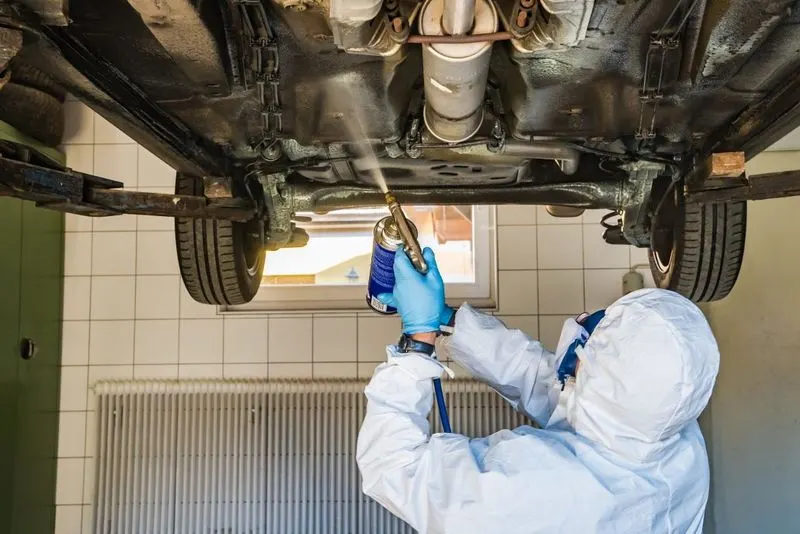
Underbody Coating Process
The underbody coating protects parts which are not physically accessible but are prone to corrosion like internal body panels, frame rails along with other exposed metal parts of the vehicle. The Underbody protective coating is used to protect our vehicle from external environment, to ensure the safety and the integrity of the vehicle.The underbody coating plays a very important role in increasing the service life of the vehicle and in improving the overall experience of the customer.
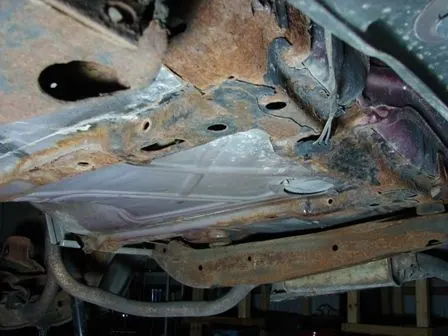
Corroded Underbody
The OEM's are having a challenging situation regarding the sales of their new cars with a reduced manufacturing cost. So, In order to save on some manufacturing cost the OEM's try to eliminate the use of the Underbody coatings on some areas which are not easily visible. As a result the service life of that particular vehicle gets reduced. Most of the vehicle owners do not pay attention to these details which results in reducing the overall life of their vehicle.
WHY UNDERBODY COATING IS IMPORTANT ?
Inorder to understand, how does the underbody coating protects our vehicle from external environment conditions we must know about how does the corrosion occurs.
Corrosion occurs when the current is passed through an anode (a metal that gives up electrons) to the cathode (a metal piece that accepts electrons) through a conducting medium called an electrolyte.
The electrolyte helps the anode terminal in releasing free electrons after which the released electrons travels to the cathode terminal through the electrolyte. The metal from the anode terminal starts getting deposited into the cathode terminal as rust. This rusting of iron or steel results in corrosion.
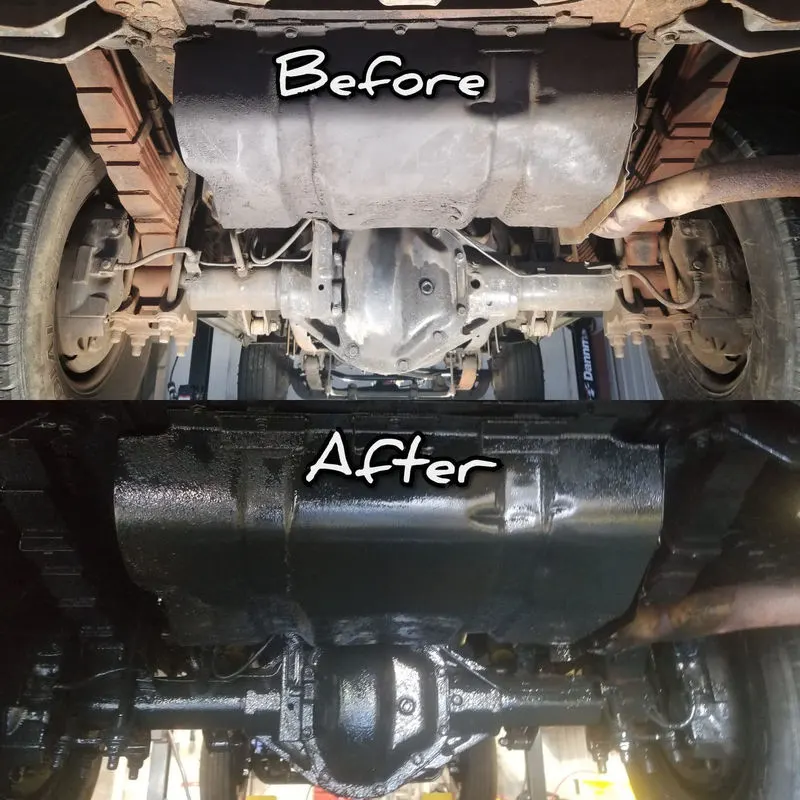
Results of underbody Coating
The applied underbody coating helps in preventing some factors that can lead to rusting and corrosion.
Coating method : In this method the solution helps us in preventing the penetration of electrolyte on metallic surface. Road salt, salt water and waste water works as an electrolyte to protect our vehicle.
Electrical method : It is the most preferable solution for underbody coating. The electrical way blocks the movement of free electrons released from the Anode terminal. On being charged negatively the Anode is also exposed to some saltwater or an electrolyte. As a result the flow of electrons are blocked to the cathode terminal and it prevents the metallic surface from rusting or corrosion. It is an expensive process than the coating method.
TYPES OF UNDERBODY COATING
The various types of underbody coating methods are as follows
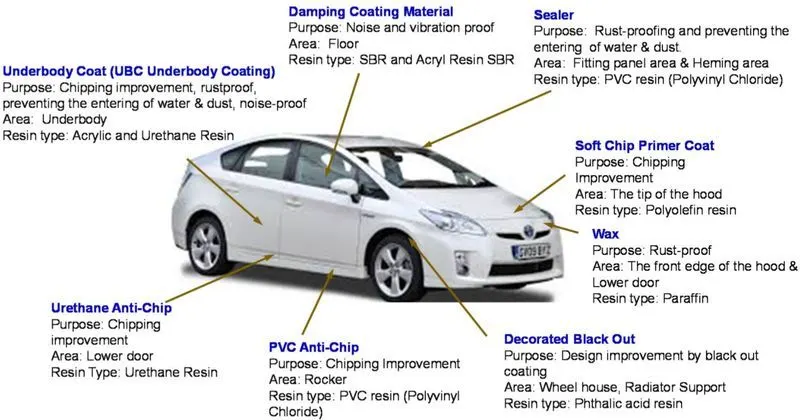
Types of Underbody Coating
- Rubberized underbody coating : The process provides sound cushioning with protection from dust, moisture and dents. After applying the coating, it dries up to a soft rubbery coating that prevents corrosion. It is generally the best protective measure against rust and moisture.
- Polyurethane underbody coating : The process is used for the splits and fractures on the underbody of the vehicle. The coating works by moving into all splits and fractures displacing salts and moisture and protecting the unoxidized metallic surfaces. It provides us with good protection against corrosion and is easy to apply on metals.
- Wax or paraffin based underbody coating : While applying the wax based coatings, it flows into the splits and cracks to provide protective measures against corrosion. It is the cheapest and quickest process among all however, it wears off quicker than other processes.
- Asphalt based underbody coating : All the above mentioned coating types will provide sufficient amount of protection to a standard vehicle. For an heavy duty vehicle the asphalt based coating process is the most preferable solution for it's underbody protection.The presence of rubberized material in this coating solution helps in providing enough protection from corrosion and also helps soften noise.
ADVANTAGES OF USING UNDERBODY COATING
Most of the vehicles manufactured these days are rust proofed. To protect your car against some saltwater and other common electrolyte, Investing in an underbody from an authorised dealer is a great investment which certainly increases the service life of your car.
It extends the lifespan of your car
The protection against saltwater and electrolyte causing corrosion is an added advantage for your vehicle. The underbody coating protects the metallic surface from rusting hence the service life of the vehicle gets increased.
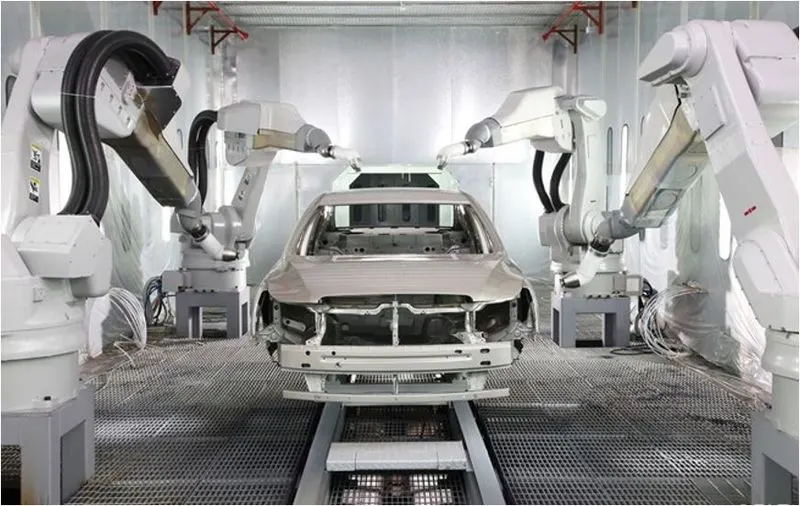
Automatic Sprayer Facility For Underbody Coating
Protection from loud road noises
The underbody coating serves as a shield from the outside noises and it also helps in preventing the noises from entering through the component. The coating also acts as a barrier between you and the outside noise.
Prevents damages from stones
The presence of stone chips on the road damages the underbody, wheel arches, sills and the trunk lower part. Sometimes, the underbody of the vehicle gets damaged due to uneven roads. The thick layer of underbody coating or anti-stone chip is an elastic layer which could not be easily damaged by stone chipping hence protecting the metal from getting damaged.
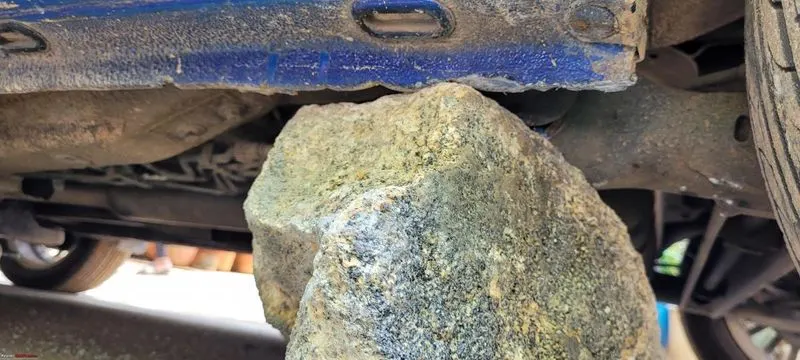
Impacts On Vehicle After Driving Over A Boulder
Protects vital components
The indispensable parts of a car are left exposed like the engine, silencer, etc. These are very much vulnerable to corrosion which can simply damage it. In order to protect these parts considerably less expensive anti-rust coating is required.
Protects Against Rust and Corrosion
The objective of using underbody coating is to prevent the exposed metal from corrosion. The effect of corrosion can be prevented by applying a rubberized coating at the underbody of your vehicle.
Prevents paints chipping
While driving on highways or inside the city your vehicle may encounter sharp gravel or an unattended object hitting the underbody of your car which can remove the paints or may damage the metal sheet from down below.
A thick layer of underbody coating helps to prevent such situations and also helps in minimising the effects of such contacts.
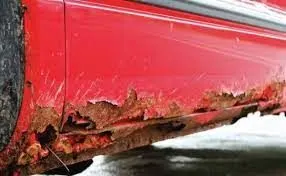
Paint Chipping can lead to serious damage on vehicle
Keeps the resale value
A well maintained car can give you much higher resale value. We can say that if a car is well treated or well maintained with underbody protection, it will keep the vehicle in better condition and will eventually extend the service life of your car.
Protects vital components
The indispensable parts of a car are left exposed like the engine, silencer, etc. These are very much vulnerable to corrosion which can simply damage it. In order to protect these parts considerably less expensive anti-rust coating is required.
DISADVANTAGES OF USING UNDERBODY COATING
As we have discussed various advantages of underbody coatings. Now let's discover some of the disadvantages of the underbody coatings process.
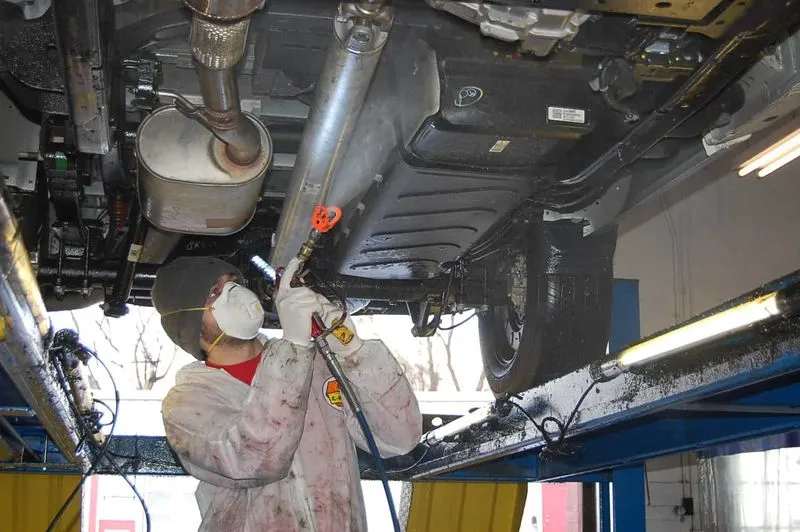
Underbody Coating Process
Less effective for already corroded surface :
The underbody coating works efficiently on a new vehicle or the vehicle underbody must be rust free. Although applying the underbody coating over the rusted surface may isolate it from further moisture and airflow, which is good, the existing oxidising/rusting process will still continue. For an already rusted underbody, it is better to first remove the rust from the surface then apply the underbody coating.
A third-party undercoating service might void your vehicle’s warranty :
Some of the new vehicles do not require underbody coating due to the structure of the vehicle and a basic protection layer is already applied. If you are going to hire a third-party provider to apply a coating, you could void the corrosion-perforation warranty that is factory-provided. Most vehicles nowadays are provided with rust-proofing and corrosion protection coatings.
If you are planning to purchase a used vehicle then the best option would be protecting the underbody of your vehicle with the help of underbody coating which can help in extending the vehicle's service life. And for a new purchased car, you can ask the dealer about what are the rust-proofing options already included before going for the new underbody coating option.
It adds weight to the vehicle :
Applying an underbody coating to a vehicle leads to an increase in the overall weight of the vehicle. Although the amount of weight increased by the underbody coating is very less (ranges between 6 to 8 kilogram for most vehicles) which can directly impact the mileage of your car. More weight means less mileage. The underbody coating might decrease your vehicle efficiency by around 1 Kilometre per litre.
Underbody coating must be reapplied after every 3 to 5 years for best results
The best way for an underbody coating to provide an ongoing protection is to reapply the coating repeatedly after some intervals. In a harsh and salty environment, the owners must reapply the coatings after every 3 years. Whereas for normal conditions, the owners can go around 5 years before reapplying the coating.
CONCLUSION
According to the various information, we can conclude that the underbody coating is essential for your vehicle's protection from different environments as well as road conditions. It will protect your vehicle's from harsh surroundings and will help in extending the service life of the vehicle.
REFERENCES
I would like to appreciate the efforts skill-lync and its teacher have put in making this topic easy to understand. Thanks to all the sources of information.
- www.skill-lync.com
- www.google.com
- www.researchgate.net
- www.mdpi.com
- www.team-bhp.com