Underbody Coating
UNDERBODY COATING:
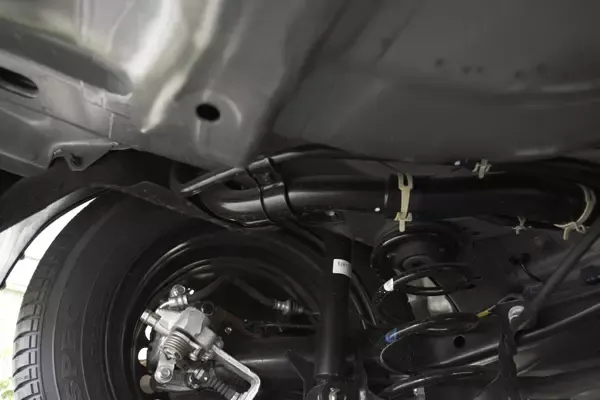
Undercoating is the sprayed application of a wax or rubber-based composite onto the entire underside of the vehicle. It's designed to create a rust-proof layer between the underside of the vehicle and the water, ice, and salt of the road. Undercoating provides a more comprehensive protective layer for your vehicle.Underbody coating is a thick cladding (typically made of rubber) that is placed uniformly to the car’s underside. When the automobile is fresh off the lot and spotless, it is usually sprayed or painted on. But it’s acceptable if you apply the undercoating after a couple of years. This is because it might protect the undercarriage from additional harm. Underbody coatings are those which are used to prevent car bodies against rust & corrosion. This underbody coating helps in protection from dust and moisture also some other factors such as poor road conditions, rocks getting thrown from tires and denting the metal and salt from water during monsoon which plays an important role in damaging the underbelly of a car.The underbody coating that is most commonly used on cars in India and supplied by companies such as 3M is a thick, rubberized paint that forms a 2-3 mm thick coating all along the underside of the car when sprayed on. You also get a thinner clear coat underbody coating which is like a lacquer that coats the entire underside of the car. Some even inject rust-preventive coating material into crevices such as the bottom of doors and door sills, to protect them from rust.Ideally any additional underbody coating should be applied when the car is brand new and clean. Car manufacturers use thick paints and sealants for the underbody, but adding an underbody coat especially in coastal cities is useful. Salt water tends to corrode cars really badly.On bad roads, flying stones and pebbles can chip off the original underbody coating and leave the metal exposed. Using an aftermarket underbody coating offer extra protection.Care must be taken while applying underbody coating.This undercoating paint if not applied properly, can get into moving mechanical parts and cause premature failure – such as into the U-joint or CV joints in a cars propeller shaft or drive shafts. They can also hinder smooth movement of suspension components, if applied incorrectly. And there’s also the risk of overspray on to the car’s paint finish on the lower edges of the car.It has a crucial function in preventing corrosion. Underbody coating is particularly useful if you live near the sea, where there is excessive humidity and rust is a common occurrence. If you live somewhere where it snows in the winter, you should seriously consider undercoating. During the monsoon season, cars are at high risk of getting corrosion. If you want to extend your car’s life you should get an underbody coating.
PURPOSE OF UNDERBODY COATING:
- Underbody coating provides long term protection from corrosion to car's underbody. It also protects parts like internal body panels, frame rails and other inner cavities that are not physically accessible but are prone to corrosion.
- It reduce road noise and also helps protect the underbody from road chips flying during driving. Usually if coated well with proper consistency it does help in road noise.
- Corrosion does more than affect the integrity of the metals in your vehicle. It can get into your metal wires and cables, affecting any component which is comprised of steel or aluminum.
- Undercoating covers the entire underside of the vehicle with a wax- or rubber-like chemical, giving you maximum protection. It also protects the undercarriage from nicks, dents, and dings from small road debris
- Good undercoating extends the life of your vehicle. Corrosion does more than affect the integrity of the metals in your vehicle. It can get into your metal wires and cables, affecting any component which is comprised of steel or aluminum.
- An undercoating protects the underside of the vehicle so you will get a longer life from your vehicle.
- Very strong undercoating, realize it or not, can attenuate noises that enter the cabin. The undercoating, which is frequently made of rubber, absorbs part of the rackets. The car’s occupants could avoid the road sounds — at least to some extent. So if you want a quite ride and pleasant experience it is always a good idea to consider getting an underbody coating.
- A good undercoat protects not just the underbody from corrosion, but also the engine and gearbox! Less corrosion combined with slower wear and tear can extend the life of your car by many years.
TYPES OF UNDERBODY COATING:
Underbody coatings are categorised into various types based on the type of material used and also the cost of the material.
- RUBBERIZED UNDER BODY COATING,
- POLYRETHANE UNDER BODY COATING,
- WAX OR PARAFFIN UNDER BODY COATING,&
- ASPHALT UNDER BODY COATING.
RUBBERIZED UNDER BODY COATING:
/
This is widely considered to be the best underbody coating for your car. It protects the underbody from scratches and keeps it properly. It’s also not difficult to apply this to the undercarriage. This can be done at the authorized service center or by the local repair shop at a reasonable price. Rubberized coating is ideal if you want to keep the road noise to a minimum and rust and corrosion away.
POLYRETHANE UNDER BODY COATING:
This covering seals breaks and fractures in the vehicle’s underbody. It provides strong corrosion resistance and also binds to the metal. Unlike an asphalt-based coating, the polyurethane coating may be painted over.
WAX OR PARAFFIN UNDER BODY COATING:
This transitory undercoating will, on the whole, fade away after a few months. On the plus side, wax-based undercoating is resistant to dampness. It is also the most cost-effective alternative.
ASPHALT UNDER BODY COATING:
This suitable for lorries, trucks, and other heavy vehicles. In comparison to rubber-based coatings, this gives a higher level of protection. Asphalt-based coatings, on the other hand, incorporate a small quantity of rubber for sound insulation. The application of this coating, however, takes some time.
PROS AND CONS OF UNDERBODY COATING:
- Undercoating is something a lot of people like to do with their vehicle to protect the underneath.
- Whether you live somewhere ice-melting chemicals are used or the roads are salted, or not, it’s still important to protect your car from rust and corrosion on the underside.
- Basically, undercoating refers to the vehicle exterior while rust-proofing refers to the inside.
VEHICLE UNDERCOATING PROS:
Protection against CORROSION and RUST;
Undercoating offers a layer of protection against corrosion and rust. Any debris will be repelled by the undercoating.
Extend the life of vehicle:
- It will extend the life of your car. Undercoating stops rust.
- Corrosion isn’t just about causing an issue with the metal under your car but it can also get into cables and wires – in fact anything made of aluminum or steel can be affected including the engine and transmission.
Cover small damages:
- You can undercoat damaged parts of the car such as scratches, chips and nicks caused by debris flying up as you drive.
- Modern undercoating can cover small areas of damage.
Reduce noise inside your car:
- Undercoating your vehicle can reduce noise inside the car while you’re driving.
- The coating creates a sound barrier meaning the interior of the car will be quieter.
It can do it yourself:
- You have the choice of undercoating your own vehicle or getting it done professionally.
- It is perhaps best to get the professionals to do it if you have the budget. It can cost more than $1500 at the shop depending on the type of car you have.
- Doing it yourself can reduce this cost by some 90% although it can be messy to do.
VEHICLE UNDERCOATING CONS:
It's not effective on cars with corrosion:
- If your vehicle already has some corrosion it isn’t as effective.
- An undercoat will slow down the corrosion rather than reverse or stop it. You should attempt to remove the rust before applying an undercoat.
- This isn’t always easy though, since rust can penetrate deeply into the metal, so encapsulating the rust and then applying an undercoat could be a waste of money.
Doesn't works so well on old cars:
- Undercoating doesn’t work so well on old cars because the residue from under the car has to be removed before the undercoating is applied.
- If you don’t remove the debris first, the already-present debris will be sealed in.
It makes your vehicle heavier:
- It makes the vehicle 10 to 20 pounds heavier which affects fuel economy (how far you can travel on one tank of gas).
- This is negligible in terms of fuel costs but still something to bear in mind.
It can be damaged:
- Undercoating can be damaged.
- Although you can expect a hard layer of protection against debris, driving on dirty or gravel roads often means the protective layer’s integrity will be reduced over time.
It can be expensive:
- Reapply it every 3 to 5 years. This is the only way to ensure your vehicle is protected properly.
- Since it can cost $1500 to get the undercoating professionally applied, this is quite a big cost to do it regularly.
THANK YOU
YOUR'S SINCERELY
P.AVINESH (B.E)