Underbody Coating
Underbody Coating:
Underbody coating provides long term protection from corrosion to car's underbody. It also protects parts like internal body panels, frame rails and other inner cavities that are not physically accessible but are prone to corrosion. Hence the coating provides a long term protection to the parts exposed at the underside of a car from corrosion. Underbody coating is highly important as it is difficult to maintain the underside of a vehicle as there are a lot of unreachable areas that are not accessible for cleaning. In such scenarios such coating restricts the need to clean frequently.
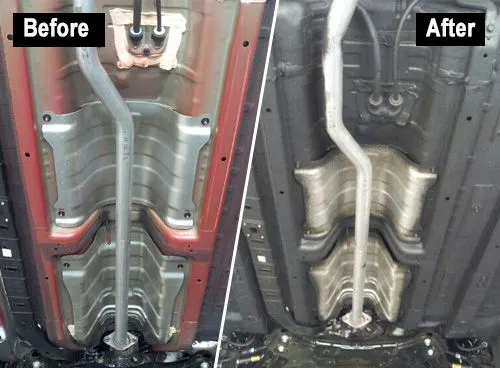
-
Types:
Underbody coatings are categorised into various types based on the type of material used and also the cost of the material.
Rubberized underbody coating:
These coatings are easy to apply and offer sound-proofing as well as protection from dust, moisture and dents. The coatings are safe even to use on wheel wells and quarter panels and when it is dried forms a soft rubbery finish that prevents further rust and moisture seep.
Polyurethane underbody coating:
This type of undercoating is a lit a bit quicker and easy to apply. This type of undercoating often comes in a canister ready to preload into application gun. This type of undercoating always requires surface preparations before applying.
Wax or paraffin-based underbody coating:
Wax or paraffin-based undercoating will be the cheapest and quickest option available in the market. But these coatings last only for one year of duration.
Asphalt-based underbody coating:
The above-mentioned undercoating is mainly used for light commercial vehicles. For vehicles such as trucks, buses, vans etc. asphalt-based undercoating is used for sufficient protection against rock chips and moisture. These asphalt-based undercoatings have a little bit of rubberised material that set up firmly and also helps in reduction in noise.
-
Advantages of Underbody Coating:
- It provides protection against corrosion by avoiding contact of water that can be splashed from the wheels during travel with the metal parts underneath the car.
- Very thick undercoating can soften the noises that reach the cabin. Since the undercoating is often made up of rubber it absorbs some of the outside noise. The occupants of the car could spare themselves of the road noises up to certain extend.
- It will offer additional reinforcement, protecting the underbody from water, road debris, gravel and small pebbles.
- Good undercoating not only defends the underbody from corrosion but also protects the engine and transmission as well. Less rusting coupled with slower wear and tear adds extra years to the lifespan of the vehicle.
Disadvantages of Underbody Coating:
- It works best only on a new car as a used vehicle may already have residue on the bottom of the car or even have spots of rust and corrosion. Undercoating will not help if corrosion already exists and the corrosion needs to be removed first before it can be applied, which can be expensive.
- The biggest drawback is the cost. Car dealership often charge quite a lot of money to undercoat a car, and for someone financing a new car purchase, this can add too much to the final purchase price.
- Although not significantly, an underbody coating can add extra weight to the vehicle thus reducing the mileage offered by it.