Underbody Coating
Under body coating:
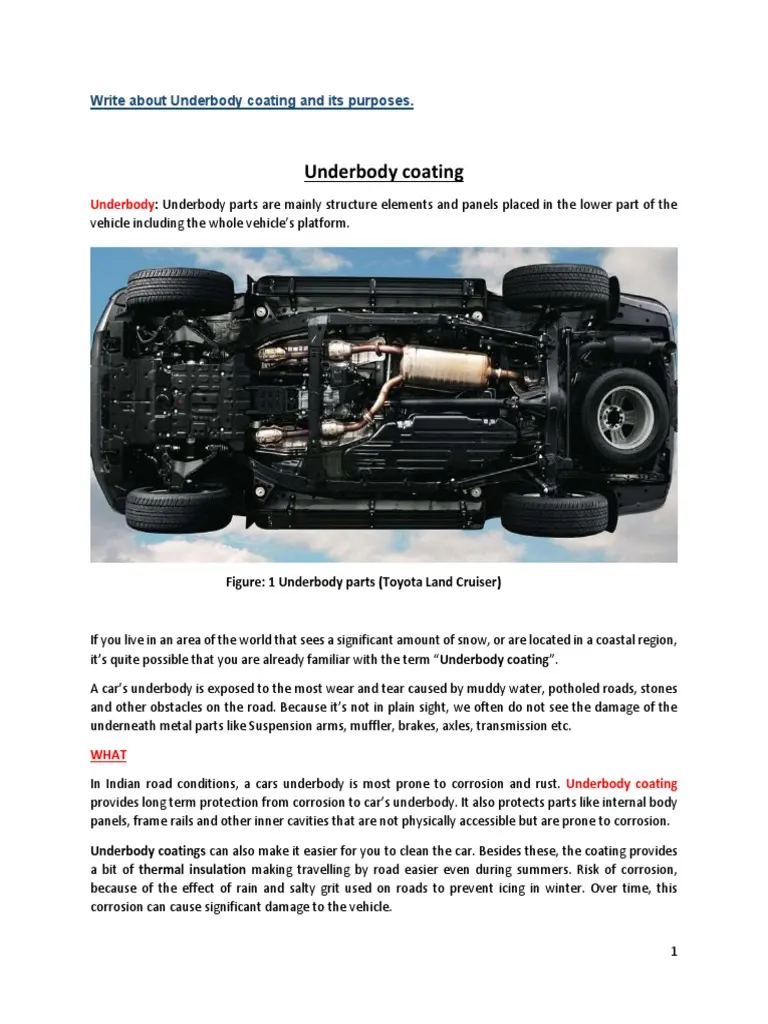
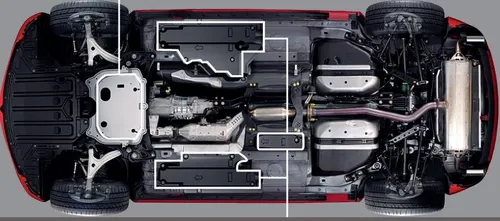
In automobile now a day has abecome the importance need of human being.So it is importancetotake proper care of the automobile in order to function neathly. Cars underbody is most prone to corrosion. Underbody coating provides long term protection from corrosion to car's underbody. It also protects parts like internal body panels, frame rails and other inner cavities that are not physically accessible but are prone to corrosion.
Under body protective coating is used to protect the vehicle chassis from external environment, to ensure the integrity and safety of car. The use of underbody coating plays a very important role in the service life of the vehicle. In general, it is required to spray such a protective coating in the manufacturing of the new car. Due to the highly competitiveness of new car sales, car producers have pressure to reduce the manufacturing cost, so that they reduce or even completely eliminate the use of under body coating where it is not to be easily seem by car owners. As a consequence, our car service life will be greatly reduced.
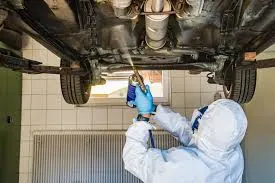
The main purpose of undercoating is to checking especially in the body components like frame ralls along with other exposed metaal parts.underbody coating can also reduce wear and tear.
Benefits
Minimizes Sound: It minimizes the sound from underneath the car resulting a noiseless, smooth driving experience.
Heat Insulation: It insulates the interior of the car from extreme temperatures from beneath the vehicle providing a comfortable cabin experience.
Anti-chipping property: If any stone hits the coating it does not get chipped away hence protects the underbody from exposure to water.
Types of underbody coating
Rubberized undercoating:
It is easy to apply and offers sound-cushioning as well as protection from dust, moisture, and dings or dents.It is rubberized undercoating is also safe to use on wheel wells and quarter panels, and dries to a soft rubbery finish that prevents further rust, damage, or moisture seeps. The coating can be painted over and, if necessary for bodywork, can be easily removed with an undercoating removal spray.
polyurethane undercoating:
This type of vehicle undercoating is a little bit quicker and easier to apply. This type of sealant works by seeping into all cracks and seams, displacing salt and moisture and oozing around rusty areas to bond with and protect unoxidized metal. It also sands quickly in case you'll need to perform bodywork and can be painted over.
Wax-based undercoatings:
A wax-based undercoating will be the cheapest and quickest option available with which to protect the undercarriage of your vehicle. They are usually available in a spray gun canister or in an aerosol can and offer at least a base protection in moderately humid climates.
Asphalt-based undercoating:
- For standard vehicles, any of the aforementioned types of undercoating will provide sufficient protection. For large trucks and heavy machinery, asphalt-based undercoating provides a bit of extra durability against rocks, chips, and moisture.
- Asphalt-based undercoating generally contains a little bit of rubberized material that sets up firmly and also helps soften noise.
Advantage:
It is preventing from car body from rusting:
It is importance roles in keeping corrosion at bay.When an undercoating is properly applied to a vehicle, then you’ll be providing the underbelly with a layer of protection against rust and corrosion.
Reduce the interior noise :
When you’re driving, the sounds of the road can be loud. For lightweight vehicles, noise pollution can be overwhelming to the driver in some situations. Applying a layer of undercoating creates a barrier against the sound, which creates an interior that is noticeably quieter. After the service is performed, many drivers notice that audio levels are noticeably lower inside their vehicles.
It will extend the life of your vehicle:
A proper undercoating extends the life of your vehicle because of its rust-stopping power. Corrosion does more than affect the integrity of the metals in your vehicle. It can get into your metal wires and cables, affecting any component which is comprised of steel or aluminium. Even your transmission and engine have exposure to rust when there isn’t a vehicle undercoating applied.
Disadvantages:
- It is very costly to do underbody coating.
- Undercoating will not help you if corrossion already exists and the corrossion needs to be removed first before it can be applied.
- Increse the weight of vechicle.