Underbody Coating
UNDERBODY COATING
- Undercoating simply refers to a defensive layer of specific materials that is applied to the underpart of vehicles for protection from mold, moisture, dust, rot, and all the other road scraps.
- Undercoating and rust-proofing are examples of offering protection and care to the underbelly of your vehicle. Even if you live in a warm climate where salt or ice-melting chemicals are not used on roadways, it is essential to protect against corrosion and rust on the underside of the car, truck, or SUV.
- Even though the terms are used interchangeably, an undercoating applies to the exterior of the vehicle. Rust-proofing goes inside the vehicle. If you’re unsure of the service being provided, ask where the application will be.
TYPES OF UNDERBODY COATING
Based on materials there are several types of vehicle undercoating such as-
- Rubberized
- Polyurethane
- Asphalt
- Wax/paraffin
RUBBERIZED
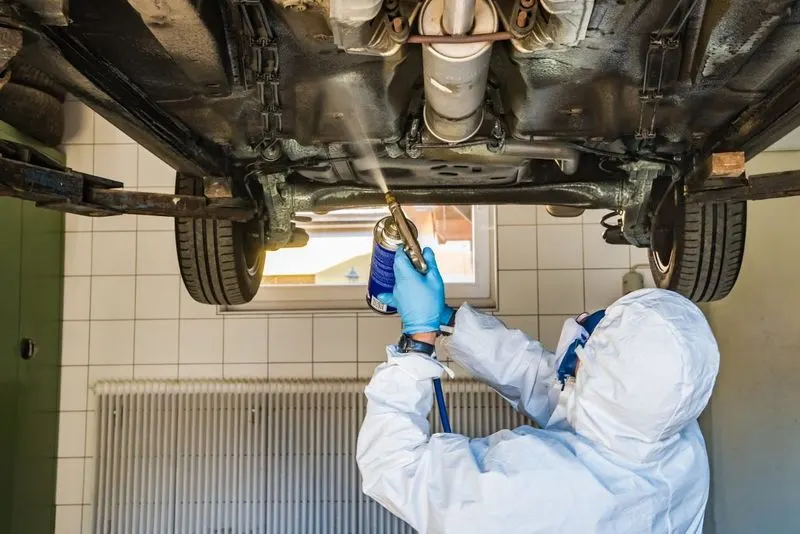
Underbody coating is usually a dense cladding (often based on rubber) applied uniformly to the undercarriage of the automobile. It is normally sprayed or painted on when the car is just out of the dealership and is clean. But even if you are getting the undercoating applied after a couple of years, it's fine too
The main purpose of undercoating is to check rust especially in the body components like frame rails along with other exposed metal parts. Underbody coating can also reduce wear and tear.
POLYURETHANE
This coating closes up splits and fractures on the underbody of the vehicle. It offers up good protection against corrosion and also bonds with the metal. Unlike in the case of asphalt-based coating, you can paint over the polyurethane coating..
Two component polyol/polyisocyanate composition useful in forming an abrasion resistant polyurethane automotive undercoating. The polyol component is unmodified castor oil or castor oil modified with cyclohexanone-formaldehyde condensate. The modified castor oil may be further modified by adding the reaction product of neopentyl glycol and adipic acid.
ASPHALT
Best suited for lorries, trucks and large vehicles this provides a greater degree of protection compared to rubber-based coatings. However, asphalt-based coatings contain little amounts of rubber for sound-insulation purposes. The process of applying this coating is a bit time-consuming though.
WAX/PARAFFIN
This more or less ephemeral undercoating will wear away in a few months’ time. On the upside, wax-based undercoating puts up a big fight against moisture. It is also the most affordable option out there.
PROS OF UNDERBODY COATING
- Fights Rust
- Absobs Noise
- Reinforcement
- Prolong Car's life
CONS OF UNDERBOAY COATING
- High Cost
- Risk Of damage during Application
- Not highly Effective on a Used Vehicle (because residue on the surface can already be present)