Underbody Coating
UNDERBODY COATING PROCESS IN A CAR
Vehicle undercoating is a process used to protect the vehicle from rust proofing and the damages occurred due to sand, gravel, road salts, and other stain, while it also helps to reduce the road noise. With proper under coating, we can extend the life span of the vehicle.
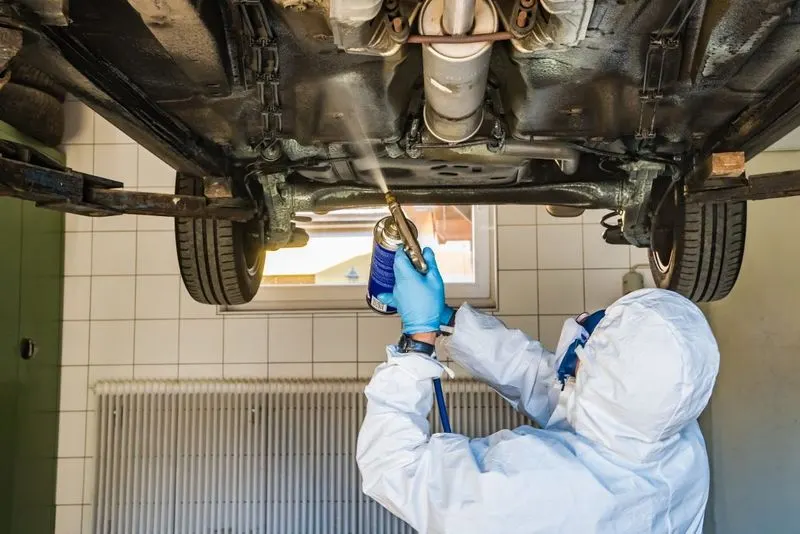
Underbody coating is an application of spraying wax or rubber-based composite onto the whole underside of the vehicle. It's designed to create a rust-proof layer between the underbody of the vehicle and the water, ice, and salt of the road. Undercoating provides a more comprehensive protective layer for the vehicle.
Why do we use underbody coating in a car. Is it necessary?
If we take as a condition in Indian road, the underbody of the car is most liable for the corrosion. Underbody coating provides long term protection from corrosion to car's underbody. It also protects parts like internal body panels, frame rails and other inner cavities that are not physically accessible but are prone to corrosion. Although the Car manufacturers use thick paints and sealants for the underbody but adding an underbody coating especially in the coastal cities is more useful. Salt water tends to corrode the cars really badly.
TYPES OF UNDERBODY COATING
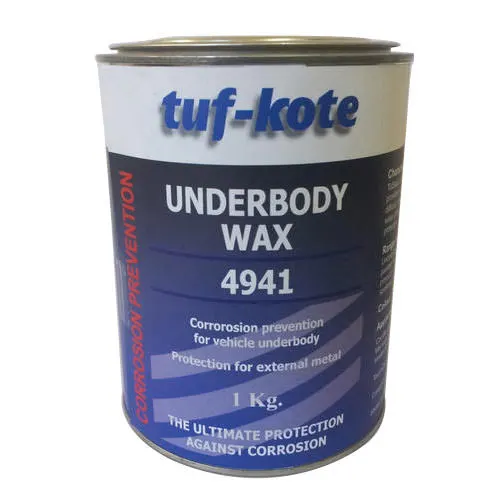
1.WAX OR PARAFFIN-BASED UNDER COATING
It is the preferred underbody coating for the cars often driven on highways and normal roads. Sometimes referred to as wax-based undercoating, it provides sufficient guard for cars in fairly moist regions. But they are not truly hardened, during spraying there is a chance to drip or flow into seams and to form cracks on the body. They are usually available in a spray gun canister or in an aerosol can and offer at least a base protection in moderately humid climates.
 |
 |
|
Advantages
|
|
Disadvantages
|
2.RUBBERIZED UNDER COATING
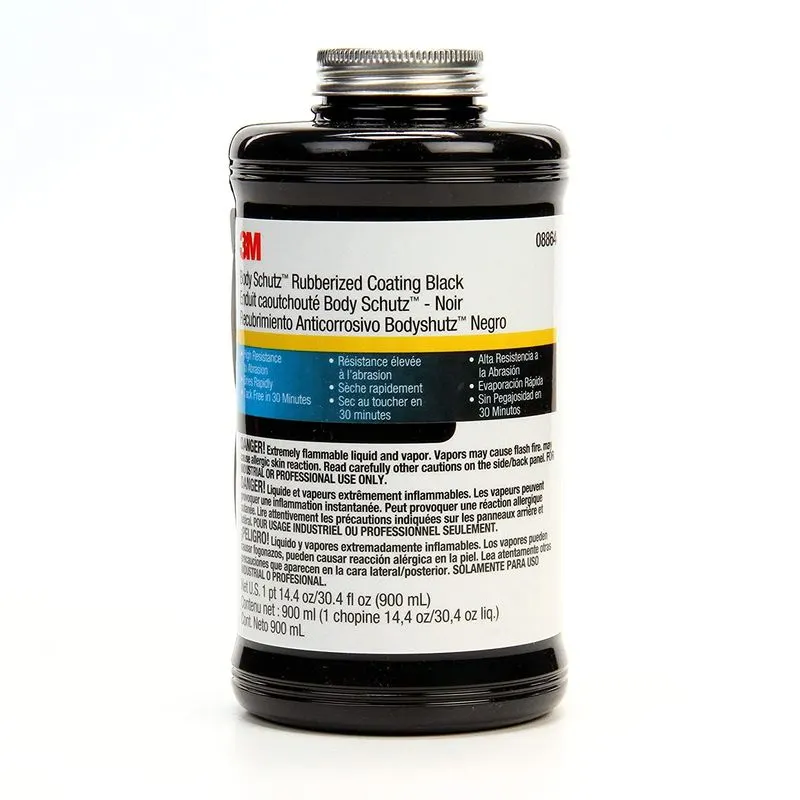
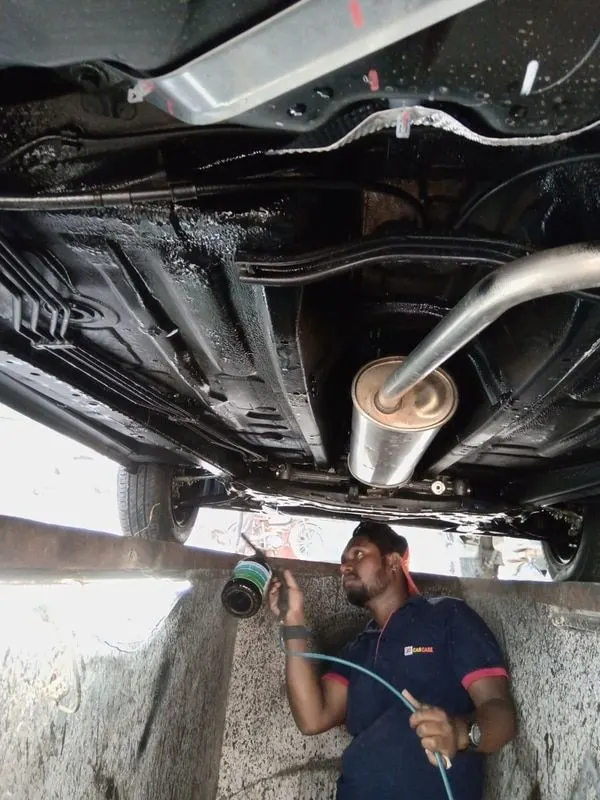
Rubberized under coating is an undercarriage coating which involves applying a rubber agent to the lower side of the car to protect and cushion it against dents, dust, and moisture. It can also be applied around wheels and quarter panels well. It is considered as the best option for standard vehicles when it comes to the different types of undercoating.
 |
 |
|
Advantages
|
Example for Rubberized coating:
- 3M 3584 Professional Grade Rubberized Undercoating
- Rust-Oleum Black Rubberized Undercoating
- 3M Body Schutz Rubberized Coating Black
- SEM 40523 Low Voc Rubberised Undercoating Aerosol
3.POLYURETHANE COATING
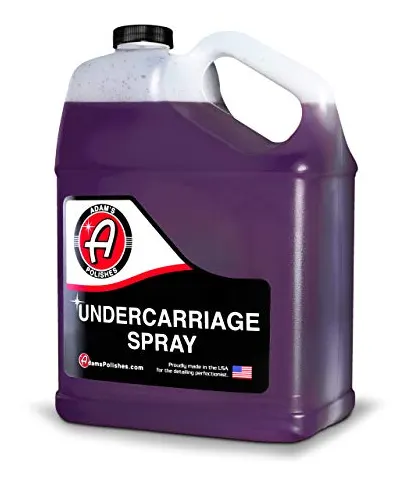
Polyurethane undercoating is a two-pack modified coating by the chemical reaction of polyfunctional acrylic and isocyanate. This coating closes up splits and fractures on the underbody of the vehicle. It gives good protection against corrosion and also bonds with the metal. Unlike in the case of asphalt-based coating, we can paint over the polyurethane coating.
Using a polyurethane-based sealant that comes in canisters ready to be loaded into a spray gun and sprayed to guard the undercarriage of the vehicle. The polyurethane used in this product is a high-quality and durable material that is perfect for any weather condition. It is ideal for standard vehicles.
|
Advantages:
|
Example for polyurethane underbody coating is Adam’s SiO2 Infused Invisible Undercarriage Dressing Spray
4.ASPHALT-BASED UNDER COATING
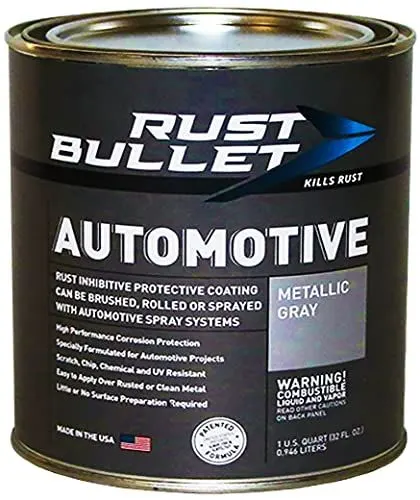
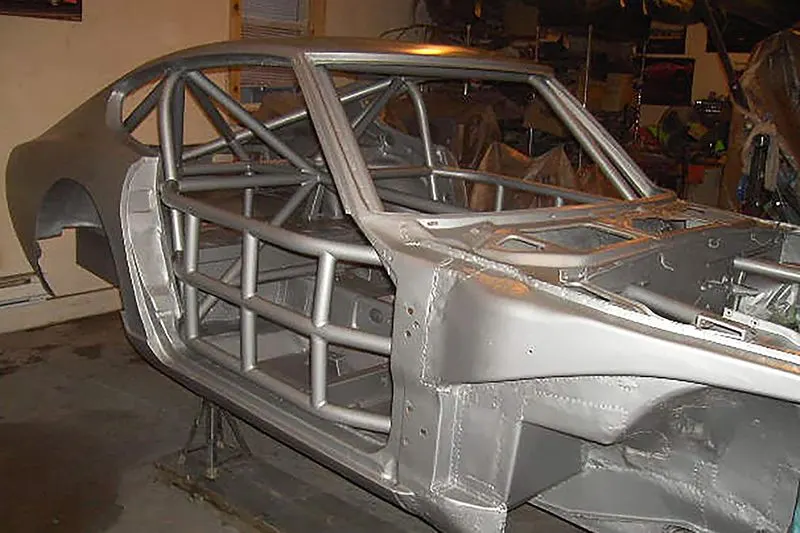
Asphalt is a petroleum-based underbody coating process. Asphalt is made from petroleum. Crude petroleum is separated into its various fractions through a distillation process at the oil refinery. After separation, these fractions are further refined into other products which include asphalt, paraffin. It is best suited for lorries, trucks and large vehicles and also provides a greater degree of protection compared to rubber-based coatings. However, asphalt-based coatings contain little amounts of rubber for sound-insulation purposes.
 |
 |
|
Advantages:
|
|
Disadvantages:
|
PROS:
- Helps to reduce the interior noise.
- It can be self-applied
- Protect the underbody from corrosion and rust.
- Extend the life of vehicle.
CONS:
- It increases the weight of the vehicle.
- Less helpful if corrosion already exist.
- Expense is too high.