Underbody Coating
AUTOMOTIVE COATING - INTRODUCTION
Automotive coatings continue to evolve as they either satisfy or are anticipated to meet customer expectations and environmental regulations while also lowering manufacturing and ownership costs. One of these evolutions is in the use of smart coatings because they offer the potential to significantly improve surface durability while adding additional functionalities or properties like self-healing, super-hydrophobicity, self-stratifying, self-sensing, soundproofing, and vibration damping.
UNDERBODY COATING
MODERN AUTOMOTIVE COATING PROCESS
Modern automotive coating methods consist of five main steps. They include the following:
- Pre-treatment: removes and cleans excess metal and forms an appropriate surface structure enabling bonding of a corrosion protection layer.
- The next step is electrodeposition (ED) of the anti-corrosion or rust prevention layer.
- A sealer like Poly Vinyl Chloride (PVC) is applied for anti-corrosion, elimination of water leaks, and minimization of chipping and vibrational noise.
- A primer is then applied to promote adhesion between the surface and the basecoat; it also imparts a smoother surface for subsequent layers and has anti-chipping properties.
- Finally, the topcoats that include a basecoat and clear coat are applied; they provide surface properties that are sought after, including color, appearance, gloss, smoothness, and weather resistance
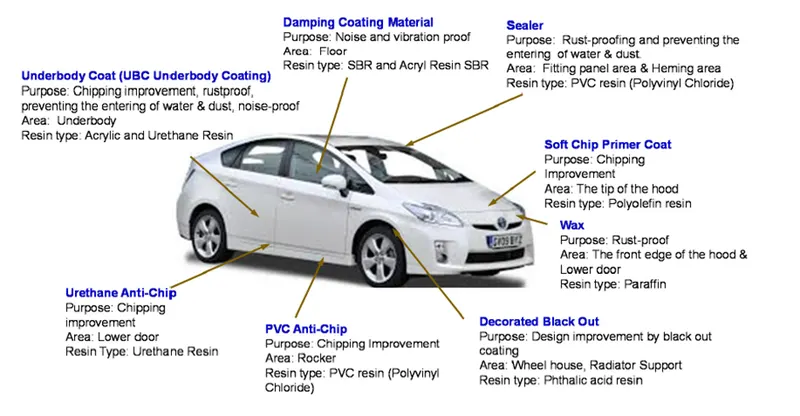
Fig 1: Summary of coating area for specific tasks
PRETREATMENT
When the automotive body sheet metal components are welded together, the resulting structure is referred to as Body-in-White (BIW). The first sequence in preparing the BIW for subsequent coating is pretreatment. Pretreatment consists of cleaning the body surface to remove remaining oils from the stamping process of degreasing, conditioning, and phosphating.
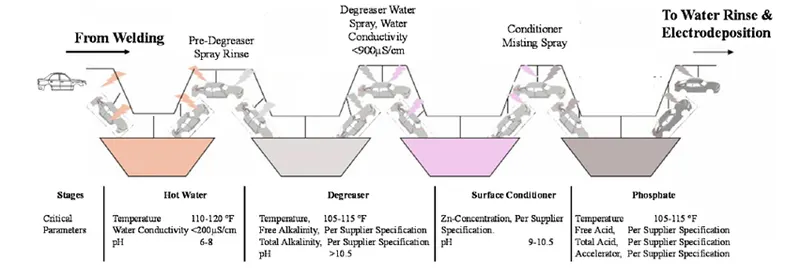
Figure 2: Pretreatment sequences in Body-in-White
ELECTRODEPOSITION
The metal underbody and frames of automobiles are coated to prevent corrosion, whereas other areas like the roof are not rust‐proofed. When not coated to prevent corrosion, the structural metals (or other materials) are primed before applying additional coatings. Figure 3 displays types of corrosion protection coatings for cold rolled steel
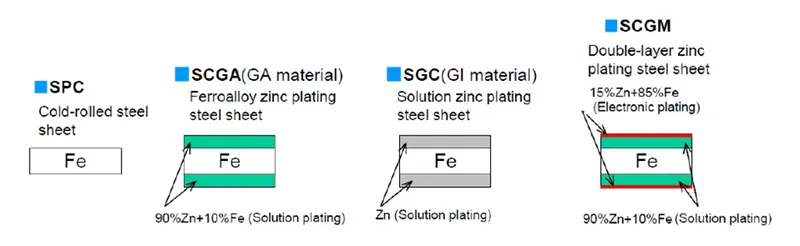
Figure 3: Various types of steel sheets for car body
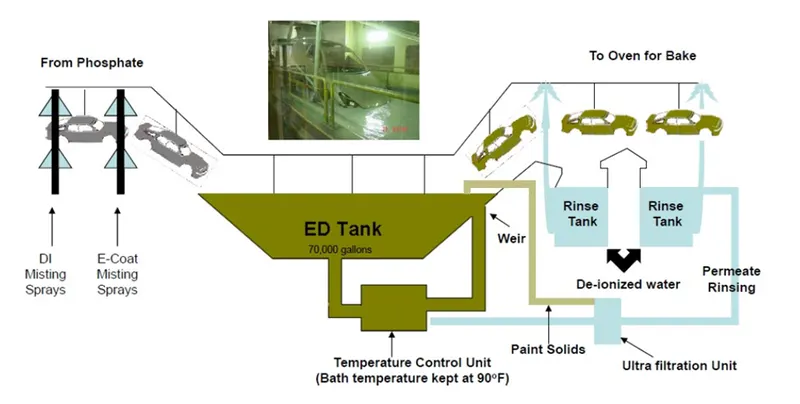
Figure 4: Electrodeposition coating process
RUST-PROOF MATERIALS: SEALER/PVC
The third step is underbody coating & seam sealing using PVC. Fig.5 displays the lower door sections & rocker panel locations where PVC or urethanes are applied as anti-chipping protection, & shows the cross-section of this layer with respect to the other coatings on the body parts.
During this third step, it is also typical to apply a soft tip primer coat that improves the chipping resistance . This layer is applied to the front edge of the hood, which is an area prone to chipping shock, using a high elastic resin that resides between the ED & primer coats. Also, during the third step, the radiator supports, wheel housing, & under rar areas of the body are coated with a relatively dull black pigment called a blackout coating.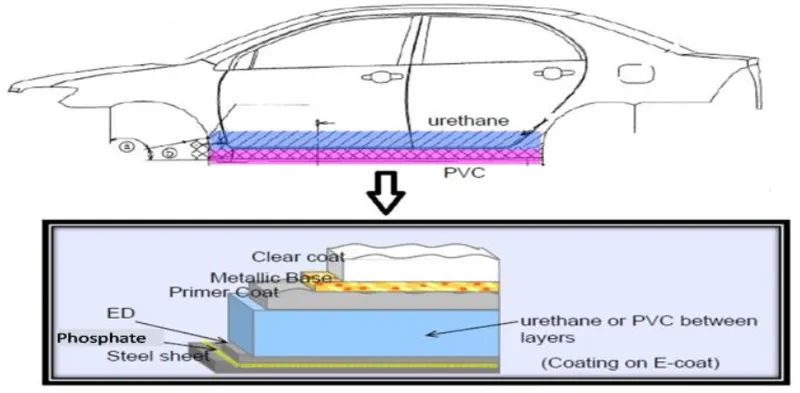
Fig 5: Underbody coating process