Underbody Coating
Automotive Under Body Coating
Aim:
To understand the purpose and need for underbody coating
BIW coating process:
Modern automotive coating methods consists of five main steps. They include the following:
- Pre-treatment
- Electrodeposition
- Rust proof material: Sealant/PVC (Under body coating)
- Primer
- Top coat
- Base coat
- Clear coat
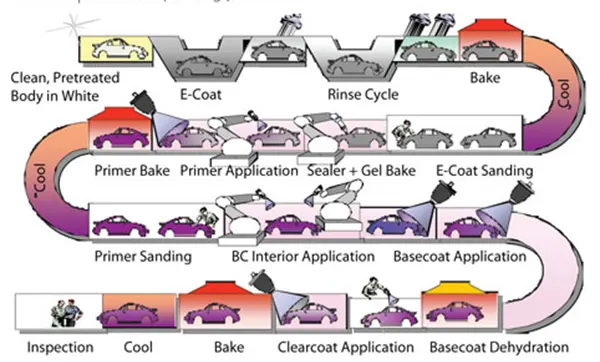
Under Body Coating:
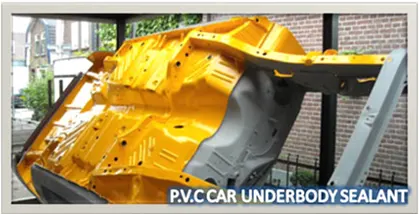
Underbody coating provides long term protection from corrosion to car’s underbody, which occurs due to oxidation of metal. It also protects parts like internal body panels, frame rails and other inner cavities that are not physically accessible but are prone to corrosion. Under body coating normally applied on Front floor, Side extension member front, extension member rear and front sill, wheel house and etc., Underbody coating thickness varies from 0.1 micron to 9 mm depending upon the pricing of the car. In sometimes all the weld points will be closed with this sealant.
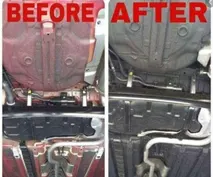
Different Types of Vehicle Undercoating
Having undercoating professionally applied to your vehicle can be expensive, but fortunately, if your budget is tight, you can do it yourself for a fraction of the price. Here are some of the various types of undercoating available.
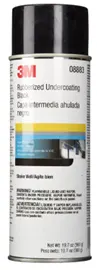
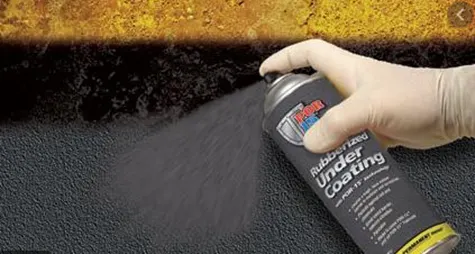
1.Rubberized Undercoating
Rubberized vehicle undercoating is easy to apply and offers sound-cushioning as well as protection from dust, moisture, and dings or dents.
In addition to your undercarriage, rubberized undercoating is also safe to use on wheel wells and quarter panels, and dries to a soft rubbery finish that prevents further rust, damage, or moisture seeps. The coating can be painted over and, if necessary for bodywork, can be easily removed with an undercoating removal spray.
Overall, rubberized coating is generally the best option for protecting your vehicle's undercarriage, as it provides the simplest and best protective measures against rust and moisture.
Web link: https://www.youtube.com/watch?v=nXvl9nt57Kg&t=5s
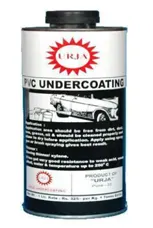
2.Polyurethane/PVC Undercoating
The other option for undercoating your vehicle is to use a polyurethane-based sealant. This type of vehicle undercoating is a little bit quicker and easier to apply.
Oftentimes, polyurethane undercoating will come in canisters ready to preload into an application gun. This type of sealant works by seeping into all cracks and seams, displacing salt and moisture and oozing around rusty areas to bond with and protect un-oxidized metal. It also sands quickly in case you'll need to perform bodywork and can be painted over.
On the flipside, this type of car undercoating generally requires a little bit more surface prep work before applying -- sanding and applying an etching primer to bare metals before using are generally recommended.
3.Wax or Paraffin-Based Under coatings
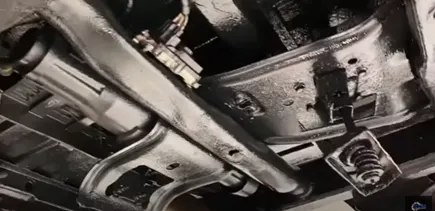
A paraffin-based undercoating will be the cheapest and quickest option available with which to protect the undercarriage of your vehicle. However, keep in mind that it will wear off quicker than other types of undercoating and will need to be stripped and reapplied at least once every year.
Wax-based under coatings never truly harden. During application, they drip or flow into seams and cracks to provide protective properties. They are usually available in a spray gun canister or in an aerosol can and offer at least a base protection in moderately humid climates.
Web link: https://www.youtube.com/watch?v=W06WX6JRGM8
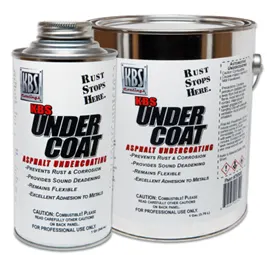
4.Asphalt-Based Undercoating
For standard vehicles, any of the aforementioned types of undercoating will provide sufficient protection. For large trucks and heavy machinery, asphalt-based undercoating provides a bit of extra durability against rocks, chips, and moisture.
Asphalt-based undercoating generally contains a little bit of rubberized material that sets up firmly and also helps soften noise. Generally sold in five gallon containers, this type of undercoating also needs more cure time than the other three, and is NOT paintable, making it best to use only for undercarriages.
Advantages:
• Minimizes Sound: It minimizes the sound from underneath the car resulting a noiseless, smooth driving experience.
• Heat Insulation: It insulates the interior of the car from extreme temperatures from beneath the vehicle providing a comfortable cabin experience.
• Anti-chipping property: If any stone hits the coating it does not get chipped away hence protects the underbody from exposure to water.
• Extends Vehicle Lifespan: The biggest advantage of undercoating products is the protection against corrosion for longer periods of time. Most of them can last for up to 5~6 years, which helps reduce rust and thus extends the lifespan of your vehicle.
Disadvantages:
- Expensive Procedure: The biggest “con” of an undercoating or rust proofing sprays is the cost. However, Automotive industries are trying to give cheaper under body coating to there customers. Web link:https://www.mycarhelpline.com/index.php?option=com_easyblog&view=entry&id=552&Itemid=91

- Added weight: Although the amount of weight added to a vehicle with an undercoating is minimal (between 5 to 10 kg for most vehicles), there is an element of fuel economy to consider. When your vehicle weighs more, the distance you can travel on a single tank of fuel is reduced. The undercoating might reduce your efficiency by up to one mile per gallon, which creates an additional fuel cost over time that is worth considering.
- Risk of damage during application: Care must be taken while applying underbody coating. This thick rubberized paint if not applied properly, can get into moving mechanical parts and cause premature failure – such as into the U-joint or CV joints in a cars propeller shaft or drive shafts. They can also hinder smooth movement of suspension components, if applied incorrectly. And there’s also the risk of overspray on to the car’s paint finish on the lower edges of the car.
Conclusion:
About under-body coating, its types and its pros and cons were successfully studied.