Underbody Coating
What is an Automotive Underbody coating:
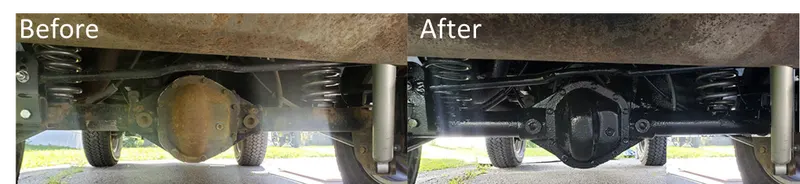
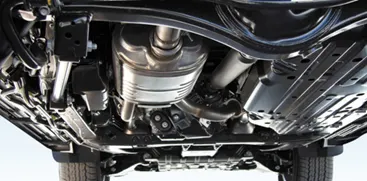
Underbody coating is usually a dense cladding (often based on rubber) applied uniformly to the lower part of the automobile. Basically, Automotive underbody coating protects a vehicle from everything the road can throw at it, and moreover, they provide a layer of protection between a vehicle’s more vulnerable underside and damaging forces such as corrosion and moisture ingress. It is normally sprayed or painted on when the vehicle is just out of the dealership and is clean. To prevent the car from further damage, Underbody coating can be applied frequently based on the condition of the undercarriage
Types of Underbody Coating:
Automotive underbody coating can be applied as part of the manufacturing or it can be an aftermarket product. Most commonly these coatings are bitumen, resin, and wax based. The most suitable coating type is dependent on the required degree of protection, and the elements to the car underside are likely to be exposed.
1. Wax-based: An excellent anti-rust coating suitable for all substrates. The wax is applied soft and cures hard, either by brush or spray and can be layered thickly. It cannot be top-coated.
2. Bitumen-based: These car underbody coatings provide hard-wearing protection against stone chip damage and corrosion. They also have sound-deadening properties. Suitable across many substrates, but cannot be painted over. Can be applied by brush or spray, is a high build, and is good for very tough conditions such as off-road.
3. Resin-based: Polyurethanes and rubber coating are popular because their elastomeric properties provide long-term stone chip damage and corrosion protection as well as sound deadening effects. These also have the benefit of being suitable for a wide range of substrates and they can be painted over. Can be spray-applied, high build, and particularly good for salted roads.
The most common of all is the Polyurethane based underbody coat. The selection of material is done based on some of its inherent properties, its adherence behavior, and also the environmental conditions through which the car underbody will go. Underbody sealants are required to remain tough and flexible at temperatures as low as −40C, and they must adhere to the material making up the underbody, including the anodic and cathodic protection on the car body.
Pros and Cons of an Underbody Coating:
Pros:
- Sound/noise cancellation: It minimizes the sound from underneath the car resulting in a noiseless, smooth driving experience.
- Insulation from heat: It works as an insulator for the interior of the car from extreme(lower to higher) temperatures the underbody of a car is going through and provides a comfortable cabin experience.
- Anti-chipping property: If any stone hits the coating it does not get chipped away hence protects the underbody from exposure to water.
- Corrosion prevention: It prevents the lower part of the car body protected from getting corroded, hence making the life of the vehicle longer.
Cons:
- It is a frequent maintenance process, required to be done periodically, depending on the length of time it is exposed to the environment types.
- It is not effective much if the coating is done after the corrosion has already happened.