Underbody Coating
What is an under-body coating?
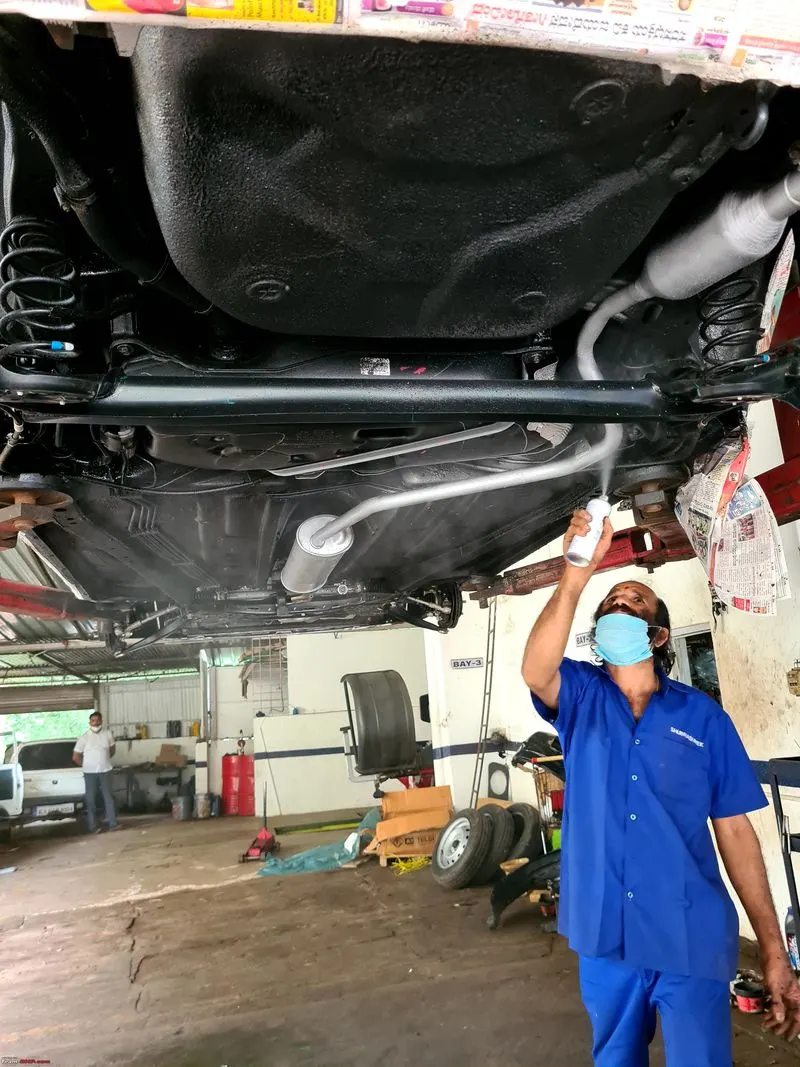
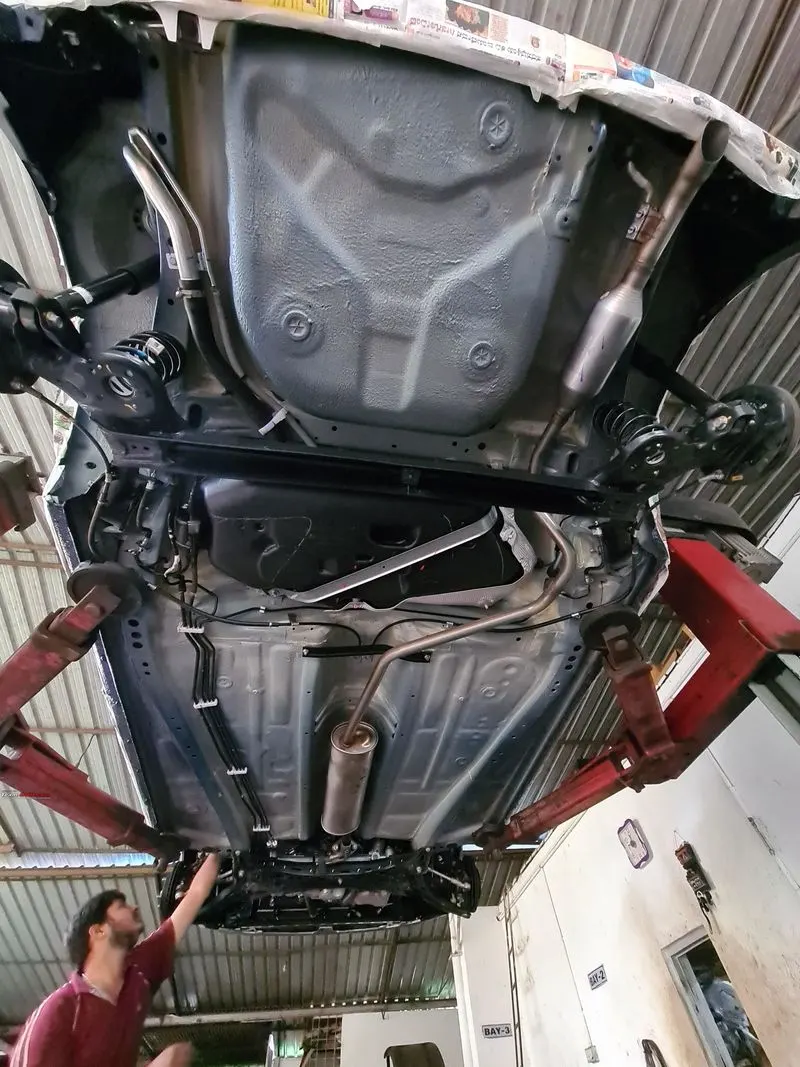
Underbody coating is a thick covering (usually composed of rubber) that is applied consistently to the underneath of a vehicle. When the car is brand new and clean, it is frequently sprayed or painted on. However, if the undercoating is applied after a couple of years, it is okay. This is because it may protect the undercarriage from further damage. Undercoating protects cars from rust and corrosion. The below image shows the undercoating paint job is undergoing.
There are 5 different types of undercoating as follows:
- Rubberized Undercoating.
Rubberized car undercoating is simple to apply and provides sound insulation as well as protection against dust, moisture, and dings or dents.
Rubberized undercoating is safe to apply on wheel wells and quarter panels, as well as your undercarriage, and dries to a soft rubbery texture that prevents further rust, damage, or moisture leaks. The coating may be painted over and quickly removed with an undercoating remover spray if necessary for bodywork.
Overall, the rubberized coating is the greatest option for preserving your vehicle's undercarriage since it offers the easiest and most effective protection against rust and moisture.
- Polyurethane Undercoating
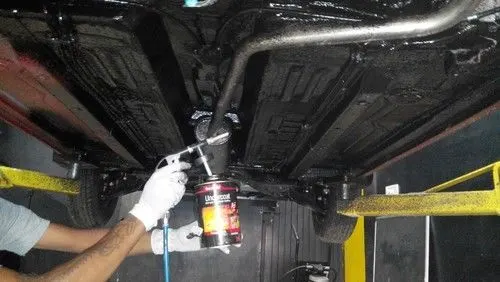
A polyurethane-based sealer is another choice for undercoating your car. This form of car undercoating is faster and easier to apply.
Polyurethane undercoating is frequently supplied in canisters that are ready to load into an application gun. This form of sealant bonds with and protects unoxidized metal by seeping into all cracks and seams, removing acid and moisture, and oozing around rusty areas. It also sands rapidly and may be painted over if the bodywork is required.
On the other hand, this sort of automotive undercoating usually necessitates a little more surface prep work before application, such as sanding and applying an etching primer to exposed metals.
- Wax or Paraffin-Based Undercoating
A paraffin-based undercoating will be the cheapest and quickest solution for protecting your vehicle's underside. Keep in mind, however, that it will wear out faster than other forms of undercoating and will need to be stripped and redone at least once a year.
Undercoating based on wax never completely hardens. They leak or run into seams and cracks to give protective characteristics during application. They often come in the form of a spray gun canister or an aerosol can and provide at least basic protection in fairly humid conditions.
- Asphalt-Based Undercoating
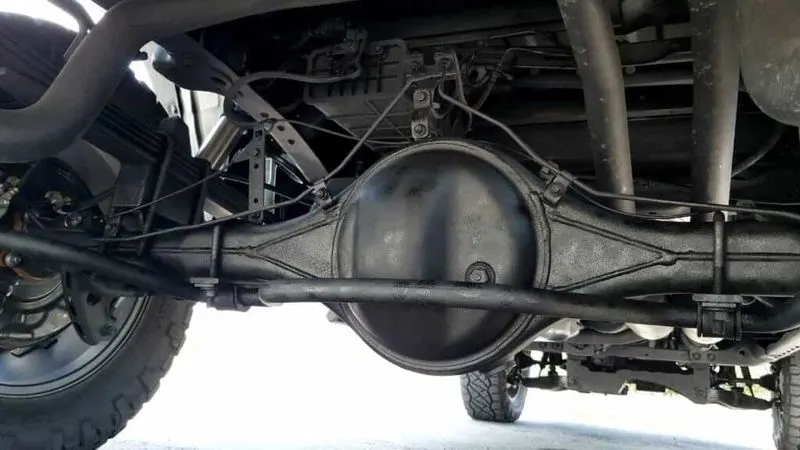
Any of the aforementioned undercoating types will provide adequate protection for standard vehicles. Asphalt-based undercoating provides extra durability against rocks, chips, and moisture for large trucks and heavy machinery.
Asphalt-based undercoating typically contains a small amount of rubberized material, which helps it set up firmly and softens noise. This type of undercoating requires more cure time than the other three, and is NOT paintable, making it best suited to use only on undercarriages.
- E-Coating
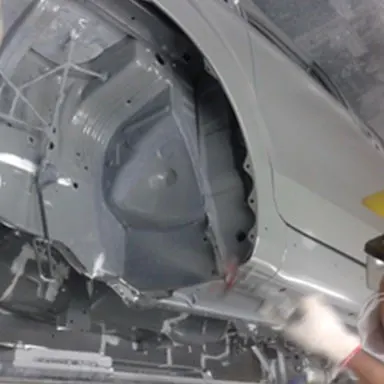
Electrocoating is the process of depositing electrically charged particles from a water suspension onto a conductive part. During the electrocoat process, paint is applied to a part at a specific film thickness that is controlled by the voltage applied. As the applied coating electrically insulates the part, the deposition becomes self-limiting and slows. Electrocoat solids first deposit near the counter electrode, and as these areas become insulated from current, solids are forced into more recessed bare metal areas to provide complete coverage. This is known as throw power, and it is an important aspect of the electrocoat process.
Pros:
- Fight Rust
- Absorbs Noise
- Reinforcement
- Prolong car's life
- Prevents stone chip damage
- Protects from corrosion
- Prevents water ingress
Cons:
- Less effective if corrosion already exists
- Works well on the new vehicle
- Not impervious to damage
- Need to reapply every 2-3 years