Study of specifications of lithium ion cells.
Aim:
To study specifications of lithium ion cells.
Objectives:
01.
To study the difference between nominal voltage and maximum voltage?
02.
To study dimensions and weight of a cell.
03.
To study various mechanical testing and standards.
04.
To study the discard procedure suggested generally for used Li ion+ batteries?
Introduction:
What is battery?
A battery is a source of electric power consisting of one or more electrochemical cells with external connections for powering electrical devices such as flashlights, mobile phones, and electric cars. When a battery is supplying electric power, its positive terminal is the cathode and its negative terminal is the anode. The terminal marked negative is the source of electrons that will flow through an external electric circuit to the positive terminal. When a battery is connected to an external electric load, a redox reaction converts high-energy reactants to lower-energy products, and the free-energy difference is delivered to the external circuit as electrical energy. Historically the term "battery" specifically referred to a device composed of multiple cells, however the usage has evolved to include devices composed of a single cell.
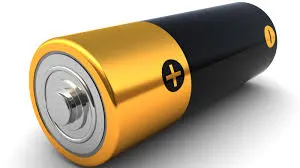
Fig01: Battery.
What is cell?
Here term cell is referred to an electrochemical cell or galvanic cell.
Electrochemical cell is a device capable of either generating electrical energy from chemical reactions or using electrical energy to cause chemical reactions. The electrochemical cells which generate an electric current are called voltaic or galvanic cells and those that generate chemical reactions, via electrolysis for example, are called electrolytic cells. A common example of a galvanic cell is a standard 1.5 volt cell meant for consumer use. A battery consists of one or more cells, connected in parallel, series or series-and-parallel pattern.
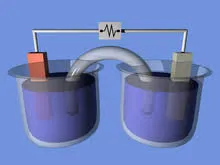
Fig02: Cell.
What is Lithium ion battery?
A lithium-ion battery or Li-ion battery is a type of rechargeable battery in which lithium ions move from the negative electrode through an electrolyte to the positive electrode during discharge, and back when charging. Li-ion batteries use an intercalated lithium compound as the material at the positive electrode and typically graphite at the negative electrode.
Li-ion batteries have a high energy density, no memory effect (other than LFP cells) and low self-discharge. Cells can be manufactured to either prioritize energy or power density.
Fig03: Lithium ion battery.
Problem Statement:
01.
What is the difference between nominal voltage and maximum voltage?
02.
Under which situation we observe the changes in dimensions and weight of a cell.
03.
List out various mechanical testing and standards.
04.
What is the discard procedure suggested generally for used Li ion+ batteries?
Solution:
01.
What is the difference between nominal voltage and maximum voltage?
What is Nominal voltage?
Nominal voltage is a value assigned to a circuit or system to designate its voltage class conveniently(e.g. 120/240 volts, 300 volts, 480Y/277 volts). The actual voltage at which a circuit operates can vary from the nominal voltage within a range that permits satisfactory operation of equipment.
The word “nominal” means “named”. It is not the precise operating or rated voltage. i.e. a 240-volt circuit may not be precisely 240.0000 volts, and may instead operate at 235.4 volts.
A nominal quantity (e.g. length, diameter, voltage) is generally the quantity according to which some item has been named or is generally referred to.
Nominal voltage is used as a voltage reference to describe batteries, modules, or electrical systems. This is the supply circuit system voltage to which the unit may be connected. You may consider it an “approximate” or “average” voltage level (although it is not technically the “average”).
Nominal voltage vs Rated voltage
The voltage level of an electrical power system is known as Nominal Voltage. It is also known as system voltage. In 3-phase systems, the voltage between the external lines is known as the nominal voltage.
The voltage range for which the equipment is designed to operate under the stable condition by giving reliability is known as rated voltage. Thus the maximum rated voltage of rated voltage range of any electrical equipment is the highest voltage at which equipment can function within its thermal limit without endangering the life of the equipment.
When designing the device, the designer should take the voltage safety margin into consideration for operation of equipment within the range of rated voltage.
The rated voltage value must be greater than the nominal voltage, for the safe functioning of the equipment. The difference between the nominal and rated voltages must be large enough to study the variations in the nominal voltage on the power lines.
Nominal voltage vs Operating voltage:
The voltage at which equipment is being operated is known as operating voltage. For reliable working of equipment, it must be operated within the range of rated voltage. The operating voltage is the actual voltage applied at the equipment terminal.
A multimeter is used to measure the voltage at the equipment terminal. If the applied voltage is greater or lower than its rated voltage, the performance of the equipment is affected.
As a concluding example for 132 kV power system, a circuit breaker is installed with the following specifications. When the operating voltage is not within the range of rated voltage, equipment operation is affected.
Nominal Voltage – 132 kVRated Voltage – 132 kV +/- 10 % [118.8 – 145.2 kV ]Operating Voltage – Can be in the range of 118.8 to 145.2 kV.
Nominal voltage vs Maximum voltage:
Nominal voltage is the value of the voltage declared by the manufacturer as the standard voltage rating of the battery.
Maximum voltage is the maximum value of the rated voltage range at which the system or device is operating.
02.
Under which situation we observe the changes in dimensions and weight of a cell.
We observe the changes in dimensions and weight of a cell or battery because of following reasons:
Expansion and contraction of host materials due to lithium intercalation.Electrode volume increase caused by irreversible reaction deposits.Dead volume and pressure changes within the cell case depending on battery structure and construction.
Common dictionaries define “intercalate” as “to insert (something) between layers in a crystal lattice, geological formation, or other structure”. In chemistry, the term “intercalation” refers to the reversible inclusion or insertion of a molecule (or ion) into compounds with layered structures. In the field of biochemistry, the concept of intercalation may refer to the insertion of molecules between the bases of DNA.
In a recent study conducted by the Chemistry Department and Institute for Materials Research at State University of New York, they further describe intercalation as “chemical reactions wherein lithium or hydrogen is inserted into a host matrix with essential retention of the crystal structure”.
Intercalation in Charge and Discharge Processes:
It must be made clear that intercalation in Li-on batteries only happens during the charging and discharging process; not during the idle state or when the battery is dead. A Li-on battery, like all batteries, consists of a positive electrode, negative electrode, and electrolytes. During discharging, the positive Lithium ion moves from the negative electrode (usually graphite) and enters the positive electrode (usually lithium oxide) through the electrolyte solution (made of organic solvent in solid or liquid form). During charging, the complete opposite of this process occurs, which is the reason why this is known as a reversible process.

Fig04: Intercalation During Charging Process.

Fig05: Intercalation During Discharging Process.
To avoid the changes in the weight and dimensions of the battery upto some extent we take following precautions:
When charging the battery, use dedicated chargers and follow the specified conditions.Use the battery only in the specified equipment.Do not connect battery directly to an electric outlet or cigarette lighter charger.Do not heat or throw battery into a fire.Do not use, leave battery close to fire or inside of a car where temperature may be above 60℃. Also do not charge / discharge in such conditions.Do not immerse, throw, and wet battery in water/ seawater.Do not put batteries in your pockets or a bag together with metal objects such as necklaces.Hairpins, coins, or screws. Do not store batteries with such objects.Do not short circuit the (+) and (-) terminals with other metals.Do not place battery in a device with the (+) and (-) in the wrong way around.Do not pierce battery with a sharp object such as a needle.Do not hit with a hammer, step on or throw or drop to cause strong shock.Do not disassemble or modify the battery.Do not solder a battery directly.Do not use a battery with serious scar or deformation.
03.
List out various mechanical testing and standards.
EMB Li-ion battery data sheet.
Zwick-Mechanical testing solutions for automotive batteries.
Note: Above manuals were reffered to study the data related testing of the Li-ion batteries.
Lithium ion batteries are highlt efficient energy storing devices which allowed the modern electric vehicles to be an alternative for mobility solutions. Batteries of the electric vehicles are bigger in size. There are lots of efforts going into the improvement of the batteries and the search for the best compromise. Testing is crucial for R&D and quality control.
All the tests needs to be done within one month after the delivery date under the following conditions:
Ambient Temperature:25±5℃; Relative Huimdity:65±20%
Standard Charge |
Constant Current and Constant Voltage (CC/CV)Current = 0.52AFinal charge voltage = 4.2VFinal charge Current = 0.052A |
Standard Discharge |
Constant Current (CC)Current = 0.52AEnd Voltage = 3.0V |
Table-01: Conditions for tests.
Various tests that are performed on the batteries are listed below:
A. Electrical Performance Tests:
Nominal voltage test.Discharge performance test.Capacity retention test.Cycle life test.Storage test.
B. Safety Performances Tests:
Short circuit test.Impact test.Overcharge test.Thermal shock test.
C. Environmental Tests:
High temperature performance test.Low temperature performance test.Anti-vibration test.Drop test.
Testing Standards:
UN ECE 100 – R2ISO 12405 - 1, 2, 3SAND2005 – 3123VW PV 8450
Note: For more details on tests, test procedures and their requirements refer the EMB-Li-ion battery data sheet.
04.
What is the discard procedure suggested generally for used Li ion+ batteries?
Why can’t li-ion batteries be disposed of with normal chemical/industrial waste?
Lithium-ion (li-ion) batteries contain a variety of chemicals. Improper disposal has significant consequences, such as environmental pollution and loss of (material) resources.
Lithium is highly reactive and difficult to control. Influences such as high temperatures, too high charging voltage, short circuit, or even too much of a heavy strain can cause exothermic reaction – a chemical reaction that releases energy through light or heat – in the battery. In short: it can catch fire rapidly. This is why airlines cannot allow spare lithium metal batteries and lithium-ion batteries in checked baggage,
Li-ion batteries contain a thin sheet of polypropylene that separates electrodes and prevents short-circuiting. However, if a device is crushed or punctured, a thermal event can result, as batteries short-circuit when the separator between their positive and negative components are breached. The larger the battery, the stronger the thermal reaction. In this way, a discarded battery could ignite other flammable material adjacent to it. Especially if large numbers of batteries are collected, where just one lithium-ion battery might ignite.
Why is processing lithium-ion batteries as e-waste challenging?
There are three main reasons why processing li-ion batteries can be challenging. First, in many cases it can be difficult to remove these batteries from devices because they are bonded to the hardware.
The second reason: during the dismantling process, it can be very easy to damage the battery. For this reason, professional separation and recycling generally requires specialized tools, processes and controls.
Finally, due to high temperature exothermic reaction, several fire incidents can be attributed to lithium-ion batteries. High-capacity batteries can be discharged to reduce the risk of fire or the release of toxic fumes during processing. The likelihood of a thermal event needs to be classified considerably higher than for conventional batteries, including when batteries are in storage.
How should consumers dispose of batteries?
Lithium-ion batteries can be recycled, but only at permitted treatment facilities. When discarded, they must be disposed of at a household e-waste collection point or battery-recycling drop off location. Of course, the electrical hazard needs to be carefully considered. High-capacity batteries can present an electric shock hazard as they can deliver higher voltages.
How should professional users / companies dispose of batteries?
Ensure lithium batteries are not exposed to high temperature or prolonged sunlight. Do not expose batteries to water or humidity. Handle these batteries carefully and package them so the safety device (casing) is not damaged. This can easily happen when batteries are stacked without a protective layer or placed beneath heavy objects. Also, ensure cores cannot come into direct contact with each other and make sure batteries are professionally discharged before further processing. Failure to do so can lead to batteries rupturing, catching fire or exploding.
Li-ion batteries contain materials that can be recycled with the right process. Recyclable materials include metal compounds, ferrous metal, aluminium, copper, graphite and plastic.
For safety reasons, batteries without protective casing and pouch cells have to be sorted separately for each of these three categories leading to six potential sorting categories (see diagram).
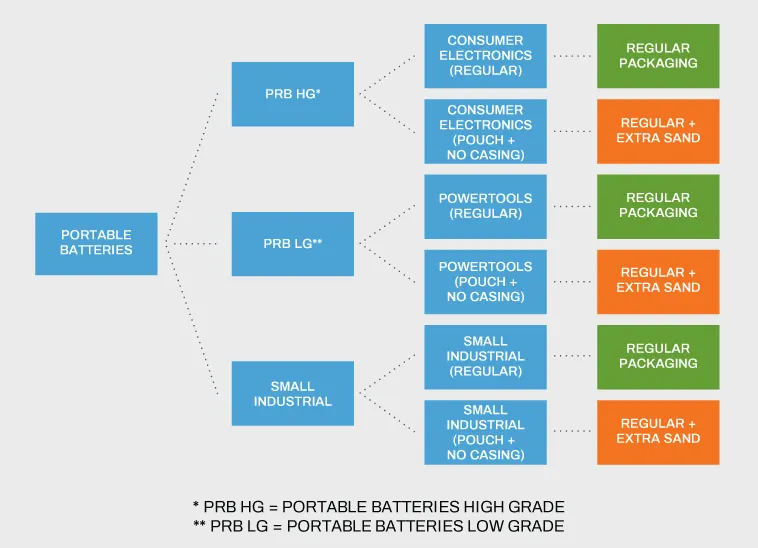
Fig06: Tree chart for disposal methods of various lithium ion batteries and their users.
Do
Ensure batteries are removed from devices, and kept segregated, before further material recovery
Approach a specialist to remove batteries if they cannot easily be separated and make sure the specialist processing facility has appropriate permits
Insulate the battery terminals or wires to prevent short circuit
Package batteries in UN-approved barrels or boxes (depending on type), separating layers with dry sand (for li-ion) or vermiculite (for other battery types)
Don’t
Dispose of li-ion batteries with ‘regular’ waste
Crush, puncture, throw or do anything to the batteries that might result in electrodes touching and short-circuiting
Mix damaged and non-damaged batteries
Place large numbers of batteries together without proper segregation, as this presents an increased fire hazard
Place batteries, or products containing batteries, in any process that is not specifically designed to accommodate batteries
Store discarded li-ion batteries inside as these have a high risk of short-circuiting and catching fire.
Conclusion:
In this study we learnt about the specifications of the Li-ion battery. We learn the difference between the nominal voltage and the maximum voltage of the battery.We studied the situations under which we observe the dimensional and weight changes in cells of the lithium ion batteries. We also studied the various types of tests that are carried out on the batteries and their testing standards. We also learnt the discard procedure of the Li-ion batteries.