Structural dynamics
1. Static Analysis -
- Here load is applied slowly and time and inertial effect are irrelevant.
- Material is linear elastic , boundary condition donot changes
Dynamic Analysis -
- Here load change with time
- Here boundary condition may change
- Dynamic can have larger effect than static dynamic due to sudden load
2. Force - Displacement Graph for elastic behavior is
In the elastic bheaviour the force and the displacemnt are linear as shown in fig
The elastic bheaviour is ability of deformed material return to its original shape
As we applied load and and unload it doesnt deform and gain ita original position is called elastic bheaviour
Force - Displacement for inelastic bheaviour
In inelastic bheaviour A we applied load and when we unload then it Change in displacement then is called inelastic
Force - Displacement For Plastic bheaviour
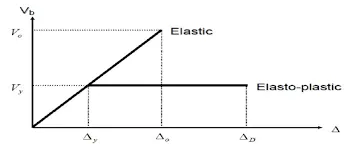
here a load is applied is same but the displacement is increasing is called plastic bheaviour
Force - Displacement For non linear inelastic bheaviour
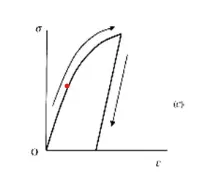
Here a load is applied but there is displacement so it is non linear inelastic bheaviour
3. Mass component - The mass without stiffness and damping . then extrnal force fi on the mass is related to the fi= mu
Stiffness - the frame without mass and damping then the external forces on stiffness is related to fs= ku
Damping component - the frame without mass and stiffness then fd = cv
mu + fd + fs = p(t) ---------------- mu + cu + ku = p(t)
4. Response spectrum -
A central concept of earthquake engineering It characterizing ground motion and there effect on sttructure with Tn
It provide a convenient means to summarize the peak response of all possible linear SDF to paticular component of ground motion
Structure of shorter period experience greater acceleration where as longer period experience grreater displacement.