Structural dynamics
1. Differentiate Static analysis and Dynamic analysis with proper representing pictures
DYNAMIC ANALYSIS:
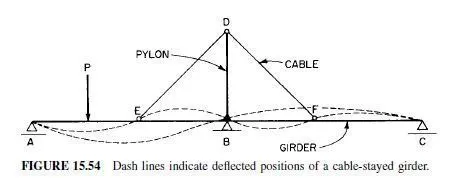
Structural dynamics s a kind of structural analysis. It covers structure's behavior subjected to dynamic loading. To find time history, dynamic displacements and model analysis, dynamic analysis can be used.
STATIC ANALYSIS:
In case of determination of of stresses, displacements, forces and strains in structure, static analysis is used. These are caused by loads. Significant inertia and effects of damping do not get induced by it.
Static stress analysis is arguably the most common type of structural analysis using FE method. Stress, strain and deformation of a component or assembly can be investigated under a range of load conditions to ensure that expensive failures are avoided at the design stage.
Structural loads are typically one, or a combination, of the following:
- External forces such as clamping force in subsea connectors.
- Surface loads, e.g. pressure loading in pressure vessels
- Body forces (gravity, acceleration such as centrifugal force in rotating machines)
2. Explain the following with relevant force-displacement graph.
Elastic behavior
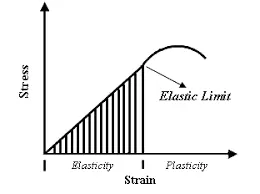
Elasticity, ability of a deformed material body to return to its original shape and size when the forces causing the deformation are removed. A body with this ability is said to behave (or respond) elastically.
Inelastic behavior
Deformation of a material that does not disappear on removal of the force that produced it.
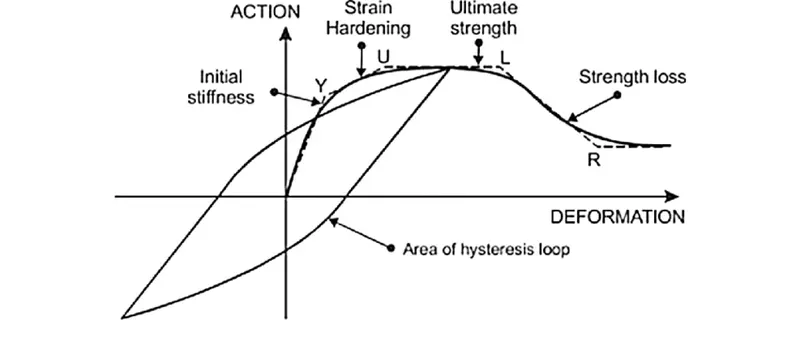
Plastic behavior
For stresses beyond the elastic limit, a material exhibits plastic behavior. This means the material deforms irreversibly and does not return to its original shape and size, even when the load is removed. When stress is gradually increased beyond the elastic limit, the material undergoes plastic deformation
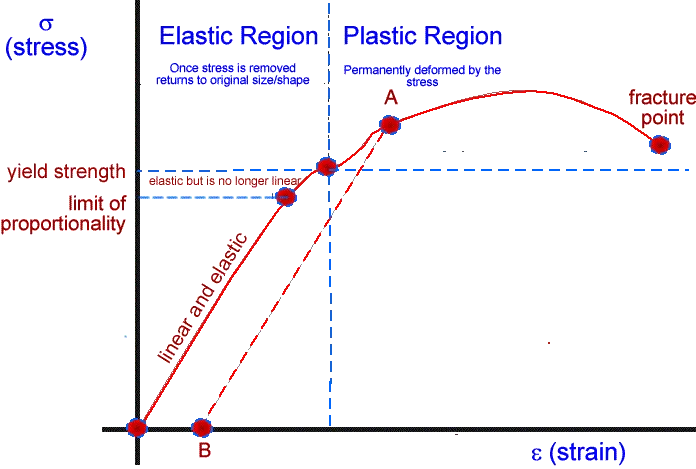
Non-linear Inelastic behavior
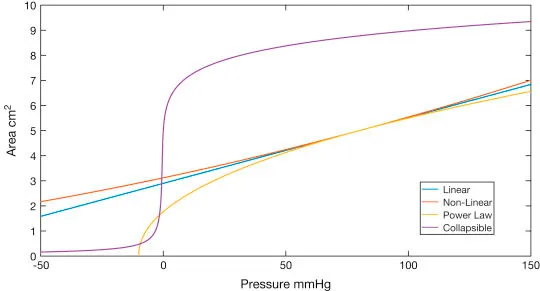
Materials have elastic behaviour usually only up to a certain load, which is called the 'yield point'. After that, the deformations are plastic. Rubber, for instance, has an elastic stress–strain curve, but the relation is not linear − in such cases nonlinear elastic models are required.
3. Explain Mass, Stiffness & Damping components in the equation of motion
Mass
Mass, in physics, quantitative measure of inertia, a fundamental property of all matter. It is, in effect, the resistance that a body of matter offers to a change in its speed or position upon the application of a force. The greater the mass of a body, the smaller the change produced by an applied force.
Stiffness
Stiffness is defined as the resistance to a force causing a member to bend. Stiffness is very important to the end-use performance of many papers.
Damping
Damping is the method of removing energy in order to control vibratory motion like noise, mechanical oscillation, and alternating electric current.
4. Provide relationship between Natural period (Tn) & Natural frequency (f) and provide their definitions
Natural period (Tn)
Natural Period Tn of a building is the time taken by it to undergo one complete cycle of oscillation. It is an inherent property of a building controlled by its mass m and stiffness k. These three quantities are related by its units are seconds (s).
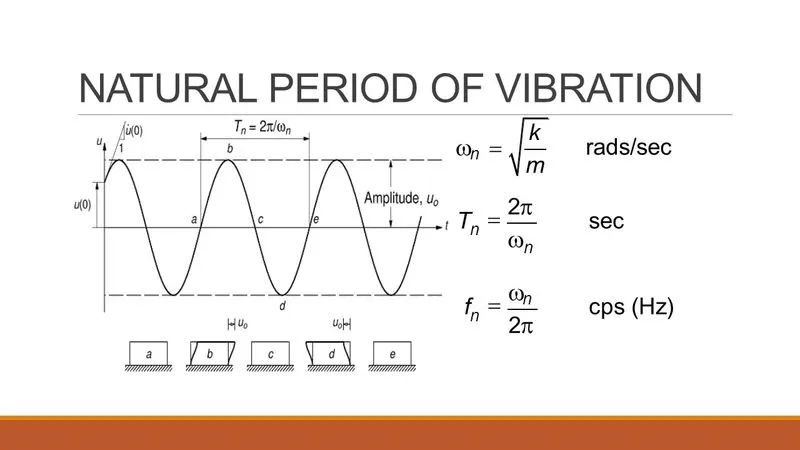
Natural frequency (f)
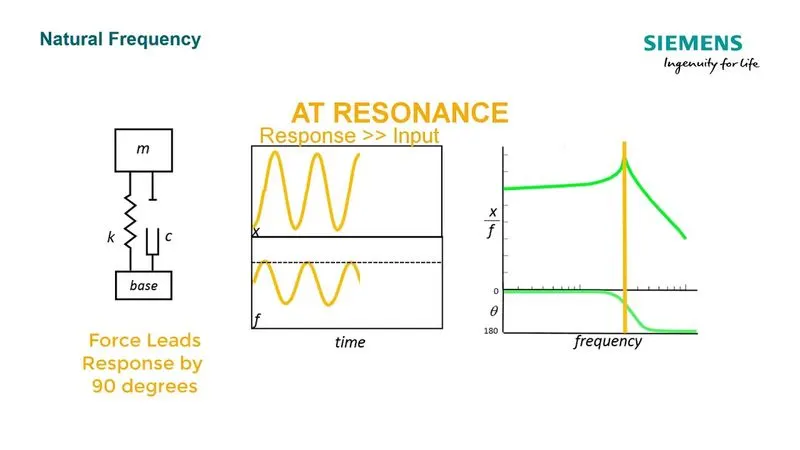
Natural frequency, also known as eigenfrequency, is the frequency at which a system tends to oscillate in the absence of any driving force. The motion pattern of a system oscillating at its natural frequency is called the normal mode (if all parts of the system move sinusoidally with that same frequency).
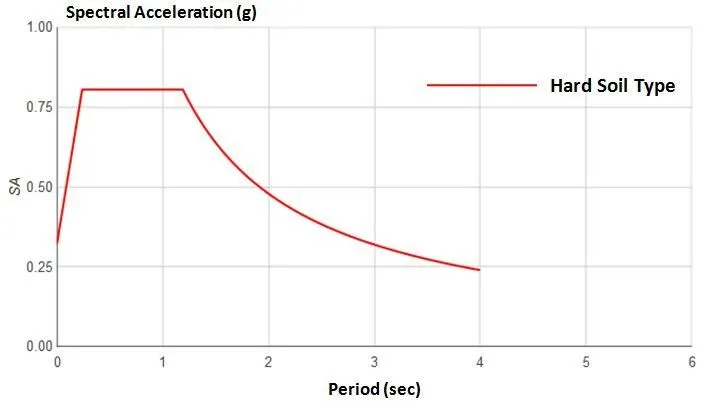
5. Explain in detail about Response spectrum & its Graph
A response spectrum is a graphical plot of the frequency of an oscillator and its damping. The response spectrum plot represents the peak or steady-state response (velocity, displacement, or acceleration) of a series of oscillators of varying natural frequency.