Structural dynamics
Ans 1: Difference Between Static Analysis and Dynamic Analysis are:
| Static Analysis |
Dynamic Analysis |
| Loads applied are static/constant | Considers dynamic loads acting on the structures such as wind and earthquake |
| Does not consider the motion of the structures | Assumes the body is in moion |
| Objective is to analyze the fatigue failure | Dynamic analysis handles impacts and other fast happening situations but also vibration |
| There is no necessity to count inertia and damping forces in case of static analysis but the elastic force should be accounted for in static analysis. | Inertia and Damping force is considered for the calculation of Dynamic force |
| There is no inertia effect on static analysis | Inertia efect is considered in Dynamic analysis. |
Ans 2:
- Elastic behavior: The ability of a deformed material body to return to its original shape and size when the forces causing the deformation are removed.
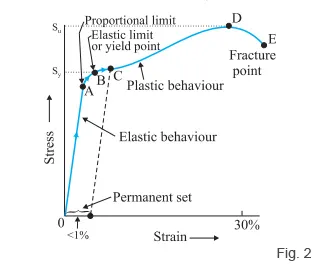
- Inelastic Behaviour: A Non Linear responce to a stress-strain diagram that retains a permanent strain or return to an unstrained state on completing unloading.
Inelastic material are non-elastic and plastic materials that easily change shape under stress.
- Plastic Behaviour: For Stressess beyond the elastic limit the material exibits plastic behaviour. The material deforms irreversibly and does not return to its original shape and size, even if the load is removed. The Stress is gradually increased beyond elastic limit, the material ungergoes plastic deformation.
- Non-linear Inelastic behavior: is a property of a material that have a non-linear stress- strain relationship even at infinitesimal strain. The strain returns along the curve without residual strain in the unloading process.
Ans 3:
- Mass: According to the Newton's Second law of motion F=ma where F= Force, m= Mass, a= Accleration. Force F acting on a body is Mass m multiplied by its Accleration a.
- Stiffness: relates to how a component bends under load while still returning to its original shape once the load is removed. Since the component dimensions are unchanged after load is removed, stiffness is associated with elastic deformation. A material can have high strength and low stiffness.
- Damping: is the method of removing energy in order to control vibratory motion like noise, mechanical ossilation, and alternating electric current. It brings a vibratory motion of a structure at rest.
The governing equation for one storey frame is formulated as
External force: p(t)
Displacement: u(t)
Velocity: u.�.(t)
Accleration: u..�..(t) Accleration
Stiffness component : The frame without damping and mass i.e f(s)=ku, it is related to the displacement u.
Damping Component: The frame without stiffness and mass i.e f(d)= cu. it is related to the velocity u.
Mass Component: The Slab is considered without stiffness and damping component i.e f(i)=mu. it is related to the accleration u.
When external force p(t) is applied to the frame then the equation will be f(s)+f(d)+f(i) is mu+cu.+ku=p(t).
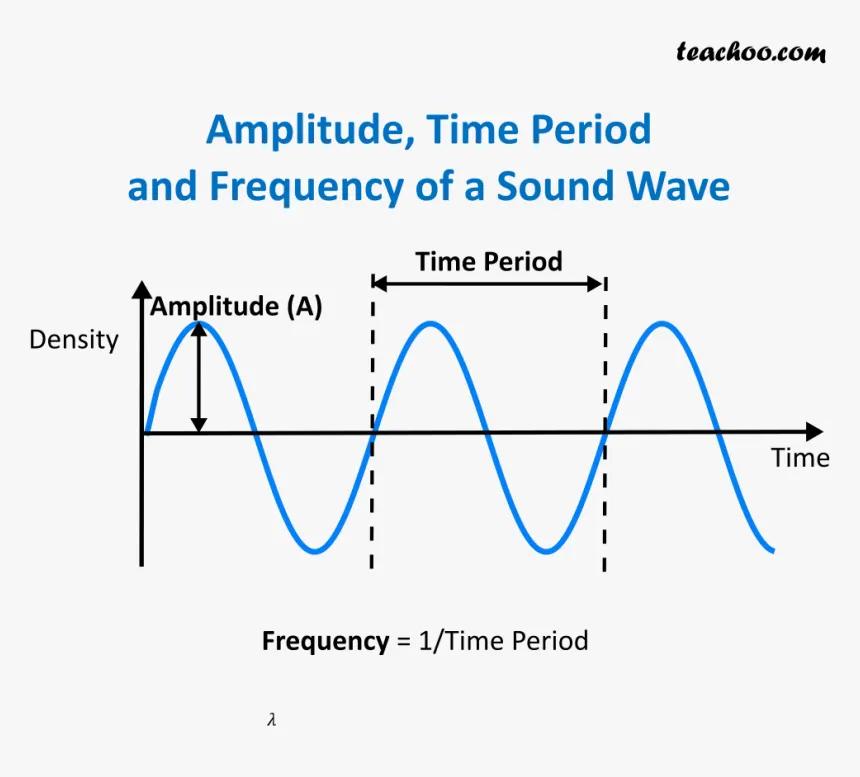
Ans 4: Period of Vibration: It is the time taken for a vibrating object to make one cycle or occilation and return to its original position.
`T= (2π)/(√(k/m))`
Natural Frequency: It is the frequency of the object at which rate it is occilating naturally when it is disturbed.`f= omega/(2pi)`
we know that `omega=√(k/m)`
therefore `f=(√(k/m))/(2pi)`
so we get `T =1/f`
Ans 5: Responce Spectrum Analysis is a linear dynamic statical analysis methos which measures the contribution of each natural mode of vibration to indicate the likely maximum sesmic responce of a essentially elastic structure.
It is a Plot that shows the peak response of all possible single degree of freedom SDOF system.
The responce spectrum can be of 3 types. The deformation spectrum is a plot peak of u, against tn for fixed. A similar plot for peak `mu^.`, is the relative velocity responce spectrum, and for peak `mu^(..) T` is the accleration responce spectrum.
- Pseudo acclerationfor an SDF system with natural frequency `omega`n is related to its peak deformation D=u0, due to earthquake ground motion.
- The quantity A has units of acceleration and is related to the peak value of base shear b0 (just another name for the peak value of the equivalent static force fs0):