Steady Vs Unsteady flow over a cylinder
Flow over a cylider
Aim : To simulate a flow over a cylinder of cut section plane and to observe vortex shedding phenomena also calculate strouhal number for RE 100 in both study state and unsteady state and to calculate the coefficient of lift and drag for different reynolds number, study the effect of reynolds numeber on lift and drag coefficients.
This problem is solved in two parts :
1) Calculation of strouhal number for re=100 in both steady and unsteady state.
2)Calculation of lift and drag coefficients for re=10,100,1000,10000,100000 by using steady state solver.
General inforamation :
When a fluid flows over a bluff body vortices form on back of the body and detach periodically.This phenomena is known as vertex shedding which is caused by flow seperation and formation of wakes continuously and leading to wake region results in low pressure region on the backside of the body causing pressure difference(low pressure on backside and high pressure on front side) .
These formed vortices detach continuously and forming a street know as von karman vortex street,which is formed at particular flow velocites and specified by range of Reynolds number typically limiting value of Re=90.
`R_E=(rho.V.D)/nu`
rho=density ;
V=velocity of flow;
D= characteristic length ,diameter in this case;
`nu=`kinematic viscosity.
This pressure difference leads to drag force or pressure drag and lift is generated when high pressure fluid try to move to low pressure region which is generally observed in aerofoil .
These lift forces are caluculated by formulaes:
`F_d=1/2C_d. rho.A.v^2`
`F_L=1/2.C_l.rho.A.v^2` .
Strouhal number: Strouhal number is a dimensionless number which describes the oscillation flow mechanism.The frequency of generated vortex shedding is related to strouhal number by
`St=(f.D)/V` where f= frequency of vortex shedding, D= hydraulic diameter, V=velocity of flow
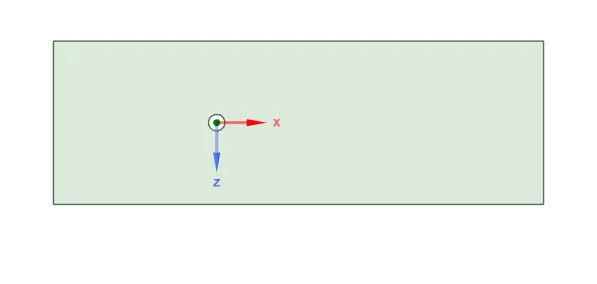
Space Claim model :
Mesh :
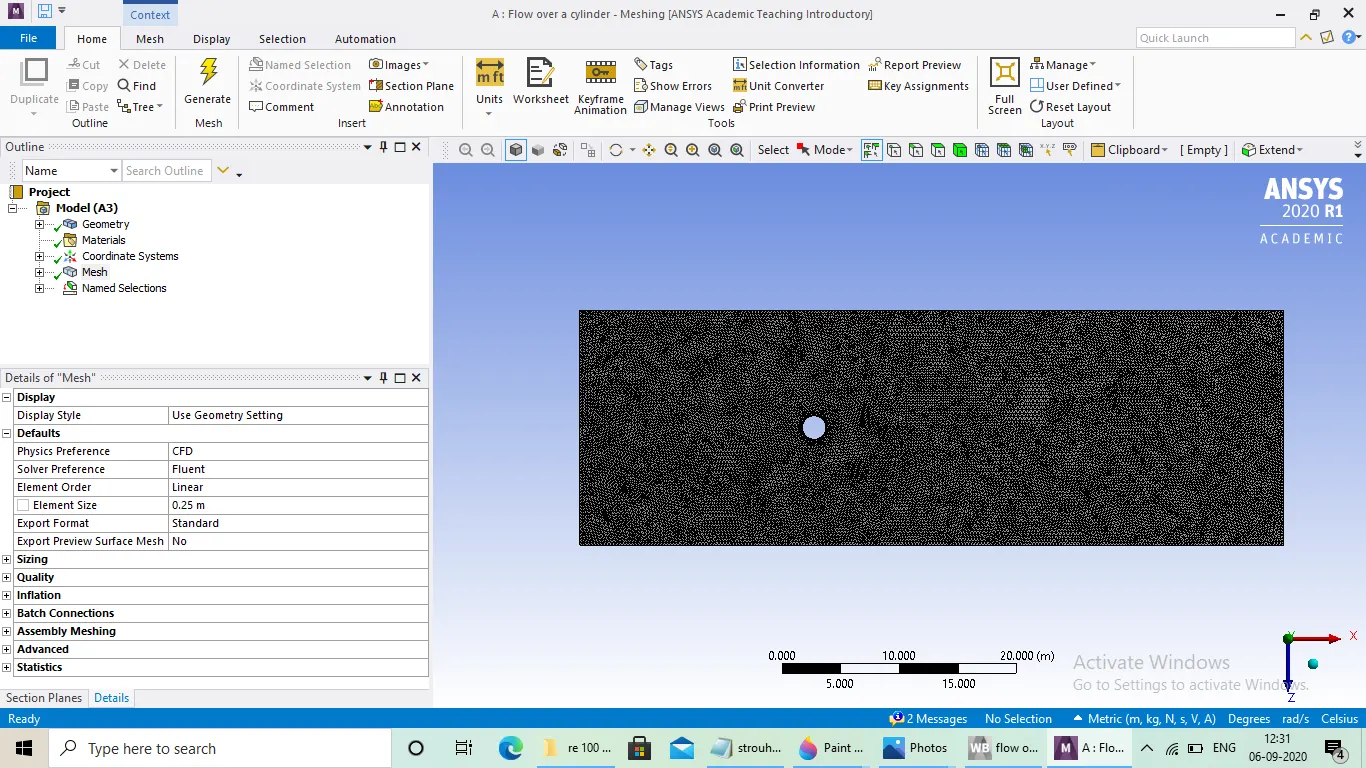
Mesh details:
Element Shape: Triangular dominent
Element size: 0.25 m
Number of elements:39860
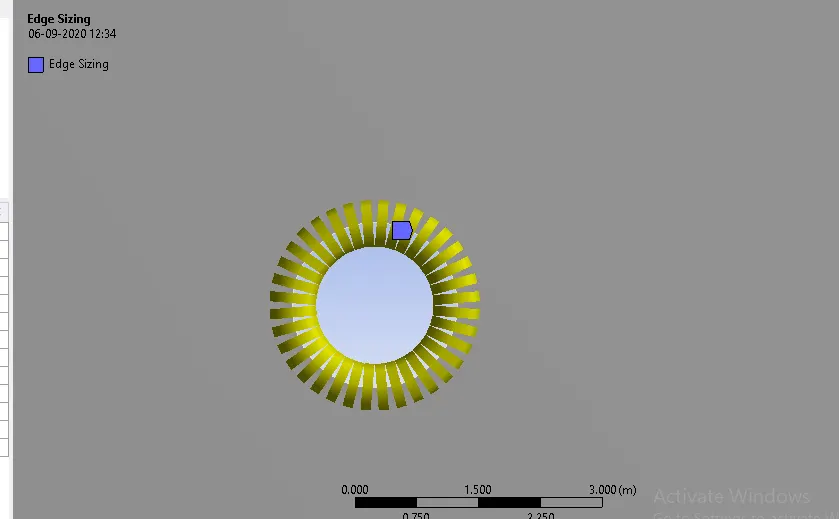
As cylinder generated is not a perfect circle ,it looks like a polygon with 18 edges approximately, hence Edge sizing is added to the cylinder wall in mesh model by inserting 36 divisions which makes the cylinder section approximately circular shape.
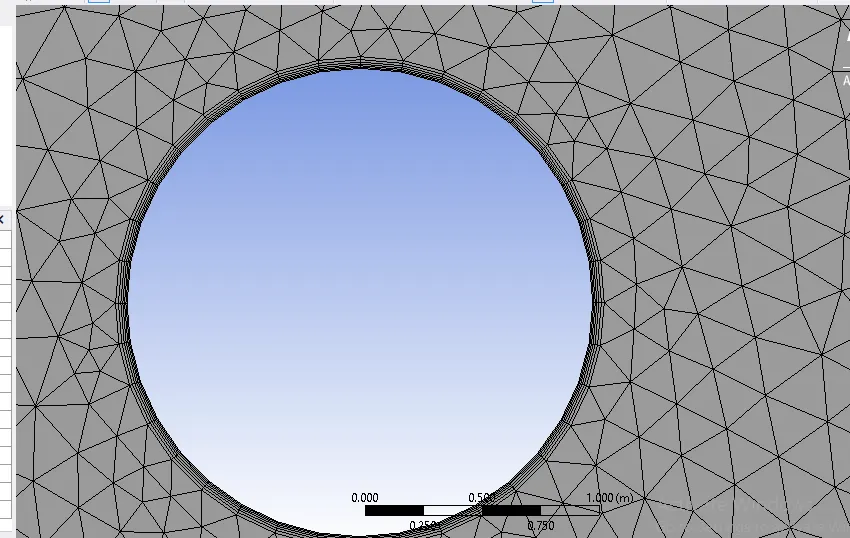
A body fitted mesh needed to be generated at cylinder wall as this wall is responsible for vortex shedding phenomena, so minute details have to captured around the wall hence a body fitted mesh is needed which is obtained by inserting inflation layers.
Number of inflation layers=6
size of first inflaton layer=5e-3
growth rate=1.2
Fluent Set-up:
Governing equations are solved by both steady and transient solvers.
Laminar flow model is used
User defined material is used with
viscosity =0.05 kg/ms,
Density =1 kg/m^3.
monitor point is addded at a distance of 4D which is 8m to plot the velocity oscillations.
Boundary conditions:
velocity inlet and pressure outlet
Viscous model: Laminar as RE=100 for part 1 of the simulation.
Hybrid initialization.
Results:
Part 1:
Steady state, laminar flow
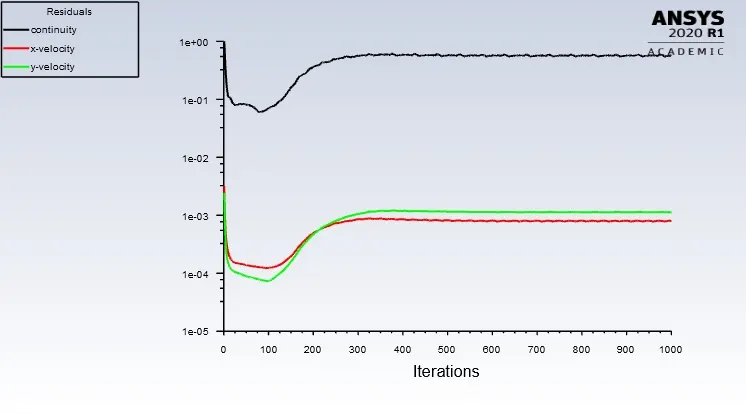
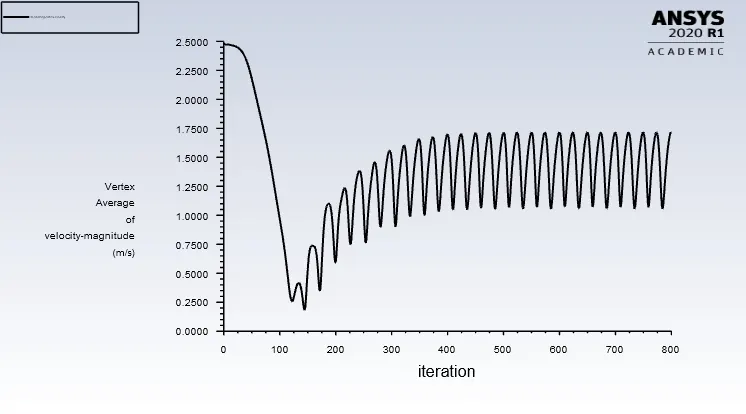
Residual convergence plot: Monitor point velocity:
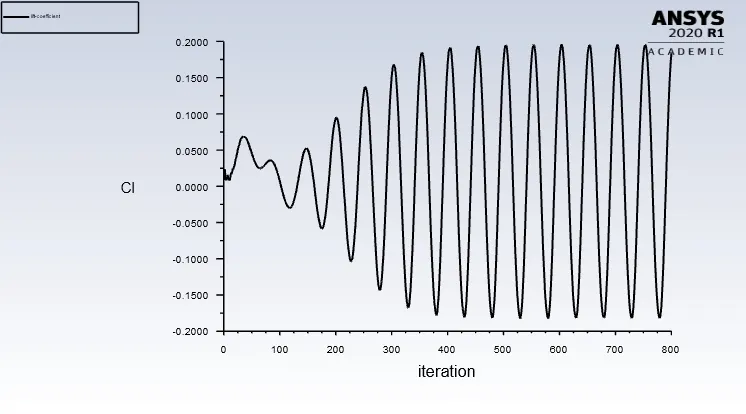
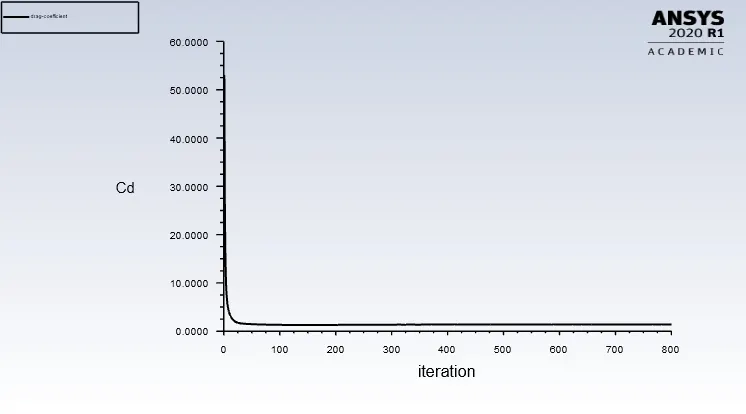
Lift plot: Drag plot:
Velocity contour:
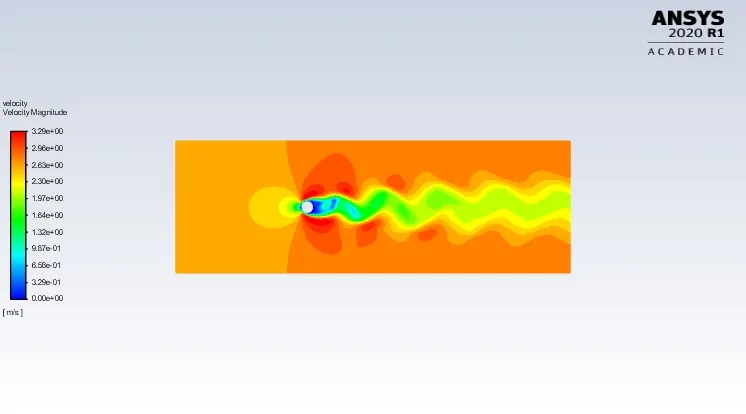
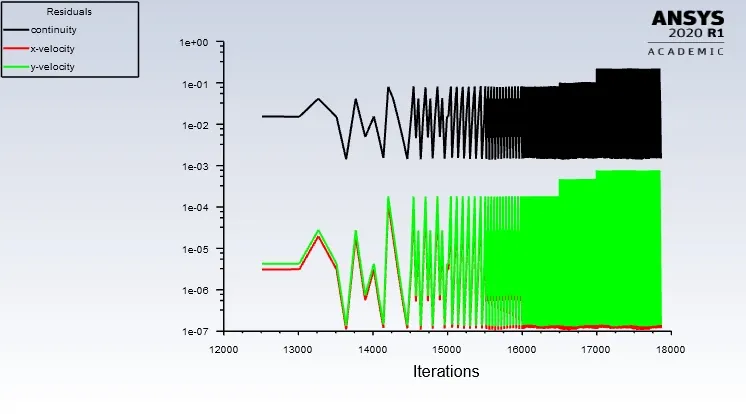
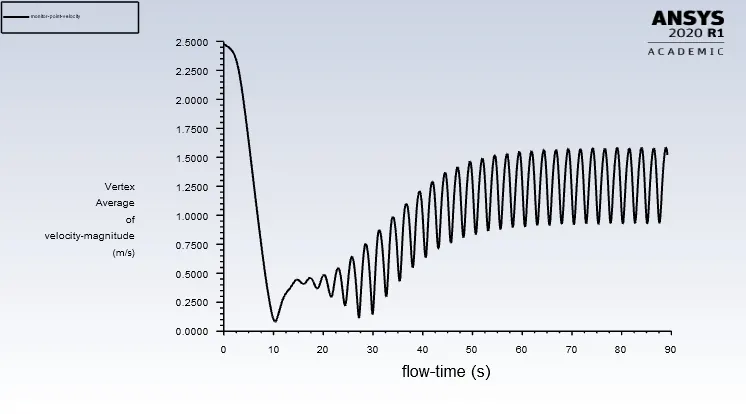
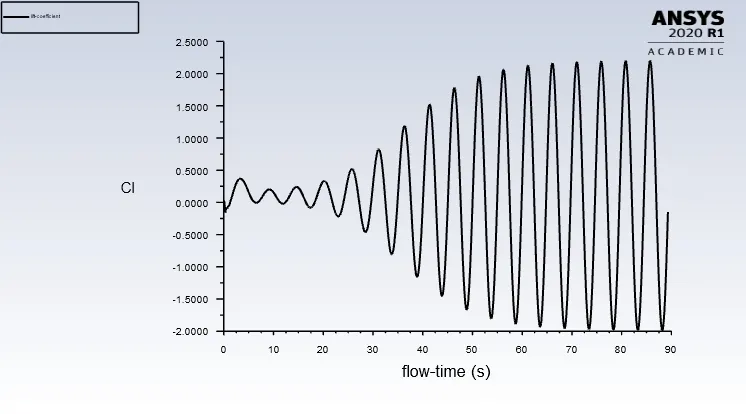
Generally ,the solution convergence is assumed from residual plots and other data plots like monitor point velocity and lift plot in this case, but as thsi is an oscillation flow mechanism the plots will never be converged but from the plots we can observe that the pattern of curve is repeating with same magnitude and time interva hence it is assumed that the solution is converged.
Unsteady state:
Number of time steps (nt) =900
Time step size(dt) =0.1
Flow time = nt*dt =90 sec
Residual plot: monitor point velocity:
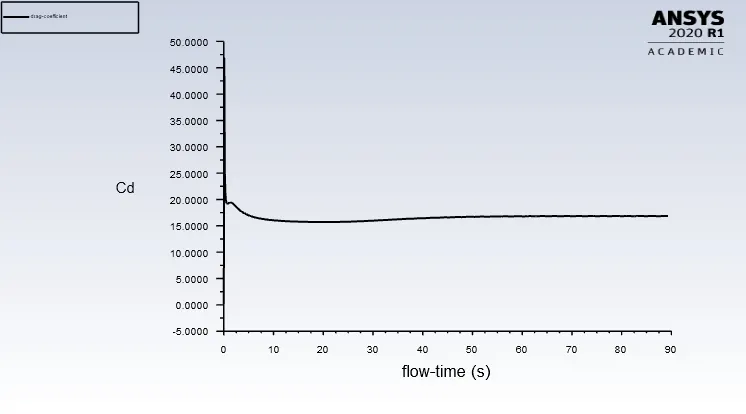
Lift velocity: Drag plot:
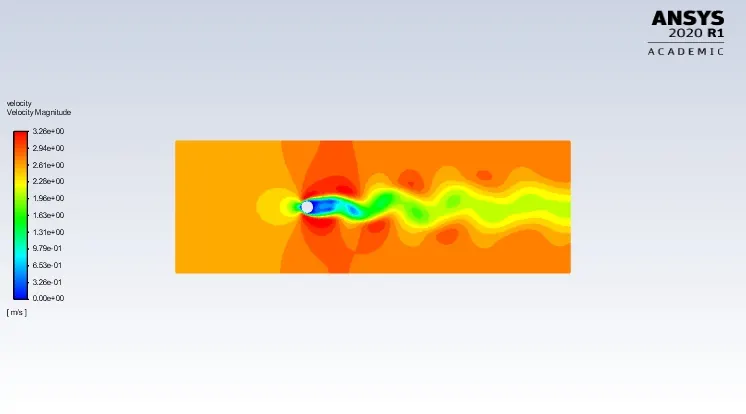
velocity contour:
Strouhal number :
Manually calculated
`St=(f.D)/U`
`=((2/10).2)/2.5`
St=0.16
From the below figure, it can be observed that at re=100 for smooth curve as we have assumed our cylinder wall to be approximately smooth, the value is approximated to our manually calculated value.
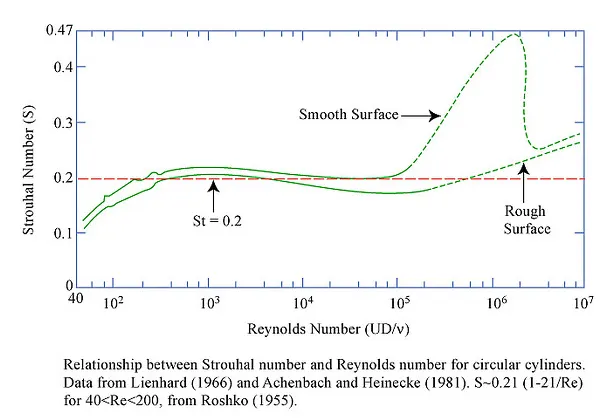
Fig source: Google
Strouhal plot: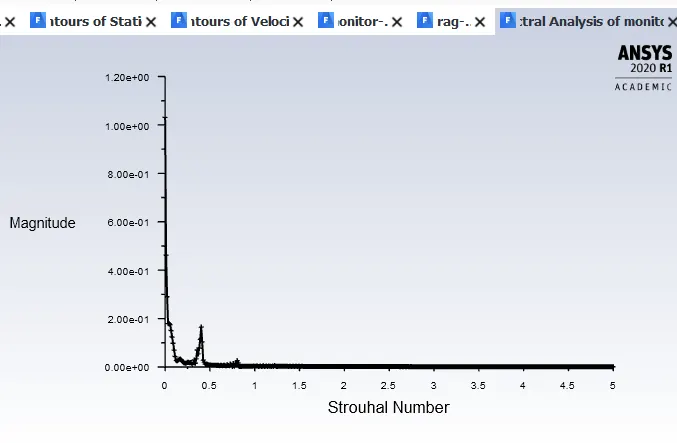
Part 2: Calculation of lift and drag coefficients for re varying from 10 to 100000 .
For RE=10 to 1000, viscous model is laminar and for 10000 and 100000 model turbulant model K-epsilon standard model is used .
LIFT PLOTS: DRAG PLOTS:
RE=10
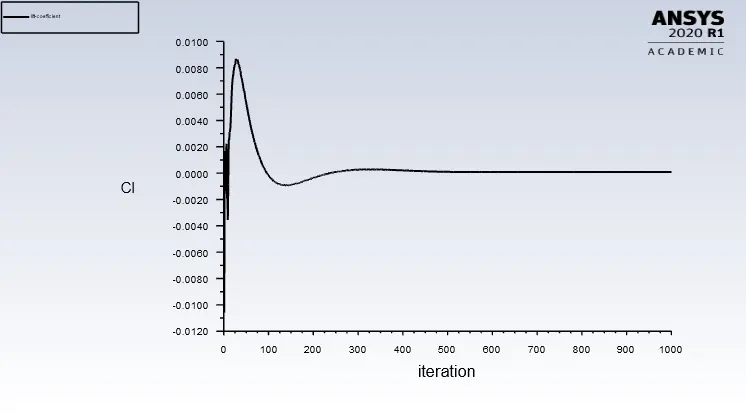
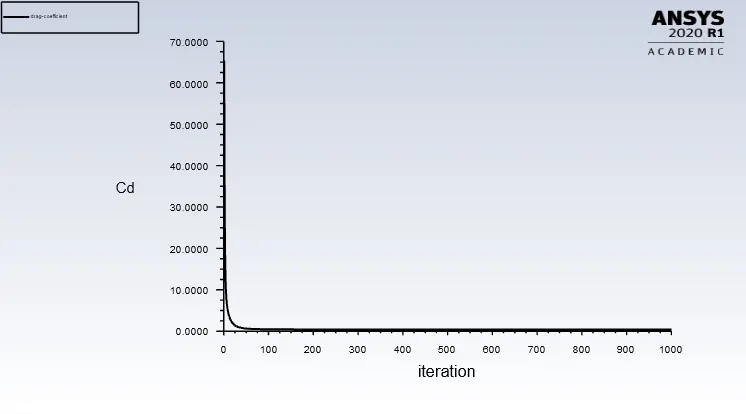
RE=100
RE=1000
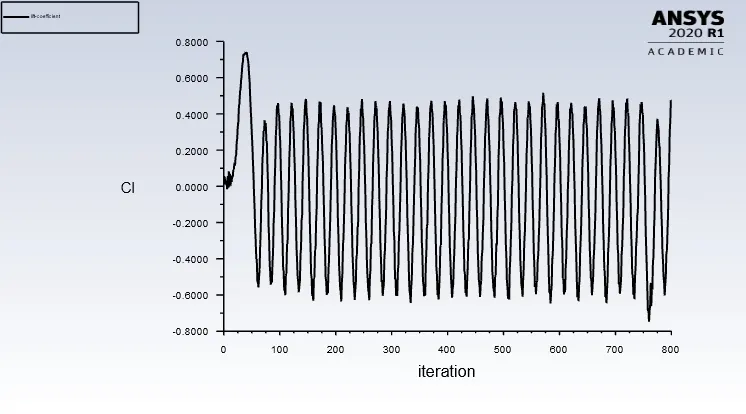
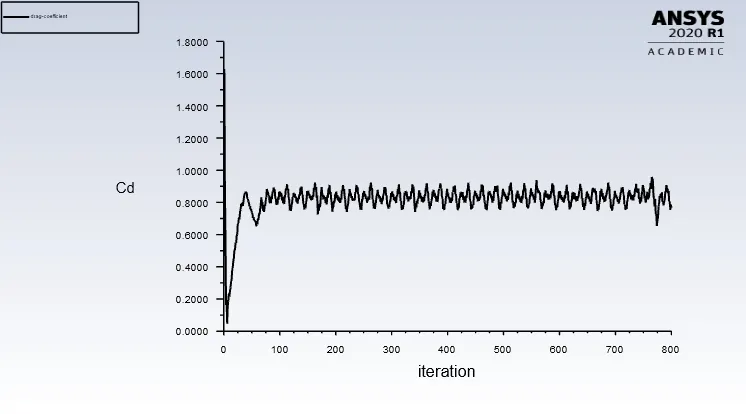
RE=10000
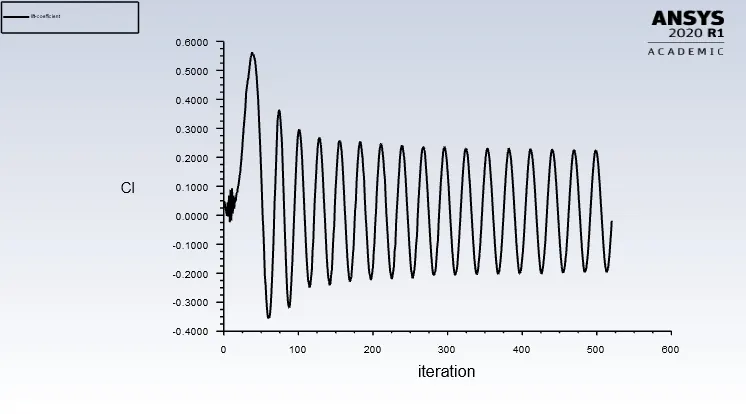
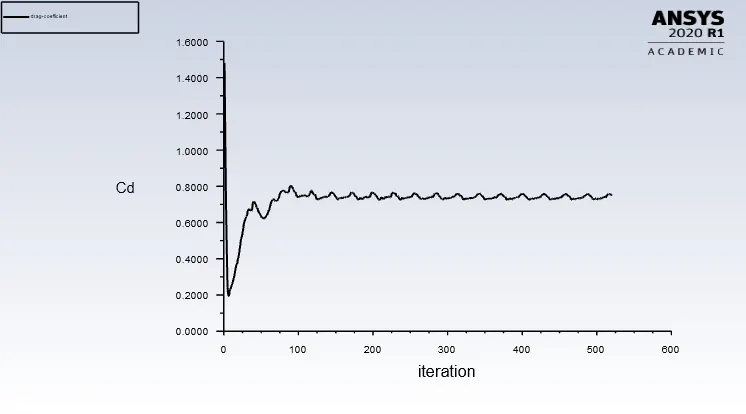
RE=100000
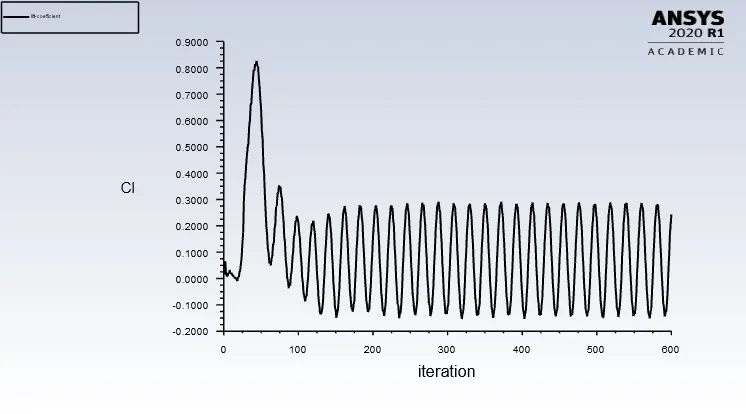
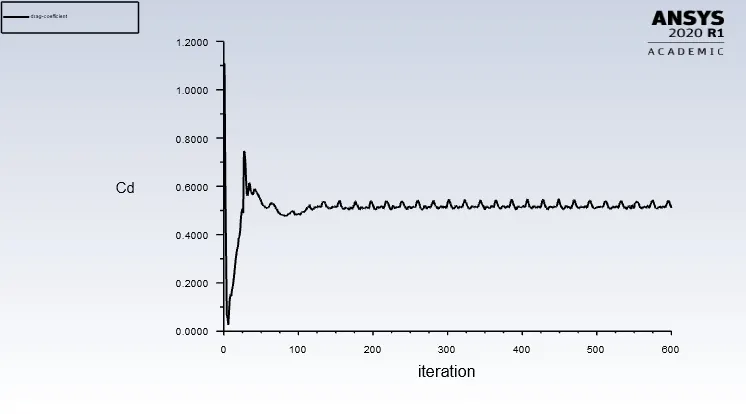
Values of Cl and Cd are calculated and tabulated below for different Reynolds number using solved in steady state:
| Reynolds number | Cl | Cd |
| 10 | 0.00063 | 3.32 |
| 100 | 0.18 | 1.36 |
| 1000 | 0.45233197 | 0.83212284 |
| 10000 | -0.01878 | 0.7479 |
| 100000 | 0.2433 | 0.5102 |
In the above table for Re=10000, Cl is in negative direction, which means lift force is acting downwards.
Conclusion:
1) Vortex shedding is observed at particular flow velocities ,specified by particular Reynolds number typically limiting vale is 100 in our case.
2) Vortex sheddig phenomena can be observed clearly in transient process than steady state process as it is more reliazable and realistic.
3) As reynolds number increases the flow transition takes place from laminar to turbulant and flow becomes energized which helps in pusing through the increasing pressure gradient (which develops due to high pressure in front side of the body and low pressure in the backside of the body) there by decreasing drag force and Cd.
4)Lift force increases by incresing the reynolds number, but at transition region lift force decreases and again increases, negative lift coefficients explains that lift is acting downwards which increases Traction effort in automobiles mainly helpful in F1 cars in addition with spoilers attached at rear end of car.
Material with low viscosity is more preffered as it is has very less boundary layer thickness compared to high viscous fluids. Generally water and air has lower values of viscosity.