Section Modulus calculation and optimization
Section Modulus calculation
- section modules can be defined as the ration of moment of inertia over distance between the neutral axis of any given objects and extreme end of the object.
- Section modulus give us idea about how much of load the given structure can take.
- If the section modulus increases the moment of resistance increases and hence its load bearing capacity.
There are two types of section moduli:
- elastic section modulus and
- plastic section modulus.
Elastic section modulus applies to designs that are within the elastic limit of a material, which is the most common case. Often, “elastic section modulus” is referred to as simply “section modulus”.
There are two types of section moduli: elastic section modulus and plastic section modulus. Elastic section modulus applies to designs that are within the elastic limit of a material, which is the most common case. Often, “elastic section modulus” is referred to as simply “section modulus”.
the elastic section moduli of common shapes such as rectangles, I-beams, circles, pipes, hollow rectangles, and c-section channels that undergo bending.
rectangles:
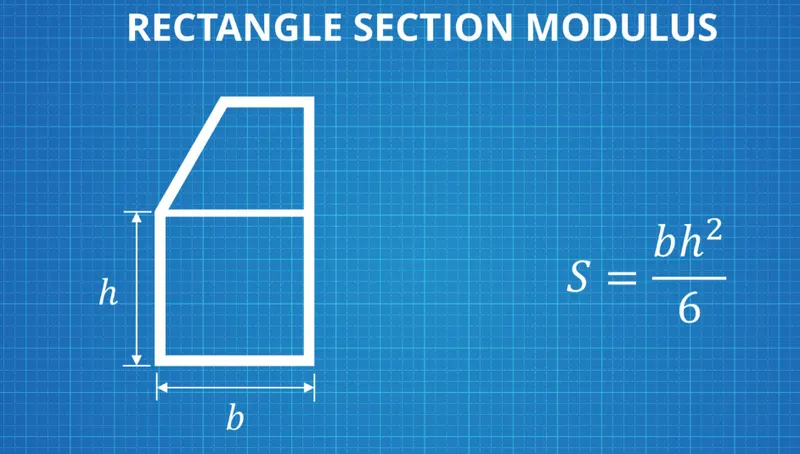
- b = section width
- h = section height
I-beams:
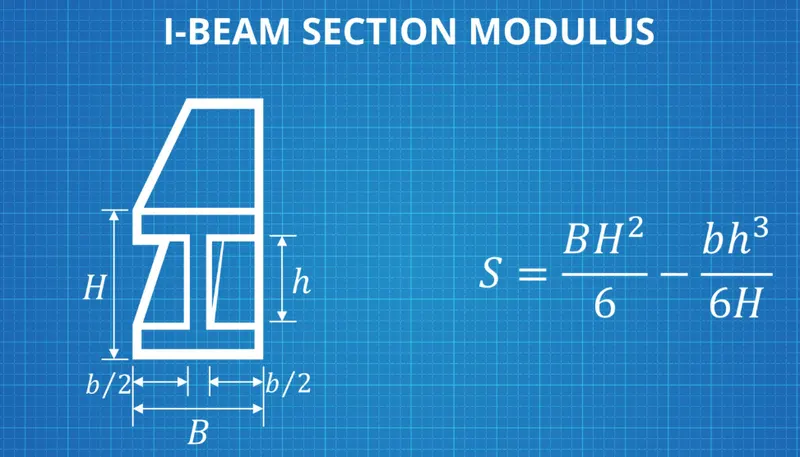
- B = flange width
- H = I-beam height
- b = flange width minus web width
- h = web height
circles:
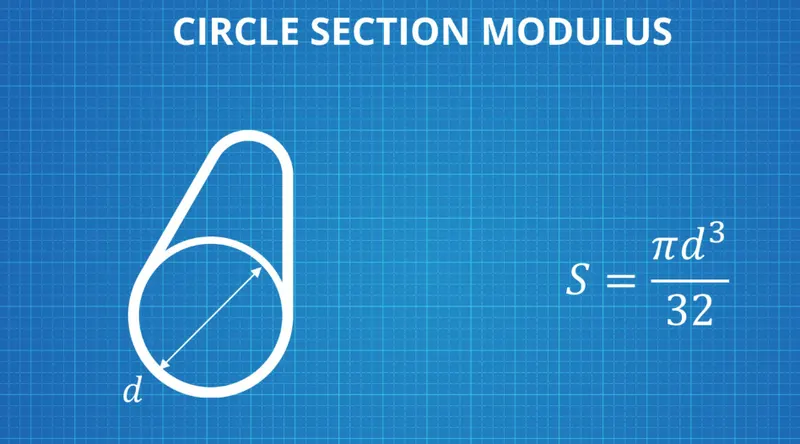
d = diameter of the circle
Hollow Circle :
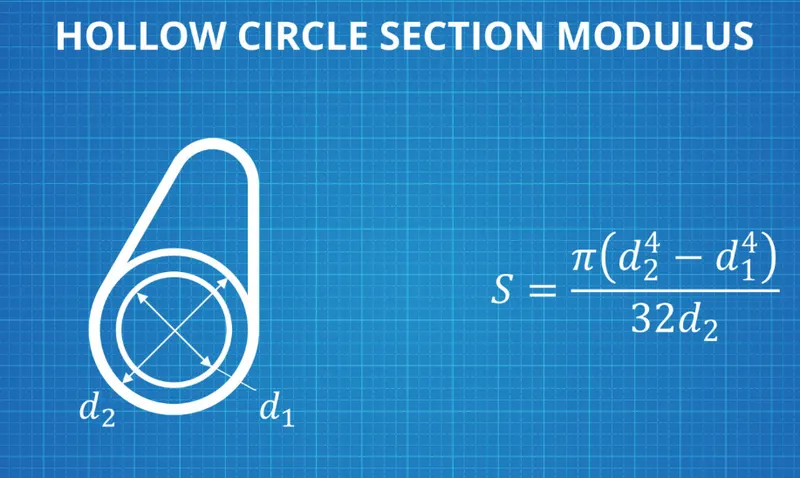
- d1 = inside diameter = 2 x inner radius
- d2 = outside diameter = 2 x outer radius
Hollow Rectangle:
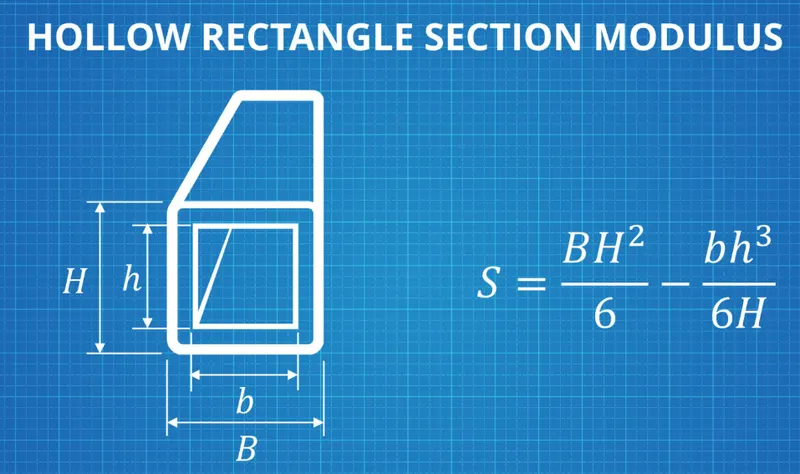
- B = outside width
- H = outside height
- b = interior (hollow) width
- h = interior (hollow) height
C-Channel:
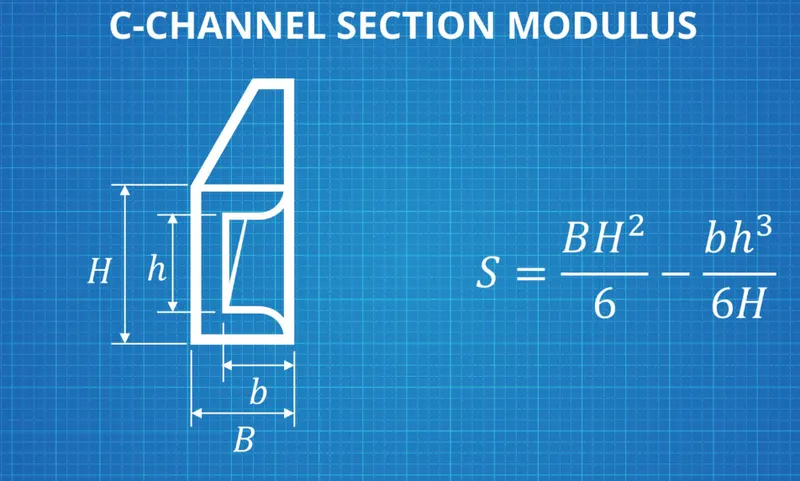
- B = flange width
- H = overall height
- b = flange width minus web thickness
- h = web height
comparison both cases :
CASE 1
Hood design
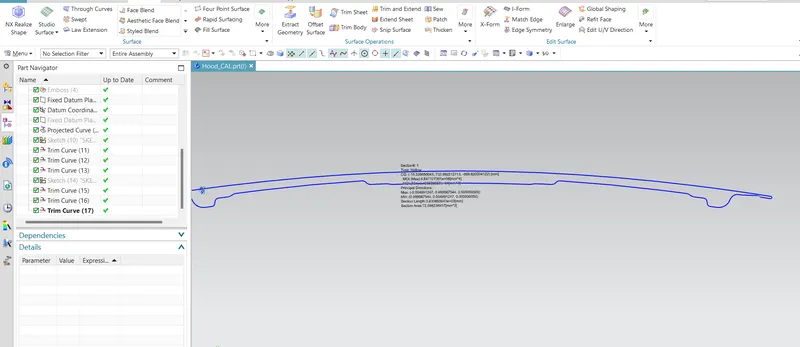
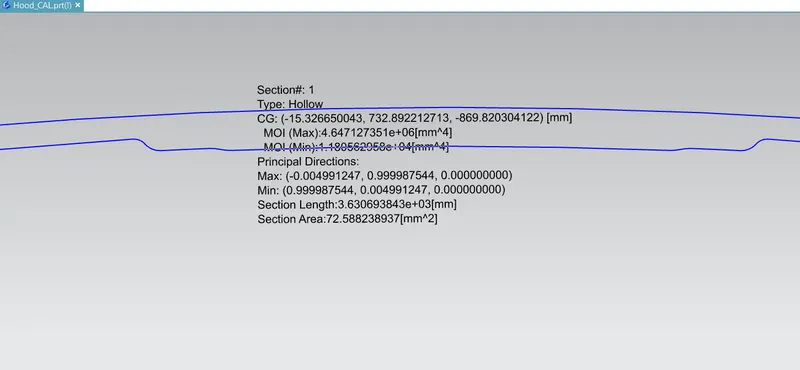
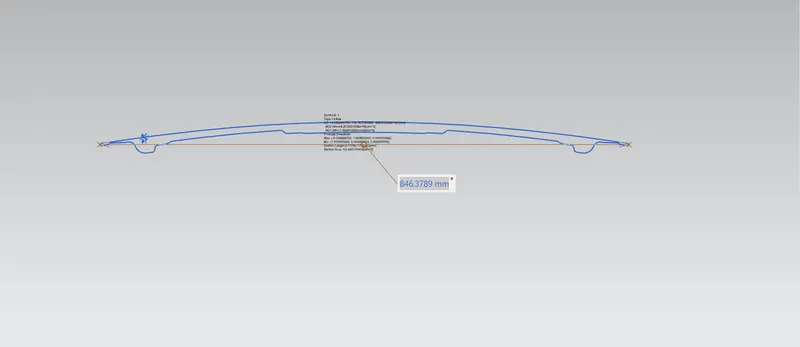
Moment of inertia (max)=4.647127351`*10^6mm^4`
Moment of inertia(min)=1.180562058`*10^4mm^4`
y= 846.379/2=423.18mm, S=I/Y
s=1.180562058*10^4mm^4/423.18
=27.897mm^4
CASE 2:
Hood Design Optimization
By increasing the depth of the inner panel by 0.5 mm
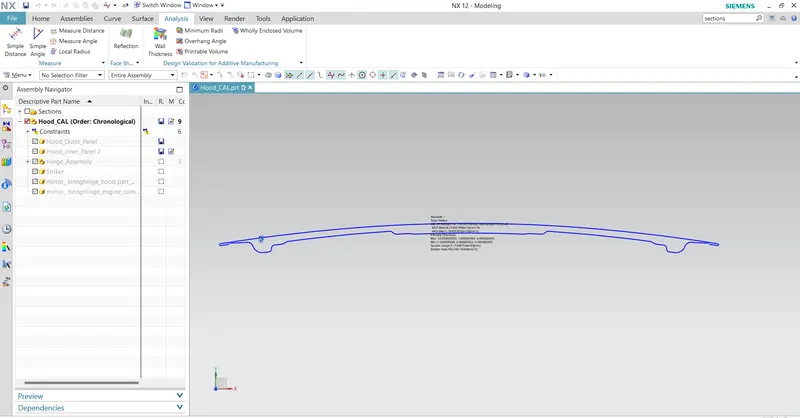
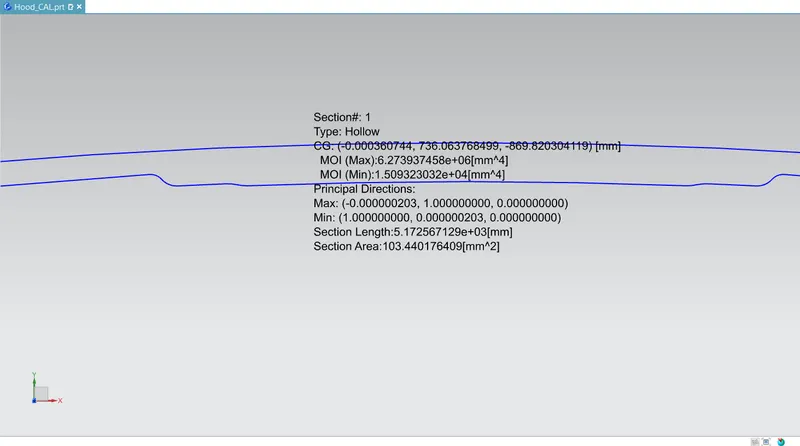
Moment of inertia (max)=6.273937458`*10^6mm^4`
Moment of inertia(min)=1.509323032`*10^4mm^4`
y= 846.379/2=423.18mm, S=I/Y
`strong>s=1.509323032*10^4mm^4/423.18`
=35.6662184mm^4
Conclusion
So, here the difference can be seen in the moment of inertia CASE1=27.897mm^4 and the change in the section modulus can be seen by the change in the design(depth) BY 0.5MM IN CASE2=35.6662184mm^4