Section Modulus calculation and optimization
Section Modulus:
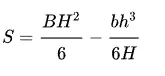
The Section Modulus(S) is geometric property of the cross section used for designing beams and flexural members.
It is a way of quantifying a cross-section of a given geometry. It is directly proportional to the area moment of inertia of the cross-section. Higher the section modulus, the more the moment of inertia, more stiffness and thus more resistance to deformation and bending. Section modulus can be improved by varying the geometry of the cross-section. In other words, stiffness can be improved by just improving the geometry without the need for adding extra material.
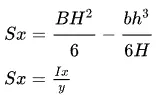
S= I / Y
S - Section Modulus. (mm^3)
I - Moment of Inertia. (mm^4)
y - Distance from neutral axis to the end of the object. (mm)
Below is the list of Section Modulus fror different cross sections:
|
Cross-sectional Shape |
Figure | Equation | Comment |
| Rectangle | 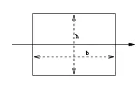 |
 |
Solid arrow represents neutrsal axis |
| Double symmetri I-section (Major axis) | 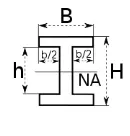 |
|
NA indicates neutral axis |
| Double symmetri I-section (Minor axis) | 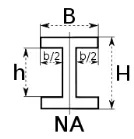 |
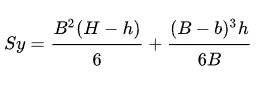 |
NA indicates neutral axis |
| Circle | 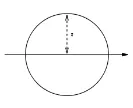 |
 |
Solid arrow represents neutral axis |
| Circular hollow section | 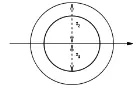 |
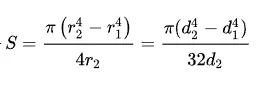 |
Solid arrow represents neutral axis |
| Rectangular hollow section | 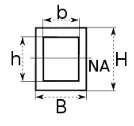 |
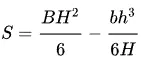 |
NA indicates neutral axis |
| Diamond | 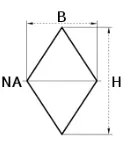 |
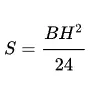 |
NA indicates neutral axis |
| C-Channel | 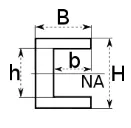 |
 |
NA indicates neutral axis |

Calculation:
Case 1:
I am taking the Hood model from the previous challenge.
The value we get after section analysis
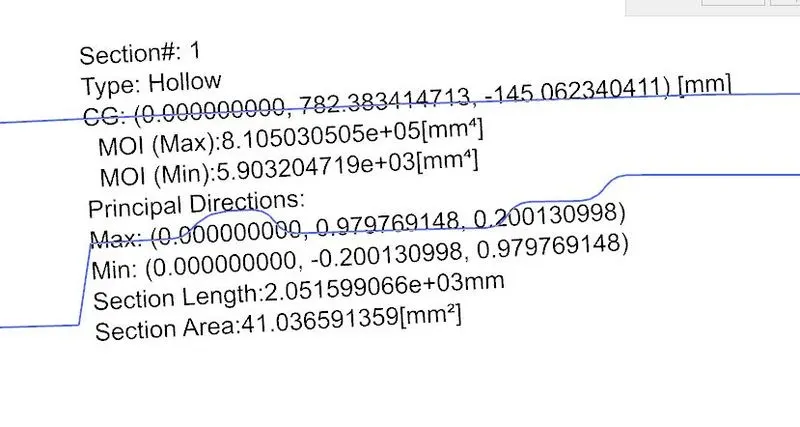
Moment of inertia(max) = 8.105030505×10^5 mm^4
Moment of inertia(min) = 5.903204719×10^3 mm^4
Distance (Y) = 485.2405/2=242.620 mm
S(max)=I/Y
S=8.105030505×10^5/242.620
Section Modulus(max)= 3340.62 mm^3
S(min)=I/Y
S=5.903204719×10^3/242.620
Section Modulus(min)= 24.33 mm^3
Case 2:
After offset of inner panel by 0.5mm.
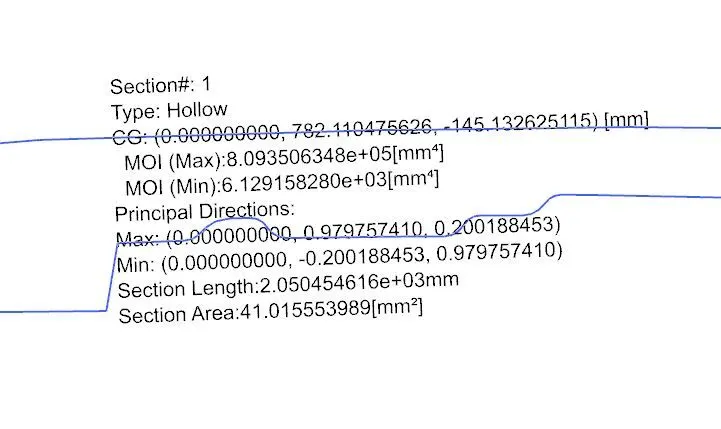
Moment of inertia(max) = 8.093506348×10^5 mm^4
Moment of inertia(min) = 6.129158280×10^3 mm^4
Distance (Y) = 485.2405/2=242.620 mm
S(max)=I/Y
S=8.093506348×10^5/242.620
Section Modulus(max)= 3335.87 mm^3
S(min)=I/Y
S=6.129158280×10^3/242.620
Section Modulus(min)= 25.26 mm^3
Conclusion
The difference can be seen in the moment of inertia and the change in the section modulus can be seen by the change in the design. As we increase the section area, the moment of inertia & section modulus increases which means strength and load material also increase.