Section Modulus calculation and optimization
SECTION MODULUS CALCULATION AND OPTIMIZATION
Introduction:
Section modulus is defined as the ratio of the moment of inertia of a section about the neutral axis to the distance of the outermost layer from the neutral axis. It is denoted by the symbol (S).
S=I/Y
where,
S= Section modulus (mm^3).
I = Moment of inertia of the section to the stress in the extreme end of the object (mm^4).
Y= Distance between the neutral axis and extreme end of the object (mm).
Factors that influence the section modulus:
o Area - Area is directly proportional to section modulus
o Thickness of sheet metal- Thickness is also directly proportional to the section modulus
o Distance between the outermost layer to the neutral axis called Y. Y is inversely proportional to section modulus.
o Cross-sectional depth of the component - It is directly proportional to the sectional modulus.
Moment of inertia:
It is defined as the quantity expressed by the body resisting angular acceleration which is the sum of the product of the mass of every particle with its square of a distance from the axis of rotation. Or in more simple terms, it can be described as a quantity that decides the amount of torque needed for a specific angular acceleration in a rotational axis. Moment of Inertia is also known as the angular mass or rotational inertia. The SI unit of moment of inertia is kg m2.
Moment of inertia is usually specified with respect to a chosen axis of rotation. It mainly depends on the distribution of mass around an axis of rotation. MOI varies depending on the axis that is chosen.
Moment of Inertia is expressed as,
I = mr2
where,
m = Sum of the product of the mass.
r = Distance from the axis of the rotation.
Area Moment of Inertia:
The area moment of inertia of a beam cross section area measures the beam ability to resist bending. The larger the moment of inertia less will be the bend.
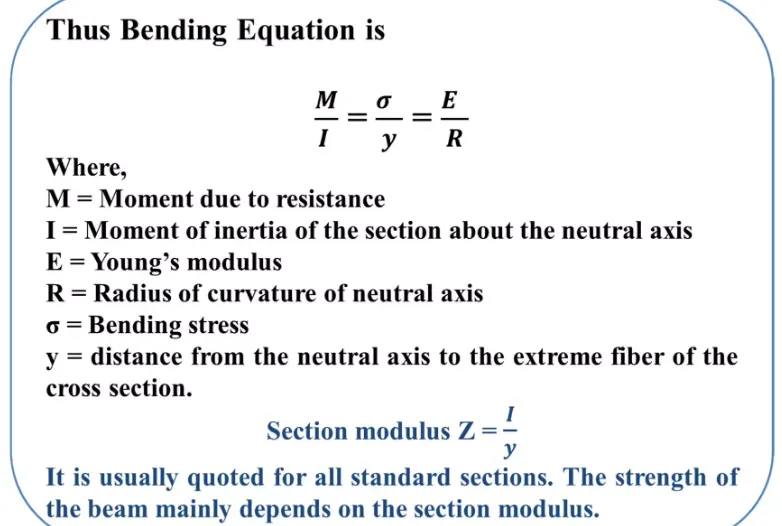

We know, (Z=I/Y)
M = σ x Z
In the above equation, M is the maximum bending moment (or moment of resistance offered by the section). Hence moment of resistance offered by the section is maximum when section modulus Z is maximum. Hence section modulus represents the strength of the section.
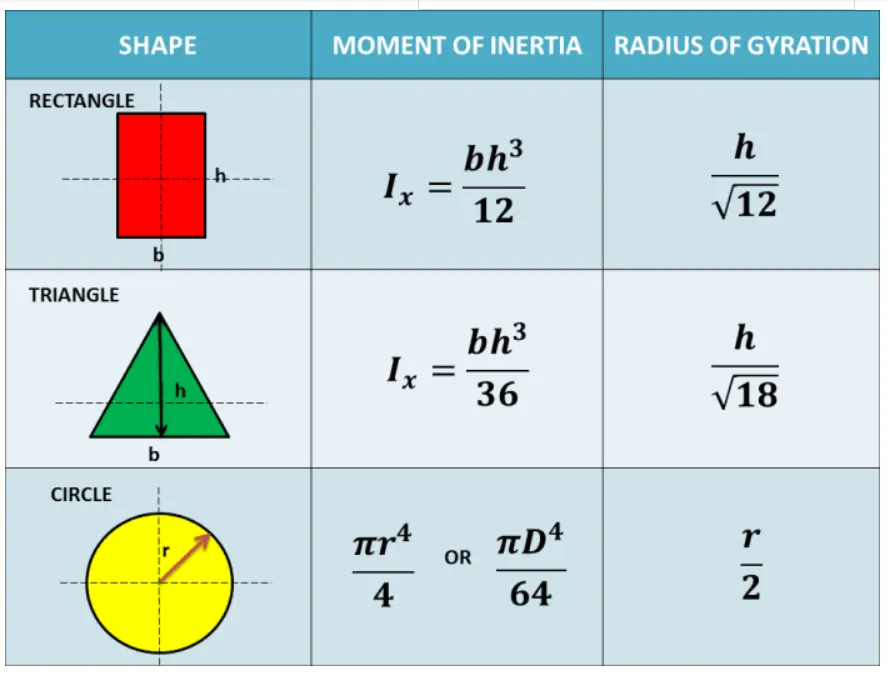
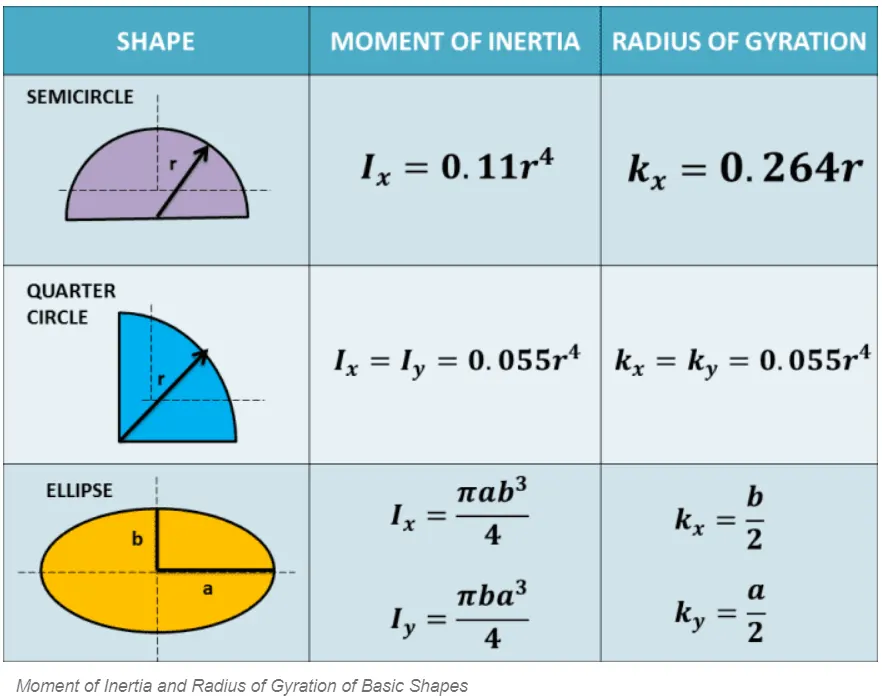
Neutral axis:
When beam is subjected to pure bending the top most fibres of the beam are subjected to maximum compression, while the bottom most fibres of the beams are subjected to maximum tension.
CALCULATION OF SECTION MODULUS:
CASE-1:
Before improvement
Select the Part body on which we have to do analysis and create a cross-section of the part and make sure that the cross-section sketch is a closed profile.
Perform Section Inertia Analysis over the section that we have created and there we can find the result as shown below.
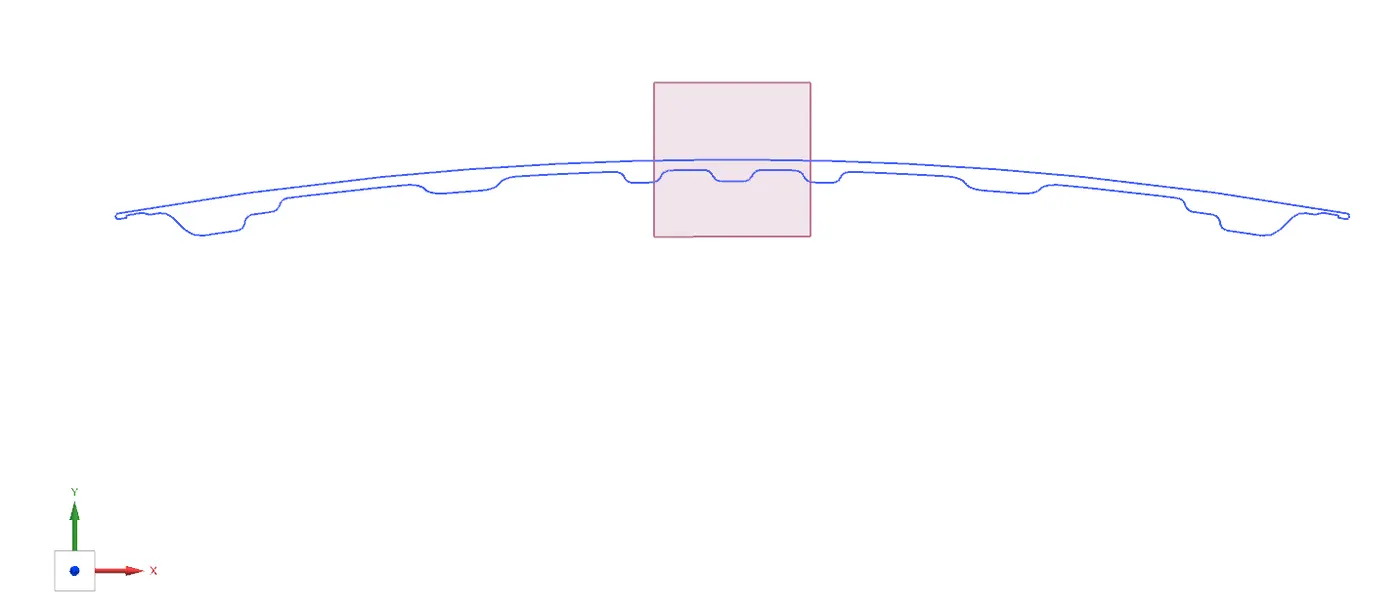
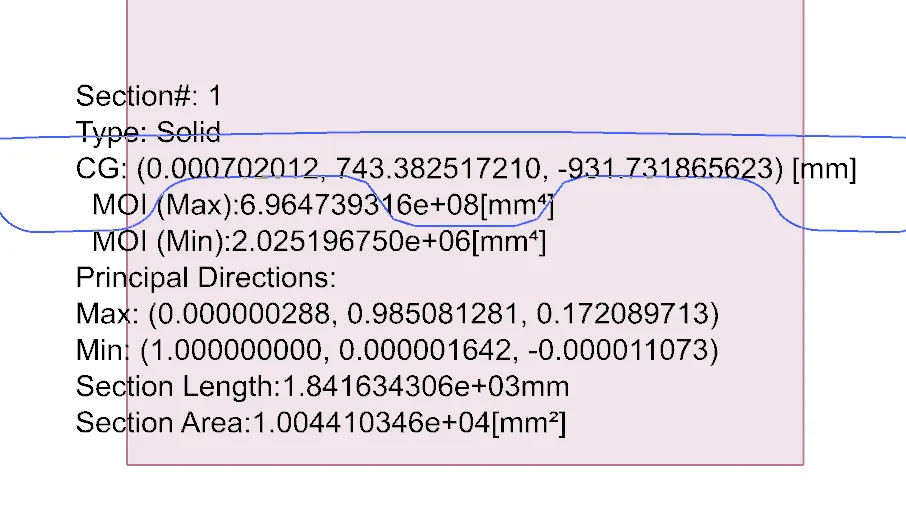
Moment of inertia(max) = 6.964739316 x 10^8 mm^4
Moment of inertia(min) = 2.025196750 x 10^6 mm^4
Total distance = 876.2 mm
Y= 876.2/2 = 438.1 mm
S= (2.025196750 x 10^6) /438.1 = 46.227 x 10^2 mm^3
S= 46.227 x 10^2 mm^3
CASE-2:
After improvement
The hood inner panel’s curve is offset by 0.5 mm downwards and the section inertia analysis is done in closed curve.
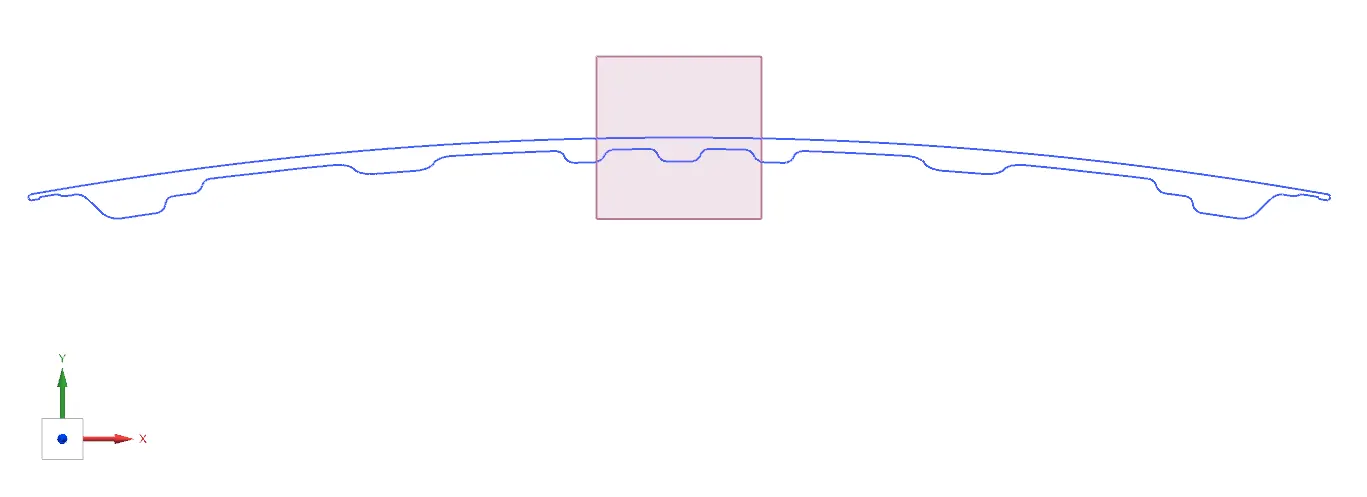
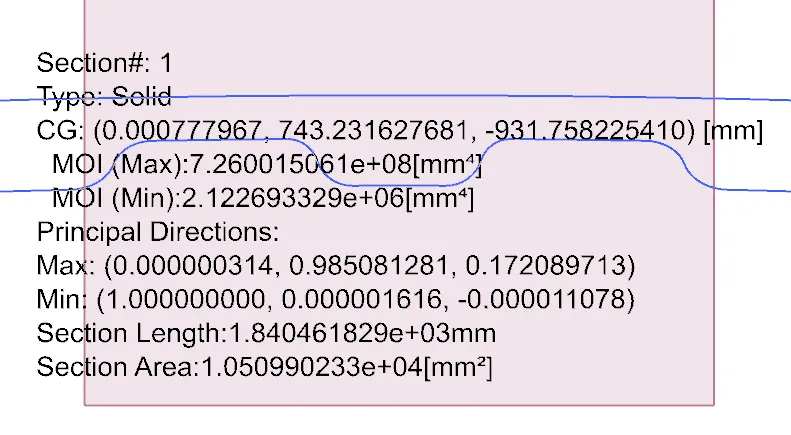
Moment of inertia(max) = 7.260015061 x 10^8 mm^4
Moment of inertia(min) = 2.122693329 x 10^6 mm^4
Total distance = 876.2 mm
Y= 876.2/2 = 438.1 mm
Smin= Imin
S= (2.122693329 x 10^6) /438.1 = 48.452 x 10^2 mm^3
S= 48.452 x 10^2 mm^3
CONCLUSION:
The section modulus value of case 2 is higher than that of case 1. The strength of material is directly proportional to the moment of inertia. Thus, increasing the sectional area will increase the strength of the component.