Section Modulus calculation and optimization
Aim : To calculate the section modulus of the previously designed hood for analyzing its strength and also optimizing the design to see the difference in the bending strength of the hood. Higher the section modulus of a structure, the more the resistive it becomes to bending.
Section Modulus :
Section modulus is a geometric property for a given cross-section used in the beams or flexural members, it is also referred to as the polar modulus or the Torsional Sectional Modulus. Other geometric properties used in design unclude area for tension and shear, radius of gyration for compression, and moment of inertia and polar moment of inertia for stiffness. Any relationship between these properties is highly dependent on the shape in question. Equations for the section moduli of common shapes are given below. There are types of section moduli, the elastic section modulus and the plastic section modulus.
S=I/Y
Here,
S= Section Modulus
I= Moment of Inertia (Units in mm 4)
Y= Distance from Neutral axis to the Extreme end (unit mm)
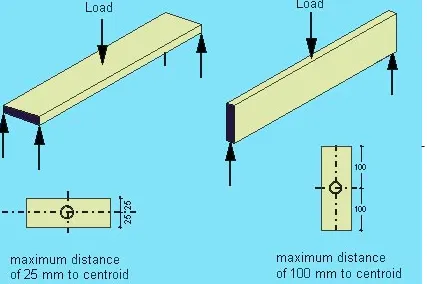
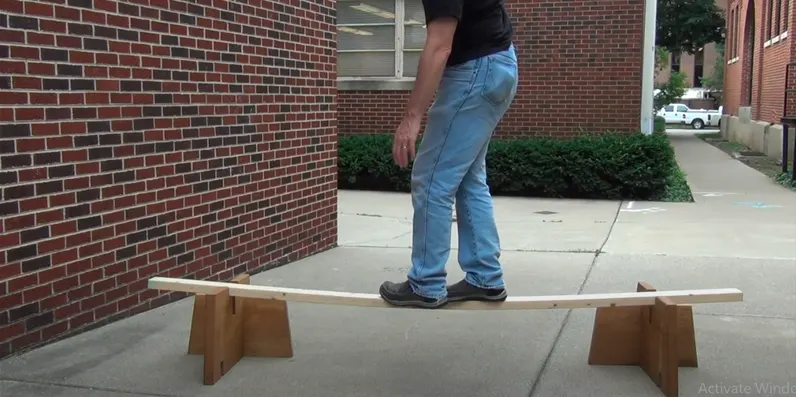
Changing the position can show the difference in bending which is because of the centroid distance from extreme fiber end.
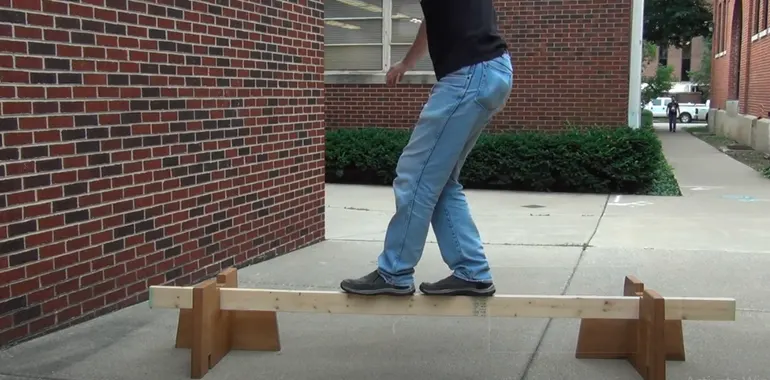
In Layman's terms, in this position there ia more material from axis to the specific direction. to resist the load which makes less bend and improves the strength.
i.e, Section modulus is also expressed as the ratio of bending moments to the bending stress of a given object within the elastic limit.
By Using the Hood Design I am going to Calculate the Hood Section Modulus.
Case 1 :
Below pic referes to the 2d sketch of the Hood part. By this we can calculate the hood section modulus.
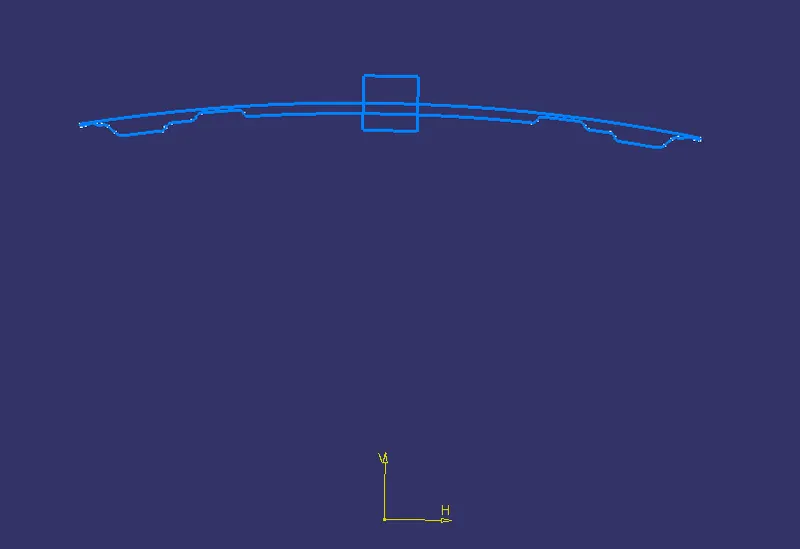
By Using CATIA V5 in that using fill command create a surface.
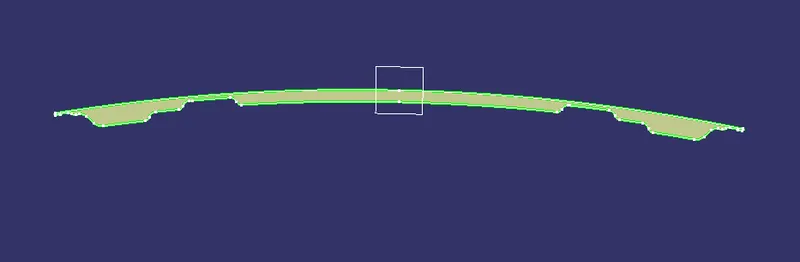
Calculating the Distance between Hood from one end to extreme end.
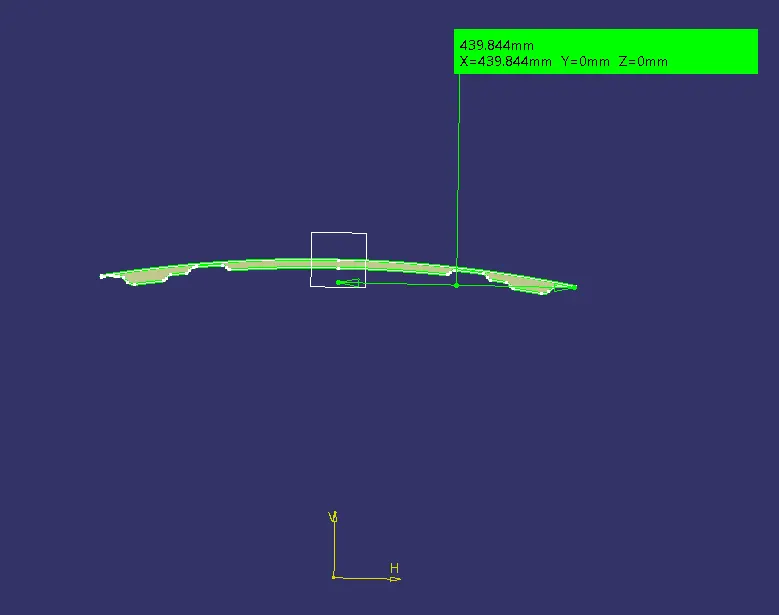
The total distance of the hood Y = ( 439.844mm)
The Command called section inertia, By this we can automatically get the Moment of Inertia values.
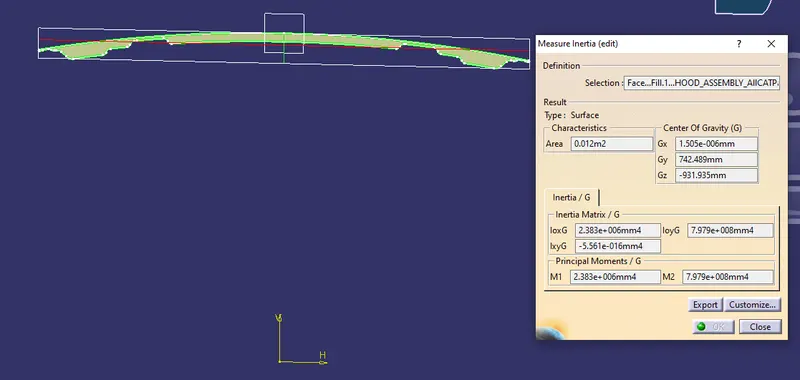
Finally got that moment of inertia (max & min) values of Hood part.
MOI (max) : (2.383e+006 * 10^05) [mm^4]
MOI (min) : (7.979e+008 * 10^03) [mm^4]
Calculation for the Hood Section of Modulus
Let,
Moment of Inertia (max. & Min) values of Hood Part.
MOI (max) : (2.383e+006 * 10^05) [mm^4]
MOI (min) : (7.979e+008 * 10^03) [mm^4]
The total distance of the hood Y = ( 439.844 mm)
For Asymmetric has two values for the top and bottom of the centroid ie., S(max) & S(min).
Section Modulus is the ratio of the second moment of area and distance from Netural axis to the given by S = I/Y
S(max) = I(max)/Y = (2.383e+006 * 10^05)/( 439.844) = (4723.416)[mm^3]
S(min) = I(min)/Y = (7.979e+008 * 10^03)/(439.844) = (194.435)[mm^3]
Case 2 :
In Case2 making some of the changes in Emboss and then folowing same as case1, same value of the total distance of the hood Y = ( 439.844mm).
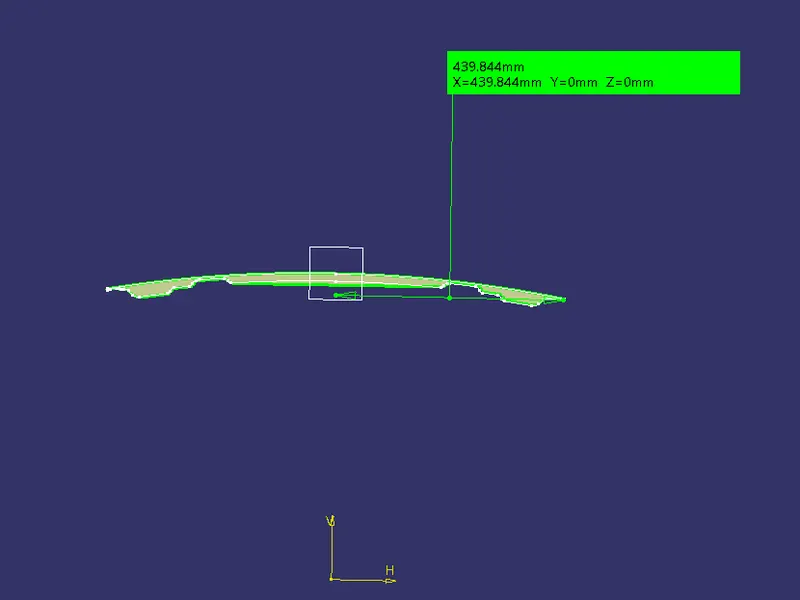
To get the Moment of Inertia values shown in below.
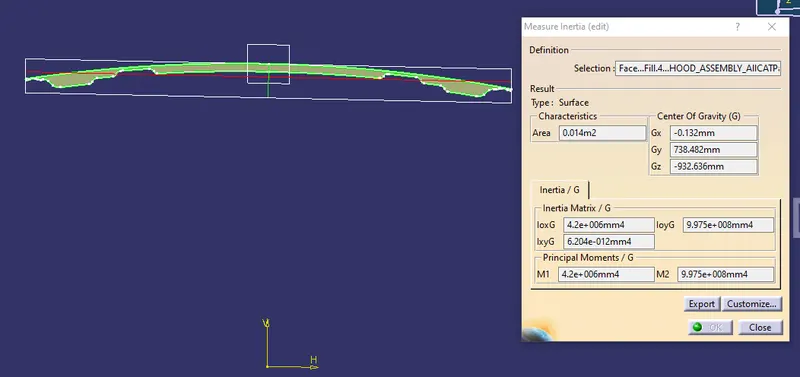
Finally got that moment of inertia (max & min) values of Hood part.
MOI (max) : (4.2e+006*10^05) [mm^4]
MOI (min) : (9.975e+008*10^03) [mm^4]
Calculation for the Hood Section of Modulus
Let,
Moment of Inertia (max. & Min) values of Hood Part.
MOI (max) : (4.2e+006*10^05) [mm^4]
MOI (min) : (9.975e+008*10^03) [mm^4]
The total distance of the hood Y = ( 439.844 mm)
For Asymmetric has two values for the top and bottom of the centroid ie., S(max) & S(min).
Section Modulus is the ratio of the second moment of area and distance from Netural axis to the given by S = I/Y
S(max) = I(max)/Y = (4.2e+006*10^05)/( 439.844 mm) = (8324.9478)[mm^3]
S(min) = I(min)/Y = (9.975e+008*10^03)/( 439.844 mm) = (243.074)[mm^3]
Comparing Case1 and Case2
We considering the section modulus minimum value only after calculating we got the values of case1 and case2 are
Case 1
S(min) = (194.435)[mm^3]
Case 2
S(min) = (243.074)[mm^3]
- When Comparing this Two Hood values. As you can see there is increasing in the values in both S max & S min.
- When increased sectional area of Emboss therefore the S(min) value in case2 increased and also increased in strength from (194.435)[mm^3] to (243.074)[mm^3].
- When we see the value of S(max) there is slightly increases from (4723.416)[mm^3] to (8324.9478)[mm^3].
- Hence comparing these two cases, we can say that when there is increase in cross sectional area similarllly there will be increase in strength.
- Increase in cross sectional area, increased the minimum load carrying capacity or strength of the Hood.
Conclusion :
Thus calculated the section modulus of Hood design and also there is improved in section modulus of the previous section Finally concluded that there is increase in sectional area it increase the overall mass of an object and also strength of the object.