Section Modulus calculation and optimization
SECTION MODULUS CALCULATION AND OPTIMIZATION:
GINEN DATA:
Use the Section from your Hood design and calculate the section modulus using the formula
S = I/y
S = Section Modulus
I = Moment of Inertia
y = distance between the neutral axis and the extreme end of the object
INTRODUCTION:
Section modulus is defined as the ratio of moment of inertia of a cross section(I) about the neutral axsis to the distance from neutral axis to the outermost layer(Y). It is denoted by the symbol Z.
Mathematical Expression: Z=I/Y
The above expression came from bending equation i.e, M/I = σ/Y = E/R
We consider :
M/I = σ/Y
M = σ(I/Y) where (I/Y) is Z i.e section modulus, then
M =σZ
In the above equation σ refers the youngs modulus which depends on the property of material where we keep this as constant so that the equation becomes,
M = Z i.e, Moment of Resistance(M) = Section Modulus(Z)
where Section Modulus increases automatically the Moment of resistance increases, which increases the strength of component and reduces the chances of failure.
- From this point the ojective of the challenge starts to produce better section modulus for better Moment of resistance towards bending during collision.
DESCRIPTION:
Section modulus: Z=I/Y
I= Moment of Inertia of a cross section Y= Distance from Neutral axis.
Moment of Inertia (I):
Firstly inertia is a tendency of an object to resist changes in its state of motion, Moment of inertia is the quantity of the object resisting angular acceleration which is the sum of the product of the mass of every particle with its square of a distance from the axis of rotation.
Moment of Inertia I = mr2 where,
m = Sum of the product of the mass.
r = Distance from the axis of the rotation.
Moment of inertia is of there types:
AREA MOMENT OF INERTIA: This is a property of a two-dimensional plane shape which characterizes its deflection under loading. EX: Resistance calculated on bending of an I cross-section
MASS MOMENT OF INERTIA: This is a property of a object to resist changes in rotational velocity. EX: resistance of wheel rotating from hill top to down.
POLAR MOMENT OF INERTIA: This is a property of a three-dimensional plane shape which characterizes its deflection under twisting simplified as torssion. EX: Resistance calculated on twisting a rod.
- In this challenge we are going to calculate and improve AREA MOMENT OF INERTIA.
DISTANCE FROM NEUTRAL AXIS(Y):
Genrally the distance for any crossection study , the axis of crossection is taken from neutral axis (bending axis) i.e ,from mid of the ojbect crossection because its the point where max bending will happen which is shown in the below figures.

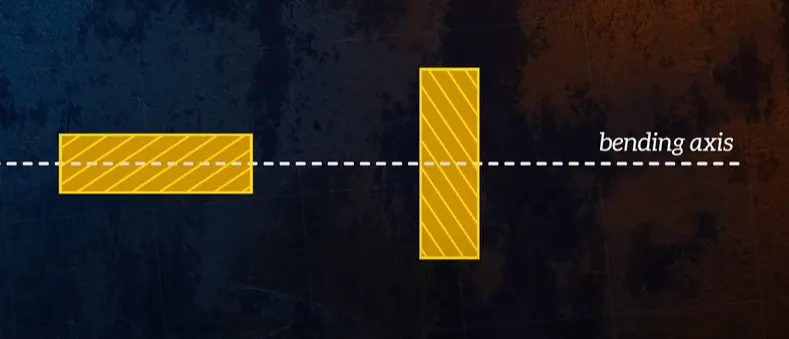
Fig.1: Max bending created at mid of the body Fig.2: Crossection section in Neutral axis
SECTION MODULUS OF INTIALY DESIGNED HOOD:
CASE-1:
As it was described above we calculate the crossection from neutral axis , in this challenge we had made section modulus curve intersection at 50% of the hood shown in below figure.
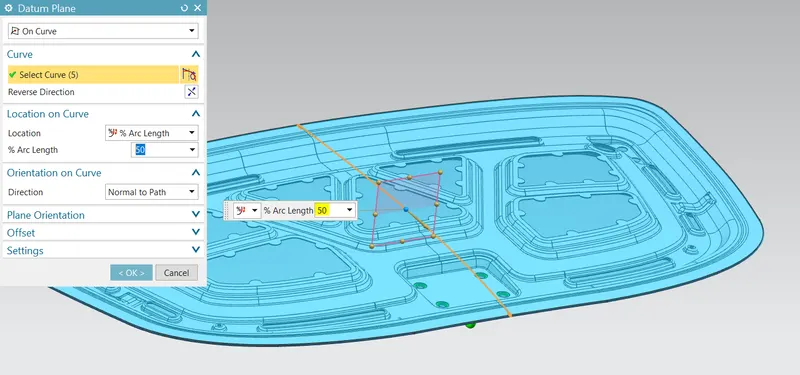
Fig.3: Crossection section in Neutral axis
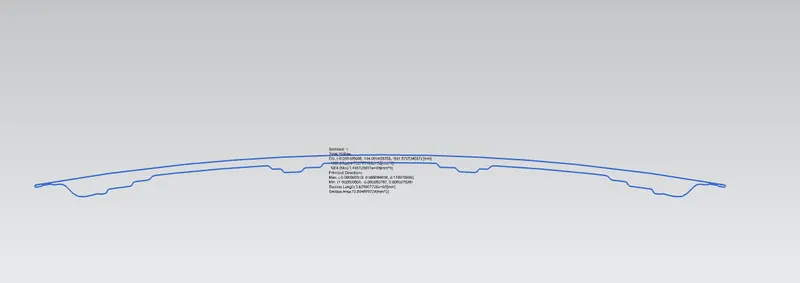
Fig.4: Curve created at Crossection section of Neutral axis
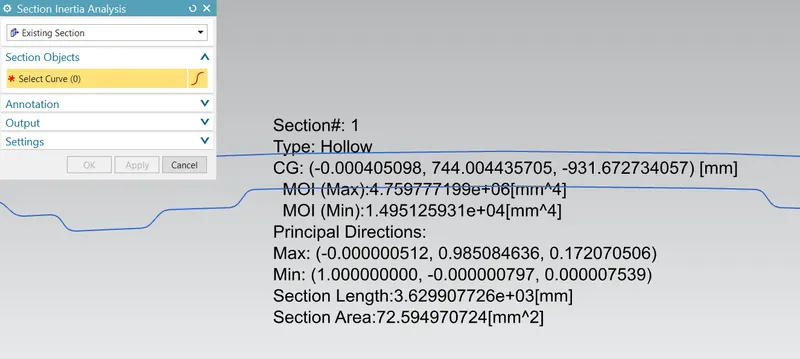
Fig.5: Initial inertia Analysis results of case-1
Results Obtained - Intial study
MOI (max) : 4.759777199 x 106 mm4
MOI (min) : 1.495125931 x 104 mm4
we should take the minimum moment of inertia to calculate the section modulus. that is the point where the hood starts to deform its shape.
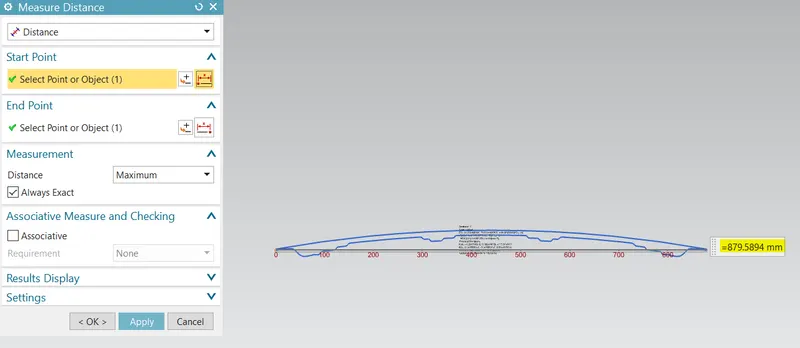
Fig.6: Total distance of the curve
Then Y is distance from netural axis so the value will be half i.e, Y= 879.5894/2 will be Y= 439.7947 mm
Therefore Section Modulus(S) = MOI(min) / y
S= 1.495125931 x 104 mm4 / 439.7947
S= 33.99599701860891 mm3
CASE-2:
We have an offseting distance of 0.7 between the inner pannel to the outer pannel where the thickening of outer pannel starts, in tis case - 2 we will offset inner pannel border to 0.5.
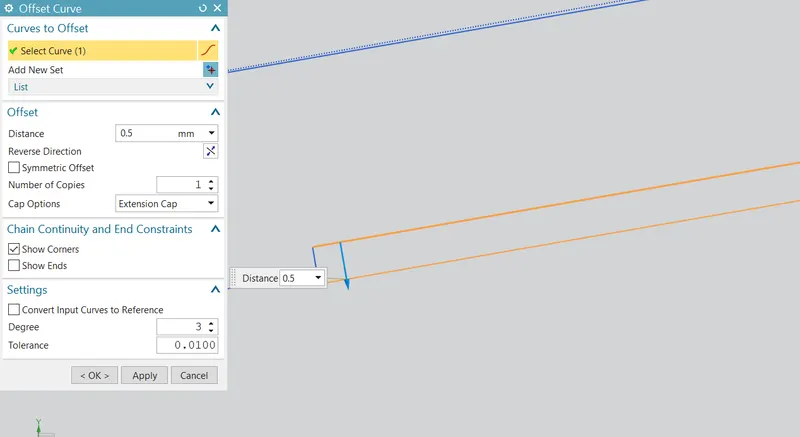
Fig.7: Offseting curve 0.5 to case-1
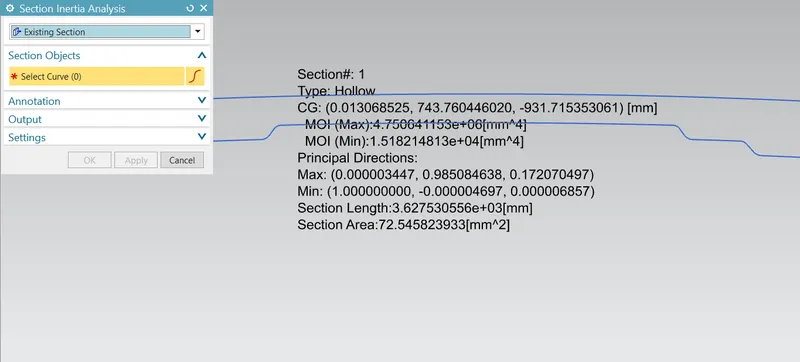
Fig.8: Initial inertia Analysis results of case-2
Results Obtained - case-2
MOI (max) : 4.750641153 x 106 mm4
MOI (min) : 1.518214813 x 104 mm4
Then Y is distance from netural axis so the value will be same ait was in case-1
Therefore Section Modulus(S) = MOI(min) / y
S= 1.518214813 x 104 mm4 / 439.7947
S= 34.52098929341349 mm3
CASE-3:
We have an offseting distance of 0.3 remaining from case-2 between the inner pannel to the outer pannel where the thickening of outer pannel starts, in tis case - 3 we will offset inner pannel border to 0.3 from case-2.
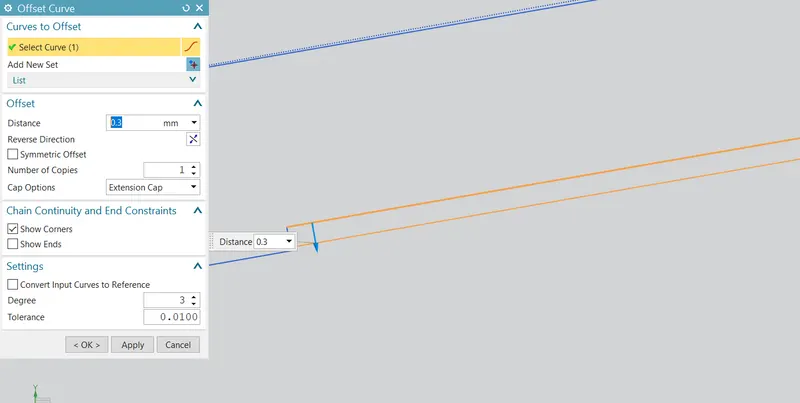
Fig.9: Offseting curve 0.3 to case-2
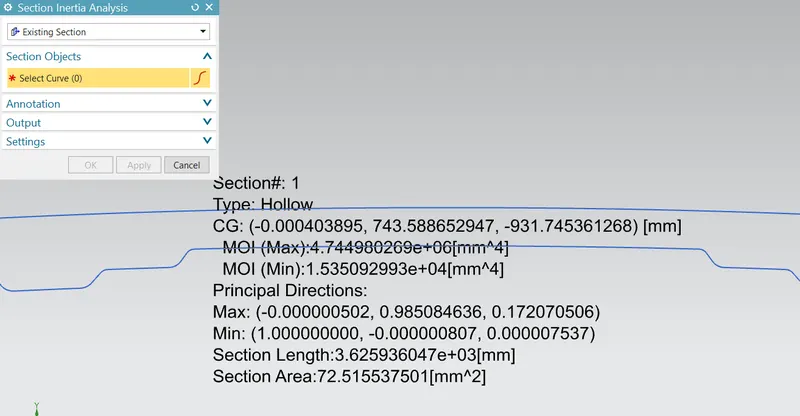
Fig.10: Initial inertia Analysis results of case-3
Results Obtained - case-3
MOI (max) : 4.744980269 x 106 mm4
MOI (min) : 1.535092993 x 104 mm4
Then Y is distance from netural axis so the value will be same ait was in case-1
Therefore Section Modulus(S) = MOI(min) / y
S= 1.535092993 x 104 mm4 / 439.7947
S= 34.90476335890136 mm3
CONCLUSION:
The MOI results obtained from all the above cases for min resistance are
CASE - 1: S= 33.99599701860891 mm3
CASE - 2: S= 34.52098929341349 mm3
CASE - 3: S= 34.90476335890136 mm3
from the above cases states that increase in area there will be increase in MOI & it was clear case-3 has highest optimization value compared to other two cases but i choose case-2 where will have clearence of 0.3 between inner and outer pannel and will otimal solution for the design i have produced.