Section Modulus calculation and optimization
AIM: To calculate and compare the section modulus of the hood design and to conclude which one has a more strength.
INTRODUCTION OF SECTION MODULUS:
Section modulus is a geometric property for a given cross-section used in the design of beams or flexural members. Other geometric properties used in design include area for tension and shear, radius of gyration for compression, and moment of inertia and polar moment of inertia for stiffness. Any relationship between these properties is highly dependent on the shape in question. Equations for the section moduli of common shapes are given below.
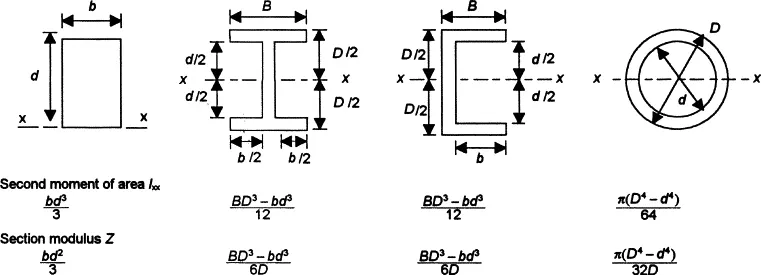
There are two types of section moduli,
- Elastic section modulus
- Plastic section modulus
| Elastic section modulus |
Plastic section modulus |
|
|
Section modulus can be calculated using a formula
S = I/y
where,
S - Section modulus
I - Moment of Inertia
y - Distance from the neutral axis to the most extreme end of the object
Section Modulus Analysis:
CASE 1 :
- Take an intersection of the designed car hood outer panel and the inner panel
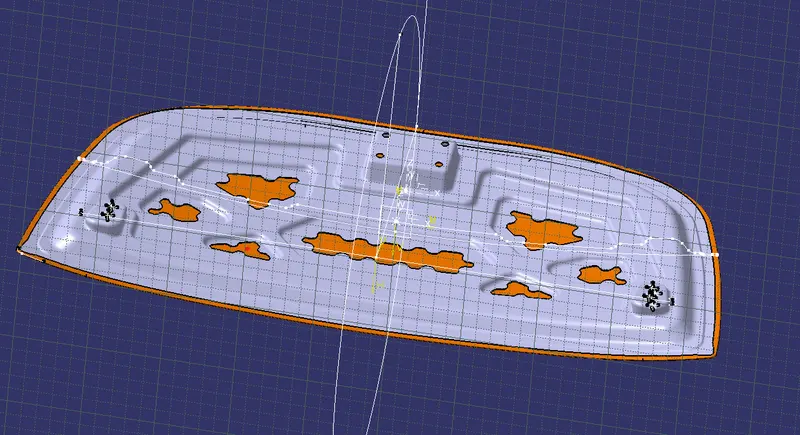
- Closed surface of intersection curve
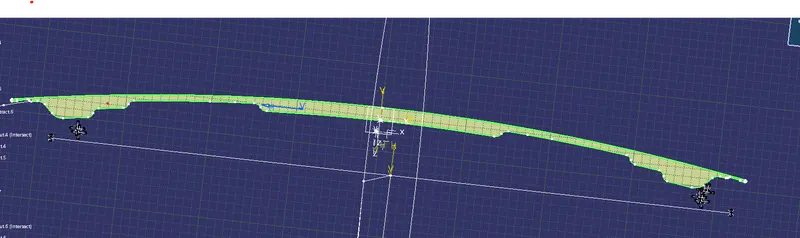
- Measure the moment of inertia by using the Inertia command in the CATIA v5 (I)
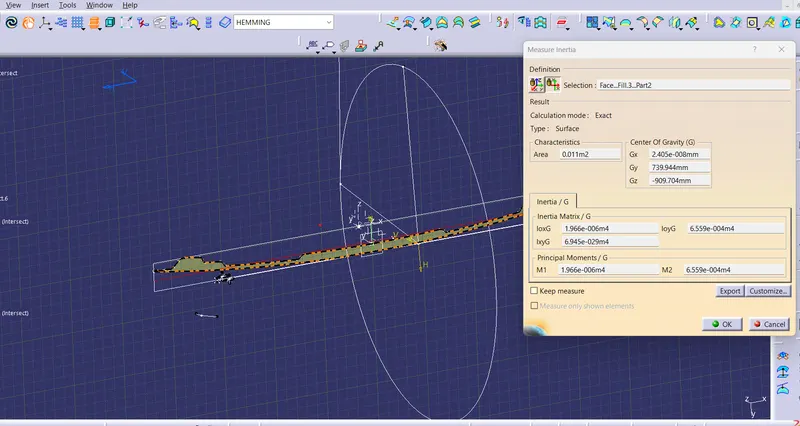
- Meeasure the length from the neutral axis to the one of extreem end (Y)
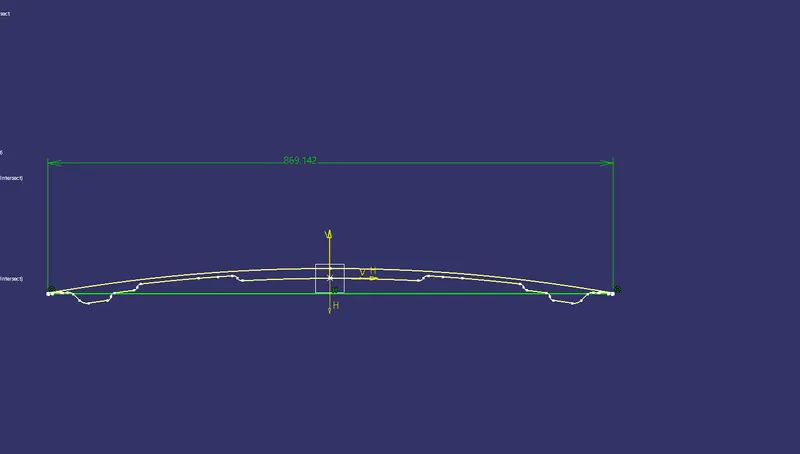
put all the value obtained in a given formula to calculate moment of inertia
i.e, S = I/y
where,
I = 1.966*10^-6 m^4 = 1.966*10^4 mm^4
y = 869.142/2 = 434.571 mm
we get
S = 0.00452400183 mm-1