Section Modulus calculation and optimization
AIM:
To calculate the section modulus of the previously designed hood for analysing its strength and also optimizing the design to see the difference in the bending strength of the hood. Higher the section modulus of a structure, the more the resistive it becomes to bending.
SIGNIFICANCE OF SECTION MODULUS
The section modulus of the cross-sectional shape is of significant importance in designing beams. It is a direct measure of the strength of the beam. A beam that has a larger section modulus than another will be stronger and capable of supporting greater loads.
1. Section modulus is the important factor for design of beam and flexural member.
2. Higher the value of section modulus, higher will be the resistance of member to bending.
3. It is required to calculate stresses in beams.
4. It is used to calculate strength of the steel structure.
5. More the section modulus, it can withstand more load and it is also considered to be more tougher.
Section modulus is a geometric property for a given cross-section used in the design of beams or flexural members. Other geometric properties used in design include area for tension and shear, radius of gyration for compression, and second moment of area and polar second moment of area for stiffness. Any relationship between these properties is highly dependent on the shape.
There are two types of section moduli, the elastic section modulus (S) and the plastic section modulus (Z)
For general design, the elastic section modulus is used, applying up to the yield point for most metals and other common materials
The Elastic section modulus is defined as S= I / Y, where I is the second moment of area (or moment of inertia) and y is the distance from the neutral axis to any given fiber. It is often reported using y=c, where c is the distance from the neutral axis to the most extreme fiber.
The Plastic section modulus depends on the location of the plastic neutral axis (PNA).The PNA is defined as the axis that splits the cross section such that the compression force from the area in compression equals the tension force from the area in tension.
Neutral axis: When beam is subjected to pure bending the top most fibres of the beam are subjected to maximum compression, while the bottom most fibres of the beams are subjected to maximum tension.
Difference between section modulus and moment of inertia
Moment of inertia is specific to bending of the cross section of the member . SECTION MODULUS: The ratio of the maximum moment on a beam and the maximum fiber stress (or moment of inertia over distance to nuetral axis of the member).
CASE-1
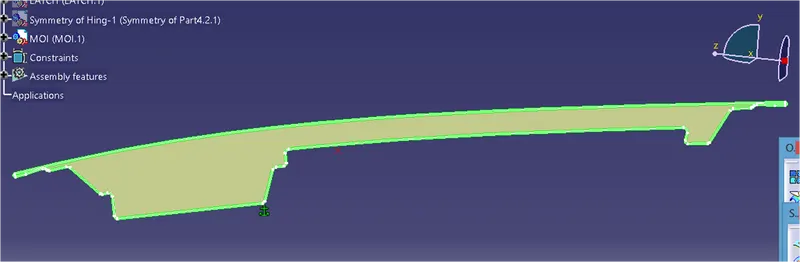
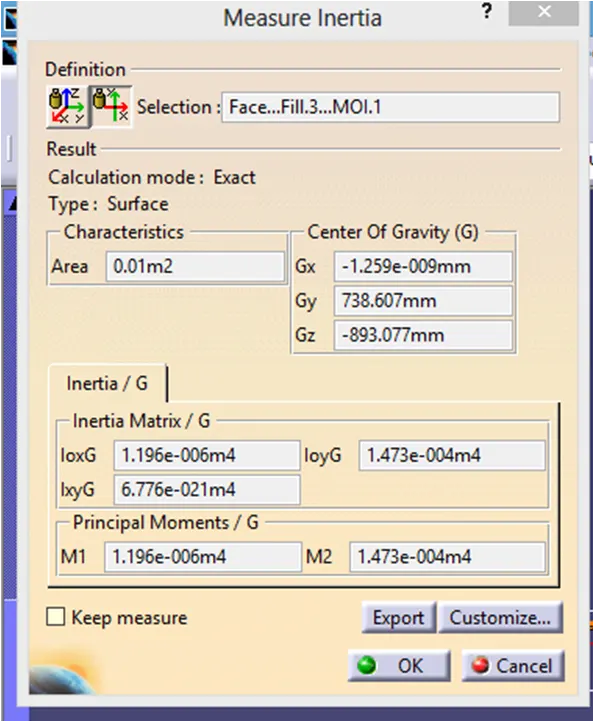

As per section modulus equation,
S = I / Y
I = MOI (min) value is considered
Y = Total distance /2,
I (max) =1.196e-006 m4
I (min)= 1.473e-004 mm4
I (min) = 14730000 mm4
Y = 487.398/2 = 243.699 mm
S= I/ y
S =60443.415 mm3 = 60.443 x 103 mm3
CASE 2

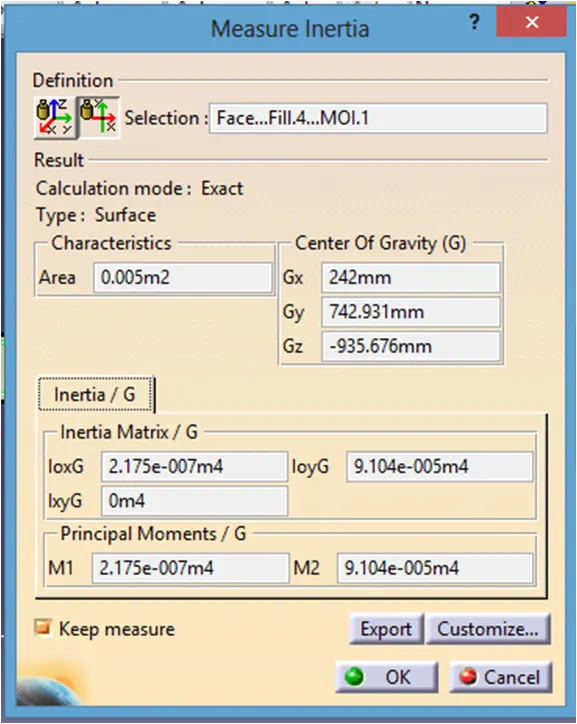

I (min) =9.104e-005 m4 = 910400000 mm4
I (max)= 2.175e-007 m4
Y= 472.597 /2 mm = 236.298 mm
S = 3852754.038 mm = 38.52754x 10⁵
CASE-3

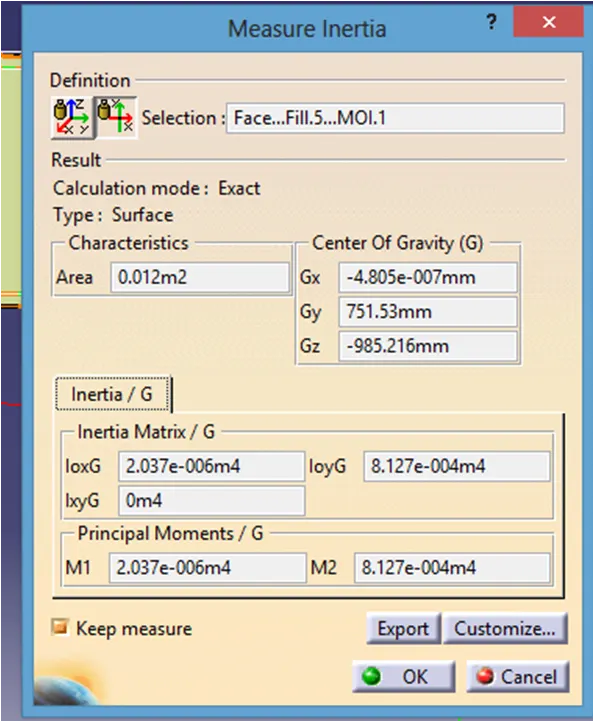

I (min) = 8.127e-004 m4 = 81270000 mm4
I (max) = 2.037e-006 m4
y= 900.045 /2 mm = 450.022 mm
S= 180591.17 mm = 180x103 mm3
- The strength of the material also depends upon the composition of material, thickness and cross-sectional area of an object.
- n case of hood also same principle will work, i.e when increase in cross sectional area by 1mm the minimum load carrying capacity or strength was increased by approximately 8% percentage.
CONCLUSION: -
The strength of the material is directly proportional to the moment of inertia, hence increase in sectional area there is have increase in overall mass of an object, hence have increase in strength.