Section Modulus calculation and optimization
Section Modulus calculation and optimization:
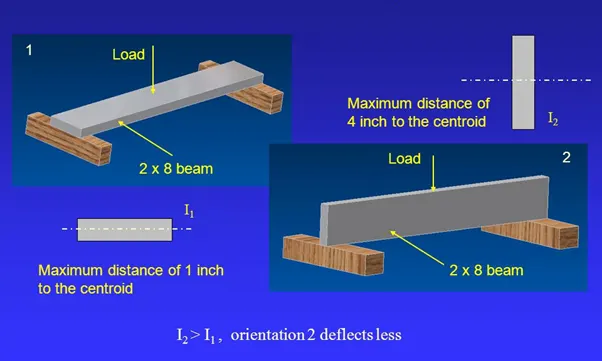
To calculate the section modulus of the previously designed hood for analyzing its strength and optimizing the design to see the difference in the bending strength of the hood. Higher the section modulus of a structure, the more resistant it becomes to bending.
Section modulus
Section modulus is a geometric property for a given cross-section used in the design of beams or flexural members, it is also referred to as the Polar Modulus or the Torsional Sectional Modulus. Other geometric properties used in the design include an area for tension and shear, the radius of gyration for compression, and the moment of inertia and polar moment of inertia for stiffness. Any relationship between these properties is highly dependent on the shape in question. Equations for the section moduli of standard shapes are given below. There are two types of section moduli, the elastic section modulus, and the plastic section modulus.
S=I/Y
Here,
S = Section modulus
I= Moment of Inertia (Unit mm 4)
Y= Distance from the Neutral axis to the extreme end (unit mm)
The Unit of a “section modulus” is (mm3)
First Design Study:
1. The Intersection of the design was taken and then section Inertia Analysis was done.
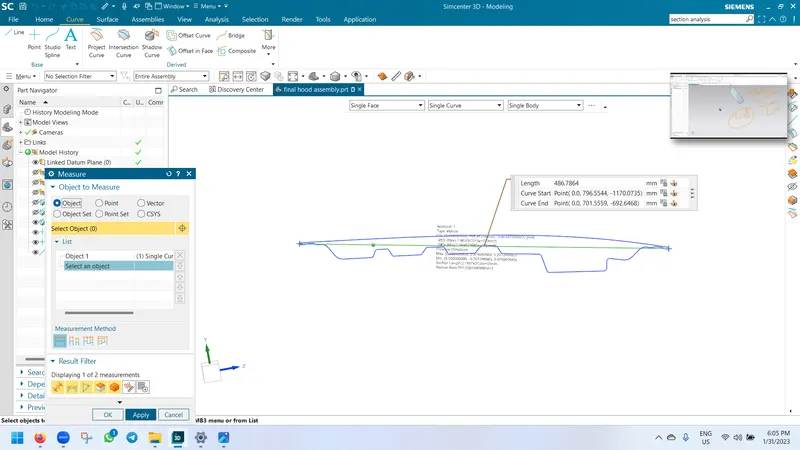
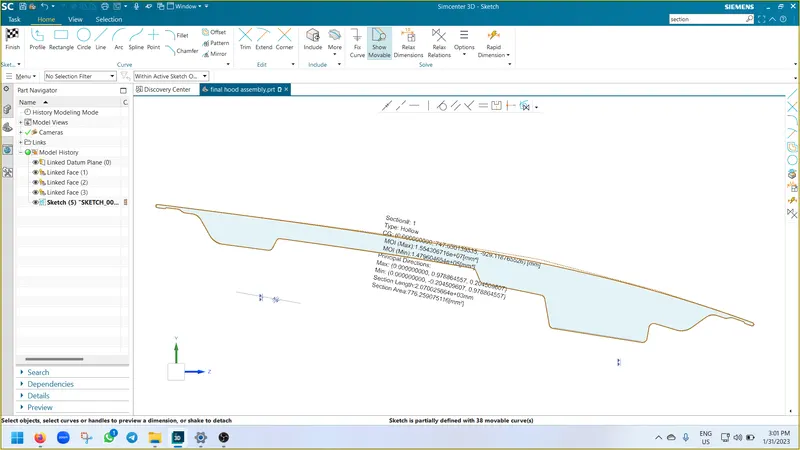
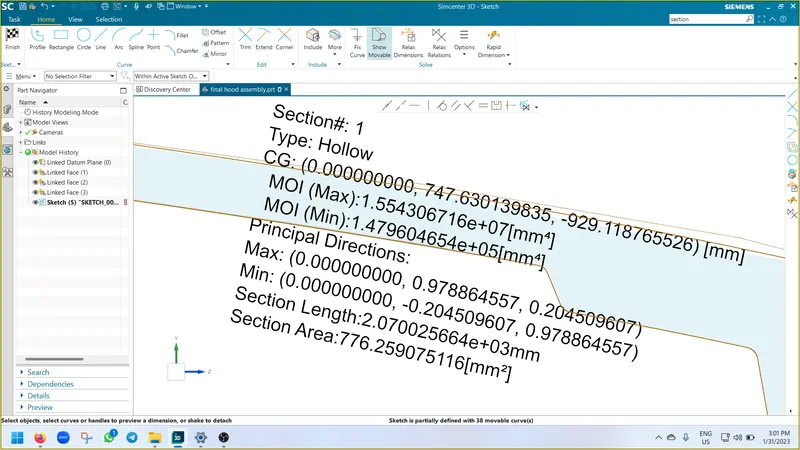
Moment of inertia(min) = 1.47960465*10^5 (mm^4)
Y = 488.8252/2 = 244.4126 mm
S= I/Y = 605.37167 mm^3 = 0.60537167*10^3 (mm^3)
Hood Design Optimization:
2. By increasing the depth of the inner panel by 0.5 mm.
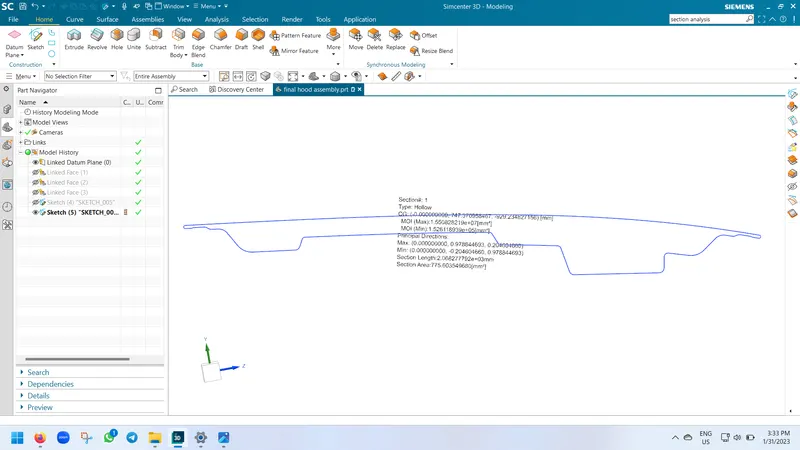
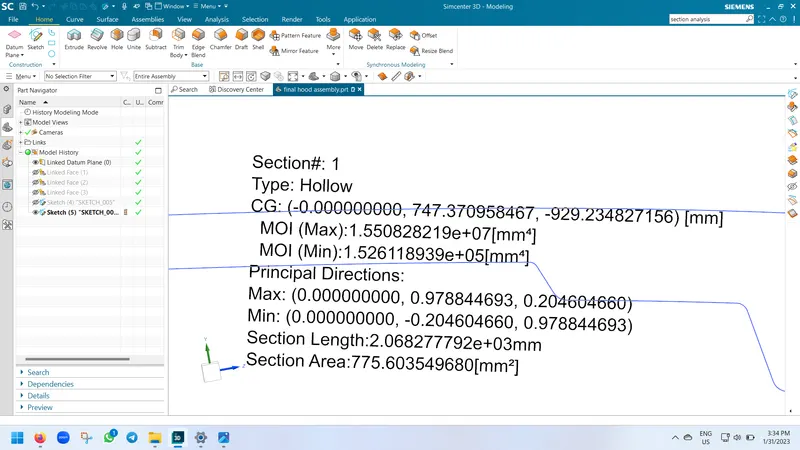
Moment of inertia(min)= 1.526118939*10^5 (mm^4)
Y = 244.4126 mm
S= I/Y = 624.4027 mm^3 = 0.6244027*10^3 (mm^3)
3. By creating embosses in the inner panel.
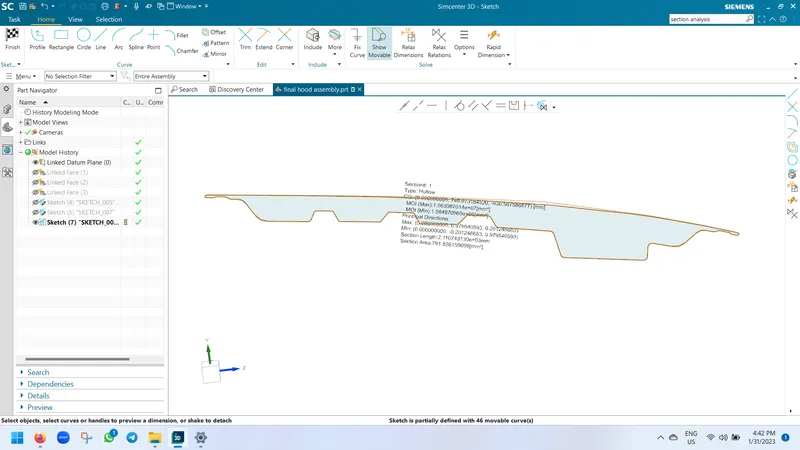
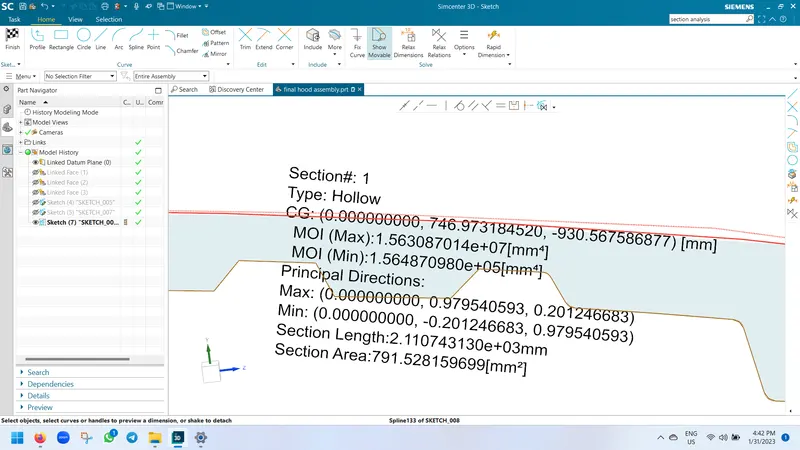
Moment of inertia(min) = 1.564870980*10^5 (mm^4)
Y= 244.4126 mm
S=I/Y = 640.25789 mm^3 = 0.64025789*10^3 (mm^3)
[ Note: Here the moment of inertia was calculated by using the NX software]
Observations:
- Newton's first law explains that, if higher the mass is, the force required to move the object is also high due to offering more resistance in order to move the object, This resistance we called a MOMENT OF INERTIA.
- In the case of the hood also the same principle will work, i.e when the increase in cross-sectional area by offsetting the hood inner panel 0.5mm the minimum load carrying capacity or strength was increased, and then by creating the embosses in the hood inner part strength was increased.
- The strength of the material also depends upon the composition of the material, thickness, and cross-sectional area of an object.
CONCLUSION:-
The strength of the material is directly proportional to the moment of inertia, hence increase in the sectional area there is an increase in the overall mass of an object, hence have increase in strength.