Roof Design
Overview:
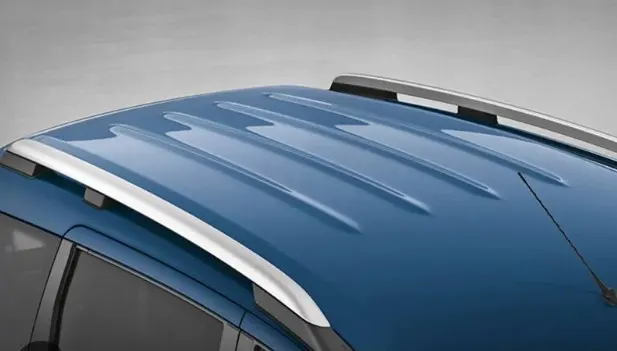
The automobile roof is the top part of a vehicle that shields passengers from sunlight, wind, and rain. Designing the roof considers different weather situations. While it adds to the vehicle's style, the roof must also be structurally strong to ensure passenger safety. Vehicle roofs are susceptible to intense heat and moderate snow loads. Calculations for heat and snow loads are performed to create well-designed roof rails. This guarantees passenger safety inside the vehicle.
Design Factors:
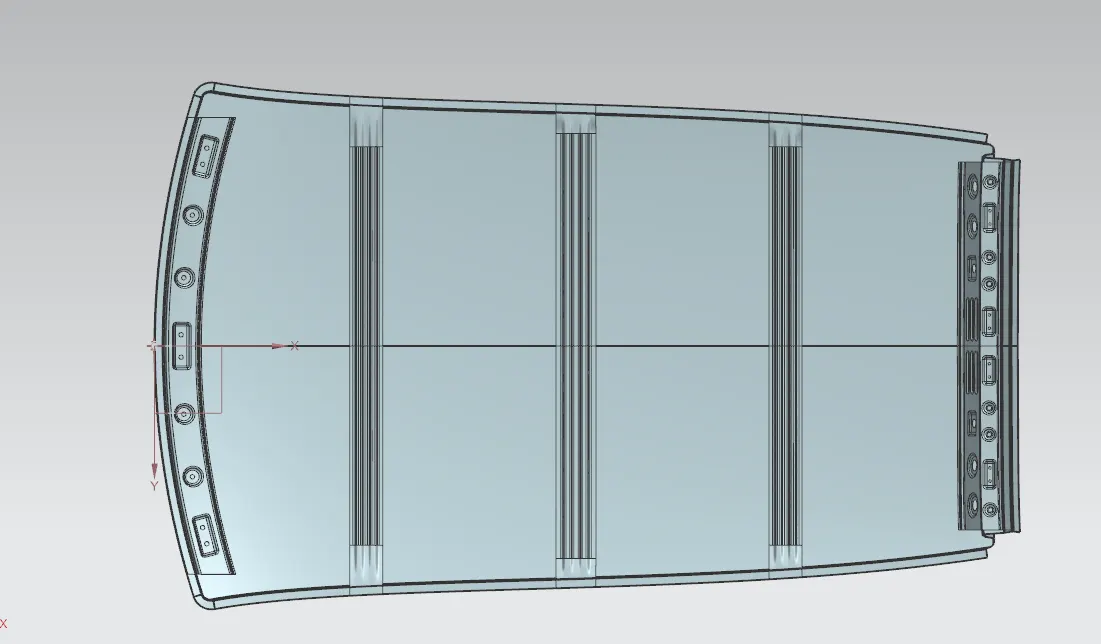
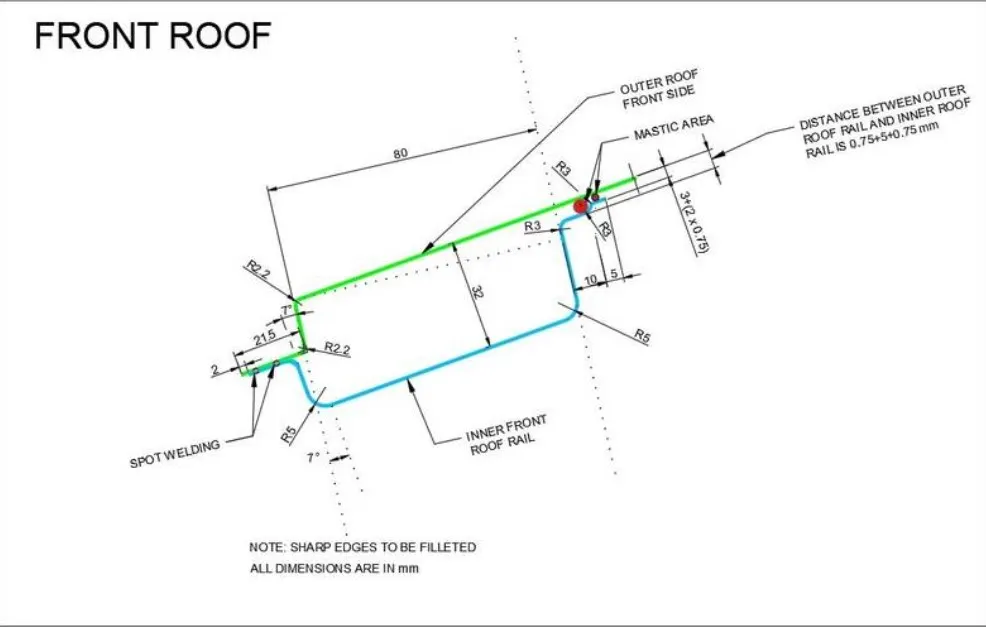
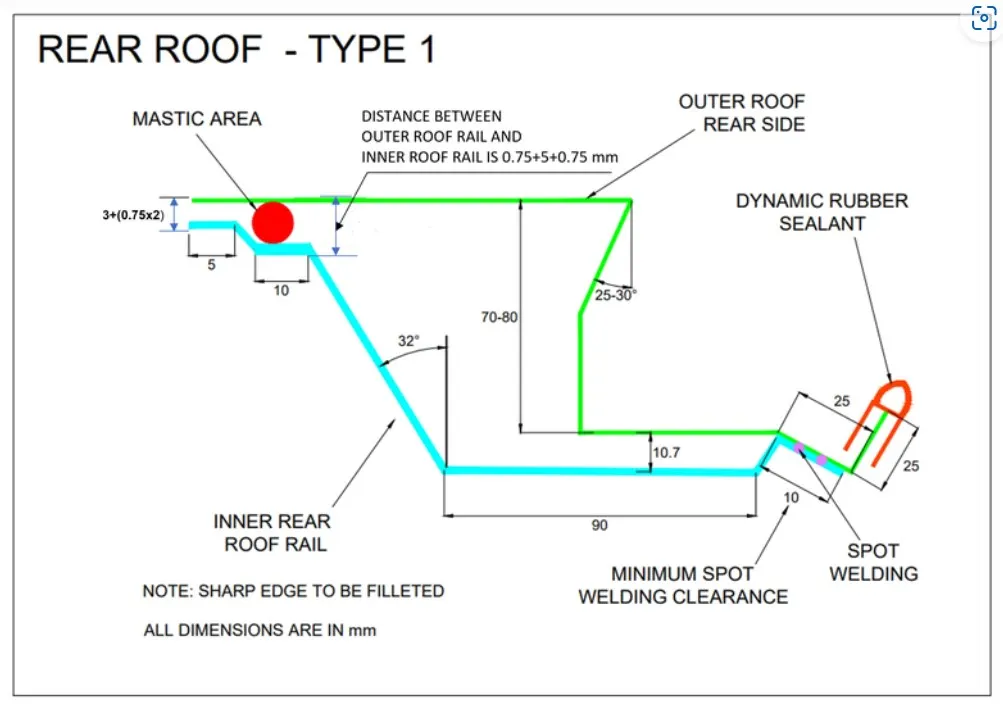
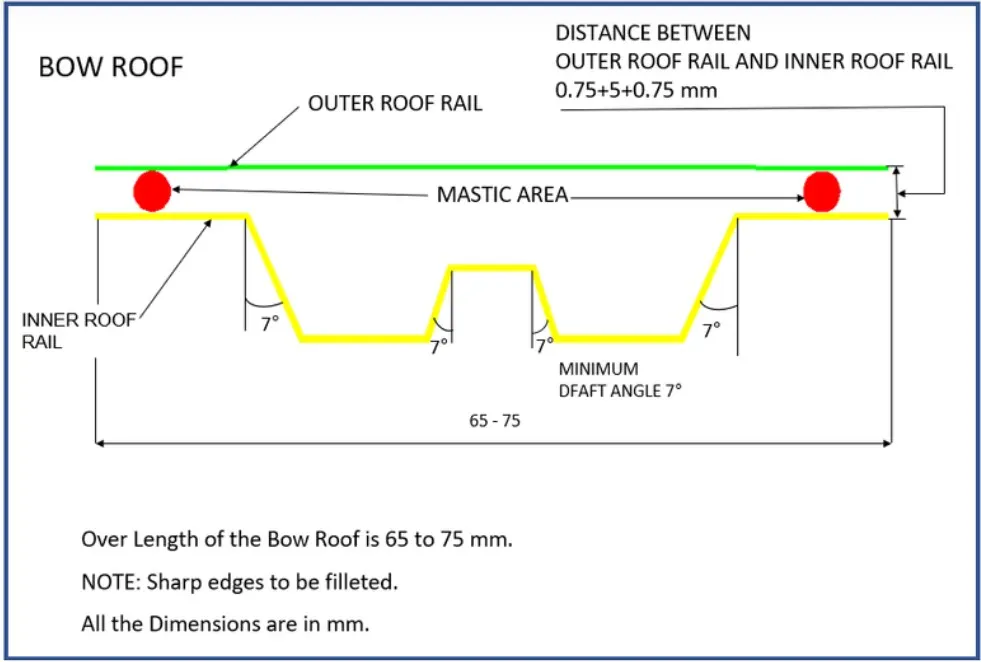
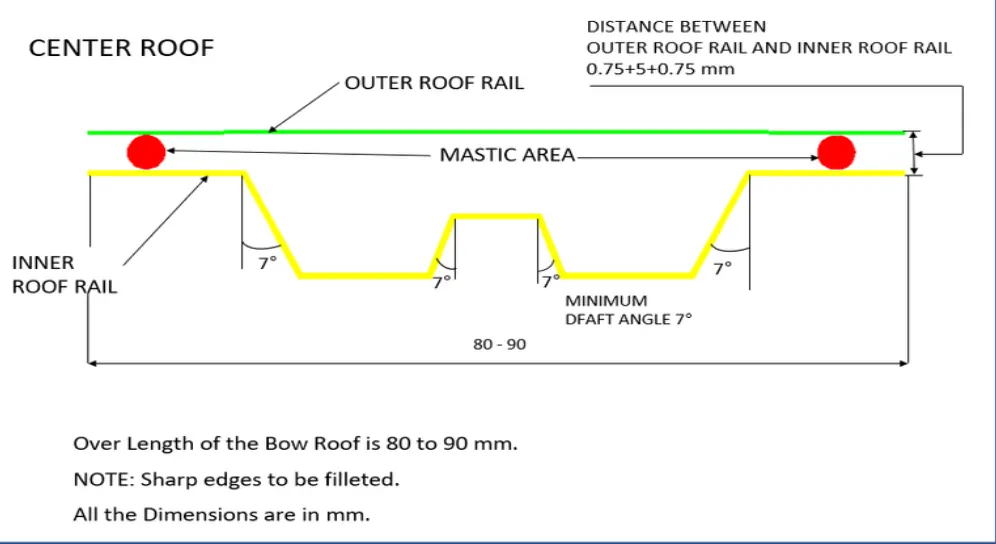
When creating a roof design, several parameters come into play. The number of roof rails must be determined to provide sufficient strength against various loads. In flatter regions, bow roofs are predominantly employed to enhance strength. Front and rear roof rails are attached to the ditch area through spot welding. Additionally, mastic sealants are used to affix front, rear, and center roof rails to the roof. Maintaining a small gap between the roof rails and the bow roof is important for minimizing noise, vibration, and harshness (NVH) issues. The design of roof rails takes the following criteria into consideration:
- Visibility: Ensuring good visibility.
- Head Clearance: Providing sufficient space for heads.
- Curvature Study: Analyzing the roof's shape.
- Heat Distortion and Snow Load: Addressing heat and snow load concerns.
- Draft Analysis: Conducting an evaluation of drafts or airflows.
Front Roof Rail Master section
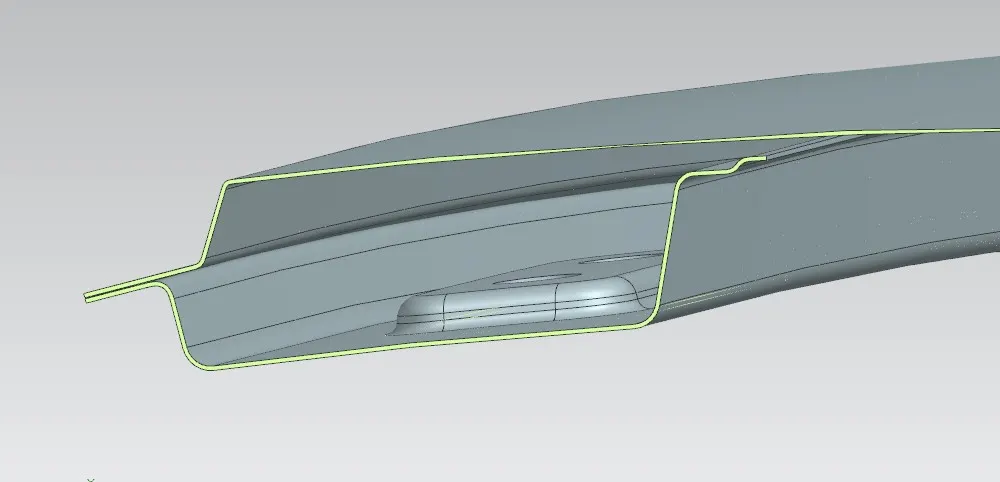
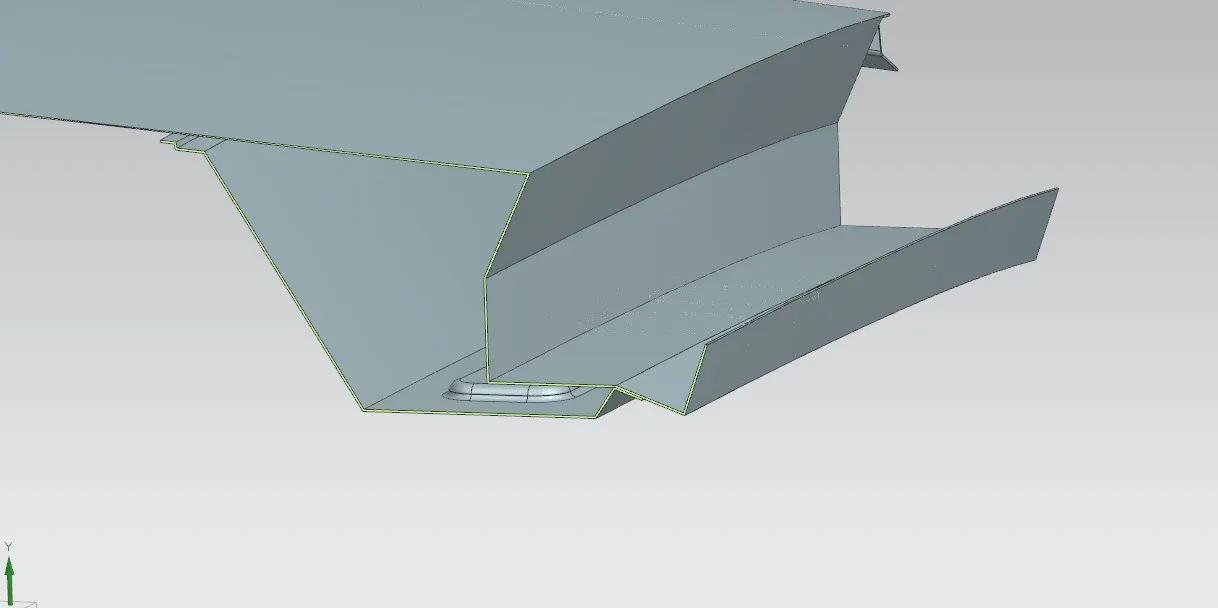
The master section of the Rear Roof Rail
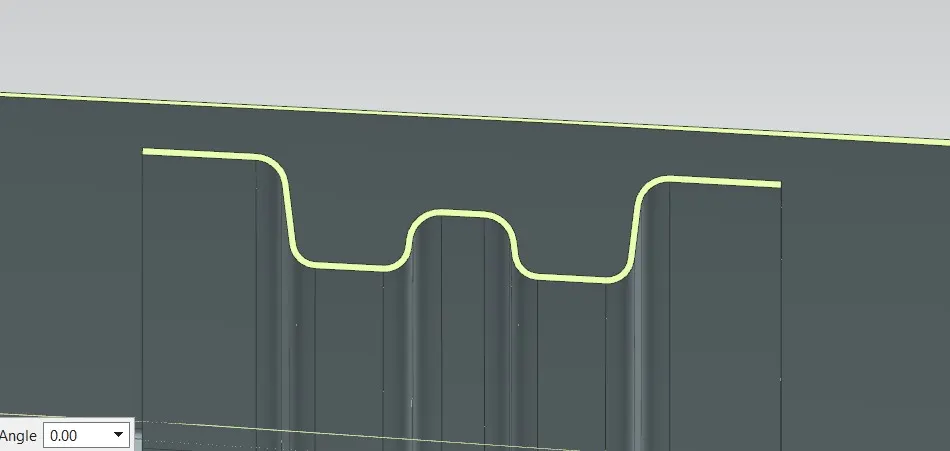
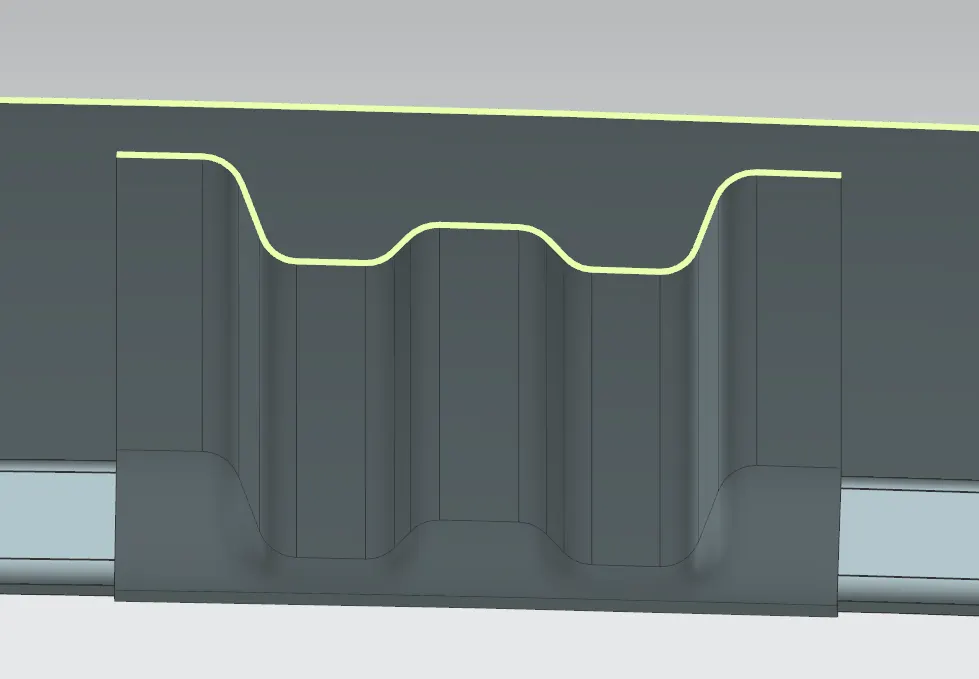
The master section of Bow Roof
The master section of Center Reinforcement Rail
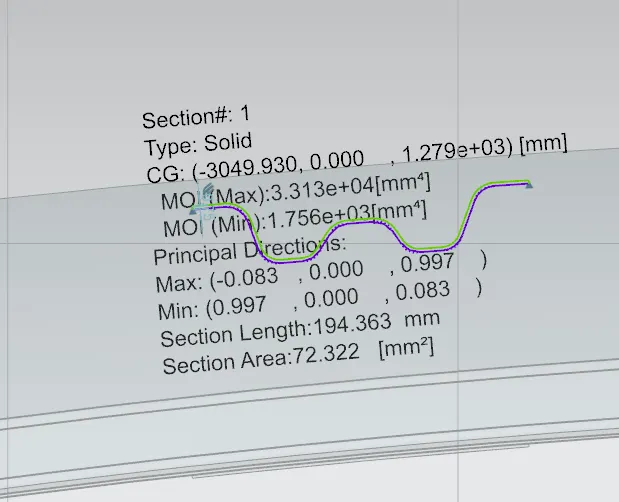
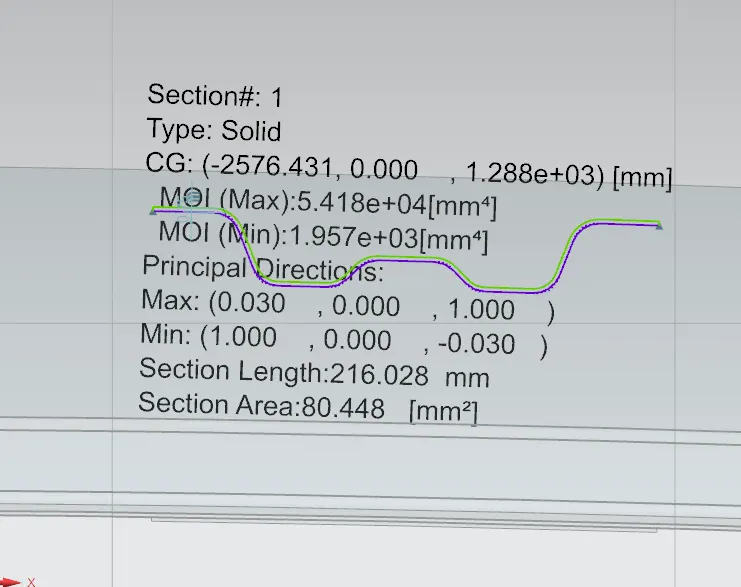
SECTION INERTIA OF REINFORCEMENT SECTIONS:
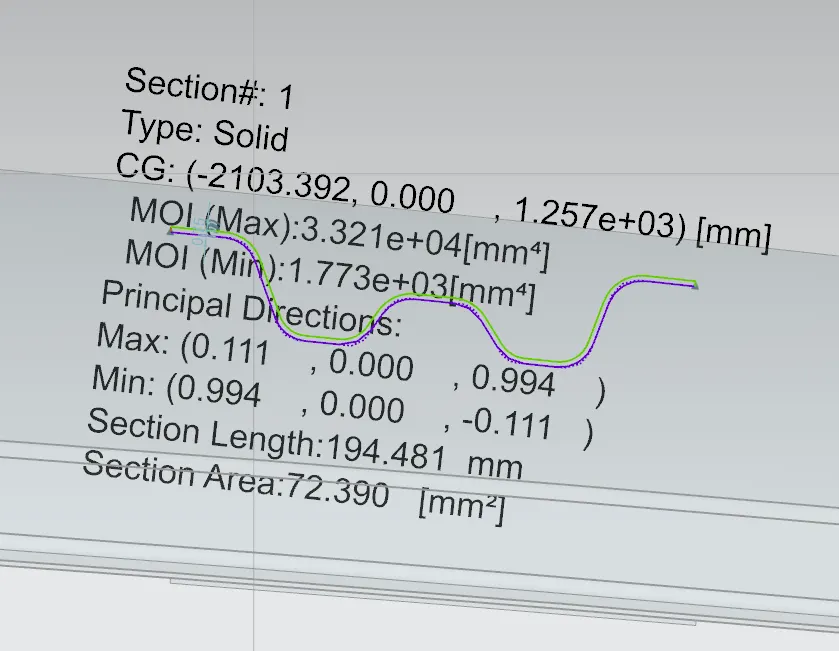
HEAT DISTORTION CALCULATIONS:
W = [1.73 x 10^(-3) x L] + [1.85 x 10^(-8) x (R^2)/t] + [1.10x10^(-3) x l] - 2.68
Judge mental Condition: OK< 2>
Were,
L = Roof Length in X-Direction[mm](Roof dimension in 0-Y)
R = Roof curvature
R = 2(Rx*Ry)/(Rx+Ry)
Rx = X curvature
Ry = Y curvature
t = Roof plate thickness [mm]
l = Bow Roof Span [mm]

SNOW LOAD CALCULATION:
Qr = [Iy x t2] / [α x s x [(Rx + Ry)/2]2 x 10-8]
Note: The Qr value given over here is correct. There was a typo error in the formula given in the video.
Where
α = My x Lx2 x 10-12 , My = Y(Ly-Y)
Judgement condition = Qr ≥ 3.1
t = Roof plate thickness [mm]
Ly = Distance between the front and rear roof Rails on the Vehicle along with 0Y[mm]
Length of Roof panel with the center point between Roof rail Front /Rear as the front and rear reference point.
Lx = Distance between the Left and Right end of the roof on the Roof BOW [mm]
Width of the roof panel exposed on the surface.
Y = Distance front Front Roof Rail to Roof BOW[mm]
s = Distance for which Roof BOW bears divided load [mm]
s = L1/2 + L2/2
Iy = Geometrical moment of inertia of Roof BOW (Y cross-section )[mm4]
Rx = Lateral direction curvature radius of roof panel Y cross-section on Roof BOW [mm]
Roof panel curvature Radius of the Length Lx in Front view
Ry = Longitudinal Direction curvature radius of the Roof panel X cross-section on Roof BOW [mm]
Roof panel X curvature radius of length s in Side view
