Roof Design
ROOF:
A roof in a car is the uppermost part of the car that provides protection and cover to the passengers and the driver.
- It is typically made of metal or other sturdy materials and is designed to withstand the forces of wind, rain, and other weather elements.
- In addition to providing protection from the weather, the roof also contributes to the overall structural integrity of the car and helps to keep the occupants safe in the event of an accident.
- The roof of a car can take many different shapes and forms, depending on the design of the vehicle, and may be fixed or retractable, depending on the model.
- Its main functinality are
- Protection from the elements: The roof provides shelter from rain, snow, sun, and other weather conditions, allowing passengers to stay dry and comfortable inside the car.
- Structural support: The roof plays an important role in the structural integrity of the car, helping to distribute weight and maintain stability.
- Safety: In the event of a collision or rollover, the roof provides protection to the occupants by preventing them from being ejected from the car or crushed by the weight of the vehicle.
- Aerodynamics: The shape of the roof can impact the aerodynamics of the car, affecting its speed, fuel efficiency, and handling.
- Style: The roof is a prominent feature of a car's exterior design, and can be customized to enhance the vehicle's appearance and appeal.
Types of Roof in Cars:
- Hardtop roof - a solid roof made of metal or other rigid material that provides the most protection from the elements and noise.
- Convertible roof - a retractable roof that can be folded back or removed entirely to allow for open-air driving.
- Sunroof - a small, retractable panel in the roof that allows sunlight and fresh air to enter the car.
- T-top roof - a roof that has two removable panels, creating an open area in the middle of the roof.
- Panoramic roof - a large, fixed glass roof that provides a wide view of the sky and surroundings.
- Moonroof - a type of sunroof that is made of tinted glass or a solid panel that can be opened or tilted to let in sunlight and fresh air.
- Retractable hardtop roof - a type of convertible roof that is made of metal or hard material and can be electronically retracted and stored in the trunk.
- Cabrio coach roof - a type of convertible roof that features a soft top that folds down and tucks into a compartment in the rear of the car.
Advantages and Disadvantages of Roof in Automobile & Car:
There are many advantages and functionality uses of roof in car and in automobiles , here are the some main key points of them
- Protection from the elements: The roof protects the occupants of the car from rain, snow, wind, and other weather conditions, providing a comfortable and safe driving experience.
- Noise reduction: A solid roof can help to reduce noise levels inside the car, creating a quieter environment for passengers.
- Safety: The roof is an important structural component of the car, providing support and protection in the event of a rollover or other accidents.
- Aerodynamics: The shape of the roof can help to improve the car's aerodynamics, reducing drag and improving fuel efficiency.
- Security: The roof provides a barrier between the occupants of the car and the outside world, helping to keep them safe from intruders or other external threats.
- Style: The roof can be a key design element of the car, contributing to its overall appearance and style.
The roof in a car is an essential component that has several advantages and contributes to the overall comfort, safety, and performance of the vehicle. And along the advantages there are also disadvantages in the roof.
- Reduced headroom: The roof can limit the amount of headroom inside the car, making it less comfortable for taller passengers.
- Reduced visibility: Some types of roofs, such as those with a small sunroof or T-top, can obstruct the driver's view, making it more difficult to see the road.
- Weight: The roof is a heavy component of the car, which can increase its overall weight and reduce fuel efficiency.
- Maintenance: The roof may require regular maintenance, such as cleaning, to prevent damage or deterioration over time.
- Cost: Some types of roofs, such as a convertible or panoramic roof, can be more expensive to install and maintain, increasing the cost of the car.
- Vulnerability to damage: The roof can be vulnerable to damage from objects like tree branches, hail, or other debris, which can be expensive to repair or replace.
The disadvantages of a car roof may vary depending on the type of roof and the specific car model, these disadvantages are generally outweighed by the benefits that the roof provides, such as protection from the elements and increased safety.
The limitations of the roof in a car will depend on the specific type of roof and the needs and preferences of the driver. While there are some limitations to consider are,
- The limitations of the roof in a car can depend on the type of roof and the specific car model.
- Limited open-air driving: While some types of roofs, such as a convertible or sunroof, allow for open-air driving, they may not provide the same level of open-air experience as a completely topless car, such as a motorcycle or a convertible without a roof.
- Limited cargo space: Some types of roofs, such as a panoramic or sunroof, may reduce the available headroom or cargo space inside the car, limiting the amount of storage space available.
- Limited visibility: Depending on the type of roof and its design, it may obstruct the driver's view or limit the amount of natural light that enters the car.
- Limited customization: Some types of roofs, such as a hardtop roof, may be difficult or expensive to modify or customize, limiting the ability of the driver to personalize their car.
- Limited durability: The roof can be vulnerable to damage from objects like tree branches, hail, or other debris, which can be expensive to repair or replace.
- Limited practicality: Some types of roofs, such as a convertible or T-top roof, may not be as practical or suitable for everyday use as a solid hardtop roof.
Accessories and Other components that are added to the roof of car to improve its strength , functionality and increase its features. The majorly considerations are,
- Roof racks: Roof racks are designed to carry luggage, bicycles, kayaks, skis, or other equipment that may not fit inside the car. They can be installed on top of the car roof and secured in place using special clamps or brackets.
- Cargo boxes: Cargo boxes are similar to roof racks but provide an enclosed space for storing luggage or other items. They can be especially useful for camping trips, road trips, or other situations where additional storage space is needed.
- Roof baskets: Roof baskets are another type of roof-mounted storage accessory that can be used to carry bulky or oversized items, such as camping gear, coolers, or sports equipment.
- Roof tents: Roof tents are designed to be mounted on top of a car roof and provide a convenient and comfortable sleeping area for camping or outdoor adventures.
- Roof-mounted solar panels: Solar panels can be installed on top of a car roof to generate electricity and power various accessories, such as lights, refrigerators, or electronic devices.
- Wind deflectors: Wind deflectors are designed to reduce wind noise and turbulence when driving at high speeds, improving the aerodynamics of the car and enhancing fuel efficiency.
- Ski or snowboard racks: Ski or snowboard racks are designed to hold skis or snowboards securely on the roof of the car, providing a convenient way to transport winter sports equipment.
- Roof Lamps: These provide the lighting to the car interior of the passengers for the accessability in the low light conditions and in the night time.
- Air Ducts: The AC ducts are provided for the for the rear side of the car for the comport of the rear passengers.
- Handle Bars: for the offroad vehicles and camping vehicles have the supporting handle bars that provided for the safety purposes.
- Insulation Material: These are fiber material that is added to the roof that abbsorbs the surround noice and vibrations . it improves the NVH factor of the Car.
- Thermal Insulatior: These materials are used in the premium segment cars that to maintain the temparature and other factors that are suiatable for the passengers in the car. It Protects against the heat absorbtion and cold temparatures into the Car body.
Heat Distortion :
W = [1.73 x 10^(-3) x L] + [1.85 x 10^(-8) x (R^2)/t] + [ 1.10x10^(-3) x l] - 2.68
Where,
L = Roof Length in X-Direction[mm](Roof dimension in 0-Y)
R = Roof curvature
R = 2(Rx*Ry)/(Rx+Ry)
Rx = X curvature
Ry = Y curvature
t = Roof plate thickness [mm]
l = Bow Roof Span [mm]
Judgement Condition OK< 2.7
| SECTION TYPE | RX | RY | R | L | t | I | w | condition statement |
| front rail to bow rail 1 | 5735.7458 | 2605.8602 | 3583.6148 | 1943.3901 | 0.75 | 505.6448 | 1.8127 | ok |
| bow rail to center rail | 4918.2772 | 6414.2182 | 5567.5121 | 1943.3901 | 0.75 | 1011.7907 | 2.8072 | ok |
| center rail to bow rail 2 | 3944.8409 | 10747.5574 | 5771.338 | 1943,3901 | 0.75 | 1500.7536 | 3.4121 | not ok |
| bow rail 2 to rear rail | 3292.1236 | 14508.243 | 5366.5107 | 1943.3901 | 0.75 | 1943.3901 | 3.7876 | not ok |
Snow Load Prediction Formula:
Qr = [Iy x t2] / [α x s x [(Rx + Ry)/2]2 x 10-8]
Note: The Qr value given over here is correct.
α = My x Lx2 x 10-12 , My = Y(Ly-Y)
t = Roof plate thickness [mm]
Ly = Distance between the front and rear roof Rails on the Vehicle along with 0Y[mm]
Length of Roof panel with the center point between Roof rail Front /Rear as the front and rear reference point.
Lx = Distance between the Left and Right end of the roof on the Roof BOW [mm]
The width of the roof panel is exposed on the surface.
Y = Distance front Front Roof Rail to Roof BOW[mm]
s = Distance for which Roof BOW bears divided load [mm]
s = L1/2 + L2/2
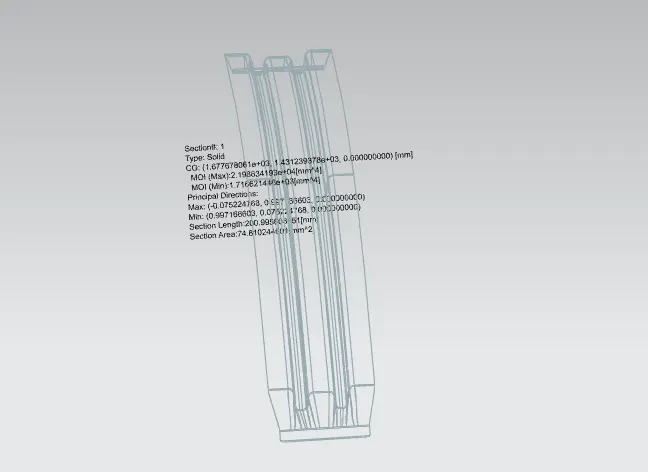
Iy = Geometrical moment of inertia of Roof BOW (Y cross-section )[mm4]
Rx = Lateral direction curvature radius of roof panel Y cross-section on Roof BOW [mm]
Roof panel curvature Radius of the Length Lx in Front view
Ry = Longitudinal Direction curvature radius of the Roof panel X cross-section on Roof BOW [mm]
Roof panel X curvature radius of length s in Side view
Judgment condition
- Qr ≥ 3.1
- 250 ≤ s ≤ 380
| SECTION TYPE | RX | RY | LX | LY | Y | L1 | L2 | Iy | t | Qr |
| front rail to bow rail 1 | 4492.1732 | 2656.0607 | 1222.9733 | 1941.2067 | 498.66 | 237.74 | 507.623 | 1.7166*10^3 | 0.75 | 0.0470 |
| bow rail i to center rail | 3775.9278 | 6331.5370 | 1170.8232 | 1941.2067 | 1009.9282 | 507.623 | 492.7899 | 1.924*10^3 | 0.75 | 0.0101 |
| center rail to bow rail 2 | 4289.9192 | 11287.0547 | 1130.7229 | 1941.2067 | 1500.0379 | 492.7899 | 443.6711 | 1.7268*10^3 | 0.75 | 0.0231 |
COMPONENT PARTS:
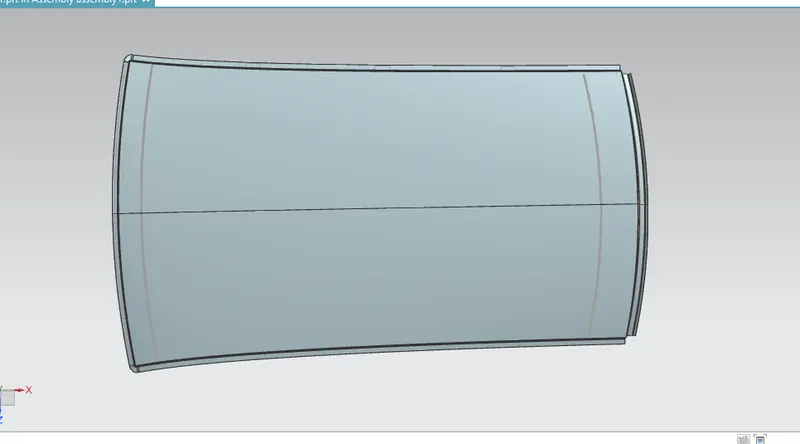
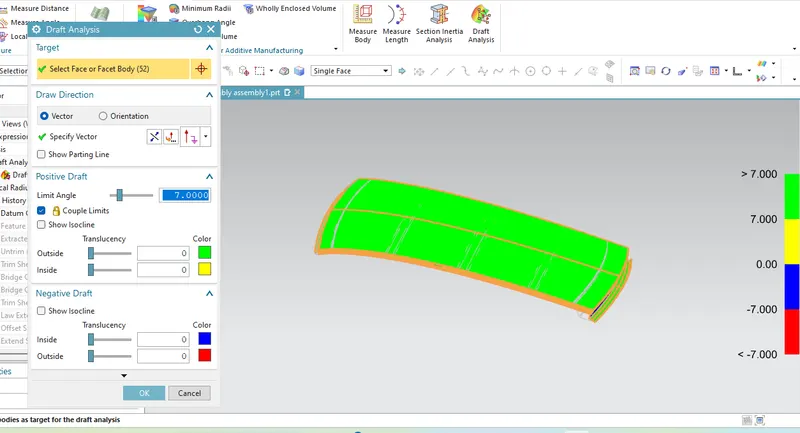
ROOF OUTER PANNEL:
FRONT ROOF RAIL:
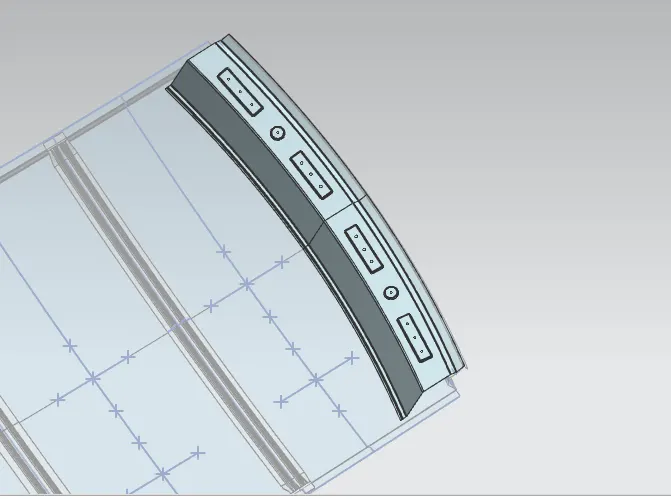
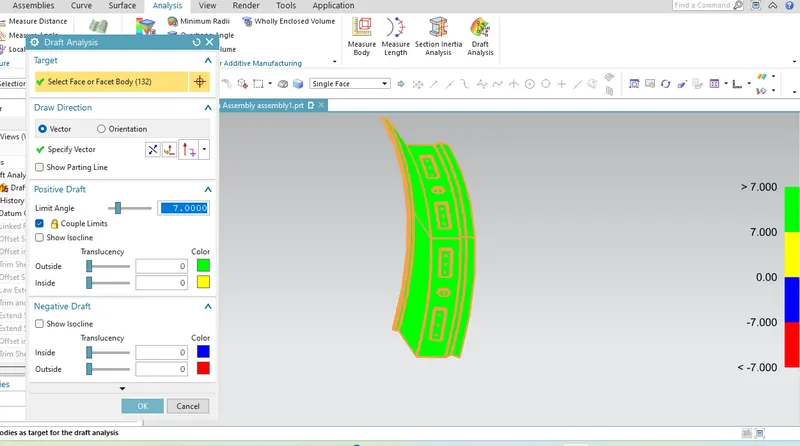
REAR ROOF RAIL:
CENTER ROOF RAIL:
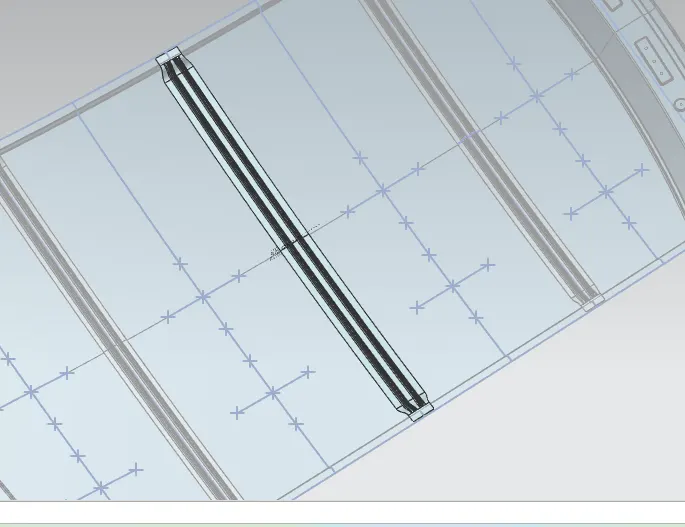
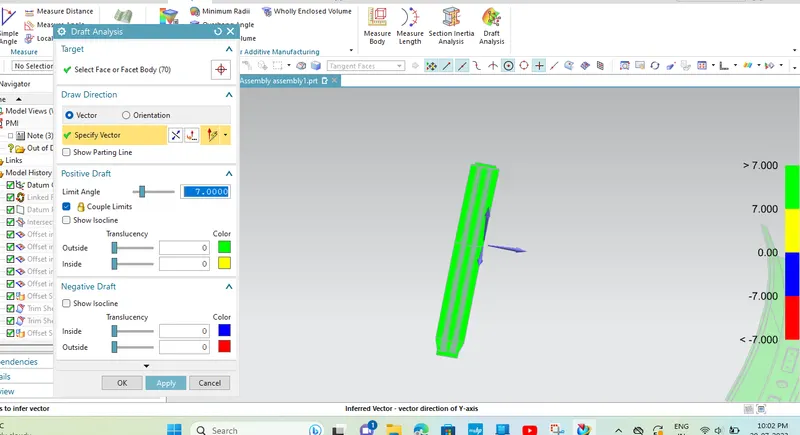
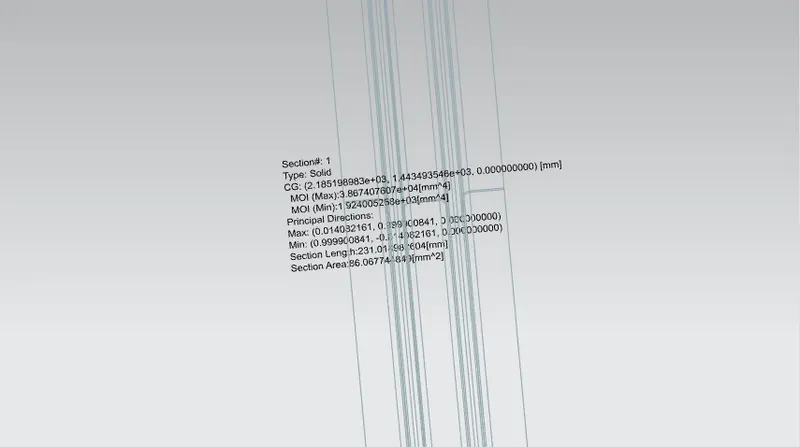
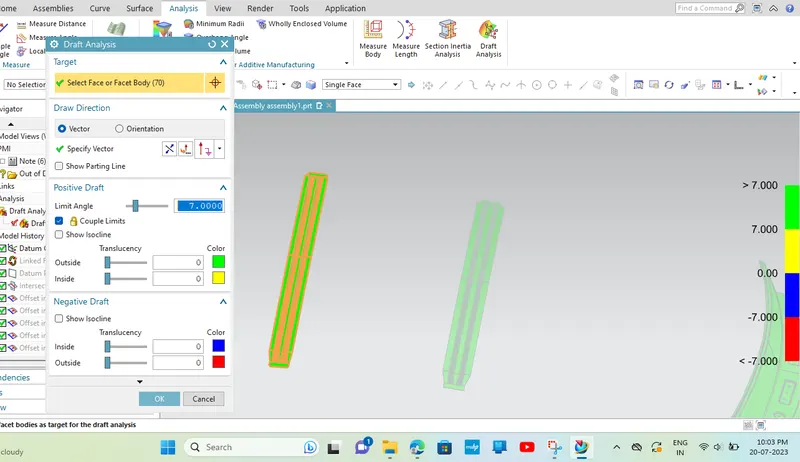
BOW ROOF RAIL 1:
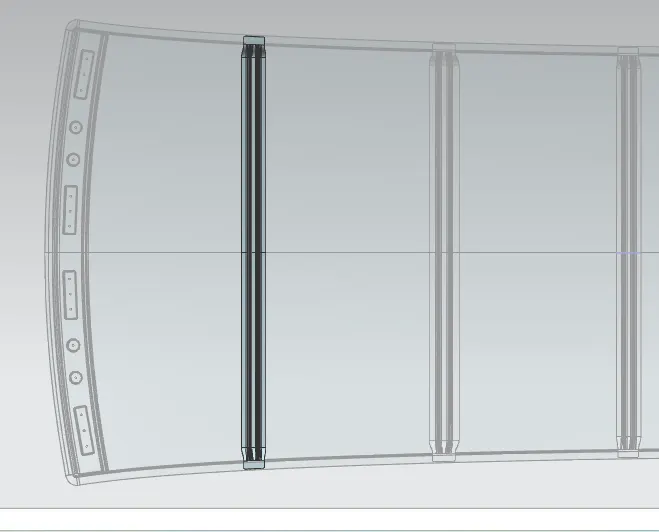
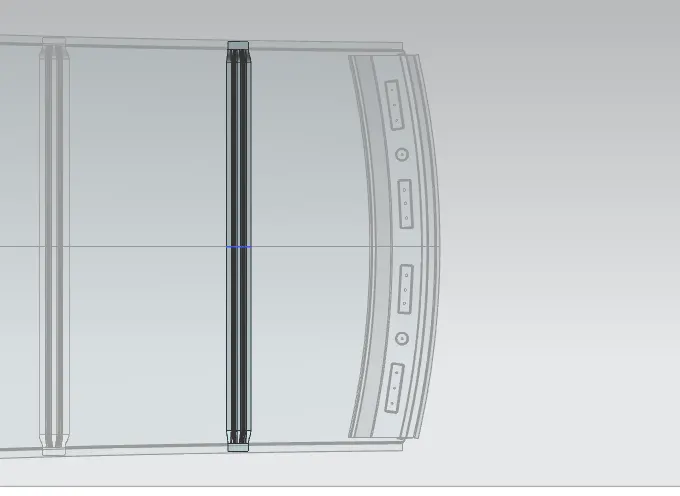
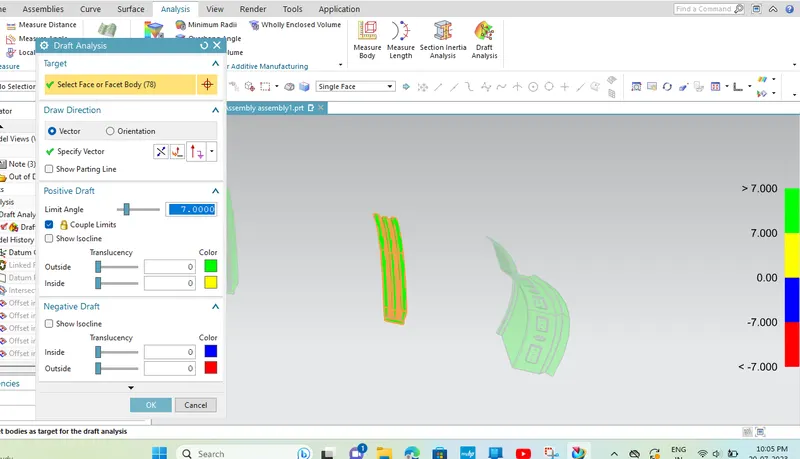
BOW ROOF RAIL 2:
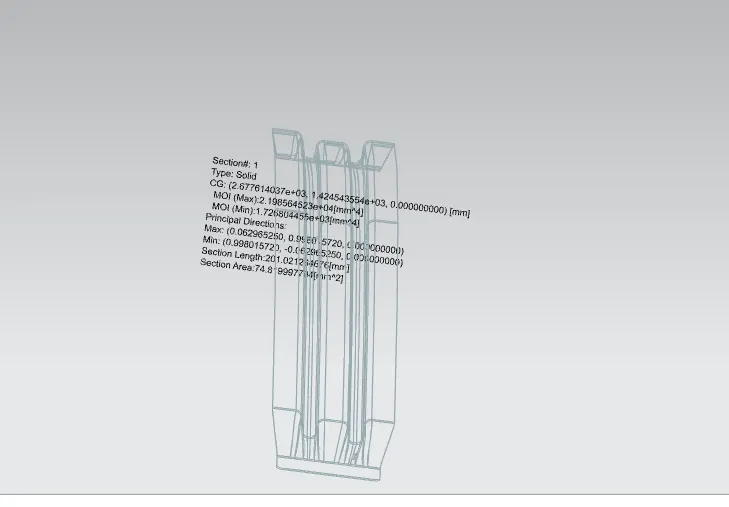
Analysis & Conclusion :
Here the test results of the Roof Design in the Heat Distortion and Snow load criteria is performed and it passes the Heat Distortion in conditions and fails in the Snow load conditions . so that the Emboss are provided in the outer roof pannels to provide the adittional strength to it. The Emboss are provided in the Flat surface of the Front and Rear roof rails for the additional support.