Roof Design
Aim: To design & develop the Roof of a car with its components by following the master section of front roof rail and design parameters.
Objective:
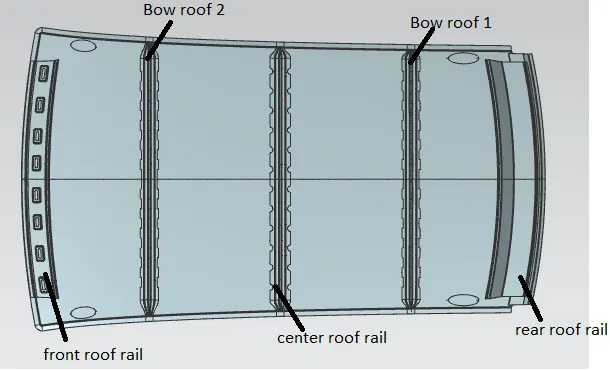
- For the given Car Roof styling, create an assembly by developing the essential flanges and reinforcements, namely the Front Roof Rail, Rear Roof Rail, Centre Roof Rail and Bow-Roofs.
- To do a curvature study on the roof and perform calculations for Heat Distortion and Snow load criterion to determine and justify the position of the Bow-roofs.
Introduction:
An automobile roof is the portion of an automobile that sits above the passenger compartment, protecting the vehicle occupants from sun, wind, rain, and other external elements. Under the styling surface that is seen on the outside, there are many other structures under the roof which contribute to its strength and stability. The roof of the car is made up of multiple parts that provide support and strength to the roof component. The roof panel is attached to the BIW of the car with the help of front and rear roof rail. This attachment is done with the help of sealants. The actual roof sheet and the roof rails support the roof sheet. There are 3 primary roof rails in a car the front, the centre, and the rear, while additional roof rails are called Bow roof rails. The number of bow roof rails depends on the size of the roof. Longer the roof, more the number of bow roof rails. Other dimensions like strength and material are governed by the factors like headroom, overall space, visibility, ergonomics and the rules and regulation of the states where it is sold. Some roofs have a window on them and are called sunroofs, while convertibles have special mechanisms that allow the roof to be retracted and be stowed away through a wide array of methods depending on the design.
Roof Parts
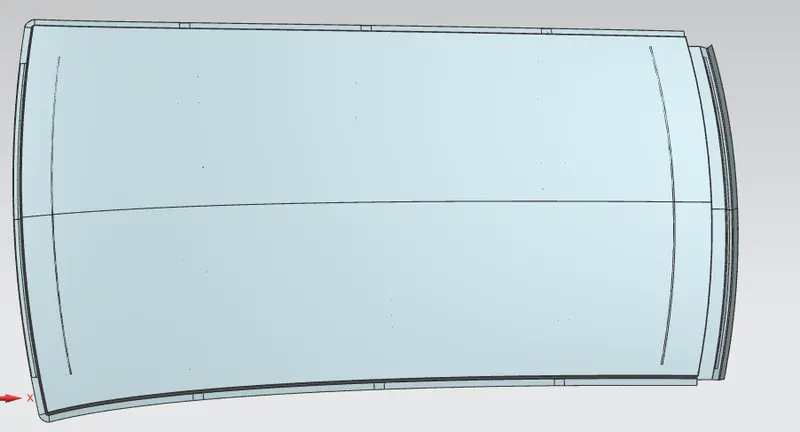
ROOF OUTER PANEL:
FRONT ROOF RAIL:
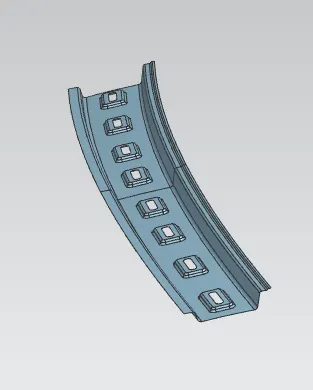
Front roof rails are used in the assembly of a roof in which it provides mounting provisions to windshield glasses and. It is designed with support requirements, visibility criteria, and headroom space in mind. The major design factor considered is the headroom clearance. The front roof rail also provides provisions for mounting the inside rear-view mirror. It is usually made from Body Side Outer scrap and therefore the thickness of the rail is 0.75 mm. A draft angle of 3-5 degrees is provided keeping in mind the deep drawing operation. The Wind Shield end flange is the exact offset of the roof surface. The bottommost flange is decided after taking into consideration the visibility criteria and the Headroom Clearance of the passenger. Spot Welds are applied at Wind Shield end of the rail and the other end is joined with the roof using Mastic Sealants which also contributes to increased strength.
BOW ROOF RAIL:
The bow roof rails provide additional support to the roof and they are positioned in such a way that they provide maximum support to the roof. Care must be taken so that they do not intrude into the headroom requirements of the car. Bow roof rails are an optional feature provided as required by the design. Small cars may have none while large ones may have 3 or more, they may also be integrated into the centre roof rail in some cases. The roof is fixed to the roof rails with the use of mastics while the ends are spot welded.
CENTRE ROOF RAIL (REINFORCEMENT CENTER):
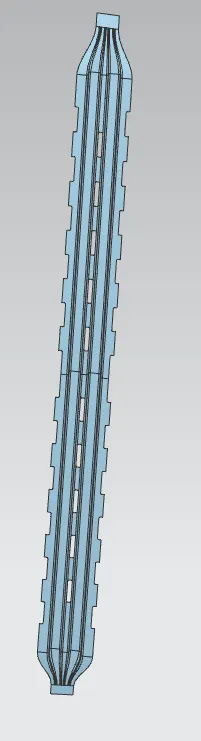
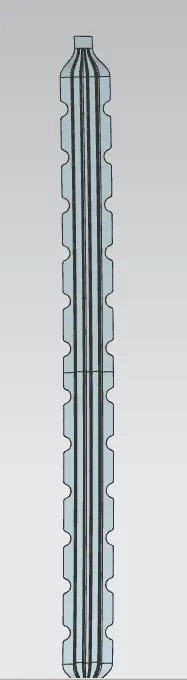
The reinforcement centre is used as a cross member between bodyside LH & RH respectively. Similar to other Rails design, we have to take into consideration the Headroom Clearance and the visibility criteria while designing the Centre Roof Rail and Bow Roofs. But unlike the Front and Rear Roof Rails, Spot Welds are not applied for joining these rails to the roof. Instead, Mastic sealants are introduced at both the ends since Centre Roof Rail and Bow Roofs are fully positioned under the Styling surface of the Roof. For increasing the strength of the rails, embossing is done. To reduce the weight of the material used, a different styling has been followed with a thickness of 0.75 mm.
REAR ROOF RAIL:
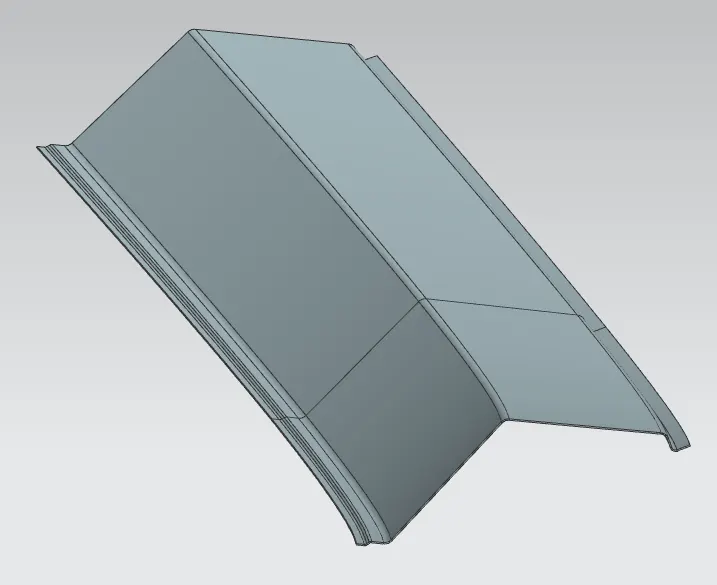
It is the support which is joined to the Back Door and the Body Side Outer and the inner panels. It is also usually made from Body Side Outer scrap and therefore the thickness of the rail is 0.75 mm. Similar to the Front Roof Rail design, we have to take into consideration the rear Headroom Clearance and the rear visibility criteria while designing the Rear Roof Rail. Inputs from the backdoor design is also taken to accommodate the required clearance. Spot Welds are applied at the Back door end of the rail and the other end is joined with the roof using Mastic Sealants. The Rear roof rail is used to provide strength to the roof panel front and it also acts as a link between windshield glass, roof panel, and headliner.
ASSEMBLED ROOF: