Roof Design
Objective:
To design a roof structure with essential flanges and reinforcement based on the provided styling, ensuring manufacturability and design feasibility. To perform a section modulus study for key sections and create the front roof rail, bow roofs, and center roof rail. To develop the ditch area and conduct a draft analysis.
Introduction:
The automotive roof, situated above the passenger compartment, shields occupants from environmental elements such as sun, wind, and rain. Beneath the visible styling surface lies a network of structural components that bolster the roof's strength and stability. The number of reinforcement structures varies with vehicle size, typically placed on flatter roof areas for enhanced strength. Key reinforcements include the front roof rail, rear roof rail, center roof rail, and bow roof, all of which are secured to the roof flanges and ditch area through mastics and spot welding to improve NVH (Noise, Vibration, and Harshness) characteristics.
Types of Car Roofs:
- Convertible roofs
- Hardtops
- Sunroofs
- T-tops
- Targa tops
- Vinyl roofs
Design Considerations for the Roof:
- Visibility criteria
- Head clearance
- Curvature analysis
- Heat distortion and snow load criteria
- Draft analysis
- Safety parameters
Roof Crush Test for Passenger Cars:
From a safety perspective, the roof plays a crucial role, especially in rollover accidents where the vehicle tips onto its side or roof. Roof strength is vital for occupant protection during real-world rollover crashes. The maximum allowable deformation of the roof structure under a load of 1.5 times the vehicle weight must not exceed 127 mm (5 inches). The test involves applying a force to a rigid block positioned on the roof, with the block not moving more than 127 mm. The direction of the applied force must be downward and perpendicular to the roof, with the test lasting no more than 120 seconds.
Master Section and its Parameters:
The master section outlines the key parameters for the design and placement of roof reinforcements. Various joining processes, such as the application of mastics and spot welding, are used to connect the reinforcements to the outer panel, enhancing the roof's strength.
Reinforcement Types:
- Front roof rail
- Central roof rail
- Rear roof rail
- Bow roof rail
Roof Outer Panel:
The outer panel of the roof is designed to meet specific criteria, including visibility, head clearance, and structural integrity. The front and rear roof rails provide reinforcement at the front and rear of the vehicle, respectively, while the central roof rail supports the flatter areas of the roof, enhancing its strength during roll-over tests. The bow roof adds torsional stiffness and load-bearing capacity.
Roof Design Calculations:
The roof design must pass various analysis tests, including heat distortion and snow load conditions. The heat distortion study determines the temperature limit beyond which the material can no longer be used structurally. This study predicts the bow roof position to strengthen the roof and prevent damage.
For snow load conditions, the roof must be designed to return to its original position after the snow is removed, preventing permanent dents or deformations. The snow load condition formula calculates the roof's ability to withstand snow weight, with specific criteria to ensure the roof meets strength requirements.
Section Modulus:
The section modulus is a geometric property used in the design of beams or flexural members, indicating the strength of a cross-section. It is calculated using the formula:
S=YI
Where:
- S = Section modulus
- I = Moment of inertia
- Y = Distance from the neutral axis to the furthest point
Calculations for section modulus are performed for various roof components, including the bow roofs and center rail, to ensure they meet strength requirements.
Draft Analysis:
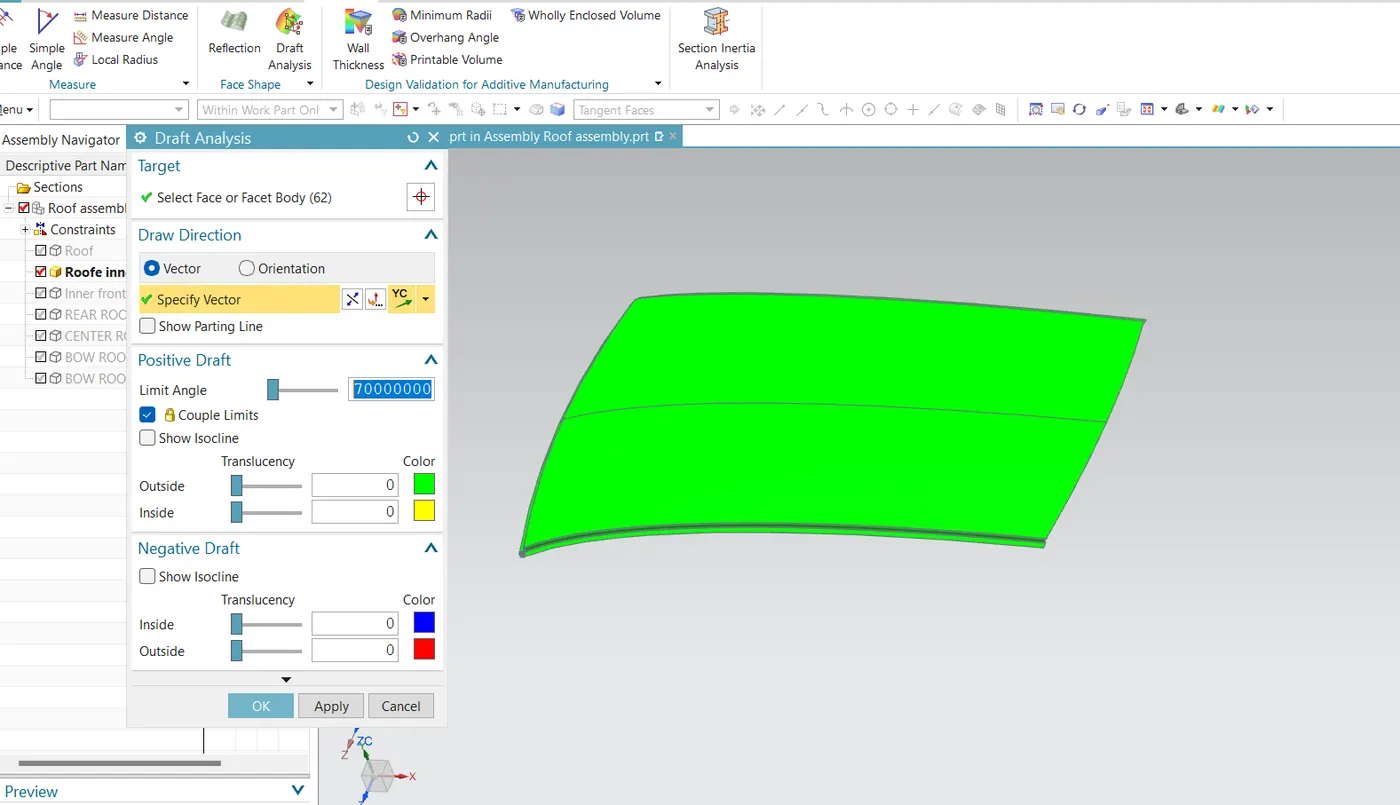
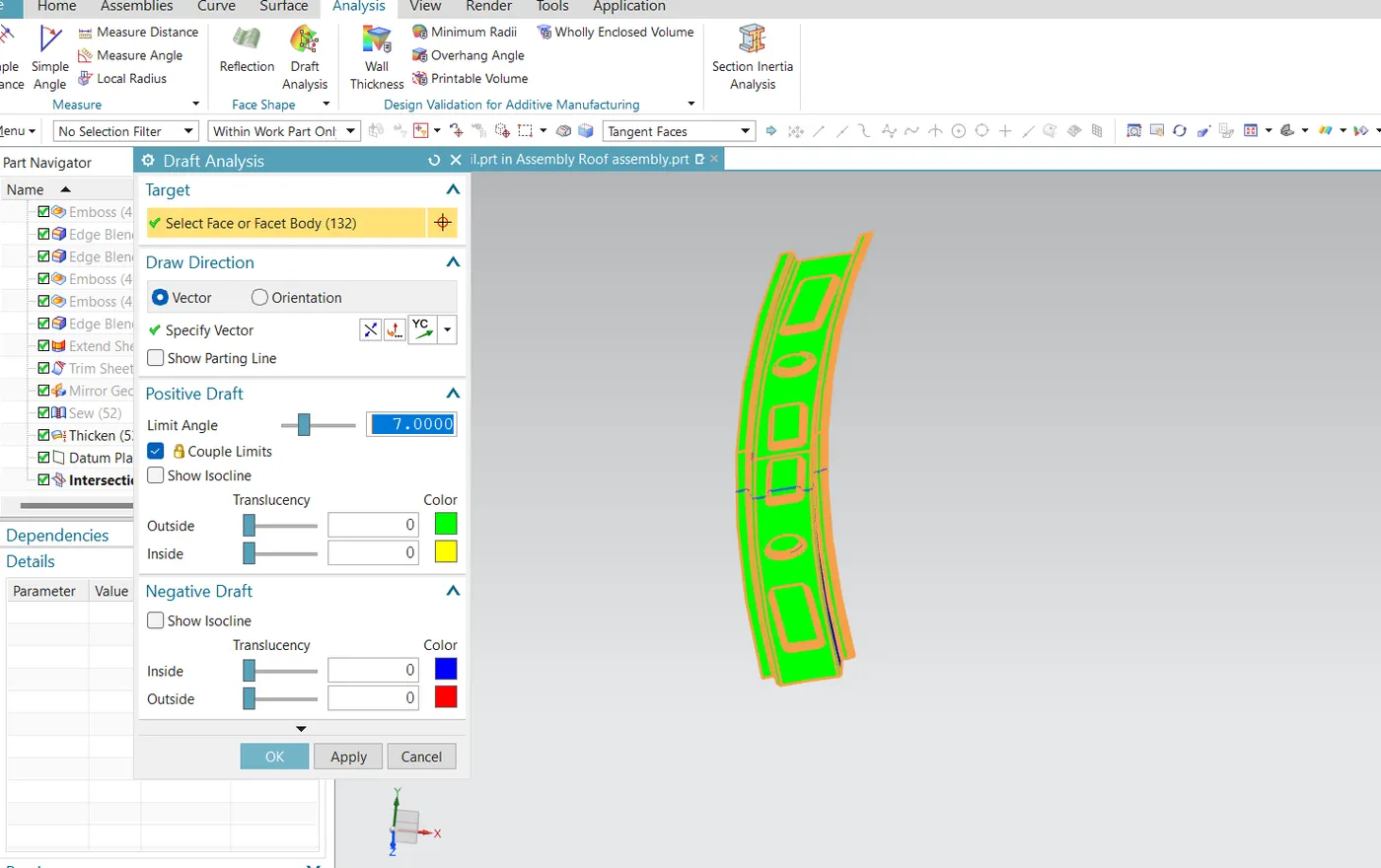
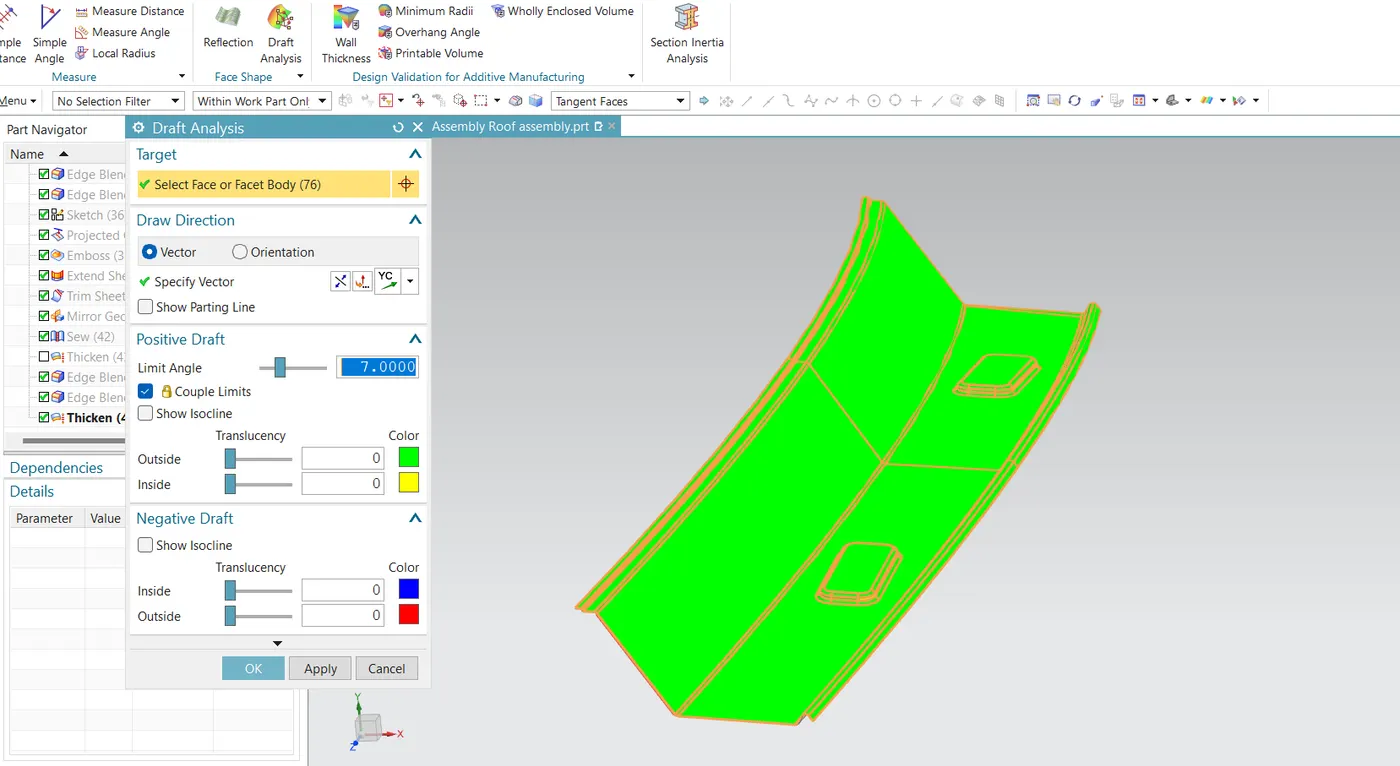
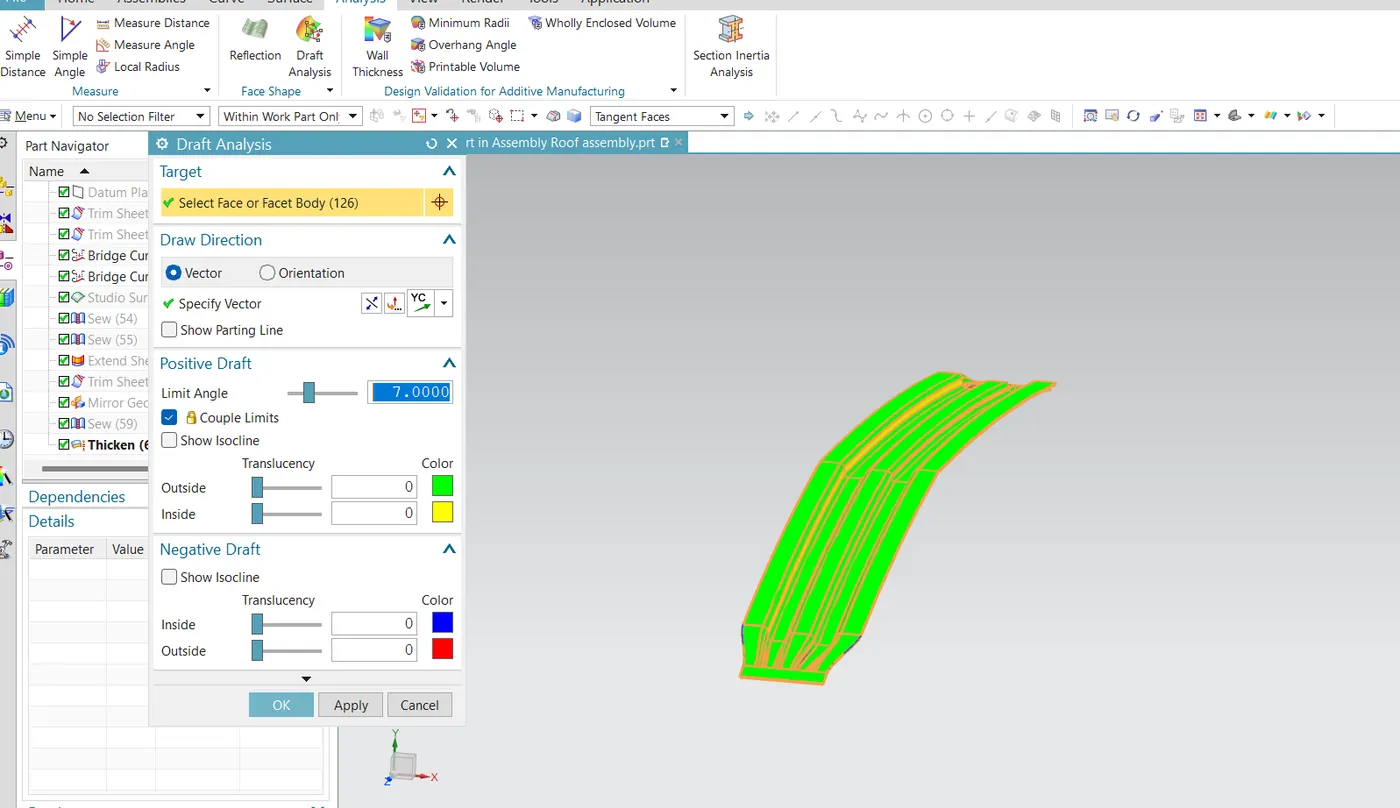
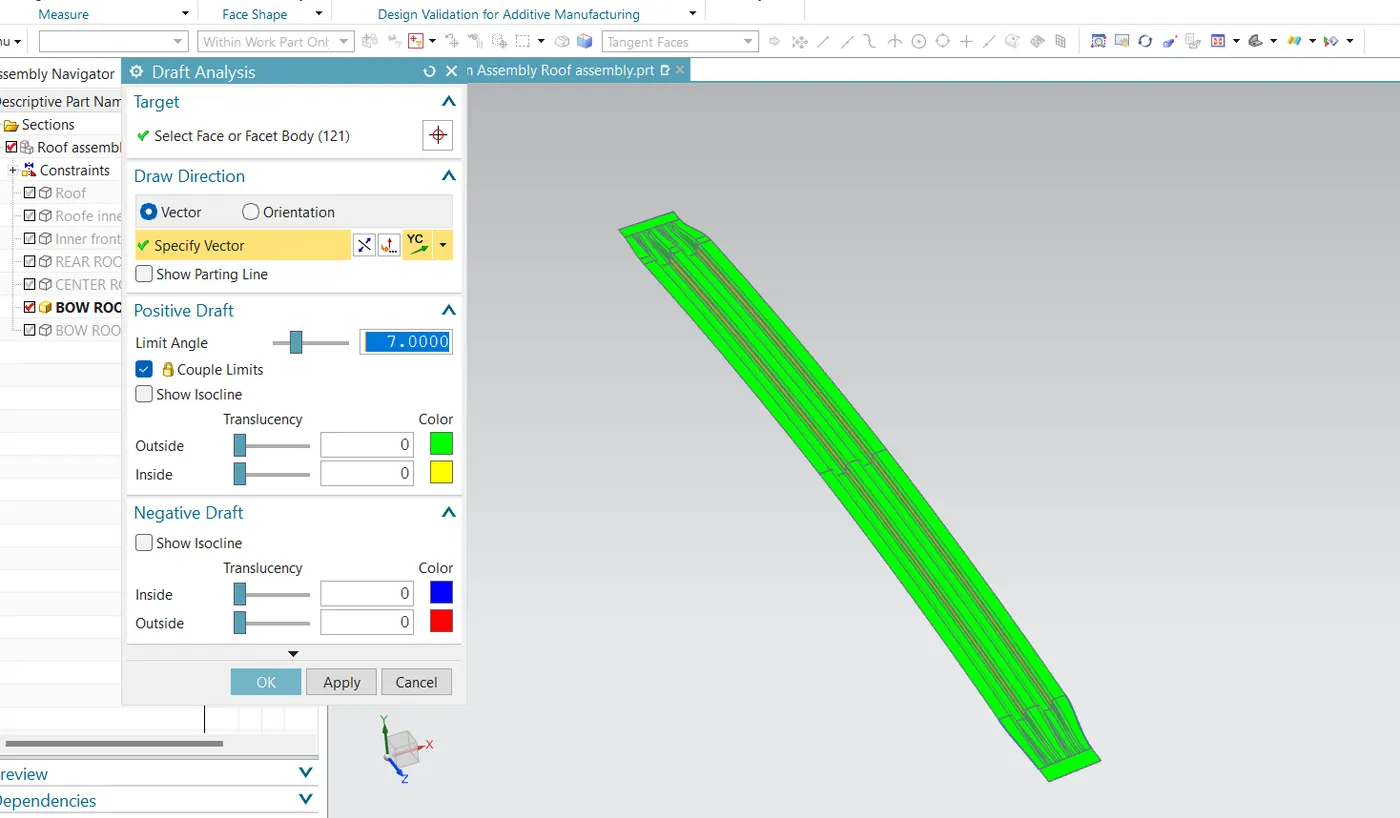
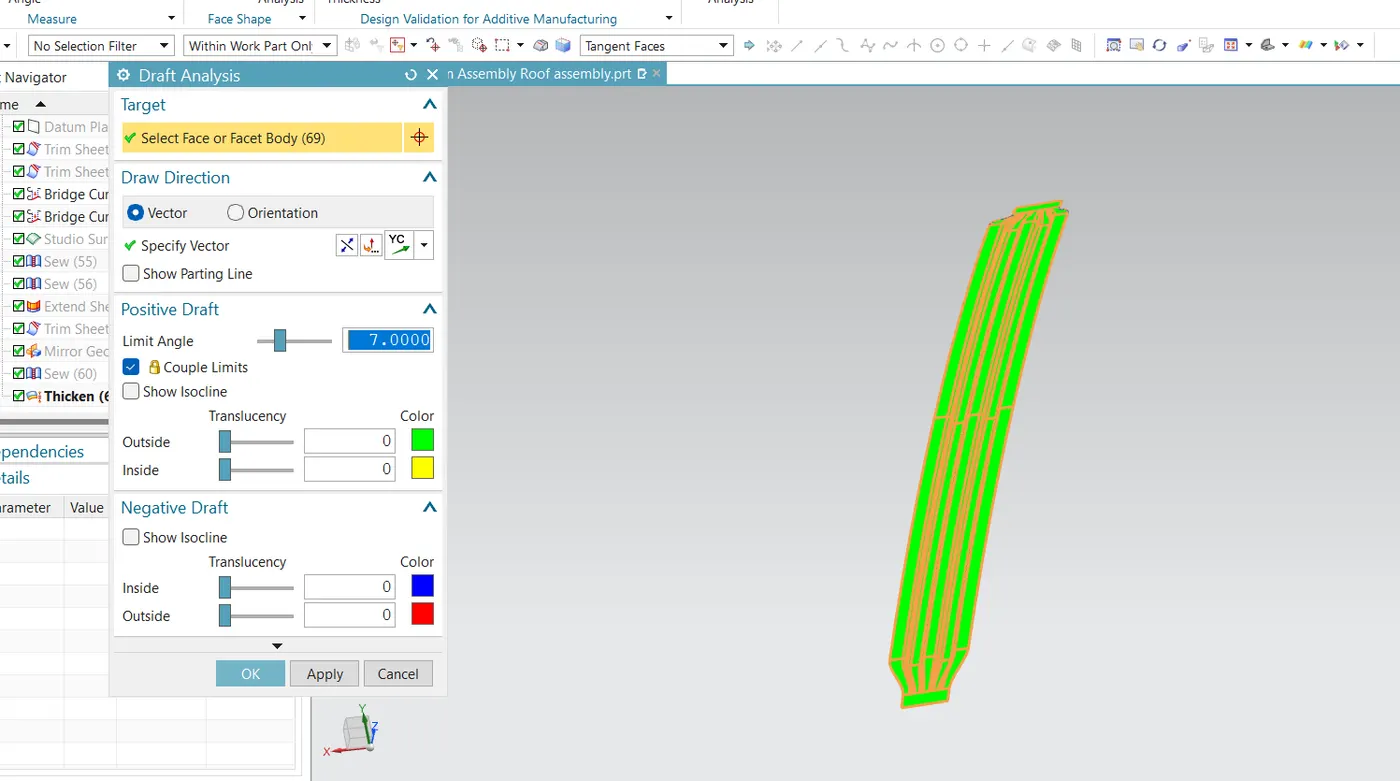
Draft analysis checks whether the part can be easily removed from the mold during manufacturing. A minimum draft angle of 7 degrees is considered acceptable, with green areas on the analysis indicating positive draft angles greater than 5 degrees, confirming the part passes the analysis.
Conclusion:
The required reinforcement and ditch area for the roof have been designed and developed based on the given styling. Curvature studies were conducted, including calculations for heat distortion and snow load conditions, with reinforcement positions meeting the criteria. Additionally, section modulus studies and draft analyses were successfully completed for each reinforcement.
Find the attached snaps of the roof
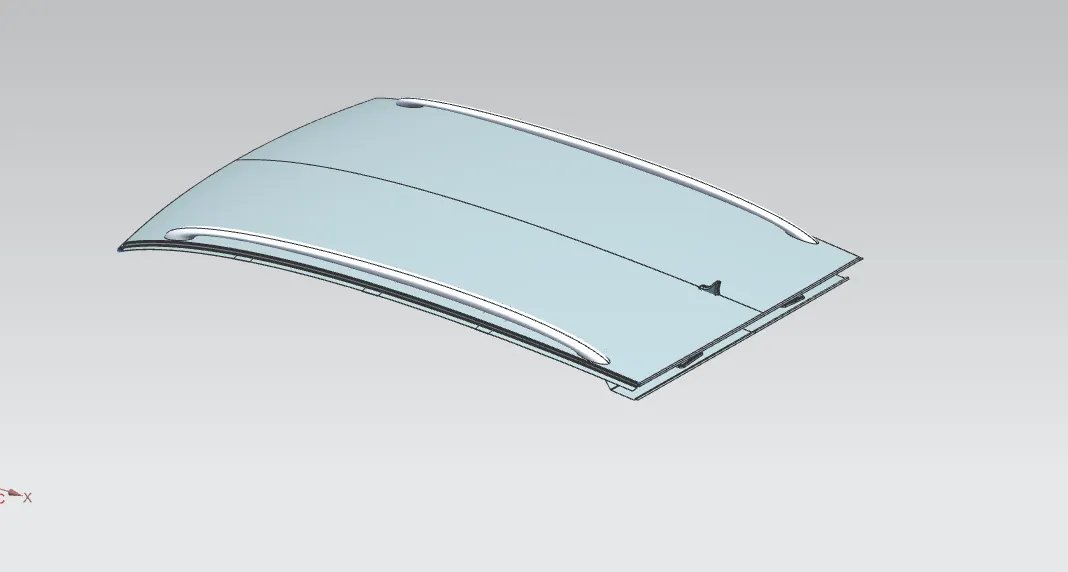
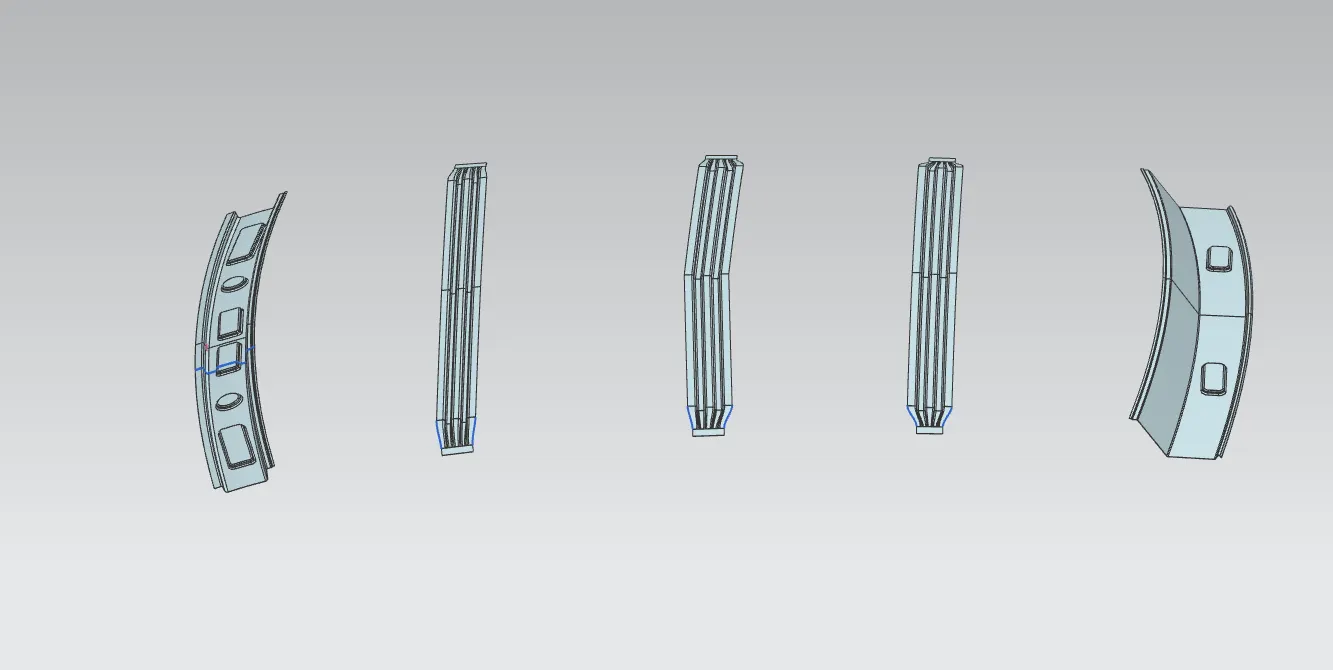
Draft analysis of roof and it's components