Roof Design
Objective - To create an
1-ASSEMBLY by developing the essential flanges for the outer roof and creating the reinforcements.
2-Provide appropriate dimensions and check for Draft analysis.
3-Do a curvature study on the roof and perform calculations to determine the position of the Bow-roofs.
Introduction -
An automobile roof or car top is the portion of an automobile that sits above the passenger compartment, protecting the vehicle occupants from sun, wind, rain, and other external elements. Because the earliest automobiles were designed in an era of horse drawn carriage, early automobile roofs used similar materials and designs.
Description-v
Early automobiles had no roof or sides, but by 1900 several cars were offered with fabric roofs and primitive folding tops . However, cars with fully closed bodies (i.e. with a rigid roof and sides) grew in popularity and soon became the norm.
In 1915–1918, the first pillarless hardtop cars were produced, then called "convertible cars" (or "touring sedans" or "Springfields"). The Springfield design featured folding upper frames on the doors and the rear glass frames are removable and stored under or behind the seats. In the late teens, Cadillac offered a sedan with removable "B" pillars.
Another form of early pillarless hardtop is the "California top", originating in Los Angeles and most popular from 1917 to 1927.
These were designed to replace the folding roofs of touring car, in order to enclose the sides of the car for better weather protection.One objective of these aftermarket tops was to bring the cost of the closed car nearer to the prices of corresponding open cars. Automobile dealers were encouraged to equip an open car with a California top to demonstrate that they were "cool and clean in summer, and warm and dry in winter." The hard tops were frequently equipped with celluloid windows that retracted like a roller blind for open sided motoring offering a low-cost compromise between an open and closed car.
A sunroof is a movable panel that opens to uncover a window in an automobile roof, allowing light and fresh air to enter the passenger compartment. Sunroofs can be manually operated or motor driven, and are available in many shapes, sizes and styles. While the term "sunroof" is now used generically to describe any glass panel in the roof, the term "moonroof" was historically used to describe stationary glass panes rigidly mounted in the roof panel over the passenger compartment. A moonroof has a glass panel that is transparent and usually tinted. Previous terms include Sunshine Roof, Sliding Head and Sliding Roof.
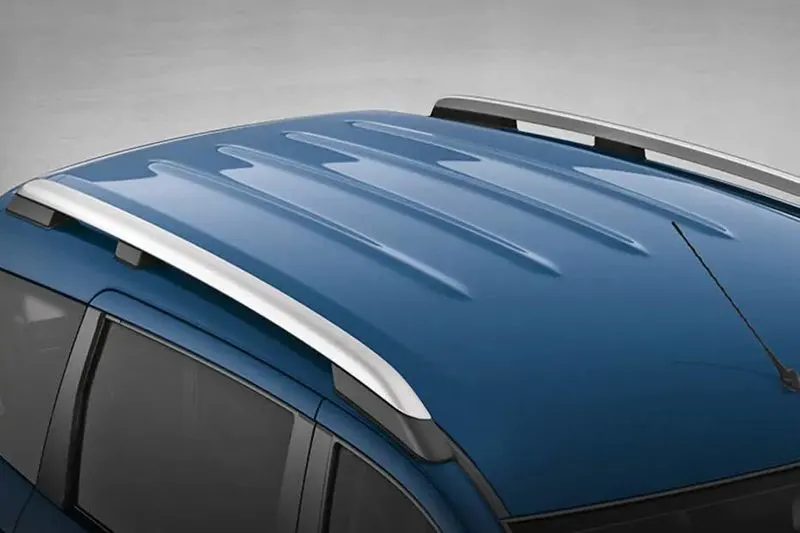
ROOF DESIGN WITH BOW ROOF RAIL
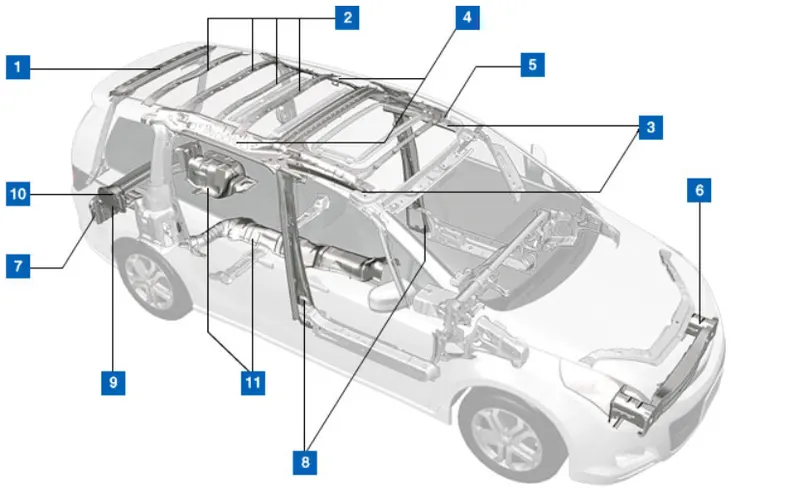
DESIGN CONSIDERATION OF ROOF
- Visibility criteria
- Head clearance
- Curvature study
- Heat Distortion and Snow Load criteria
- Draft analysis
PROCEDURE -
we are provided by the roof surface alone with master section of different flanges
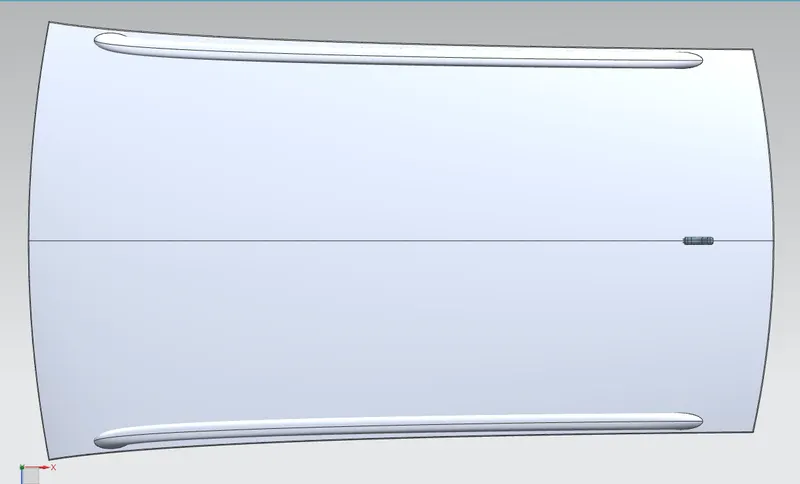
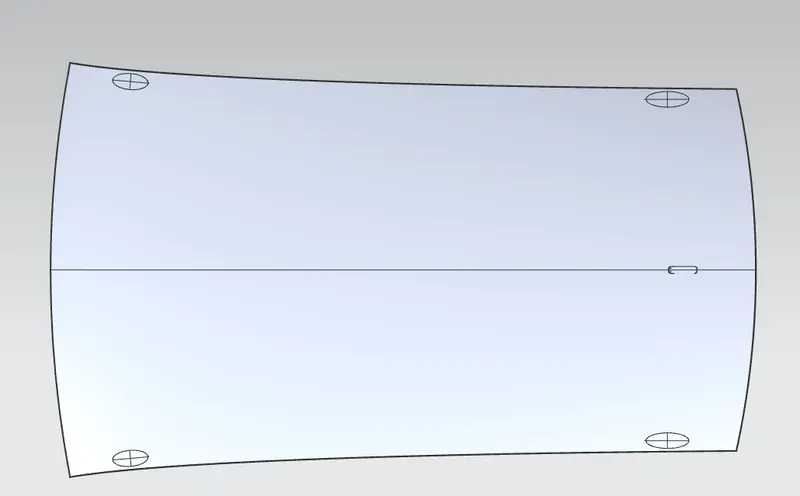
mater-section of front rail roof
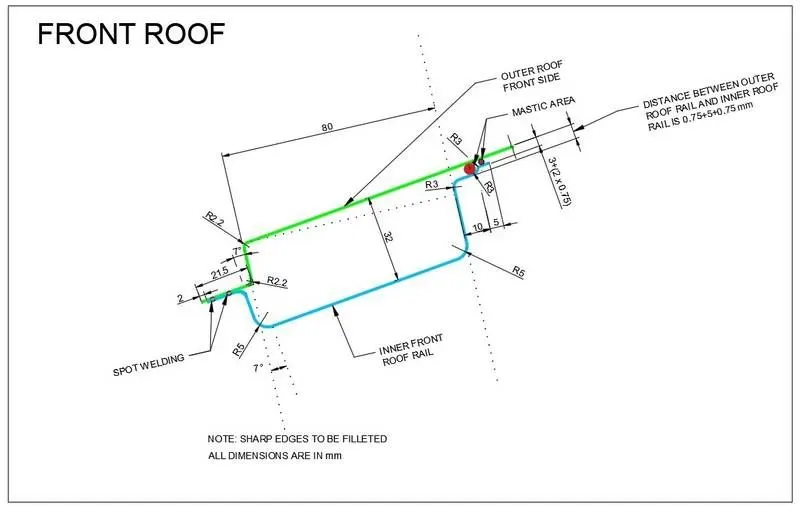
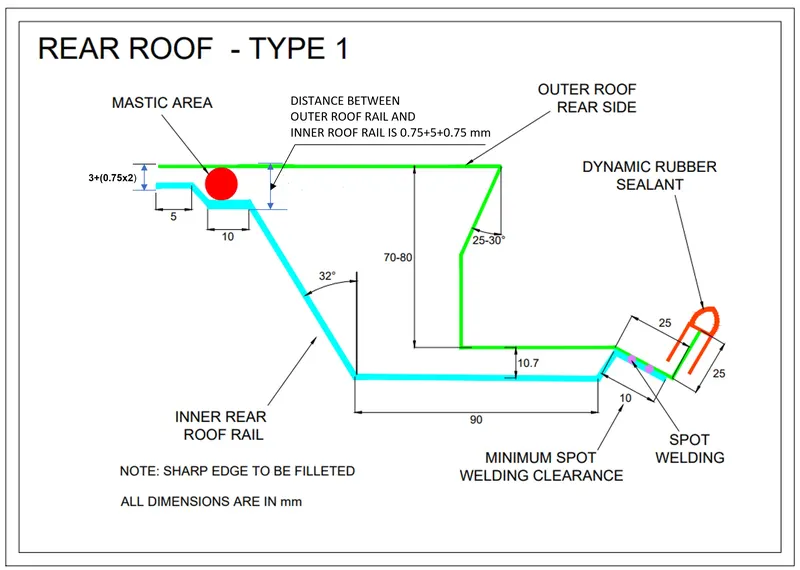
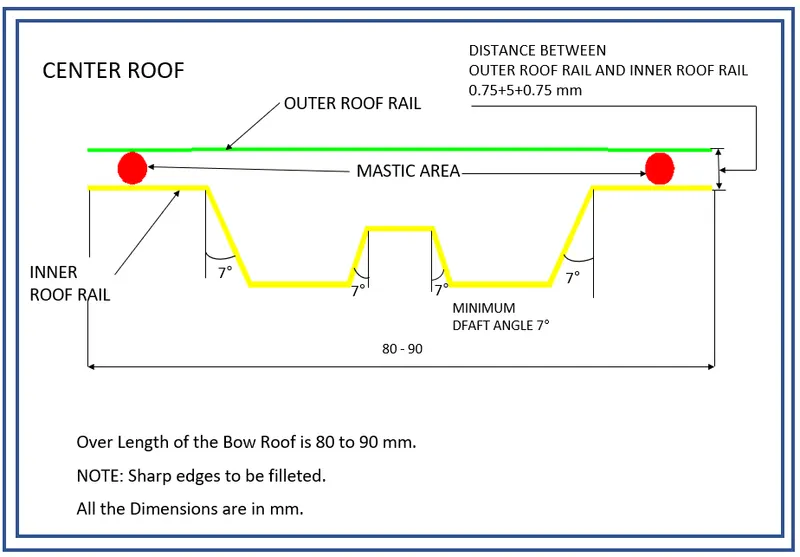
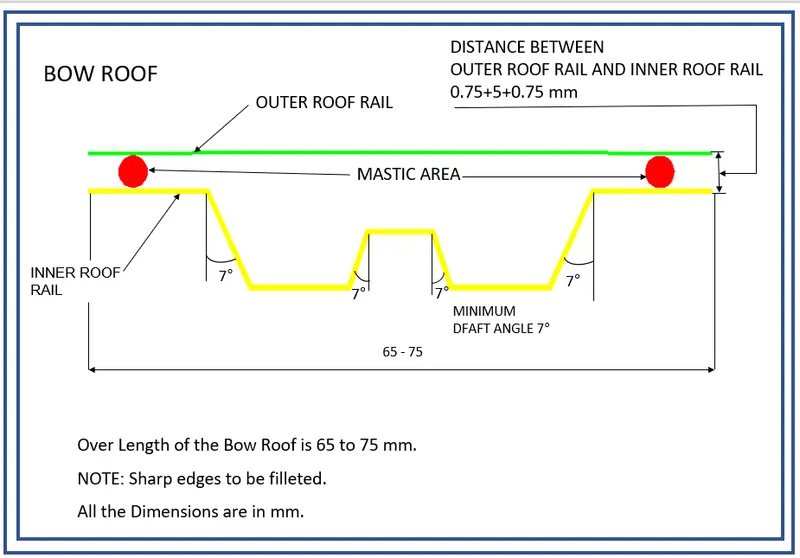
Develop the reinforcements as separate parts.
- Before, we start working on the roof design we have to make sure that we are doing it in the assembly file.
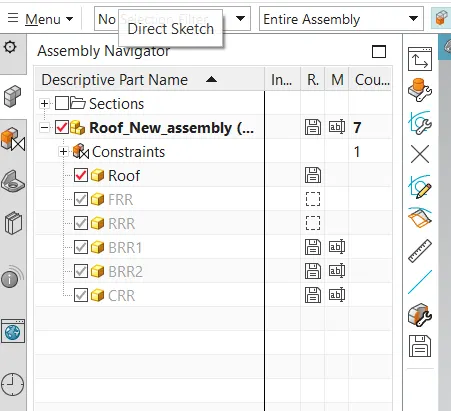
- Extract the surface of the roof provided and break the associative link as we are going build a new roof design.
- Start with the creation of a roof ditch area with a tool opening angle of 7 degrees.
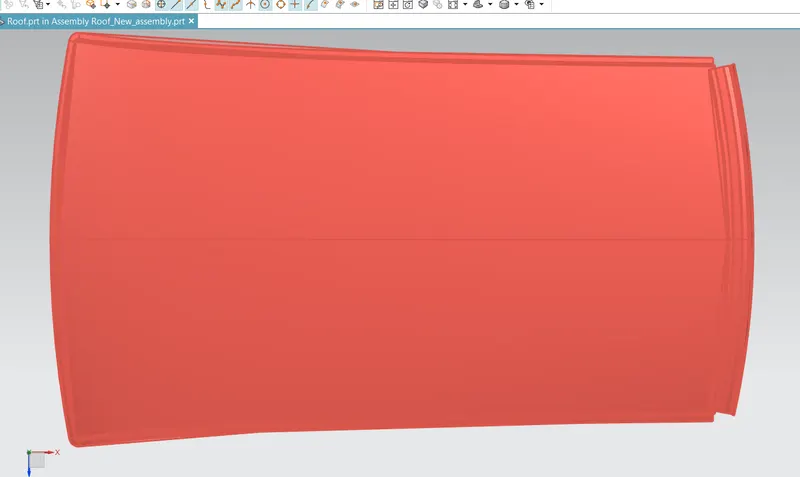
when the roof with ditch area is prepared then , create all rail roof parts separately.
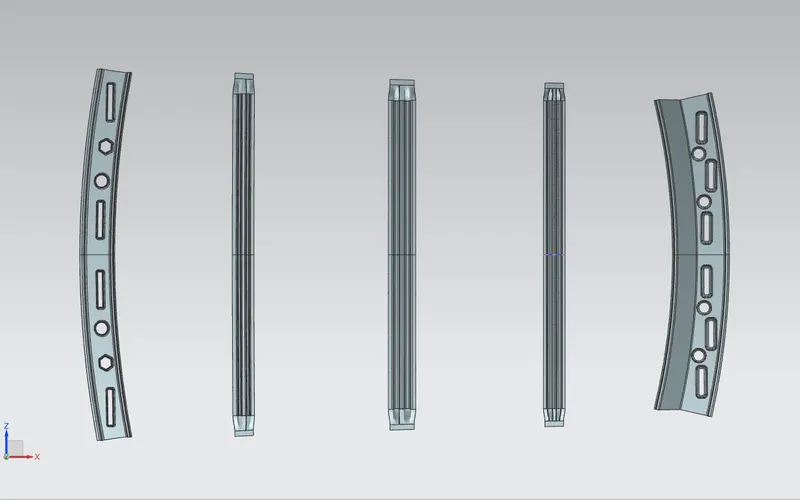
Front rail roof -
The front roof rail is located on the front of the roof where the wind shield joins with the roof. The visibility criteria and the head room clearance of the passenger are taken into consideration for the bottom flange. One end of the rail is joined using spot welding while the other end is joined with the roof using mastic sealants for increased strength.
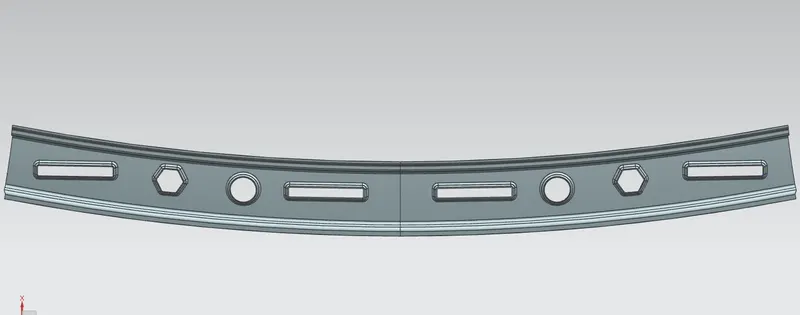
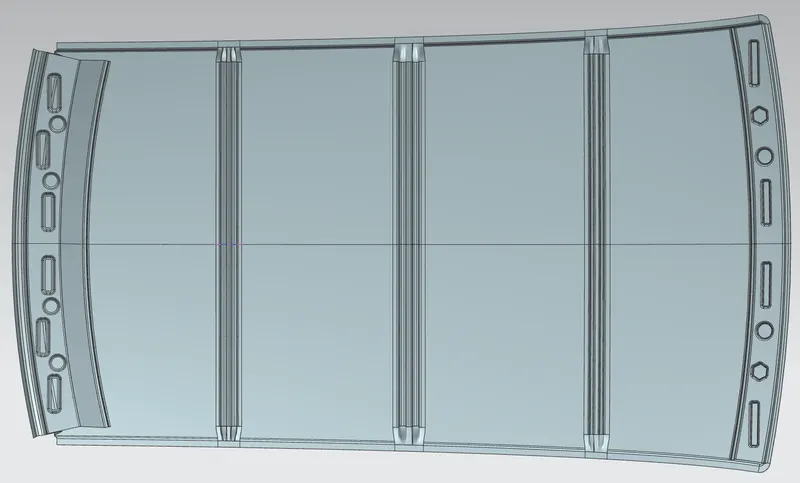
Bow roof 1- Bow roof 1 is a additional support to strenghtn the roof . Both the ends are joined together using mastic sealants to increase strenght and also since this would not affect the styling of the roof . The length of bow roof should be between 65mm-70mm . And it is placed between front roof rail and center roof rail .
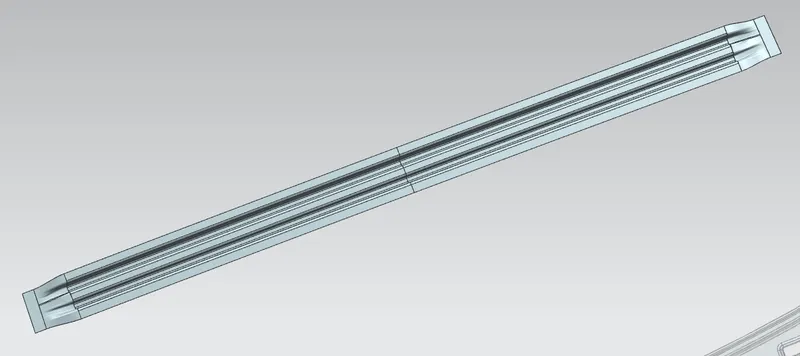
Bow roof 2- Bow roof 2 is a additional support to strenghtn the roof . Both the ends are joined together using mastic sealants to increase strenght and also since this would not affect the styling of the roof . The length of bow roof should be between 65mm-70mm. this one is placed between center rail roof and rear rail roof .

Center roof rail - center roof rail is placed in the middle of the roof. As roof is a large area . In the middle the force acting are very high to improve the strength so, we add center roof rail. The length of bow roof should be between 80mm-90mm and its breadth is larger than the bow roofs.
Rear roof rail - This roof rail joins with the back door and the roof.
Inputs from the backdoor are taken into consideration for designing this roof rail.
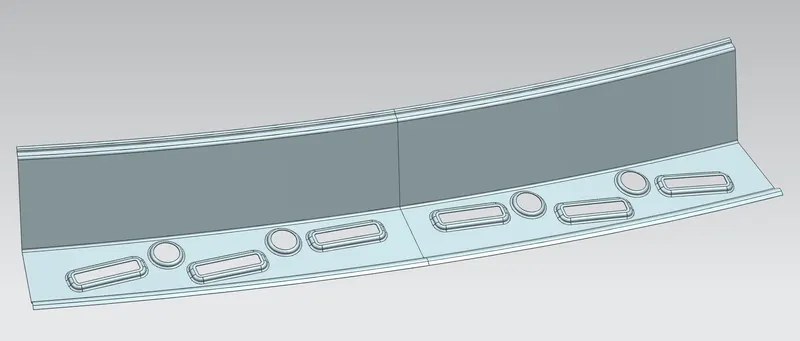
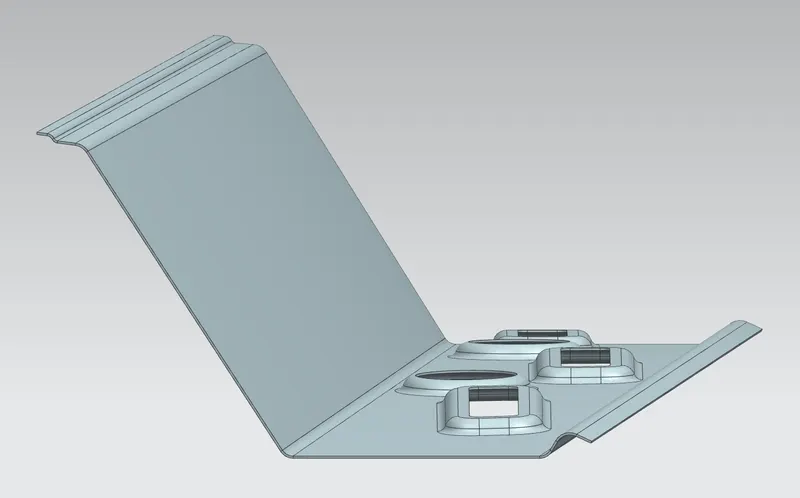
The complete roof with all roof design.
ROOF FRONT

ROOF BOTTOM
CALCULATIONS
Heat distortion calculation-
W = [1.73 x 10^(-3) x L] + [1.85 x 10^(-8) x (R^2)/t] + [ 1.10x10^(-3) x l] - 2.68
Where,
L = Roof Length in X-Direction[mm](Roof dimension in 0-Y)
R = Roof curvature
R = 2(Rx*Ry)/(Rx+Ry)
Rx = X curvature
Ry = Y curvature
t = Roof plate thickness [mm]
l = Bow Roof Span [mm]
Judgment Condition
OK< 2.7
|
Result- all calculations above satisfies the given condition for heat distortion calculation. i.e W<2.68
Snow Load Prediction Formula
Qr = [Iy x t2] / [α x s x [(Rx + Ry)/2]2 x 10-8]
Note: The Qr value given over here is correct. There was a typo error in the formula given in the video.
Where,
α = My x Lx2 x 10-12 , My = Y(Ly-Y)
t = Roof plate thickness [mm]
Ly = Distance between the front and rear roof Rails on the Vehicle along with 0Y[mm]
Length of Roof panel with the center point between Roof rail Front /Rear as the front and rear reference point.
Lx = Distance between the Left and Right end of the roof on the Roof BOW [mm]
The width of the roof panel is exposed on the surface.
Y = Distance front Front Roof Rail to Roof BOW[mm]
s = Distance for which Roof BOW bears divided load [mm]
s = L1/2 + L2/2
Iy = Geometrical moment of inertia of Roof BOW (Y cross-section )[mm4]
Rx = Lateral direction curvature radius of roof panel Y cross-section on Roof BOW [mm]
Roof panel curvature Radius of the Length Lx in Front view
Ry = Longitudinal Direction curvature radius of the Roof panel X cross-section on Roof BOW [mm]
Roof panel X curvature radius of length s in Side view
Judgment condition
Qr ≥ 3.1
|
result - all calculations above does not satisfies the given condition for snow load condition i.e Qr<3.1
solution for the above problem.
now we have to make few changes in the deisgn to satisfy the condition there are many ways to do it.
- we can provide emboss on the roof
- we can provide additional bow roof
- we can increase the thickness of the sheet
- we can modify the bow roof so that we can get higher value of Iy
conclusion - We were successfully able to design the roof with all the roof rails for better support and strength. We designed it so as to satisfy the norms and regulations by calculating the heat distortion criteria and the snow load critera. While doing this we also understood about the methodology behind designing the roof of the car and what all we take into consideration while designing so.