Fender Design - Wheel Arch Challenge
Aim- To Calculate the Wheel Arch gap at required points and check whether the car passes the European standard.
Introduction -
Fender is the American English term for the part of an automobile, motorcycle or other vehicle body that frames a wheel well (the fender underside). Its primary purpose is to prevent sand, mud, rocks, liquids, and other road spray from being thrown into the air by the rotating tire. Fenders are typically rigid and can be damaged by contact with the road surface.
Sticky materials, such as mud, may adhere to the smooth outer tire surface, while smooth loose objects, such as stones, can become temporarily embedded in the tread grooves as the tire rolls over the ground. These materials can be ejected from the surface of the tire at high velocity as the tire imparts kinetic energy to the attached objects. For a vehicle moving forward, the top of the tire is rotating upward and forward, and can throw objects into the air at other vehicles or pedestrians in front of the vehicle.
types of fender
there are mainly two types of fender designs
- full bumper type
- half bumper type
1- full bumper type -
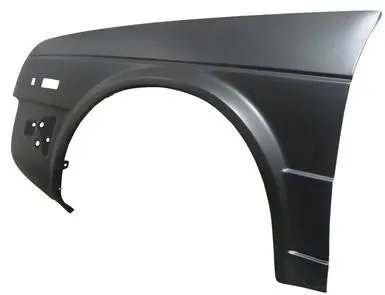
The full bumper type fender was used in old cars, it covers the full area until the front lighting. But it has a lot of sheet metal material which is unnecessary and increases the weight of the fender. This type of fenders are no longer used in automobiles.
2- Half bumper type -
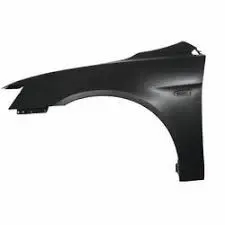
EUROPEAN REGULATION REQUIREMENT
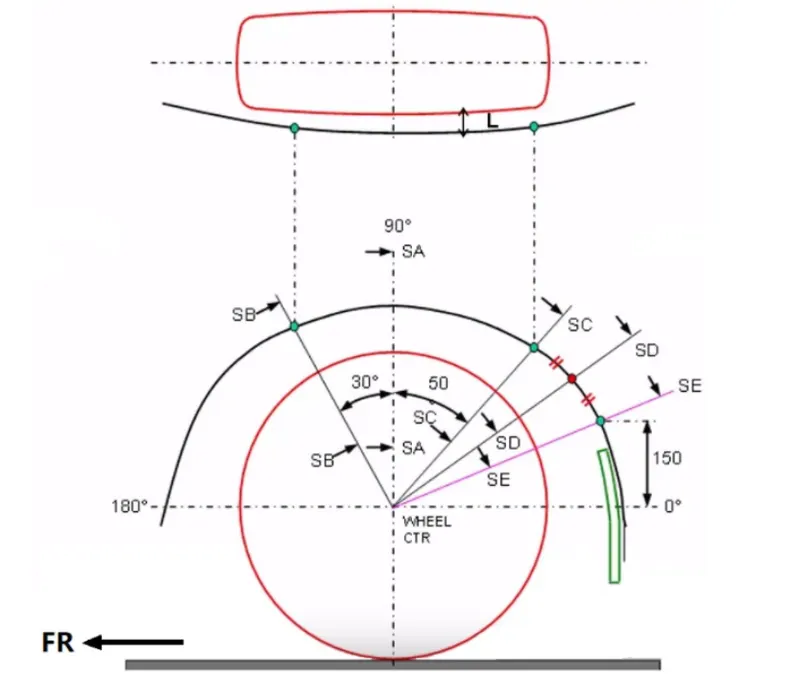
Measure CL L at section SA-SA-SB-SB-SC-SC-SD-SD-SE-SE and produce CL check chart to validate.
- At all five sections the CL L value should be greater than 10mm to satisfy the European regulation.
- Wheel guard requirement: the value of a .Shall be more than 5mm at a line 30 degree forward and 50 degree rearward from the central verticalaxis of axis of wheel.
Procedure -
we have fender wheel design
first we select a outside face wheel for creating a plane .
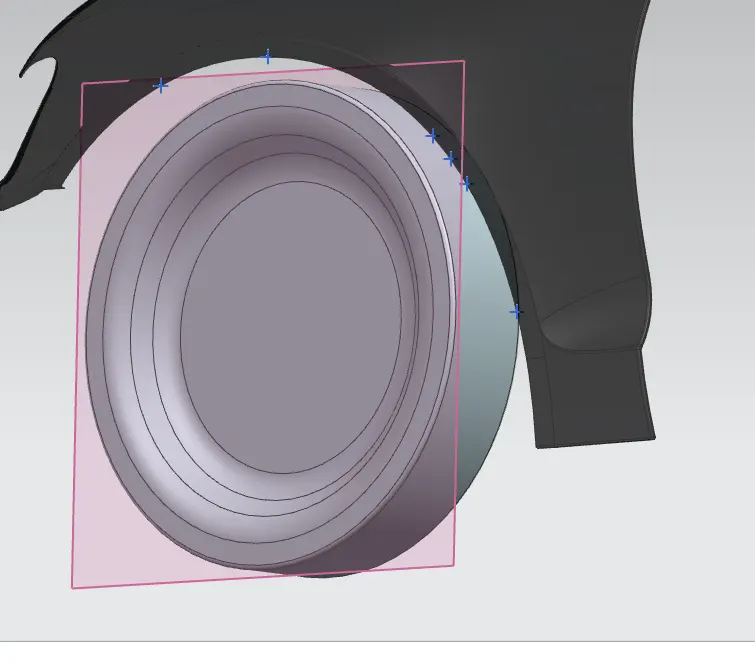
on this plane we create a sketch as per the european standards .
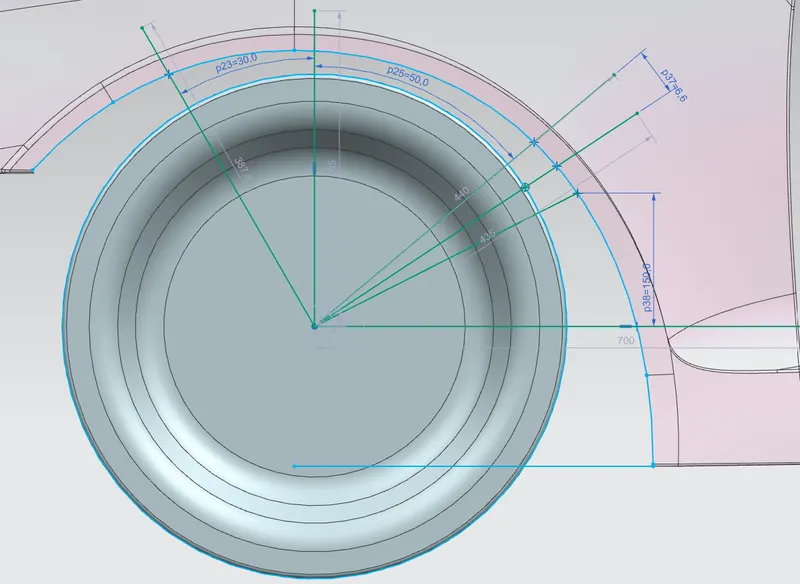
now we simply creates the intersection points on the outer fender arc .
in the last step we starts measuring the distance one by one of Z - direction to get all five sections the CL L value should be greater than 10mm to satisfy the European regulation.
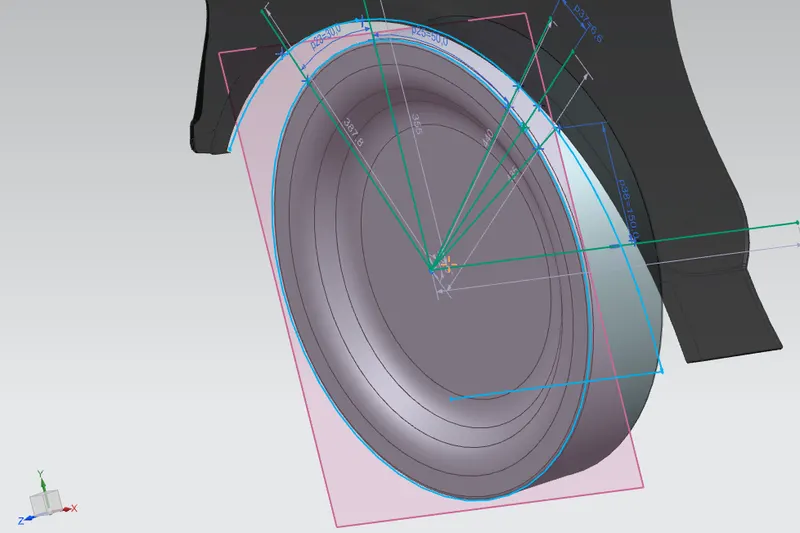
we can see the from ucs the distance we need to measure is in Z -direction
hence, first point SB is 10mm.
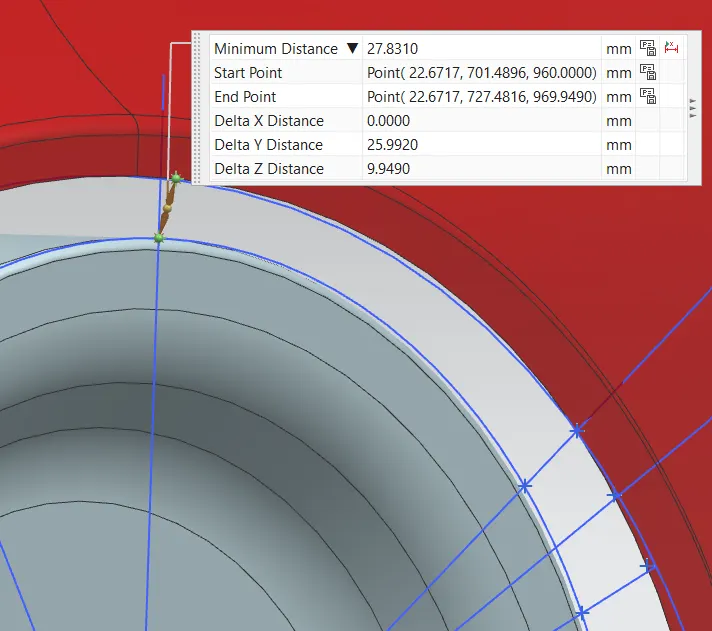
second point distance SA is 9.9490mm
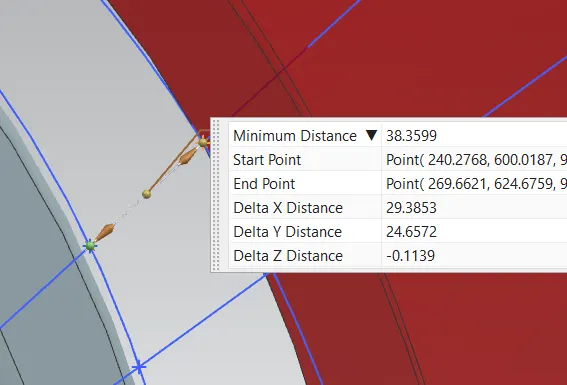
now the third point SC is -.1139 (negative sign represents that the fende is behind the plane we created i.e outermost face of wheel)
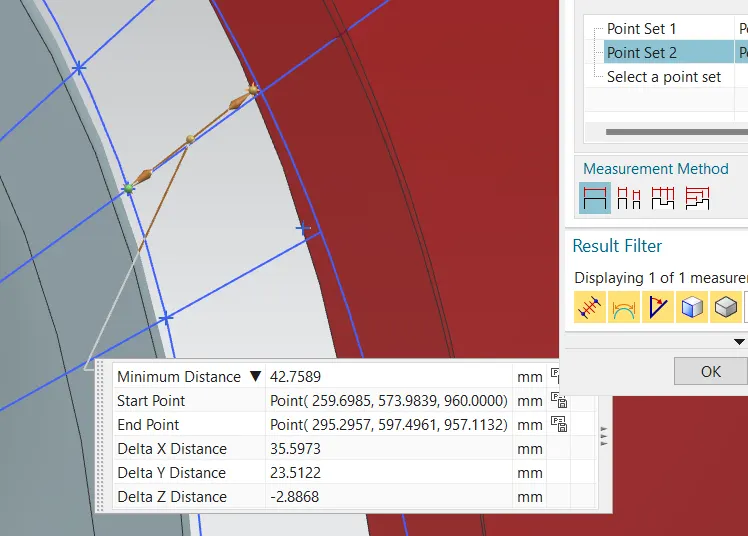
similarly point 4 SD is -2.8868mm
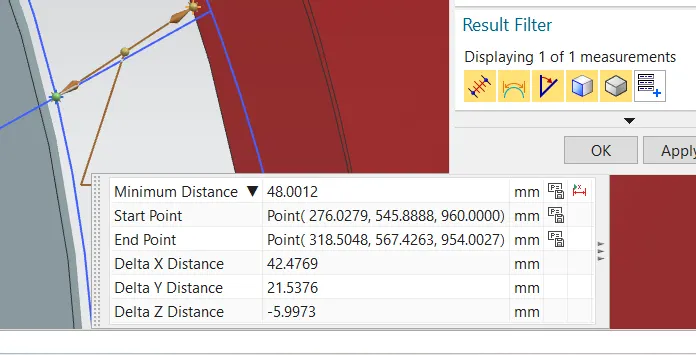
the last point SE is -5.9973mm
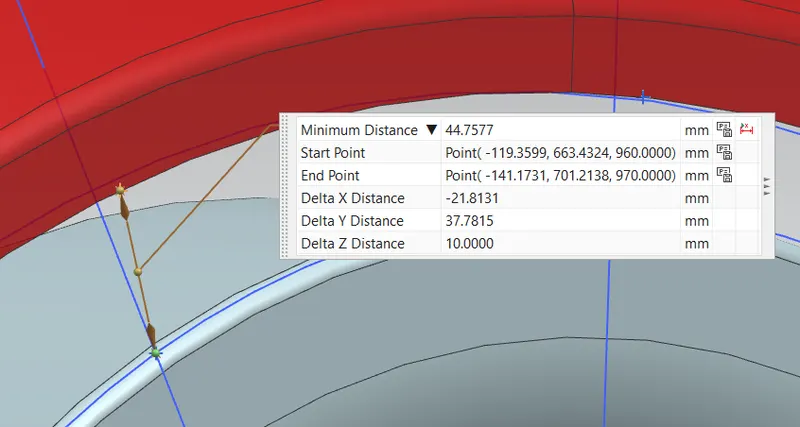
- now we have to take the value of (a) . a should be more than 5mm at line 30degree forward and 50degree to satisfy the european standards..
The value of a at sb line is 37.75mm . you can see the value of y in photo below
similarly the value of a at sc is 24.6572
hence we get all the points
Conclusion -
SB = 10 MM
SA = 9.94 MM
SC = -.113 MM
SD = -2.8868 MM
SE = -5.9973 MM
sb(a) = 37.75 MM
sc(a) = 24.65 MM
| SECTION | L(>10MM) | RESULT | A(<5MM) | RESULT |
|
SA-SA |
10 |
PASS |
||
| SB - SB | 9.94 | FAIL | 37.75 | PASS |
| SC - SC | -.113 | FAIL | 24.65 | PASS |
| SD-SD | -2.8868 | FAIL | ||
| SE-SE | -5.9973 | FAIL |
From the above results we can conclude that the Fender does not pass the European Regulations as the minimum clearance between the fender arch wheel to the outer most wheel is 10 mm and this design does not meet the this minimum clearance so this fender design is fail for the European Regulation standard.