Roof Design
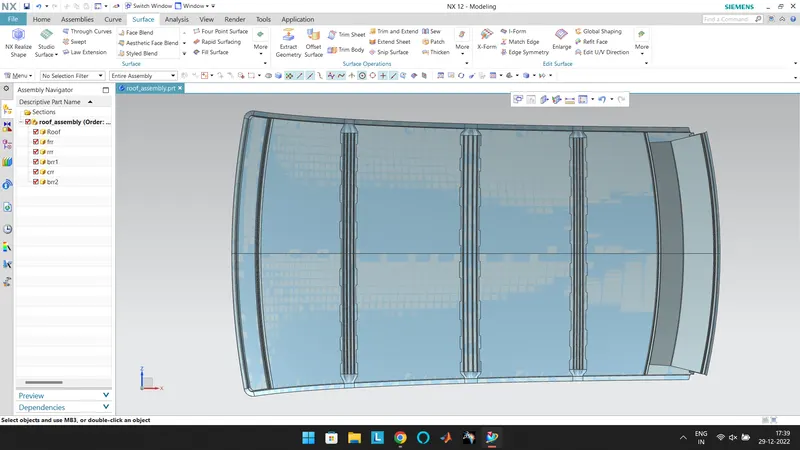
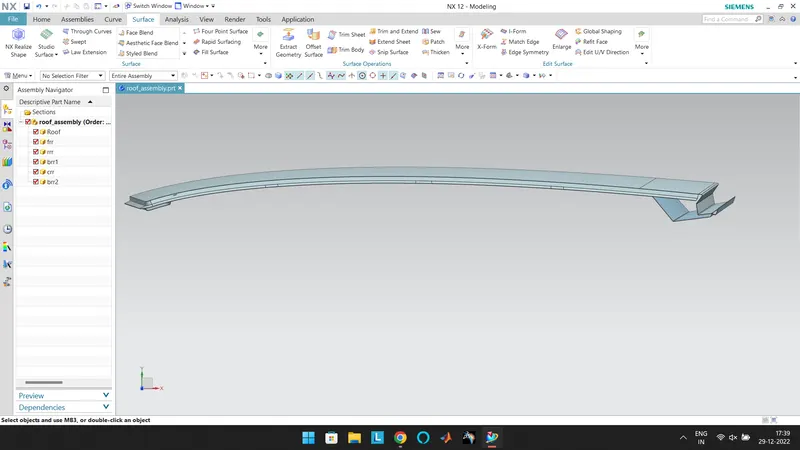
Roof : An automobile roof or car top is the portion of an automobile that sits above the passenger compartment, protecting the vehicle occupants from sun, wind, rain, and other external elements.
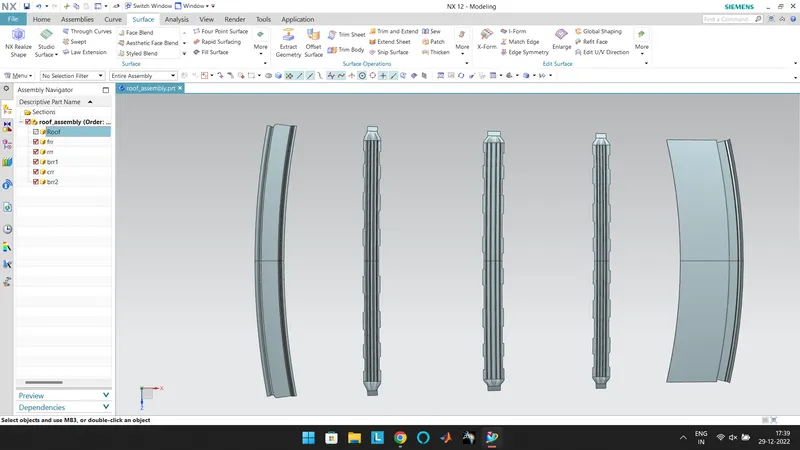
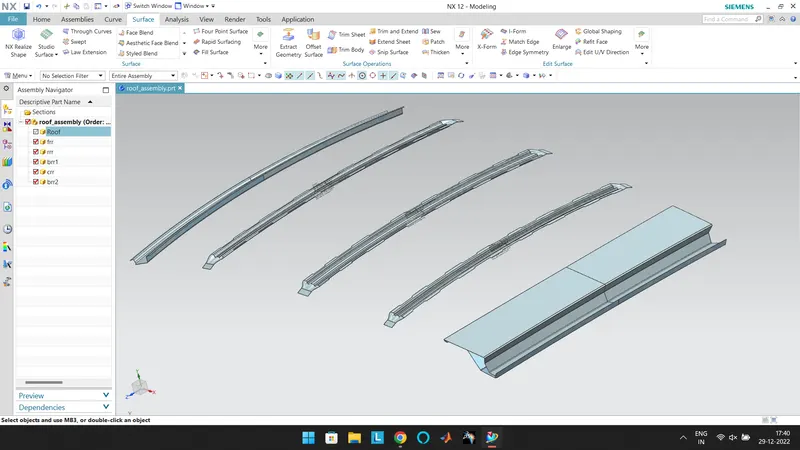
Front roof rail is the one which joins the wind shield glass , body side outer and the inner panel also. Here the front roof rail is designed based up on the master section given.
Rear roof rail is the one which joins the back door and the body side outer.
Central roof rail helps in providing effectively support to the flat area of the roof as it is more susceptible to failure under the action of load. Generally central roof rail is placed at the center of the roof which is connected to the B-pillar support structure.
The Bow roofs are give to improve the torsional stiffness and load bearing capacity of the roof structure .The number of bow roof present is depends on the overall size of the roof. Presently in this project two bow roofs are added.
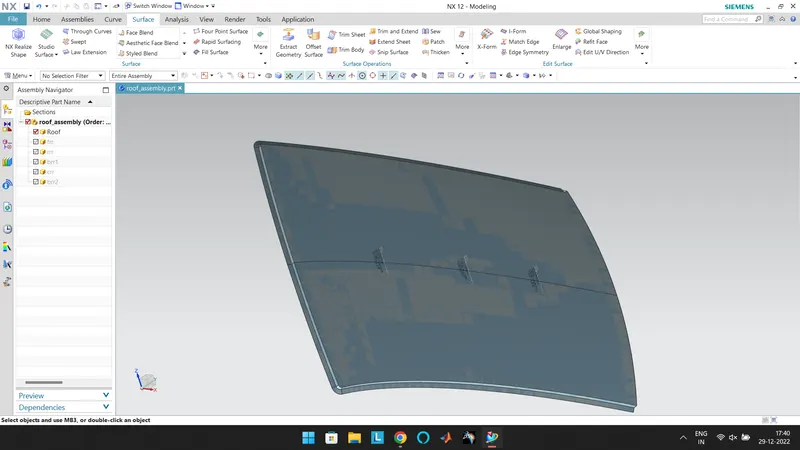
Joining Process: Mastics are introduced between the roof outer panel and the reinforcements for joining .Where ever the mastic are introduced there is remarkable improve of the strength. Spot welding is also introduced to join the reinforcements and the outer panel.
MASTIC SEALANTS OF ROOF: The Mastic sealant or the Mastic point is an elastic compound that behaves like a rubber. The mastic sealants are applied at the many places like roof outer to front roof rail, rear roof rail, bow roof and reinforcement center roofs. They help the roof outer panel to come back to its original shape after it gets deformed. It will give the three methods in one operation, it fills the gap between the two or more substrates, it forms a barrier through the physical properties of the sealant itself, and by adhesion to substrates.
DESIGN CONSIDERATION OF ROOF:
- Visibility criteria
- Head room clearance
- Bow roof position
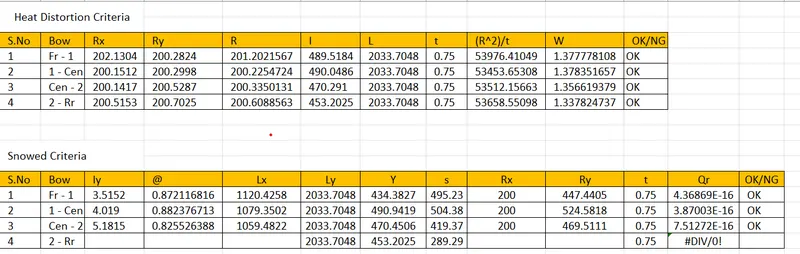
- Heat distortion and Snow load criteria
- Draft analysis
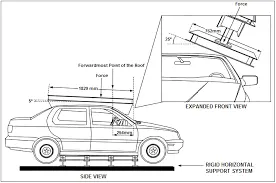
Roof Crush Test: The load is applied in such a way that 50 is tilted from the front end to the rear end and the load will be in 1800 mm in length and 750 mm in width . The load is applied at the position of 250 from the flatness of the roof. The load is applied on the roof for almost 120 sec and the crush speed at which the load applied is 13 mm/sec or less than that.
Test rating is based on reformation to its original shape after the roll over and deepness of the protrusion after the roll over
If the displacements goes above the requirements level then we have to increase the bow roof thickness or add more mastics points to increase the strength . the stronger the roof the better it can protect the occupants in the roll over crashes.
HEAT DISTORTION STUDY ON THE ROOF :
The heat distortion study plays a major role in sheet metal usage. Heat distortion temperature is a temperature limit above which the material cannot be used for the structural applications.This study is used to predict the heat distortion temperature at where the material starts to soften when exposed to a fixed load at elevated temperature . In order to avoid bending or damages on the roof, based on the heat distortion temperature , this study will predict the bow roof position which helps to strengthen the roof .
SNOW LOAD CRITERIA :
This test is done to know how is the roof behaving when there is a snow over. Normally due to the snow weight the dent will happen. But the roof should be designed in such a way that when the snow is removal the roof should go it its original position. This is the basic requirements for snow load criteria .