Roof challenge
Aim: To design the flanges, Bow, Reinforcement in front, center and rear roof fo the given roof surface.
Introduction: The roof is an important part of the car body that is used to cover the car from the top. because it is a class A surface, it must be vsuallu appealing and attractive to the customer. It also protects the occupants and components inside the car from the sun heat rain dust and other element.
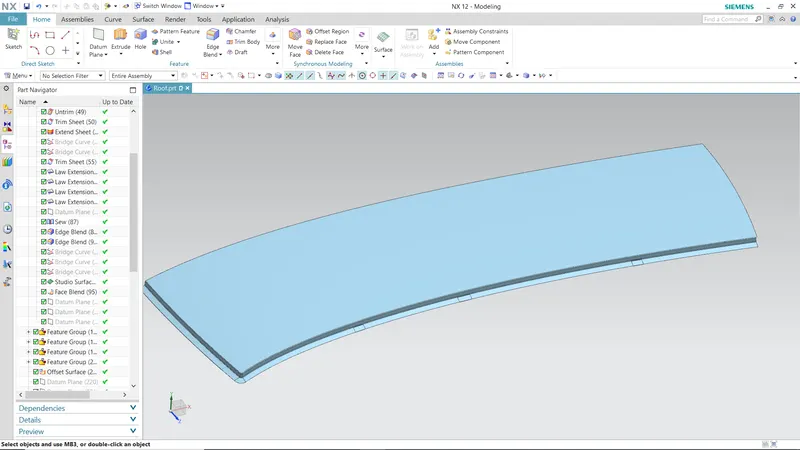
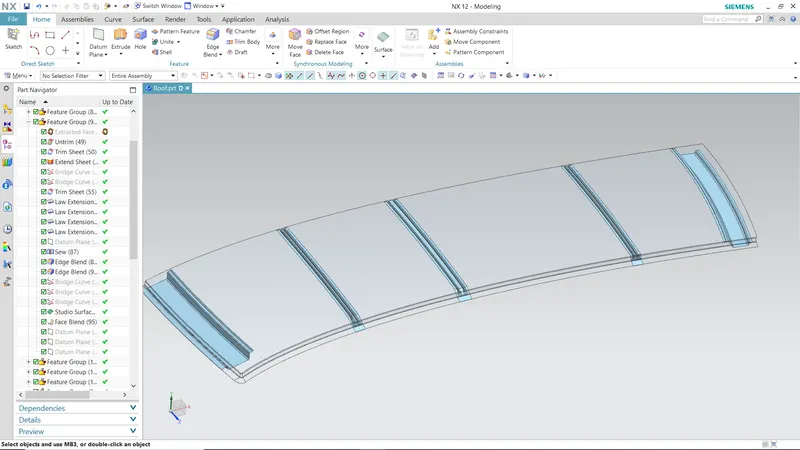
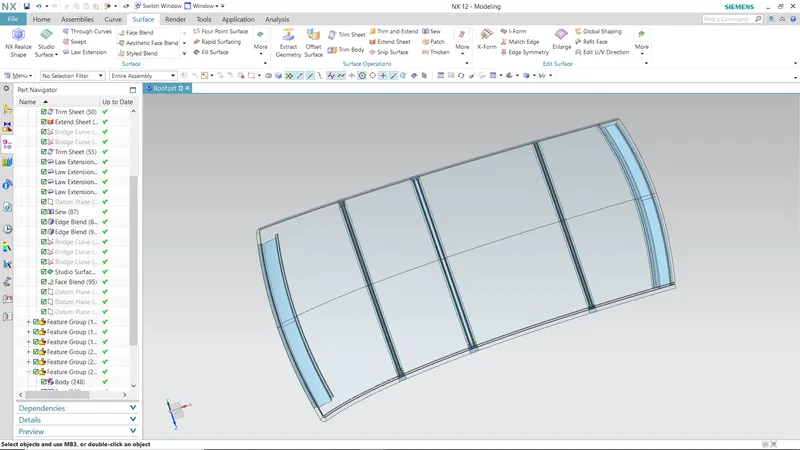
Front rail roof with thickness 0.75mm toward outer roof
It provides support to the car windshield glass. Spot welding is used to joint one end to the windshield and mastic is used to joint the other end to the outer roof. The most bottom flanges was placed by considering the visibility criteria.
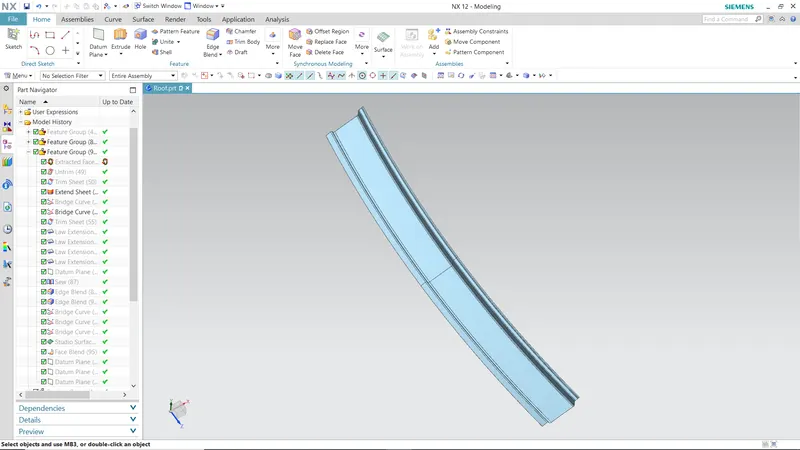
Rear rail roof with thickness 0.75mm toward the outer roof
This supports is used to connect the back door and the outer and inner pannel of the body side. using spot welding the backdoor was joined to it . and the other end of the raer rail was connected to the roof with mastic sealants. The most bottom flange was plaaced while keeping headroom clearance and rear visibility in mind.
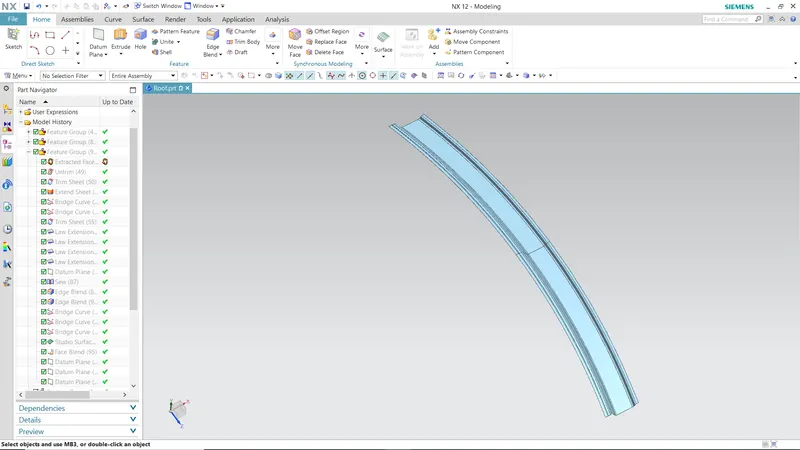
Bow rail roof from front with thickness 1mm toward outer roof
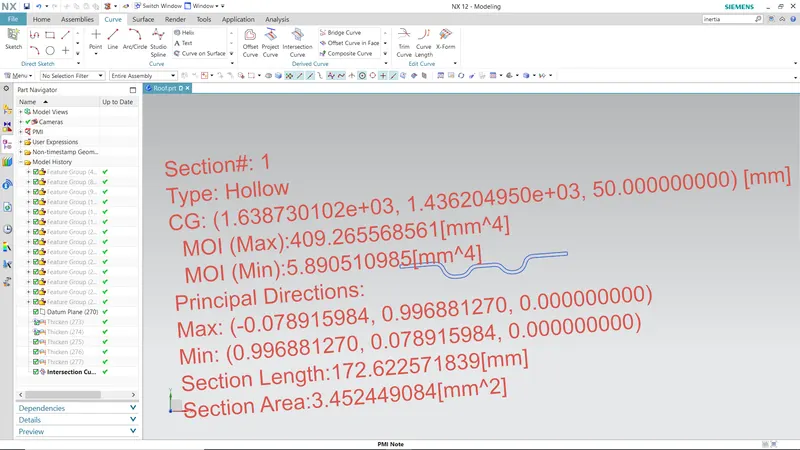
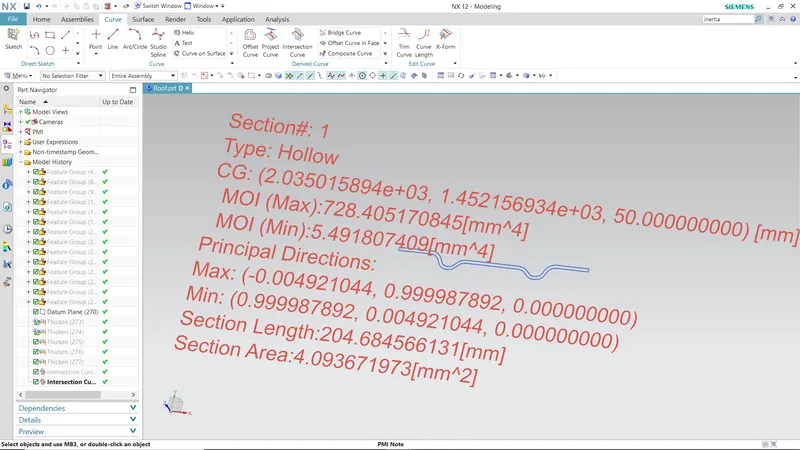
Its purpose is to provide support for the outer roof. During the design process the head room clearances and visibility criteria must be considered. Because it is a styling surface only mastic sealant were used to joint the bow rail and roof. More thickness and embossing can be added to increase their strength and high moment of inertia value.
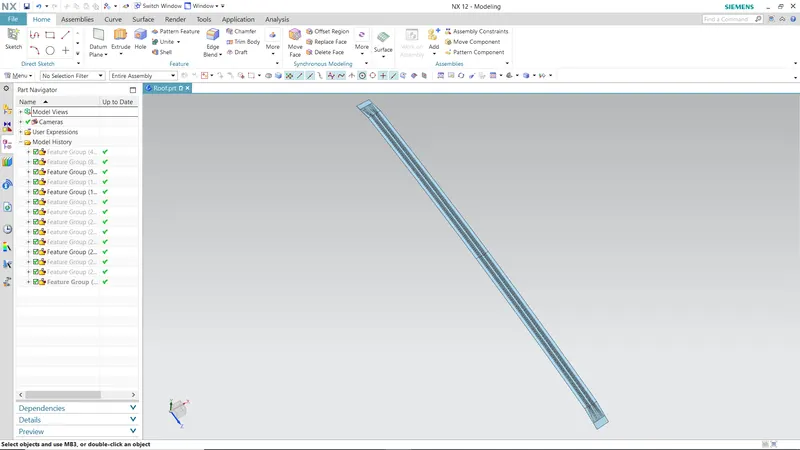
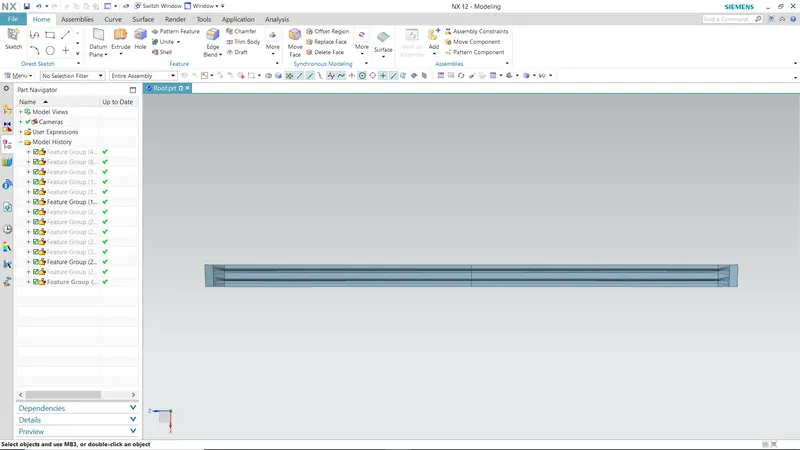
Ditch area and joining operation
It is the part of the outer roof that has been enlarged. Spot welding is used to attached the support such as the rail and bow to the ditch region. Because it is not a styling surface spot welding was utilised on it. Except for the side connection all other conection are made mastic. A 5mm gap was provided between the outer roof and all suports for the mastic.
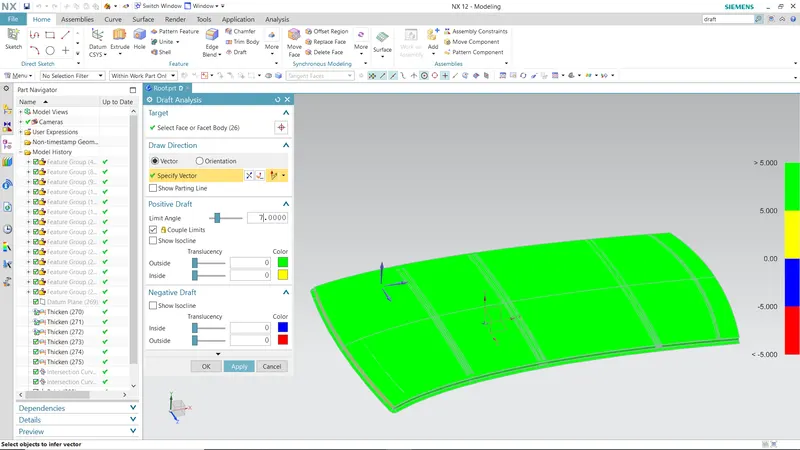
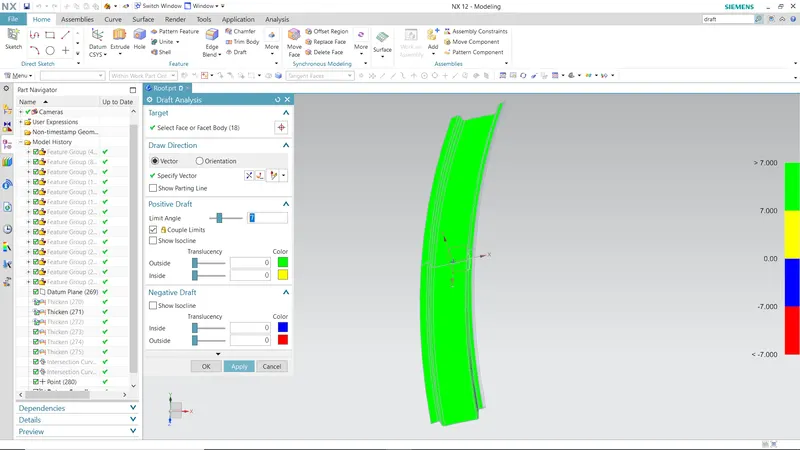
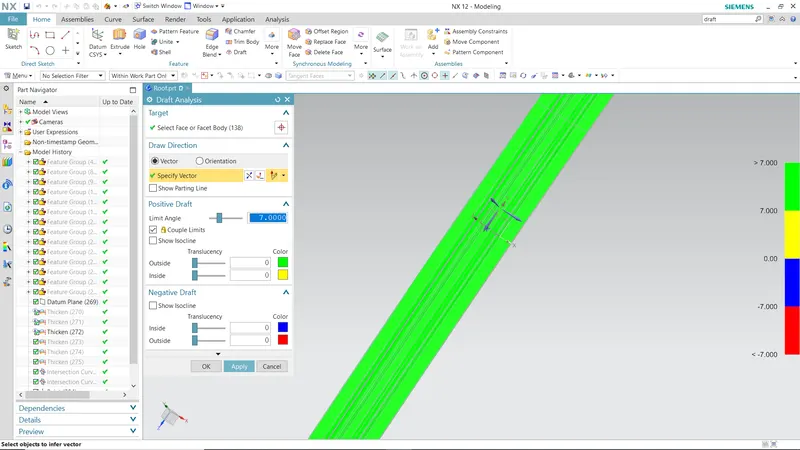
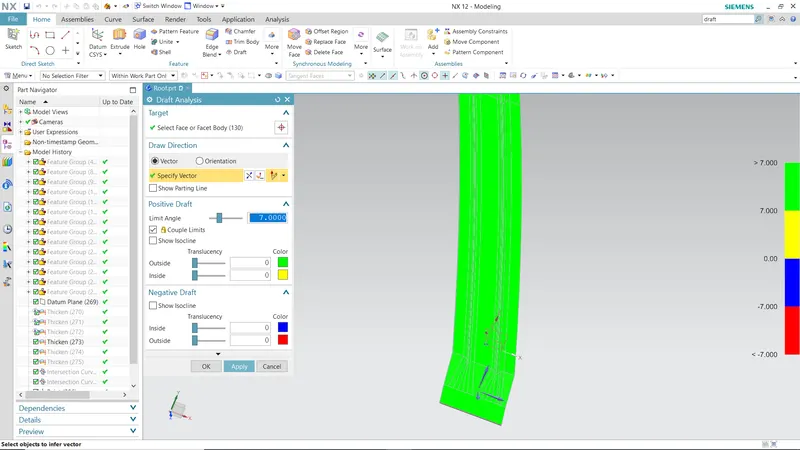
Draft analysis
It must be done for the smooth manufacturing process in particular direction. In this method the draft angle will be checked . It must be more than 7degree for positive draft. One should try to avoid the negative draft during the design stage.
Conclusion
The required roof design was completed based on the given surface and all criteria were taken into account when designing the parts.