Roof challenge
AIM:-
To design & develop the Roof of a car with its components by following the master section and design parameters.
OBJECTIVE:-
- To develop the essential flanges and reinforcements using roof styling as input.
- To do a curvature study on the roof and perform calculations to determine the position of the Bow-roof.
- To determine the Heat Distortion Criteria of the car's roof.
- To find the section modulus on the O-Y section of the roof and also for all the components of it.
- To determine the Snow Load Criteria for a car's roof.
- To perform a Draft Analysis on the final CAD model of the roof.
ROOF:-
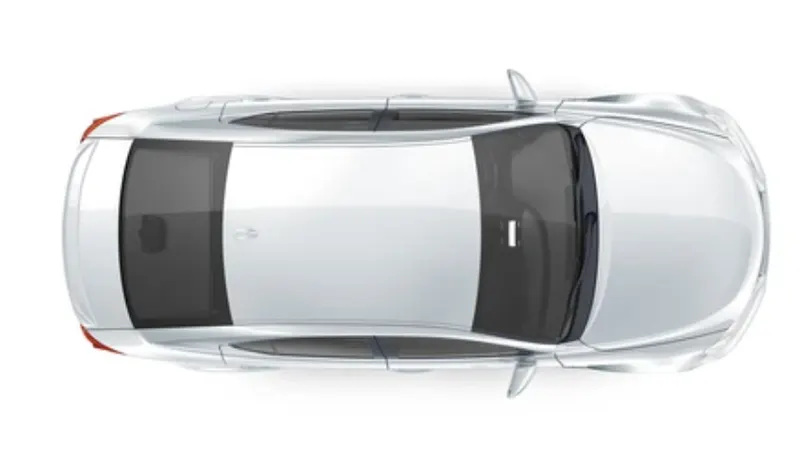
An automobile roof or car top is the portion of an automobile that sits above the passenger compartment, protecting the vehicle occupants from sun, wind, rain, and other external elements.
TYPES OF ROOFS:-
- Hardtop:-
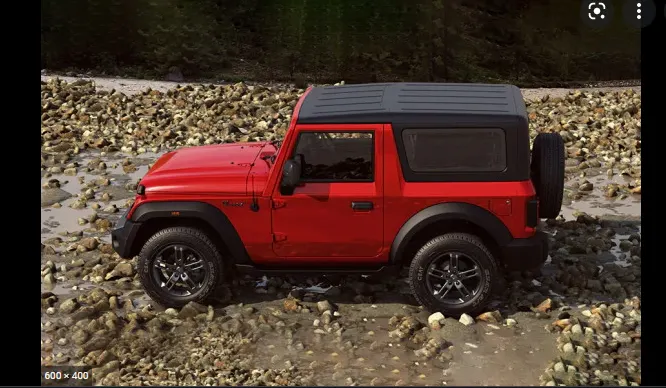
A hardtop is a rigid form of automobile roof, which for modern cars is typically constructed from metal. A hardtop roof can be either fixed (i.e. not removable), detachable for separate storing, or retractable within the vehicle itself.
- Convertible roof:-
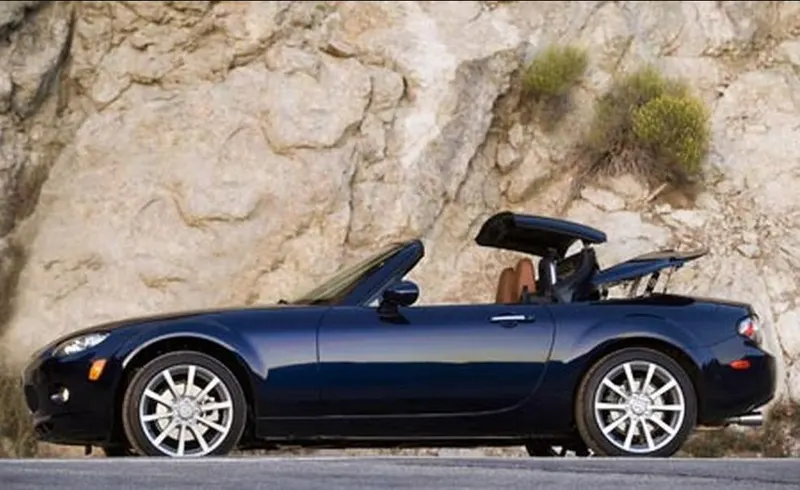
A convertible roof car is a passenger car that can be driven with or without a roof in place. The methods of retracting and storing the roof vary between models. A convertible allows an open-air driving experience, with the ability to provide a roof when required. Potential drawbacks of convertibles are reduced structural rigidity.
- Sunroof:-
A sunroof is a movable panel that opens to uncover a window in an automobile roof, allowing light and fresh air to enter the passenger compartment. Sunroofs can be manually operated or motor-driven, and are available in many shapes, sizes, and styles. While the term sunroof is now used generically to describe any glass panel in the roof, the term "moonroof" was historically used to describe stationary glass panes rigidly mounted in the roof panel over the passenger compartment. A moonroof has a glass panel that is transparent and usually tinted. Previous terms include Sunshine Roof, Sliding Head, and Sliding Roof.

ROOF ASSEMBLY:-
The roof assembly has the following parts,
- Front roof rail
- Rear roof rail
- Centre rail with reinforcement
- Bow roof rail 1
- Bow roof rail 2
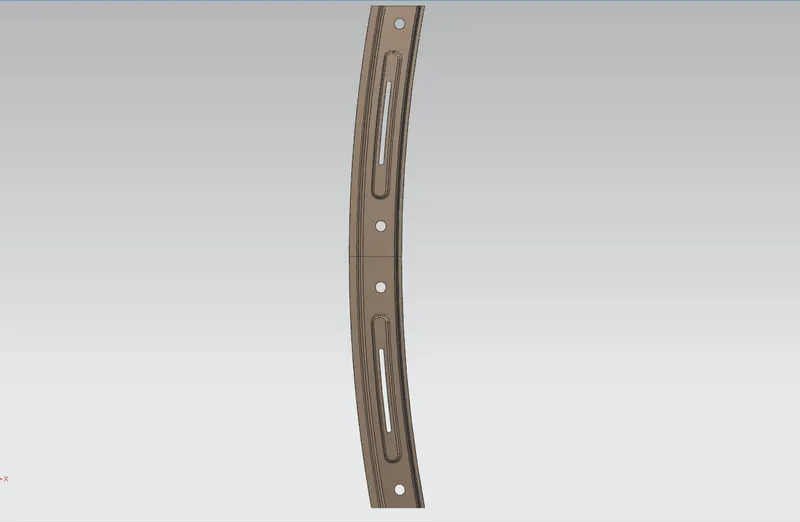
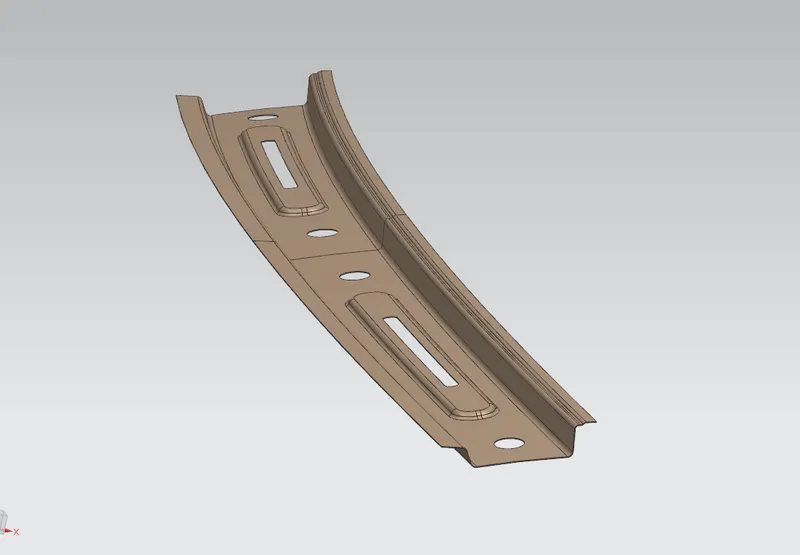
FRONT ROOF RAIL:-
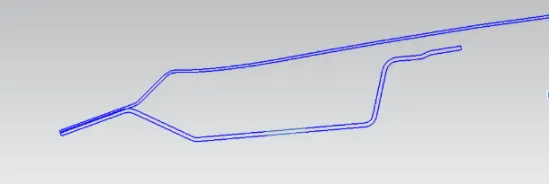
The front roof rail is the one that joints the front roof side and the bodyside front. Basically, the roof rails and the roofs are joined with the help of mastic and spot welding.
REAR ROOF RAIL:-
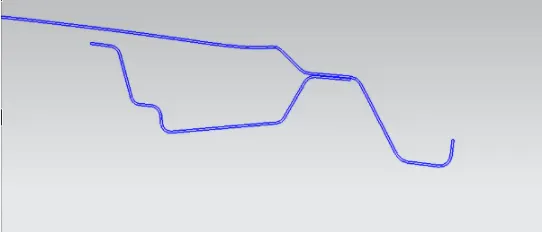
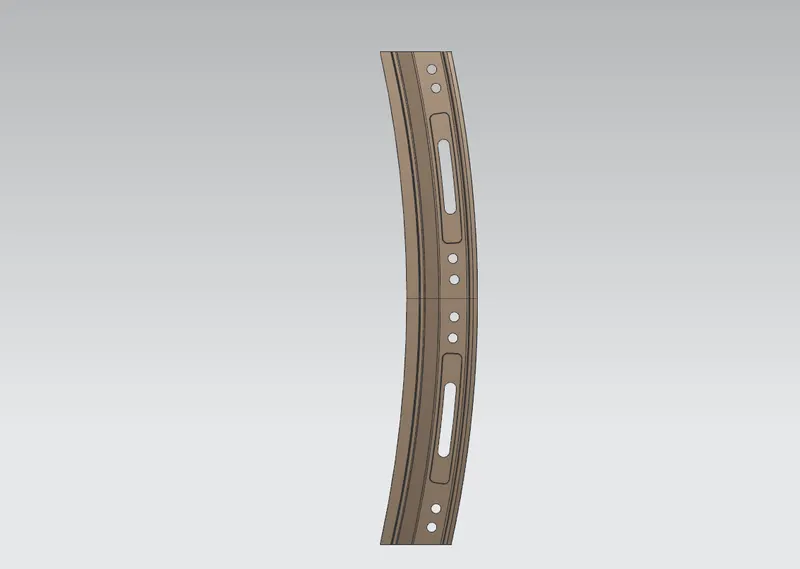
REAR roof rail is attached at the rear end of the roof. The back door is attached to the rear roof rail with the help of hinge attachments.
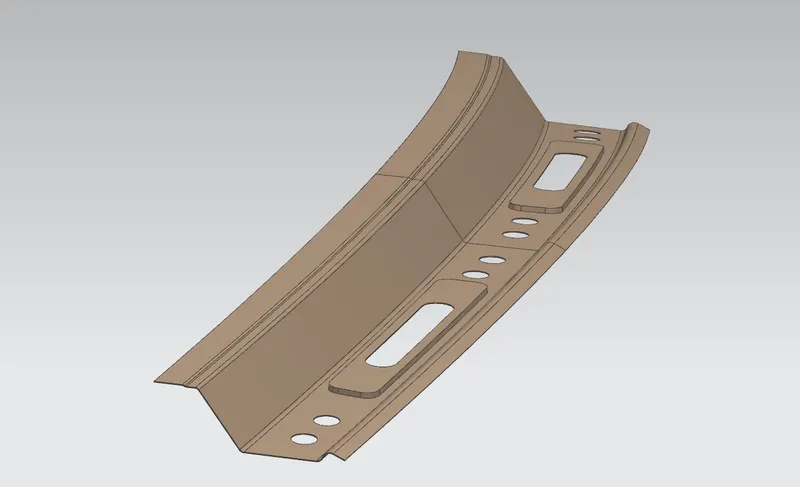
CENTRE ROOF RAIL:-
Centre roof rail is designed at the centre of the roof to provide more support and strength to the roof. It is spot welded to the reinforcement to provide better strength.
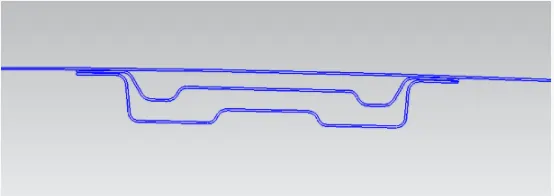
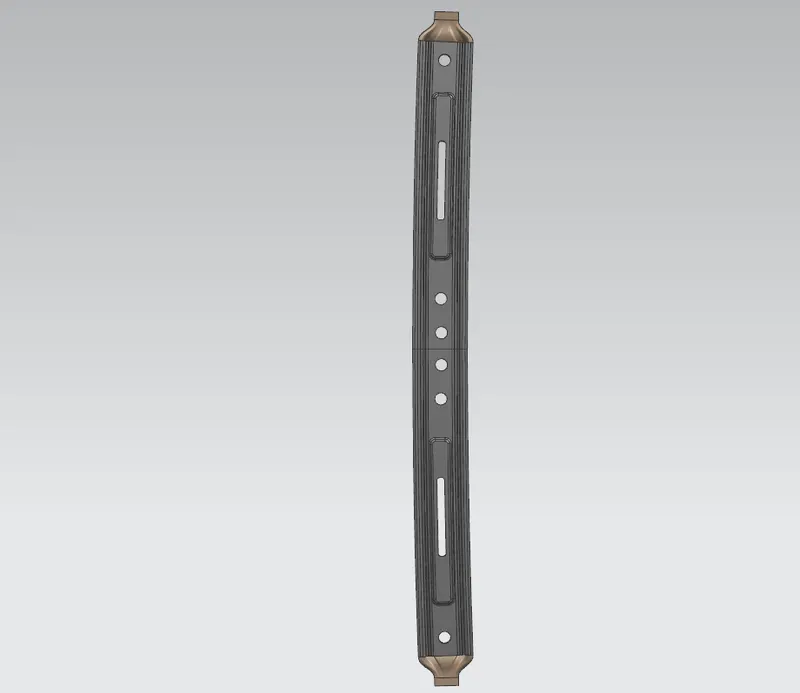
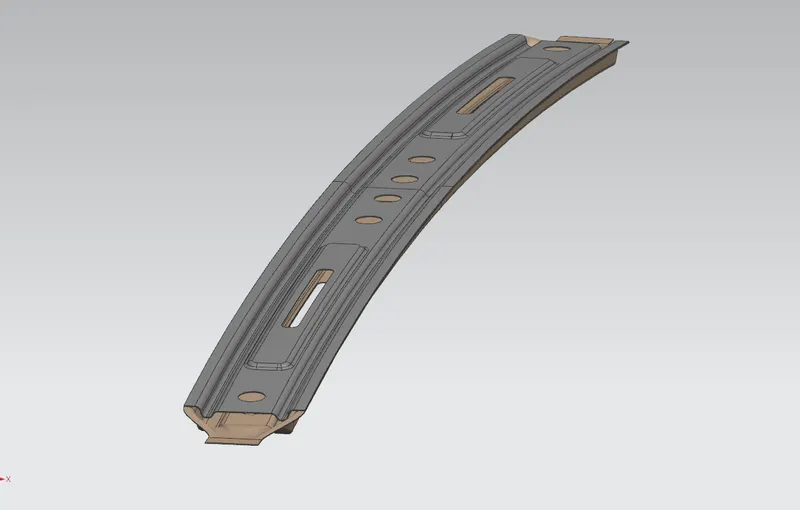
BOW ROOF RAIL:-
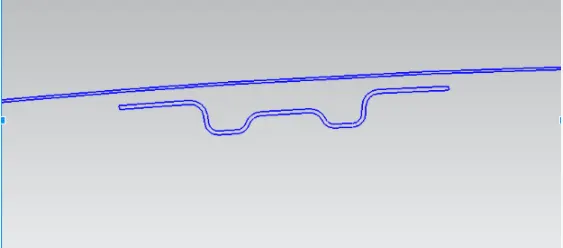
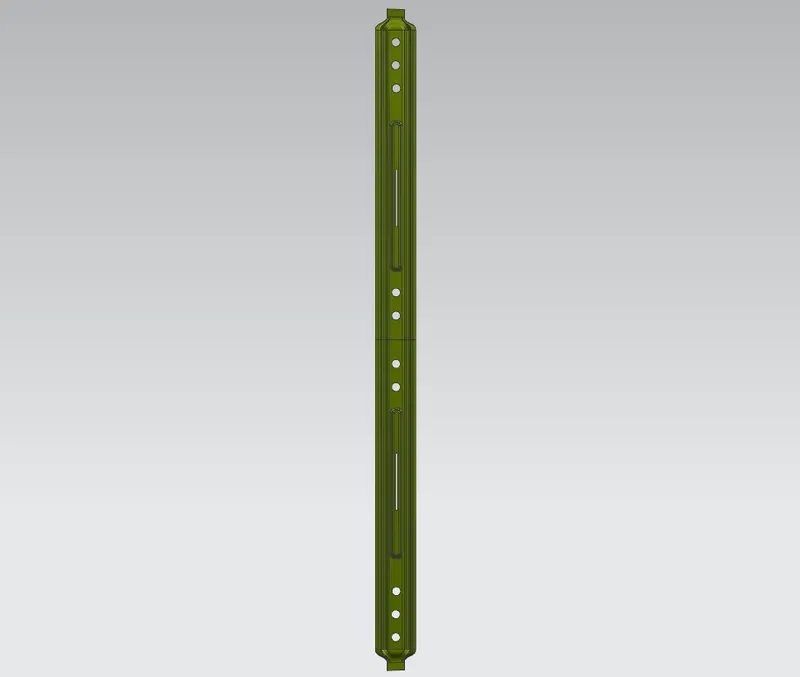
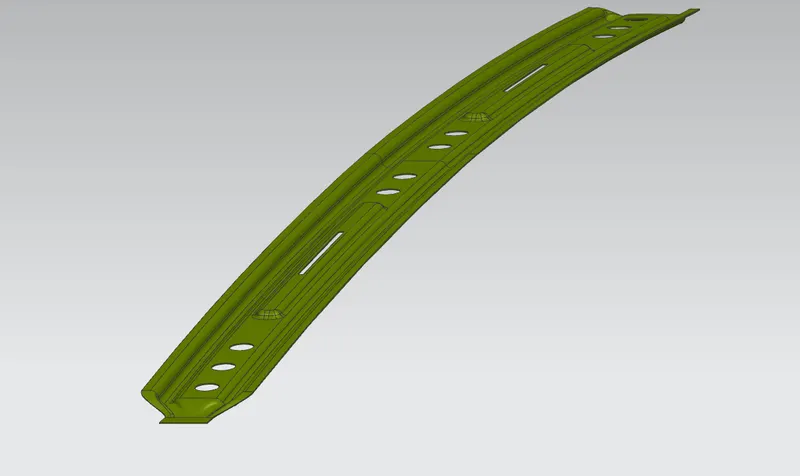
These bow roofs are introduced to provide stiffness towards the curvature of the roof. As per the length of the roof, the number of bow roofs should be introduced. There are 2 bow roofs in this design.
ROOF:-
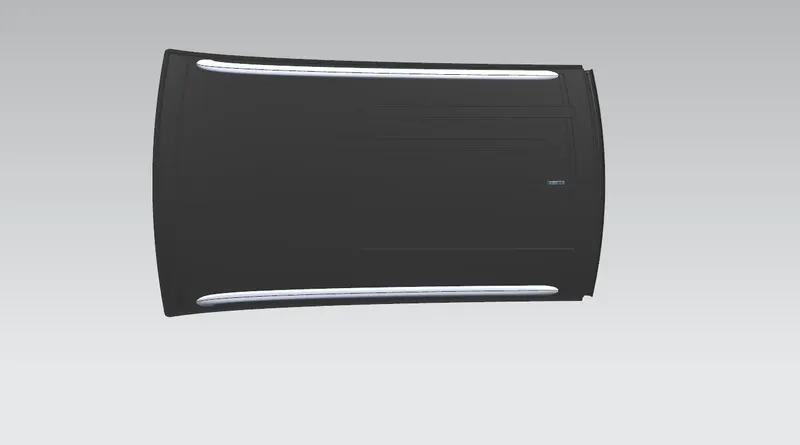
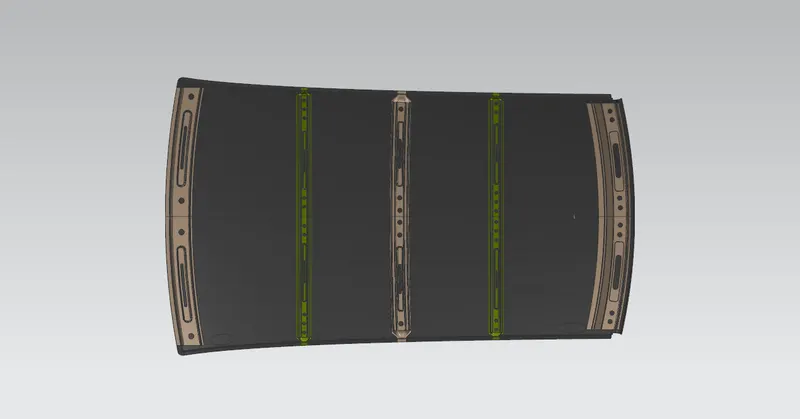
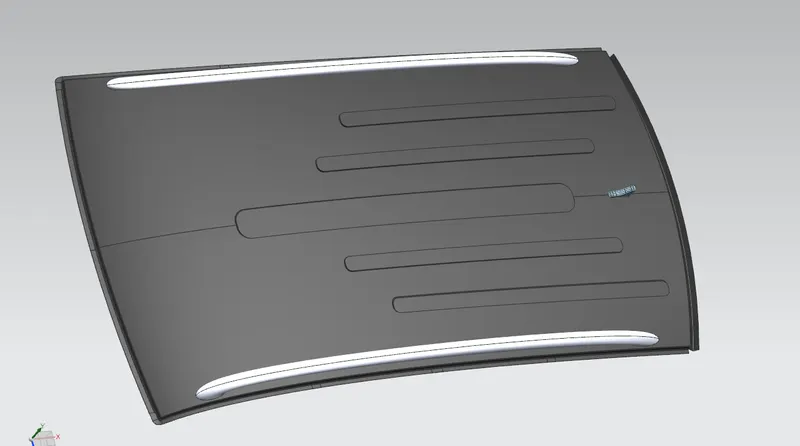
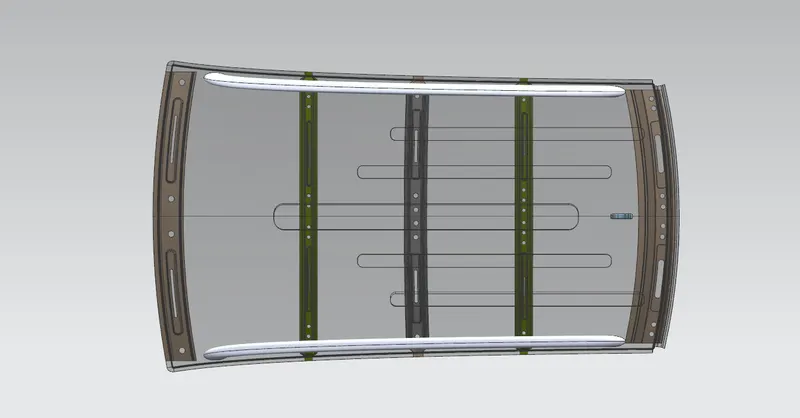
By following the above-mentioned steps, the roof is created considering every design aspect. The outer roof is modified for the bow roofs and centre roof rail flanges to spot weld. The overall roof is shown below,
TOP VIEW:-
BOTTOM VIEW:-
TRIMETRIC VIEW:-
TOP VIEW WITH TRNSLUENCY ON:-
DRAFT ANALYSIS:-
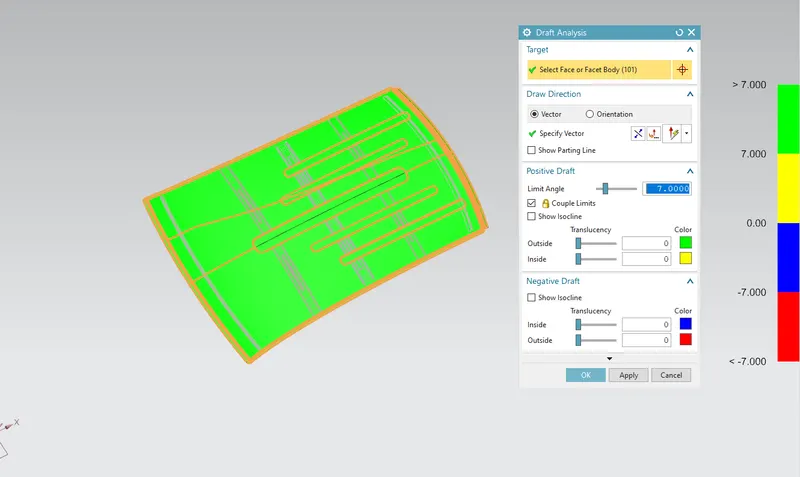
All the products are prepared in sheet metal raw material. So appropriate draft should be given to the parts we design, only then the part can be manufactured. The draft of the parts should be handled in the design stage itself. A draft angle of a minimum of 7 degrees is given to the parts to avoid the wear and tear of the dye.
DRAFT ANALYSIS OF FRONT ROOF RAIL:-
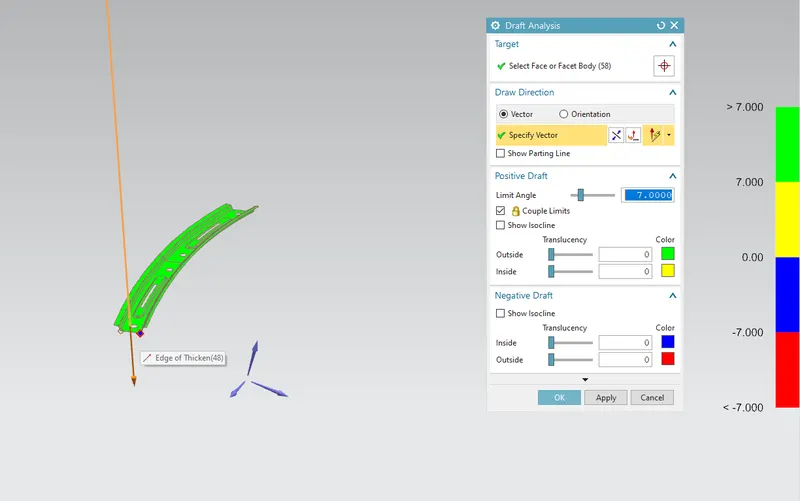
DRAFT ANALYSIS OF REAR ROOF RAIL:-
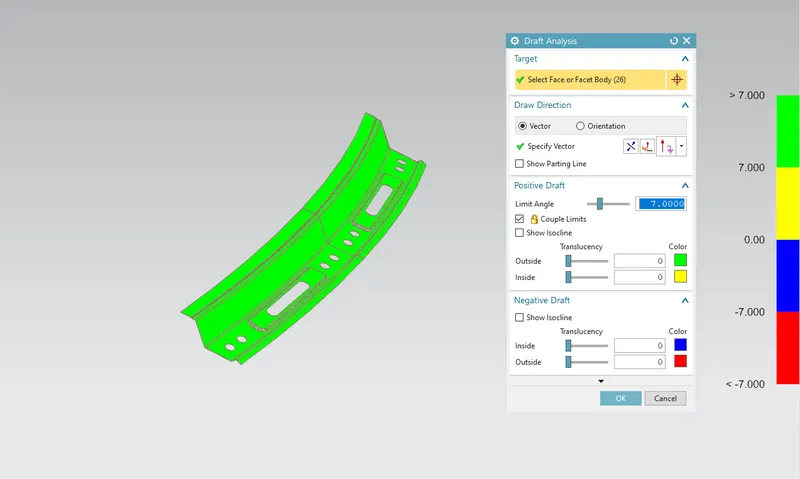
DRAFT ANALYSIS OF CENTRE ROOF RAIL:-
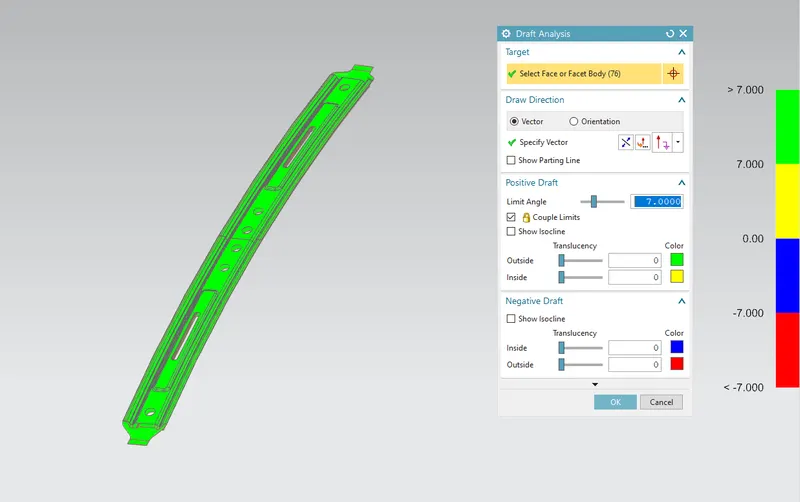
DRAFT ANALYSIS OF BOW ROOF RAIL:-
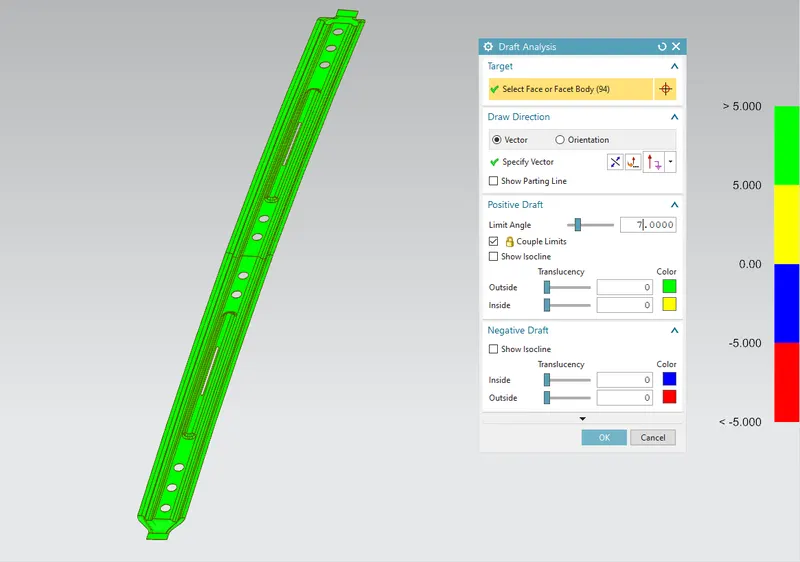
DRAFT ANALYSIS OF BOW ROOF RAIL 2:-
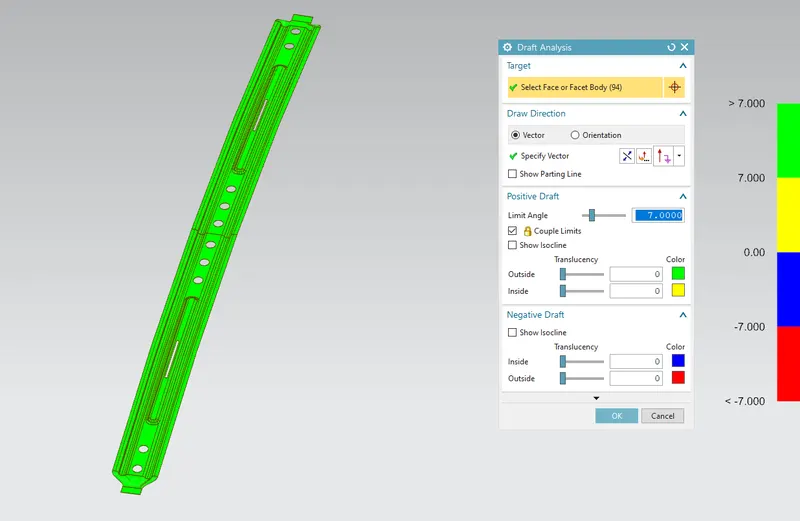
DRAFT ANALYSIS OF OUTER ROOF:-
TESTS TO BE CONDUCTED:-
There are some physical tests that are conducted on the car roof for passenger safety. The tests are,
- Roof crash test
- Heat distortion test
- Snow load test
ROOF CRASH TEST:-
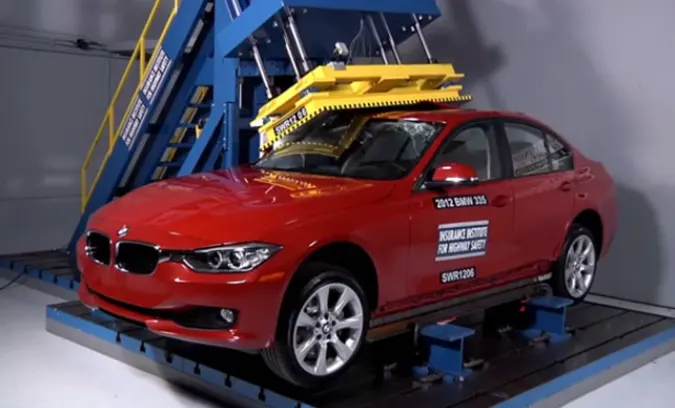
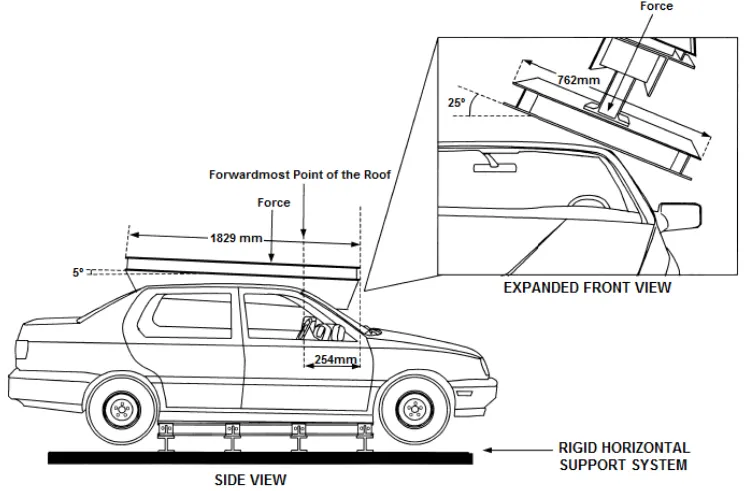
Roof crush test is the test of failure and displacement of an automobile roof into the passenger compartment during a roll-over accident. It is considered an important test for the roof.
CONDITION:-
- All the doors and windows should be closed and locked.
- The body sill (or) chassis are fixed on the surface horizontally.
HEAT DISTORTION:-
This is the theoretical study to make sure the bow roofs are in the correct position.
Heat distortion is calculated by the formula,
W = [1.73 x 10^(-3) x L] + [1.85 x 10^(-8) x (R^2)/t] + [ 1.10x10^(-3) x l] - 2.68
Where,
L = Roof Length in X-Direction[mm](Roof dimension in 0-Y)
R = Roof curvature
R = 2(Rx*Ry)/(Rx+Ry)
Rx = X curvature
Ry = Y curvature
t = Roof plate thickness [mm]
l = Bow Roof Span [mm]
HEAT DISTORTION TABLE:-
| S.No | BOW'S | Rx(mm) | Ry(mm) | R(mm) | I(mm) | L(mm) | T(mm) | W(mm) | OK/NG |
| 1.) | FRR & 1st | 5738.06 | 2562.18 | 1771.26 | 463.41 | 2030.07 | 0.75 | 1.41 | OK |
| 2.) | 1st & CRR | 4890.66 | 6525.49 | 2795.5 | 341.59 | 2030.07 | 0.75 | 1.39 | OK |
| 3.) | CRR & 2nd | 4046.89 | 10230.59 | 2899.81 | 348.01 | 2030.07 | 0.75 | 1.41 | OK |
| 4.) | 2nd & RRR | 3346.24 | 14157.35 | 2706.5 | 417.68 | 2030.07 | 0.75 | 1.46 | OK |
The roof is thus passed in the heat distortion test.
SNOW LOAD CRITERIA:-
This is also a theoretical study to make sure that the roof withstands the snow weight.
Snow load is calculated by the formula,
Qr = [Iy x t2] / [α x s x [(Rx + Ry)/2]2 x 10-8]
Where
α = My x Lx2 x 10-12 , My = Y(Ly-Y)
Judgement condition = Qr ≥ 3.1
250 ≤ s ≤ 380
t = Roof plate thickness [mm]
Ly = Distance between the front and rear roof Rails on the Vehicle along with 0Y[mm]
Length of Roof panel with the centre point between Roof rail Front /Rear as the front and rear reference point.
Lx = Distance between the Left and Right end of the roof on the Roof BOW [mm]
The width of the roof panel is exposed on the surface.
Y = Distance front Front Roof Rail to Roof BOW[mm]
s = Distance for which Roof BOW bears divided load [mm]
s = L1/2 + L2/2
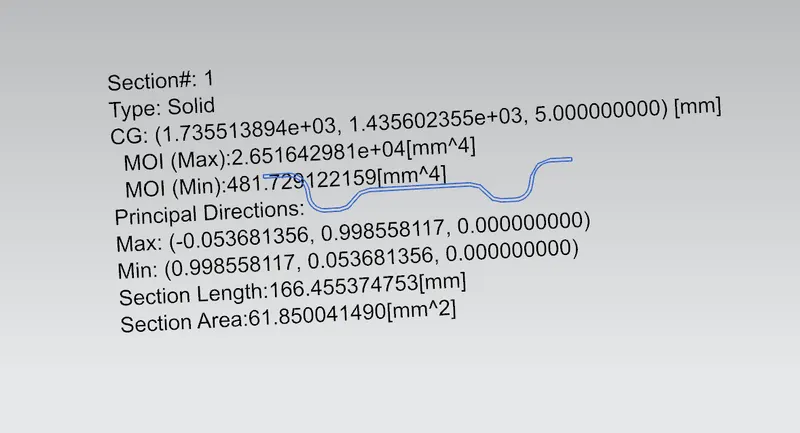
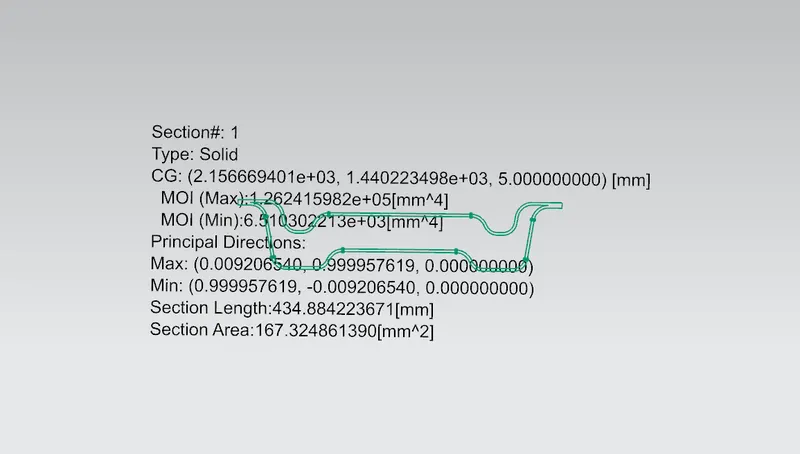
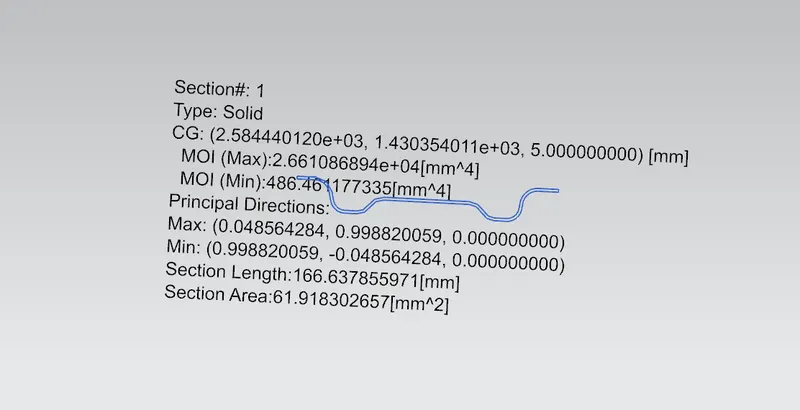
Iy = Geometrical moment of inertia of Roof BOW (Y cross-section )[mm4]
Rx = Lateral direction curvature radius of roof panel Y cross-section on Roof BOW [mm]
Roof panel curvature Radius of the Length Lx in Front view
Ry = Longitudinal Direction curvature radius of the Roof panel X cross-section on Roof BOW [mm]
Roof panel X curvature radius of length s in Side view
MOMENT OF INERTIA:-
BOW ROOF 1:-
CENTRE ROOF RAIL:-
BOW ROOF 2:-
SNOW LOAD TABLE:-
| S.No | BOW's | Iy(mm⁴) |
|
Lx(mm) | Ly(mm) | Y(mm) | S(mm) | Rx(mm) | Ry(mm) | T(mm) | Qr | OK/NG | |
| 1.) | FRR & 1st | 481.72 | 0.936 | 1139.1 | 2030.7 | 459.2 | 400.35 | 4570.66 | 2544.09 | 0.75 | 5.713 | NG | |
| 2.) | 1st & CRR | 6510 | 0.677 | 1084 | 2030.7 | 341.5 | 344.75 | 793.95 | 6454.03 | 0.75 | 119.4 | OK | |
| 3.) | CRR & 2nd | 486.46 | 0.657 | 1060 | 2030.7 | 348 | 382.85 | 811.913 | 10656.93 | 0.75 | 33.07 | NG | |
| 4.) | 2nd & RRR | - | 0.736 | 1045.2 | 2030.7 | 417.7 | - | 4103.75 | 2318.18 | 0.75 | -- | -- |
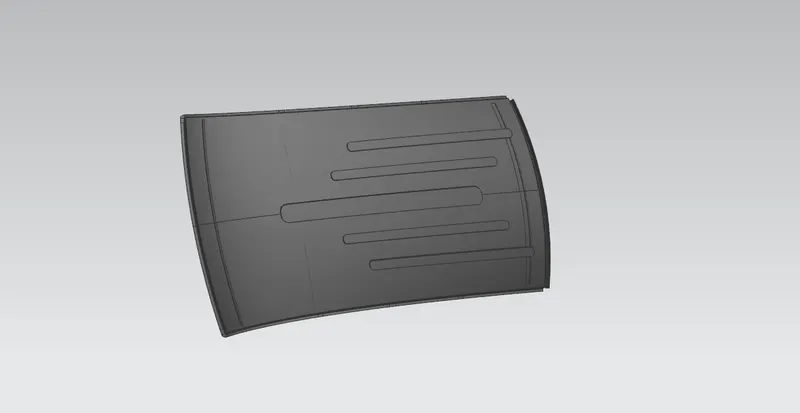
From the table, it is clearly seen that the 'S' value is exceeding 380 in both cases. So these bow roofs do not satisfy the snow loa criteria. To pass this test beads and embosses are added to the roof to strengthen the roof or the styling part is resend to the styling team to make some changes in the curvature of the roof.
FINAL ROOF:-
CONCLUSION:-
Finally, the roof of the hatchback car has been successfully designed with considering all the engineering aspects and also the draft, heat distortion, and snow load analysis was done.