Roof challenge
Roof design using NX 12
Aim- Roof design using NX 12 and its optimization by calculating heat distortion criteria, snow load criteria and section inertia analysis.
Objective-
- To develop essential flanges and reinforcements from the input styling surface.
- Provide appropriate dimension and check for draft analysis and perform section modulus on the 0-Y section.
- To do a curvature study on the roof and perform calculations to determine the position of the bow -roof.
Inputs-
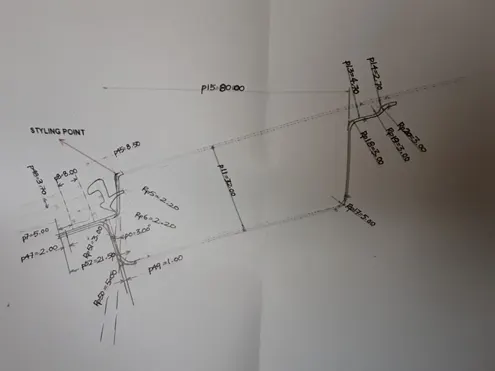
Master section for rear roof rail
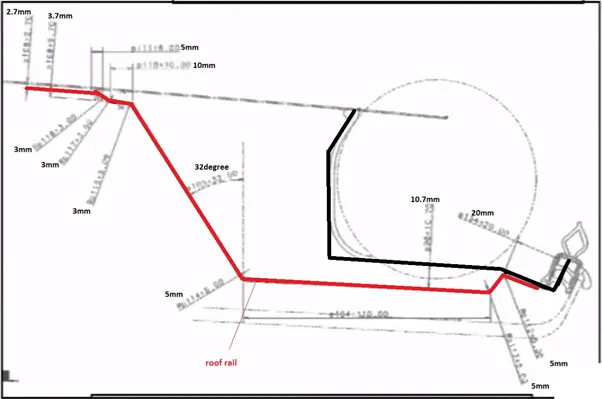
Master section for front roof rail
Roof- An automobile roof can be termed as a protective structure that keeps the passenger of the vehicle safe from external elements like weather, flying debris, and one of its main purposes is to protect the inhabitants of the vehicle from sustaining any injuries during rollover incidents and sudden impacts on roof.
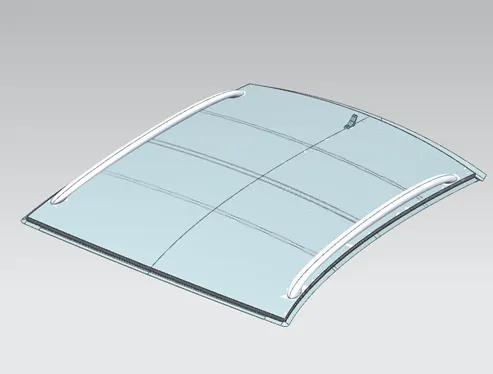
- The roof itself is not a single component but an assembly of various parts and structure that from the roof assembly.
- It consists of an outer panel that provides covering and forms the top portion of the vehicle and also provides good aesthetics and strength to the vehicle.
- They are various components under the outer panel that form an internal structure which adds a lot of strength to the roof portion.
- And these components are the reason for the roof not getting caved in during rollover incidents of the vehicle.
Structural components of the roof
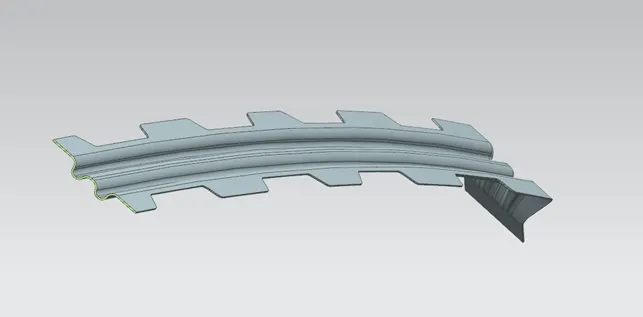
- Front roof rail reinforcement (FR)
- Bow roof rail reinforcement 1 (BR1)
- Center roof rail reinforcement primary (CR)
- Center roof rail reinforcement secondary
- Bow roof rail reinforcement 2 (BR2)
- Rear roof rail reinforcement (RR)
- Front roof rail reinforcement (FR)
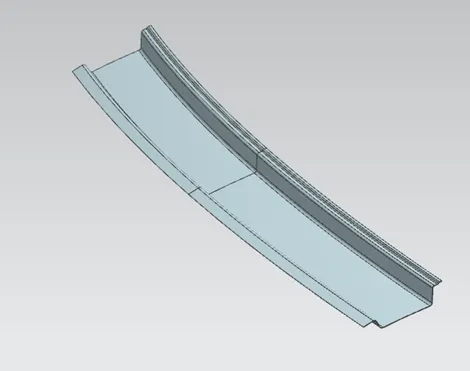
- Bow roof rail reinforcement 1 (BR1)
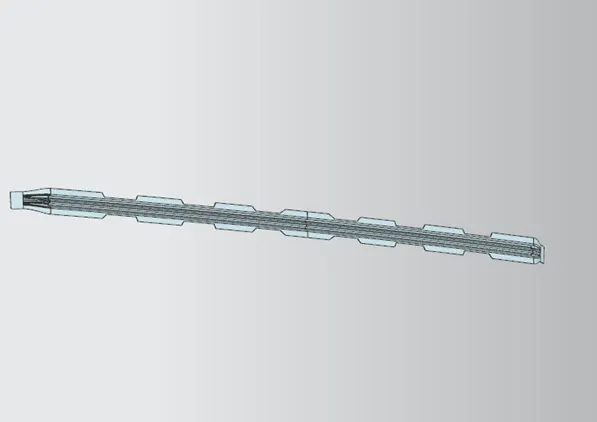
- Center roof rail reinforcement primary (CR)
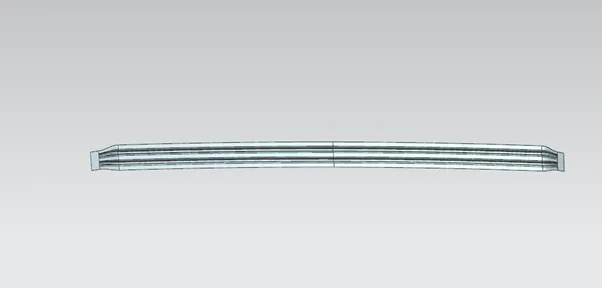
- Center roof rail reinforcement secondary
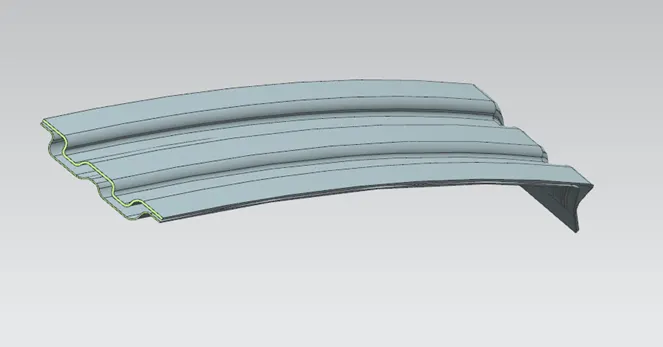
- Bow roof rail reinforcement 2 (BR2)
- Rear roof rail reinforcement (RR)
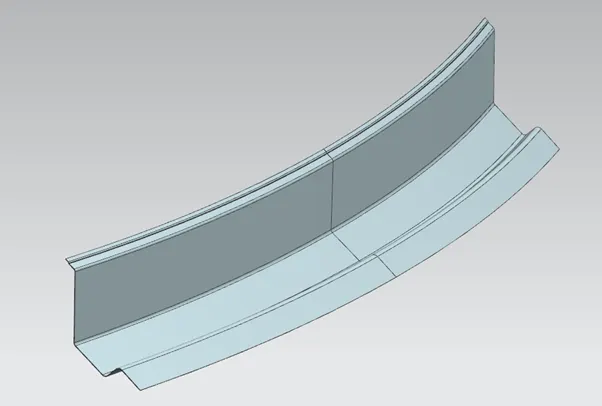
Complete roof design
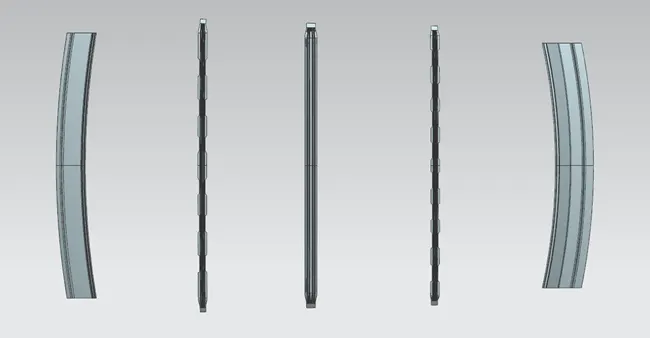
Calculation for determining the bow roof position-
Heat distortion criteria-
Heat distortion temperature is the temperature at which the metal softens and deforms under a specific load. This study is done
to check the ability of the roof to withstand high temperature with respect to the positioning of the reinforcements which contribute to increased strength.
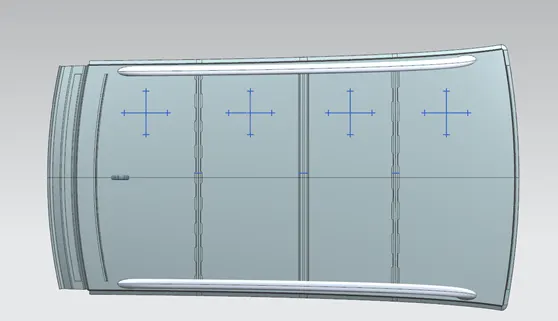
Created sketches for heat distortion calculation
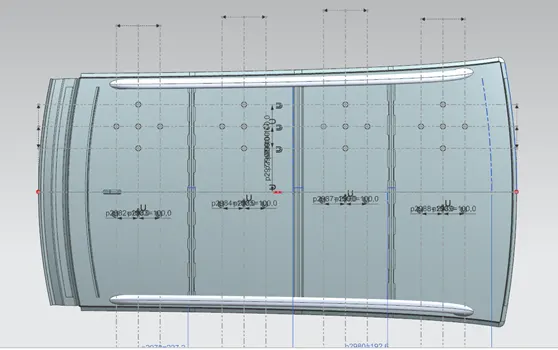
Heat distortion prediction formula
W=[1.73×10^(-3)×L]+[1.85×10^(-8)×(R^2)/t]+[1.10×10^(-3)×I]-2.68
Judgement condition- OK<2.7>3.1
Where
L=Roof length in X- Direction[mm](Roof dimension in 0-Y)
R= Roof carvature
R= 2(Rx×Ry)/(Rx+Ry)
Rx= X Carvature
Ry= Y Carvature
T= Roof plate thickness [mm]
I= Bow roof span [mm]
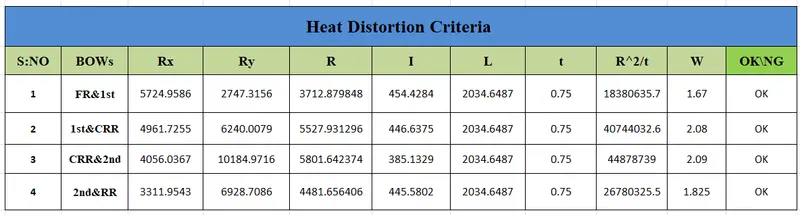
From the above resuilts it is concluded that the desired designed roof satisfies the heat distortion criteria.
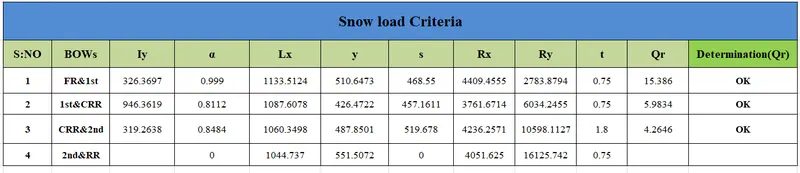
Snow load criteria-
Snow load criteria study is done to check the ability of the roof to withstand snowfall and bounce back to its original shape without any permanent deformation once the load is removed.
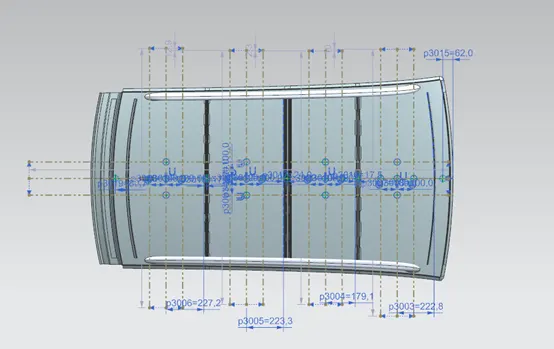
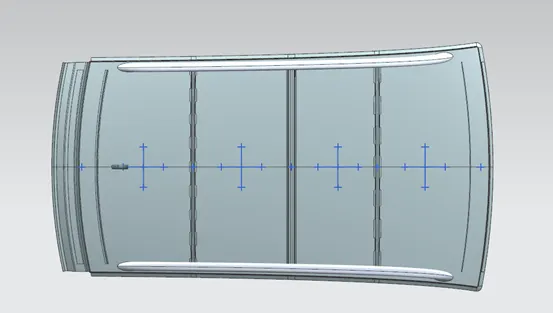
Created sketches for snow load criteria
Snow load prediction formula-
Qr = [Ly×t^2]/[α×s×[(Rx+Ry)/2]^2×10^-(8)]
Where
α = My×Lx^2×10^-12
My= Y(Ly-Y)
Judgement condition =Qr≥3.1 and 250≤Qr≤380
T = Roof plate thickness
Ly = Distance between the front and rear roof rail on the vehicle along with 0-Y
Lx = Distance between the left and right end of the roof on the roof bow.
Y = Distance for which roof bow bears divided load
S = Distance for which roof bow bears divided load
S= L1/2+L2/2
Iy = Geometrical moment of inertia of roof bow along Y cross section
Rx = Lateral direction curvature radius of roof panel along Y cross section
Ry = Longitudinal direction curvature radius of the roof panel along X cross section