Research and Design of Lopifit Treadmill Walking Bicycle
A PROJECT Report On
“Research and Design of Lopifit Treadmill Walking Bicycle”
Summitted By
PAVAN RAJKUMAR MESHRAM
Guided By
Tony Thampy
For the Skill-Lync
March-2023
DECLARATION:
The project titled “Research and Design of Lopifit Treadmill Walking Bicycle”
is our own work carried out under the guidance of Tony Thampy , for Skill-Lync.
ACKNOWLEDGEMENT:
With profound feeling of immense gratitude and affection, we would like to thank our guide, Tony Thampy.
His encouragement, supervision with constructive criticism and confidence enable us to complete this project.
We also wish to extend our reverences to Tony Thampy, for providing necessary facilities to complete this project.
PROJECTED:
PAVAN RAJKUMAR MESHRAM
ABSTRACT:
Now a Morning exercises play an important role in human life. As we know the exercising will reduce the amount of excess calorie of the body and the metabolic activities of the body. When doing exercise, a large amount of human energy is get wasted. Our project is mainly aim to convert this energy into sufficient form and for making the exercise more convenient by a new design. For that we designed a Bicycle where the pedal of the cycle is fully replaced by a treadmill. The treadmill will drive the rear wheels of the cycle via a belt drive, so that its need only the effort of exercising in treadmill to travel a short distance conveniently. A powerful generator and a battery is provided to the rotating parts of the Bike so that it can produce and store electrical energy during exercising or travelling. We can use this electrical energy in emergency situations such as power failure, it can light some lamps in a room and can give power for music systems, also helpful for travelling in Nights etc.
INTRODUCTION:
The treadmill bicycle is completely a new way of moving which is designed mostly for runners. Basically, using a treadmill is similar to running, hiking or walking. Think about the last time you were riding a bike over a few obstacles such as train tracks, potholes, speed bumps etc. The possibilities are you stood up on the pedals to improve your balance when crossing the obstacle. Basically, the treadmill bicycle will provide the rider a well-balanced position the entire time. It is a combination of amalgamation of DC motor with different components upgrading your walking speed to a much higher pace. Since it uses no fuel it a very conventional option for people in their busy schedule to take care of their health completely. People with a busy schedule will also be able to take care of their health and physical fitness. Above all, it is not a conventional treadmill to make use of only in closed rooms, people using treadmill bicycles can roam around freely on roads as well. This project overcomes the drawback of the conventional treadmill which is stationary and moreover the jogger gets exposed to the natural atmosphere too. So, this proposed methodology provides an ultimate solution by making use of the wheels and making the treadmill bicycle a walking cycle. The walking cycle has a simple mechanism, operated with free wheels, gear chain, bearing shaft and links arrangement. The conversion of the linear motion into rotary motion is done by the gear chain and free wheel mechanisms of the linkages, which involves very simple movements. The rotary motion is again converted into linear motion of the cycle through mechanical linkages (gear chain and free wheels) arrangement. The conveyor system is either a continuous movement or intermittent which depends on the person’s usage. So, a basic free wheel mechanism with bearings is designed with time delay which can be used to halt the movement when necessary. This invention relates to improvements in transport devices, and it relates particularly to devices for transferring people, small in number like that of a bike or a cycle. The Walking Bicycle is the one, which combines walking and cycling into one activity. The Walking Bicycle combines the two activities into a linear motion, allowing you to propel yourself forward at desired speed, simply by walking on the belt provided. Usually, the operation of the walking cycle machine is controlled by the user itself by simply walking on the treadmill belt and also balancing the cycle. The operating speed of the walking cycle differs on the amount of force applied by the user.
Exercise Treadmills:
The forerunner of exercise treadmills was designed to diagnose heart and lung disease, and was invented by Dr. Robert Bruceand Wayne Quinton at the University of Washington in 1952. Dr. Kenneth H. Cooper's research on the benefits of aerobic exercise, published in 1968, provided a medical argument to support the commercial development of the home treadmill and exercise bike. Among the users of treadmills today are medical facilities (hospitals, rehabilitation centres, medical and physiotherapy clinics, institutes of higher education), sports clubs, Biomechanics Institute, orthopaedic shoe shops, running shops, Olympic training centres, universities, fire-training centres, NASA, test facilities and training rooms of police and army, gyms and even home users. Treadmill ergometers are now mainly motor driven. Most treadmills have a running table with sliding plate. Before and after the race table, there are two shafts. The running belt is stretched between the shafts and the running deck. Safety standards for treadmills are the IEC EN 957-1 and IEC EN 957-6.
For medical treadmills applicable norms, standards and guidelines are the Medical Device Directive (MDD), European Guideline 93/42 EEC, European Guideline 2007/47 EEC, IEC EN 60601-1, EN 62304, EN 14971 and the machinery directive 2006/42/EC. Medical treadmills are class IIb active therapeutic devices and also active devices for diagnosis. With their very powerful (e.g., 3.3 kW = 4.5 HP) electric motor-powered drive system treadmills deliver mechanical energy to the human body through the moving running belt of the treadmill. The subject is not changing his horizontal position and is passively moved and forced to catch up with the running belt underneath his feet. The subject can also be fixed in safety harnesses, unweighting systems, various supports or even fixed in and moved with a robotic orthotic system utilizing the treadmill. Medical treadmills are also active measuring devices. When connected through an interface with ECG, ergo spirometry, blood pressure monitor (BPM), or EMG, they become a new medical system (e.g., stress test system or cardiopulmonary rehabilitation system) and can also be equipped to measure VO2max and various other vital functions. Most treadmills have a “cardio mode”, where a target heart rate is defined and the speed and elevation (load) are controlled automatically until the subject is in “heart rate steady state”. So, the treadmill is delivering mechanical energy to the human body based on the vital function (heart rate) of the subject. A medical treadmill which is also used for ergometry and cardiopulmonary stress test as well as performance diagnostics is always a class IIb medical device either when used as stand-alone device in a medical environment or when used in connection with an ECG, EMG, ergo spirometry, or blood pressure monitoring device.
OBJECTIVE:
Treadmill cycle is the new way of locomotion. It makes workout more interesting and competitive. There is no need to get stuck in the gym at a corner when you can roam while you work out. Secondly, looking from the ever-growing problem of pollution, this cycle turns out to be eco-friendly without emission of harmful pollutants. Moreover, it saves fuel thus helping in saving the natural resources. Lastly, in this metropolitan world, people are ignoring their health and fitness. This cycle would be a boon for such fitness deprived people having hectic schedule.
- Useful for exercise purpose. February 2018, Volume 5, Issue 2 JETIR (ISSN-2349-5162) JETIR1802057 Journal of Emerging Technologies and Innovative Research (JETIR) www.jetir.org 352
- To reduce the use of non-renewable energy sources.
COMPONENT AND THEIR SPECIFICATION:
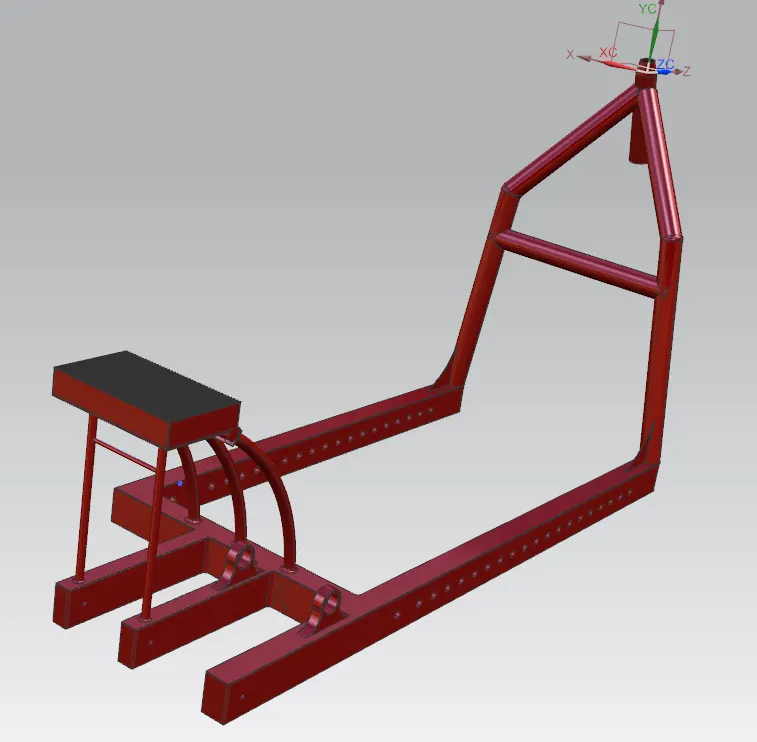
Treadmill Frame design:
Frame design is done according to the trade belt size. As per space availability and clearance for reduction of friction, Frame consists of set of rollers, in which past and last roller is for movement of belt and other are supportive rollers. Rollers are fitted in frame by means of bush.
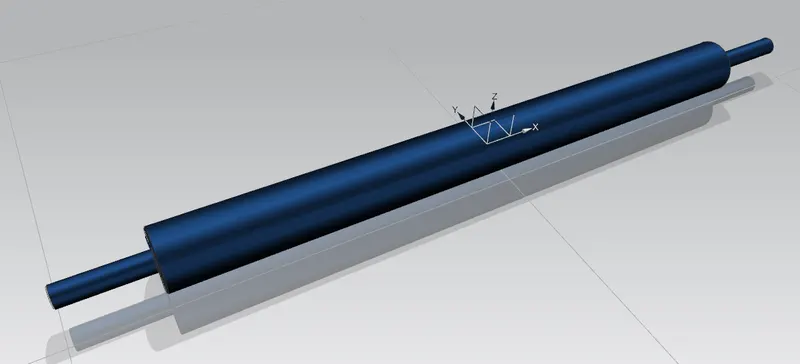
ROLLER:
Roller is used to rotate the belt and used to reduce friction while walking or running and reduce the effort of a person and to produce maximum power.
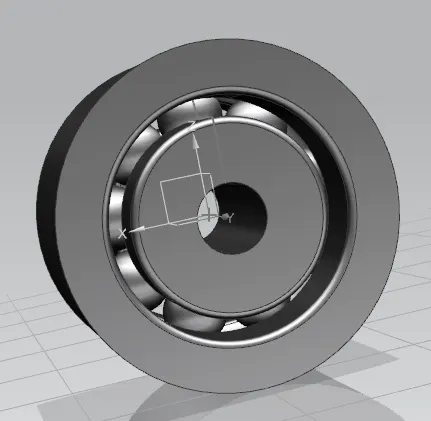
BEARINGS:
Bearings are used to freely rotate rollers and to support the rollers to neglect friction. The bearings are pressed in rollers by means of punching press machine.
Calculation for Bearing Design:
Radial load (Fr) = 200 kg = 200 * 9.81 =1962 N
Axial load (Fa) ≈ 600 N (loading condition) Speed,
V=𝜋*D*N assuming (velocity 7.5km/hr.) 7.5 x 1000/60=𝜋*0.03*N
Speed (N) = 1326 rpm (as velocity varies speed also varies)
Dynamic load (C)
Average life = 10000 hours
Equivalent load (From Design data book)
Fe = (xFr+ yFa)
x & y = constant
ko= oscillation constant
ks = service factor
kp= preloading factor
kr= rotational factor
e =Fa/Fr =600/1962 = 0.34
e > 0.25 (For deep groove ball bearing)
x = 0.56, y = 1. Assuming,
ko= constant rotational speed of races = 1
ks = light shock load = 1.5
kp= for no preloading bearing = 1
kr= outer races fixed & inner race is rotating = 1
Equivalent load;
Fe = (xFr+ yFa)
= (0.56 * 1962 +1.6 *600) *1.5
Fe = 3088.08 N
⸫ Dynamic load, C
L = (c/Fe) n * Kref
Reliability is 50% as assumed life is 10000 hrs
Kref = Reliability Factor
= 5.0
L = 60 million revolutions
n = index of ball bearing 60 = (c/3088)3*5.0
C = 7071.58 N From design data book dynamic load above 7071.58 is8800 i.e.
From design data book considerable bearing (deep groove) is 0302 (as per standard diameter of shaft is 15 mm) .Light shock load (For SKF bearing it is 6302)
BELT:
Belt is used in an assembly to build tension along the rollers to build friction among the extreme rollers and to provide moving mechanism for the treadmill and to actuate motion in the assembly for the rotation of the roller to transmit power to the AC motor to acquire desired current.

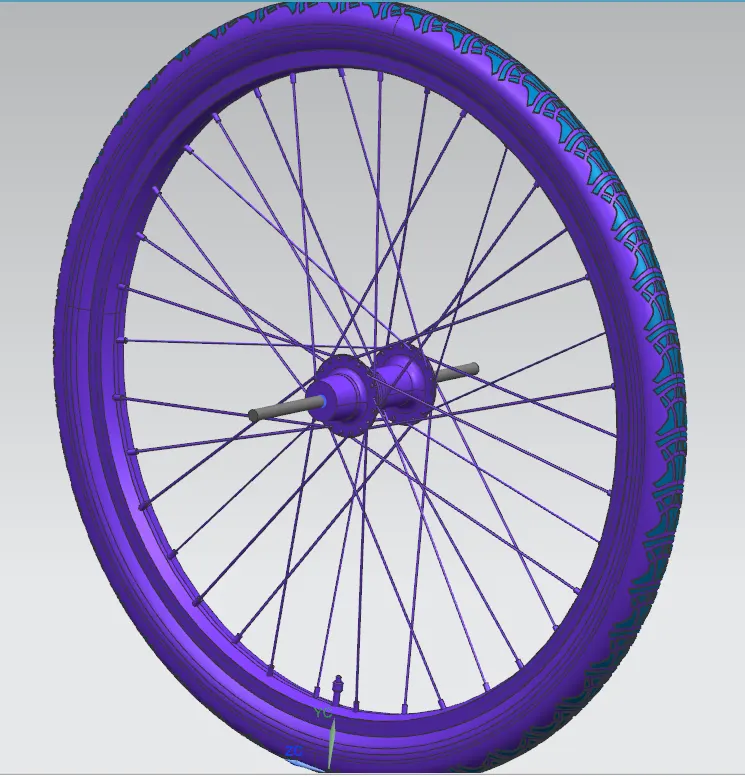
WHEEL:
A wheel together with an axle overcomes friction by facilitating motion by rolling. A moment needs to be applied to the wheel by gravity or by application of external force for rotating the wheels. Mostly used in transport applications More generally the term is also used for other circular objects that rotate or turn, such as a Ship's wheel and flywheel.
HANDLE:
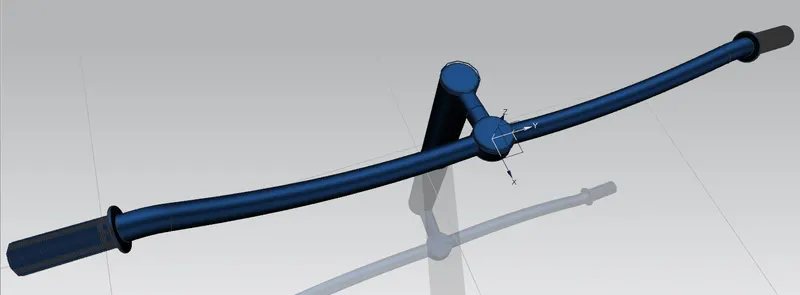
A bicycle handlebar is the steering control for Bicycle It is the equivalent of a tiller for vehicles and vessels, as it is most often directly mechanically linked to a pivoting front wheel via a stem which in turn attaches it to the fork.
FORK:
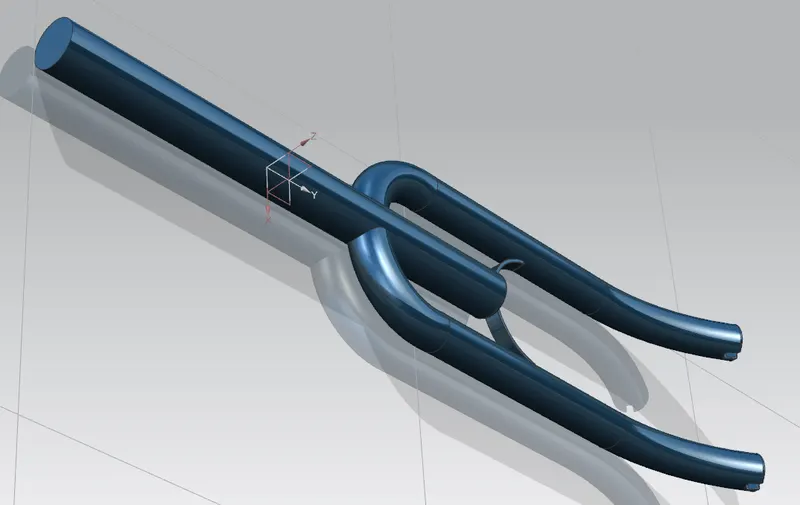
A mechanical assembly that integrates a bicycle's frame to its front wheel and handlebars, allowing steering by virtue of its steerer tube.
CHAIN:
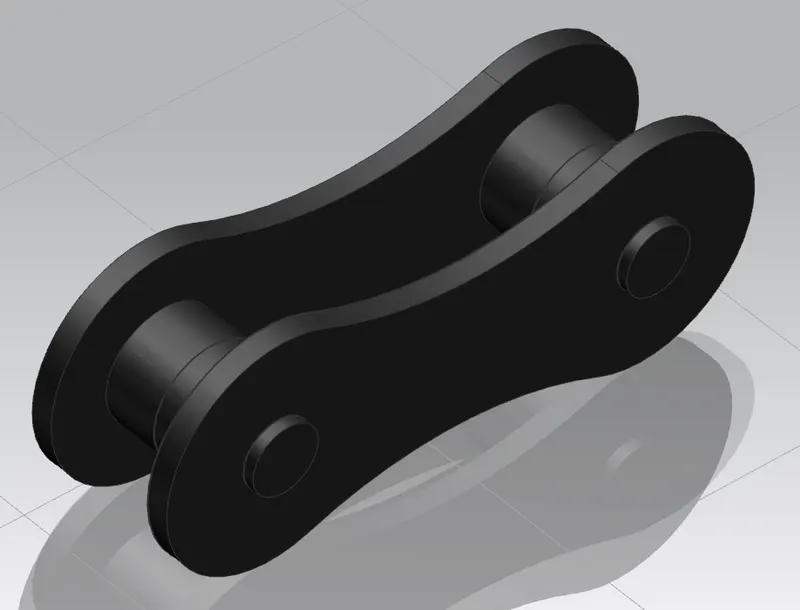
It is a roller chain that transfers power from the pedals to the rear wheel, thus pushing it to move forward. In the rear wheel, chain loops are found on the crank set chainrings, along the chain stays, and on the cassette sprockets.
FENDER:
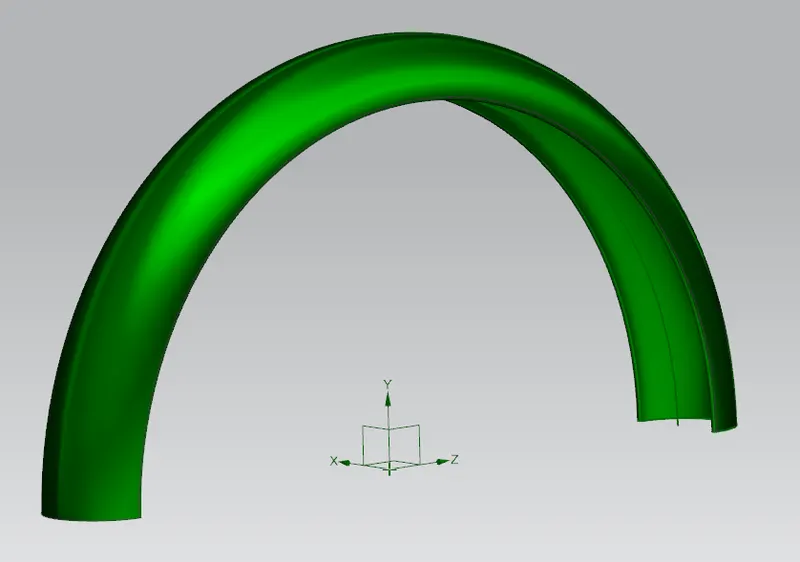
These are curved pieces of plastic installed over the tires that capture and redirect the road spray emitted by the tires, keeping the rider relatively clean. Plus, it’s essentially a cover for the bike’s tires to protect the rider from the rain. The fenders on your bicycle will prevent your back, your shoes, and your face from getting dirty from rain.
ROTOR & MOTOR:
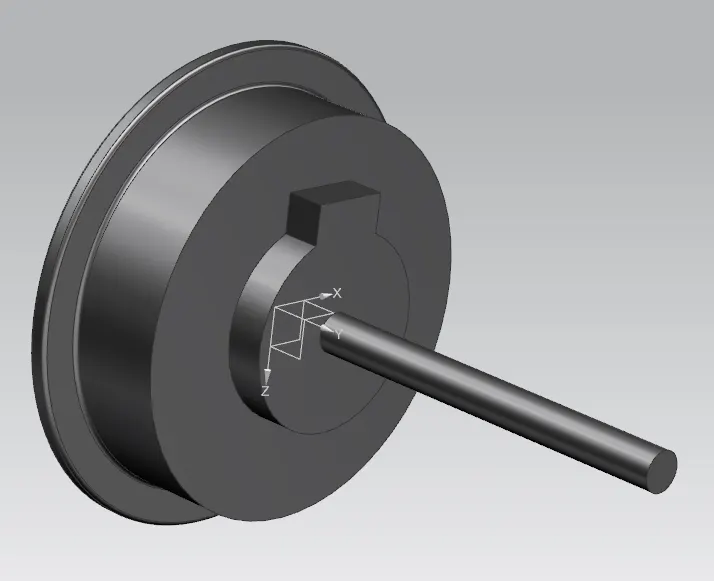
Hub motor electromagnetic fields are provided to the stationary windings of the motor. The outer a part of the motor follows, or tries to follow, those fields, turning the connected wheel. In a brushed motor, energy is transferred by brushes contacting the shaft of the motor. Energy is transferred in a very brushless motor electronically, eliminating physical contact between stationary and moving components. Although brushless motor technology is costlier, most are more efficient and longer lasting than brushed motor systems. A hub motor usually is designed in one of 3 configurations. Considered least practical is an axial-flux motor, where the stator coil windings are generally sandwiched between sets of magnets. The other 2 configurations are each radial designs with the motor magnets secured to the rotor; in one, the inner rotation motor, the rotor sits inside the stator, as in a conventional motor. In the other, the outer rotation motor, the rotor sits outside the stator and rotates around it. The application of hub motors in vehicular uses is still evolving, and neither configuration has become customary. Electric motors have their greatest torque at startup, creating them ideal for vehicles as they need the most torque at startup too. The idea of "revving up" thus common with burning engines makes no sense with electrical motors. Their greatest force happens because the rotor initial begins to show, that is why electrical motors don't need a transmission. A gear-down arrangement could also be required, however in contrast to in a very transmission ordinarily paired with a combustion engine, no shifting is required for electrical motors.
BATTERY:
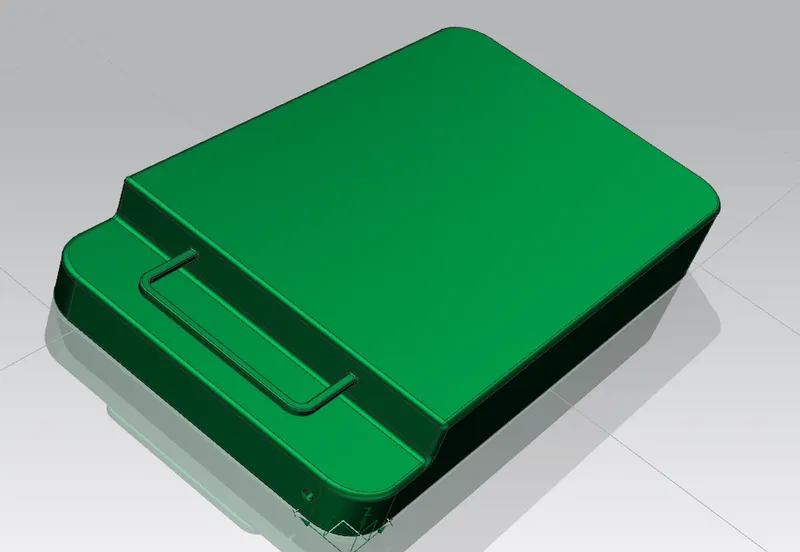
The 3 primary functional elements of a lithium-ion battery are the positive and negative electrodes and electrolyte. Generally, the negative conductor of a conventional lithium-ion cell is created from carbon. The positive conductor may be a metal compound, and therefore the solution may be a lithium salt in an organic solvent. The electrochemical roles of the electrodes reverse between anode and cathode, depending on the direction of current flow through the cell. The most commercially popular negative electrode is graphite. The positive electrode is usually one in every of three materials: a layered oxide (such as lithium cobalt oxide), a polyanion (such as lithium iron phosphate) or a spinel (such as lithium manganese oxide). Recently, graphene-based electrodes (based on 2D and 3D structures of graphene) have also been used as electrodes for lithium batteries. The electrolyte is typically a mixture of organic carbonates such as ethylene carbonate or diethyl carbonate containing complexes of lithium ions.[78] These non-aqueous electrolytes generally use non-coordinating anion salts such as lithium hex fluor phosphate (LiPF6), lithium hexa fluor arsenate hydrate (LiAsF6), lithium perchlorate (LiClO4), lithium tetra fluoroborate (LiBF4), and lithium triflate (LiCF3SO3). Depending on materials choices, the voltage, energy density, life, and safety of a lithium-ion battery can change dramatically. Recently, novel architectures exploitation nanotechnology is employed to enhance performance. Drastic change can lead to reverse polarities which are dangerous. Pure lithium is highly reactive. It reacts vigorously with water to form lithium hydroxide (LiOH) and hydrogen gas. Thus, a non-aqueous electrolyte is often used, and a sealed container rigidly excludes moisture from the battery pack. Lithium-ion batteries are more expensive than NiCad batteries but operate over a wider temperature range with higher energy densities. They need a protecting circuit to limit peak voltage.
|
Parameter |
Corresponding factor/value |
|
Type |
Li-ion |
|
Voltage |
12 V |
|
Max. Continuous Discharge current |
15A |
|
connected in |
Series |
|
Amp-Hour Rating |
20 Ah |
|
Discharge cut-off voltage |
10 V |
Centre Stand:
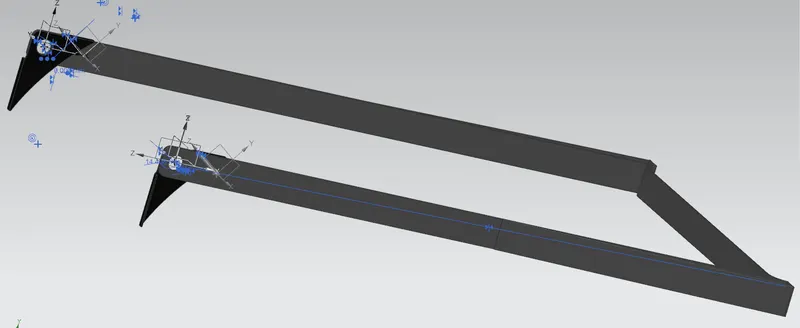
A cycle stand is a necessary accessory when you own a bicycle, making it easier to park the cycle. Cycle stands are kickstands and are very adjustable. They are made up of materials stainless steel. It is light in weight. These stands have heavy-duty springs and can be easily installed at home. These stands last for a long time and are suitable for mountain and road biking. This stand is easy to fit and equally easy to remove if required.
Materials:
Mild Steel:
M.S. Has carbon content from 0.15% 0.30%. They are easily weldable, thus can be hardened only. They are similar to wrought in properties. Both ultimate tensile and compressive strength of the steel increases with increase in carbon content. They can be easily gas welded or electric or arc welded. With increase in the carbon percentage, weld ability decreases. Mild steel serves the purpose and hence selected.
Plastic:
Plastics are usually classified by the chemical structure of the polymer's backbone and side chains. Important groups classified in this way include the acrylics, polyesters, silicones, polyurethanes, and halogenated plastics. Plastics can be classified by the chemical process used in their synthesis, such as condensation, polyaddition, and cross-linking. They can also be classified by their physical properties, including hardness, density, tensile strength, thermal resistance, and glass transition temperature. Plastics can additionally be classified by their resistance and reactions to various substances and processes, such as exposure to organic solvents, oxidation, and ionizing radiation. Other classifications of plastics are based on qualities relevant to manufacturing or product design for a particular purpose. Examples include thermoplastics, thermosets, conductive polymers, biodegradable plastics, engineering plastics and elastomers.
Reasons:
- Mild Steel is readily available in market.
- It is economical to use.
- It has good mechanical properties and it is easily machinable.
- It is available in standard size.
- It has moderate factor of safety, because factor of safety result in unnecessary wastage of material and heavy selection.
- It has high tensile stress.
- Low coefficient of thermal expansion.
- We use the plastic material to made Mudguard.
- It is light weight.
ADVANTAGES:
- It is used to reduce the weight of the human body
- It produces electric power
- It is environmentally friendly
- It is very economic
DISADVANTAGES:
- Some treadmill runners develop bad running habits that become apparent when they return to outdoor running.
- In particular a short, upright, bouncy gait may result from having no wind resistance and trying to avoid kicking the motor covering with the front of the foot.
- Imposes a strict pace on runners, giving an unnatural feel to running which can cause a runner to lose balance.
APPLICATION:
- Fitness and gym
- It is used to reduce the weight
- Those who are interested in evening walks.
- Automobile application.
- Two-wheeler Application.
FUTURE SCOPE:
It can be used as an indoor locomotive device infrastructure with large roof span i.e., malls, warehouse, open markets, large office spaces, etc. By using such product pedestrian cops can save themselves from getting exhausted. Pedestrians in large campuses can benefits from this product the same way. Can replace cycle as an energy efficient vehicle for those who cannot drive a cycle.
CONCLUSION:
Exercise-Treadmill bicycle helps in maintaining proper physique. Physical fitness is of utmost importance in day-to-day life. People often get bored while exercising in a closed room such as gym. By using treadmill bicycle one can exercise outdoors in fresh air. Fuel saving-People often use vehicle for travelling over short distance. This causes unnecessary wastage of fuel. Due to use of treadmill bicycle over short distance a large amount of fuel can be saved. Travelling-Treadmill bicycle can be used for travelling over short distances. One can also exercise while travelling over short distance. Eco- friendly-Treadmill bicycle does not require any fuel. Therefore, it does not emit any pollutants. So, it is an eco-friendly vehicle.
References:
- R. Gandhewar, Priyanka H. Kakade and H.S. Lankar “A Review Paper on Concept and Utility of Treadmill” international journal of innovative research in science and engineering (march 2017): 406-410
- Harsh Mankodi, “Analysis of a Treadmill Based Human Power Electricity Generator”, Submitted under the supervision of Prof. Rusen Yang to the University Honors Program at the University of Minnesota-Twin Cities in partial fulfillment of the requirements for the degree of Bachelor of Mechanical Engineering, cum laude. June 30, 2012.
- https://lopifitus.com
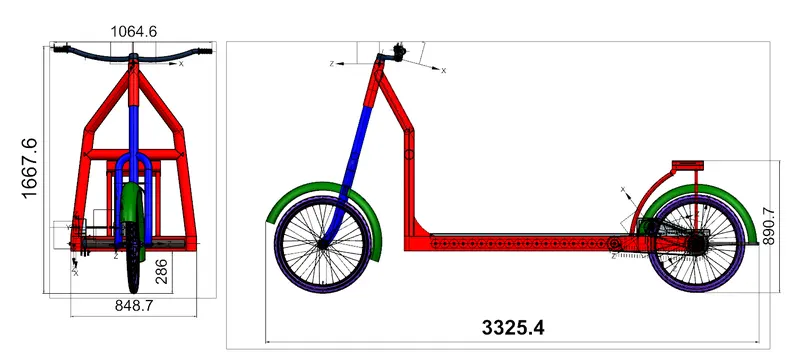
LOPIFIT DIMENSIONS:
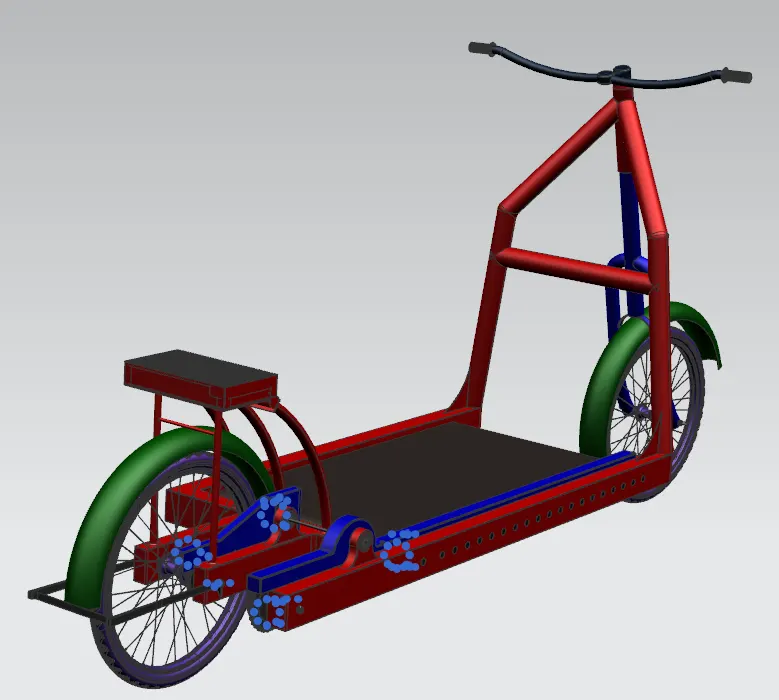
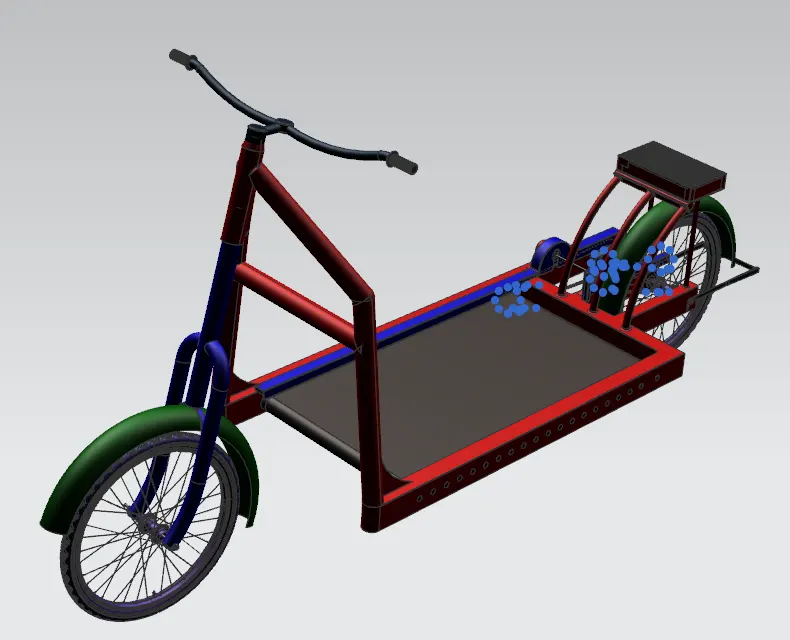
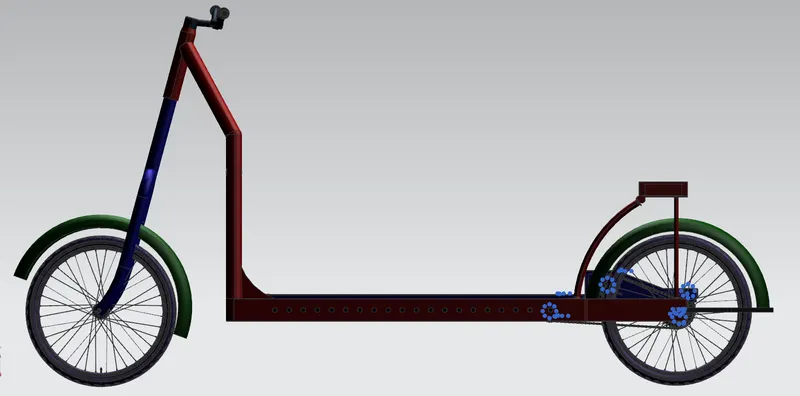
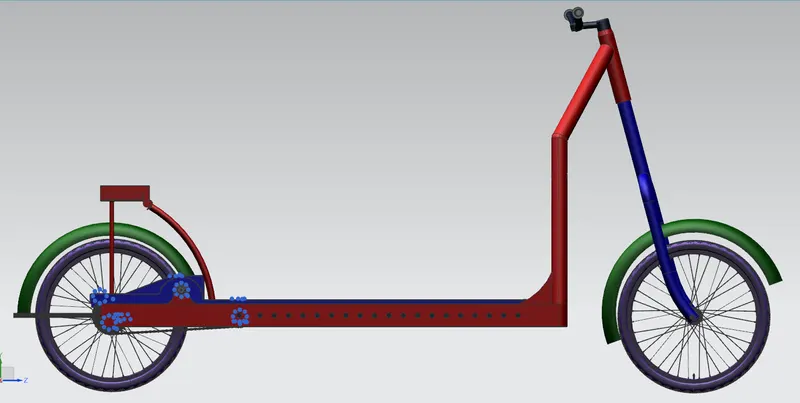
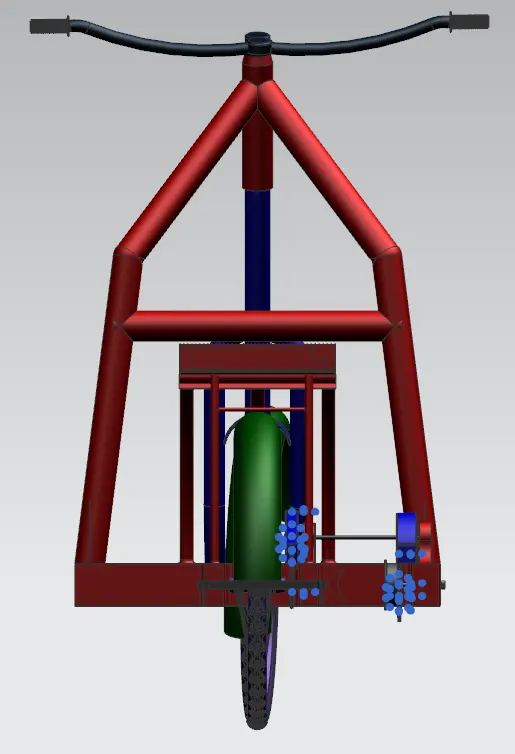
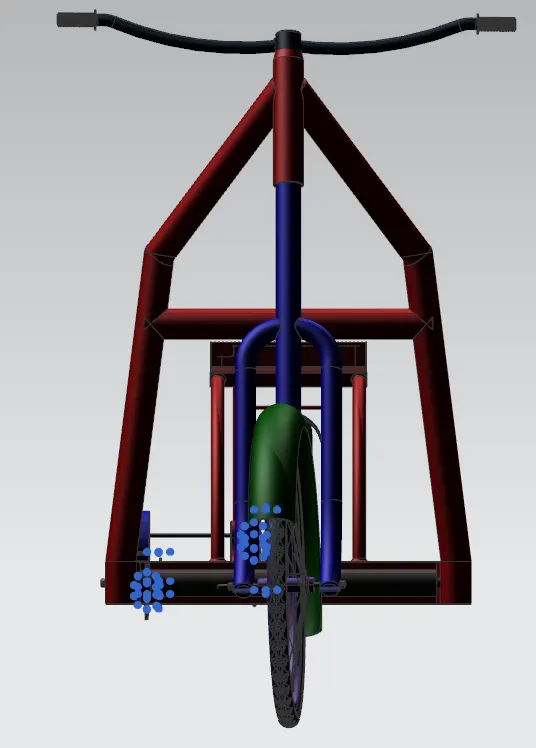
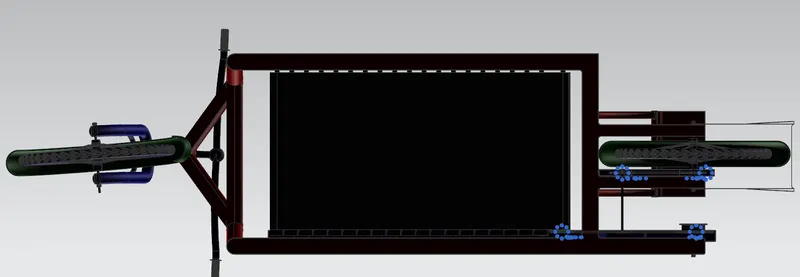
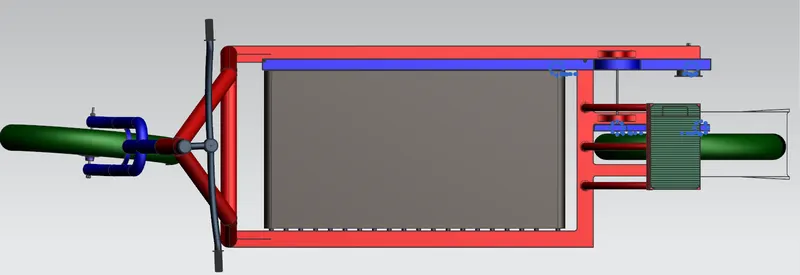
PROJECT GALLERY:
Google Drive Link:
https://drive.google.com/file/d/1Sz_J6Q8bT98YgwbSzOudgxowp02FYiuV/view?usp=sharing
Thank You......