Rayleigh Taylor Instability Challenge
Introduction : The Rayleigh–Taylor instability, or RT instability is an instability of the interface between two fluids of different densities which occurs when the lighter fluid is pushing the heavier fluid. This is observed in many different phenomena as when water is placed over oil in Earth's Gravity. Is is also observed in astrophysical phenomena like nebulae. It is also important for understanding proper functioning of nuclear reactors.
Fig. R-T Instability in the Crab Nebula ( "Fingers of the red gas flowing into the less dense blue core")
CFD Models used to simulate RT instability :
- Level Set Method : Uses Level Sets for Numerical Analysis of Surfaces and Interfaces. It can perform numerical calculations withour having to parametrize the surface. It is excellent at tracing the interface ( It is very sharp and distinct ) but is not very good when it comes to conservation of mass. It has less spurious currents
- VOF Method : The VOF Method or the Eulerian Approach for Multiphase Flow requires parametrization of the surface. The interface is not sharp and diffuse. It considers the volume fraction of a phase in the mesh cell as a parameter for tracking the interface. It is excellent at mass conservation but sometimes leads to spurious currents
- Coupled Method : Both VOF and LS have their own set of advantages and disadvantages. We can combine them to form a separate model for describing certain physics.
- Langrangian Methods : Smoothed Particle Hydrodynamics ( SPH ) and Moving Particle Simulation ( MPS) can also be used to solve the problem , although they will be computationally expensive.
Problem Setup:
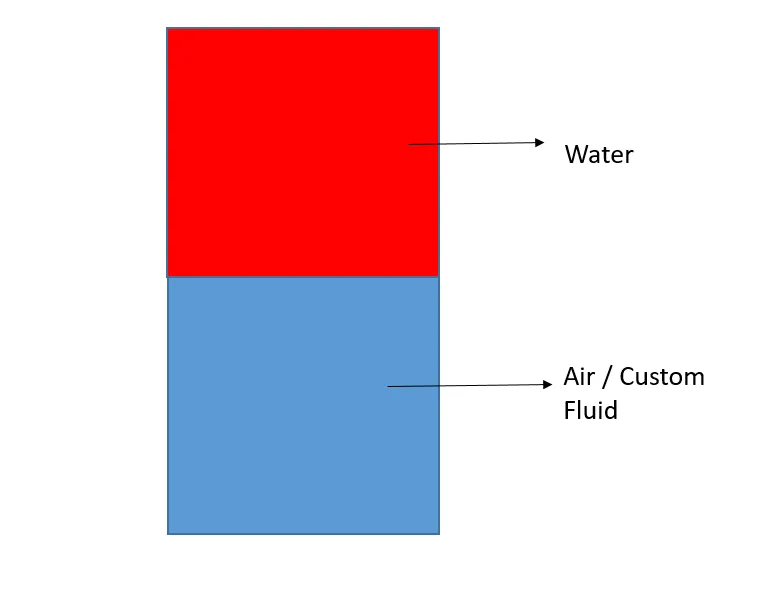 |
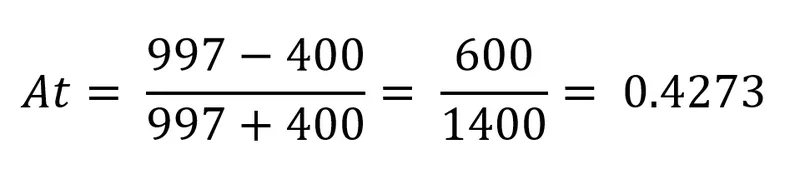
In this numerical simulation we track the interface between the two fluids. In case (a) and (b) we use air and in case (c) we use a custom fluid with density 400 kg/m3 and Viscosity 0.001 kg/m-s
The Above Geometry was prepared using SpaceClaim Software
In this problem we have considered a transient solver as we can interested in the time evolution of the fluid interface and not the final result.
We use the Volume of Fluid Method with Two Eulerian Phases.
Equations Involved :
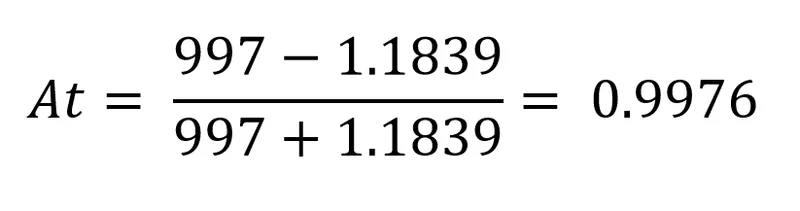
We define a quantity called the Atwood Number as follows :
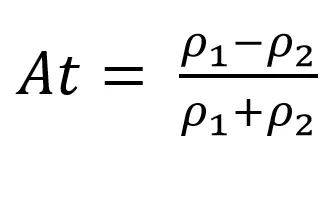 |
Where `ρ_1` is the density of the heavier fluid and `ρ_2` is the denisty of the lighter fluids
For At close to 1 , The fluid forms bubble like plumes. For At close to zero the fluid forms symmetric "fingers".
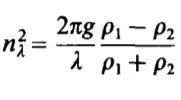
The famous Scientist Subrahmanyan Chandrasekhar derived two equations governing Rayleigh Taylor Instability in abscensce of viscosity. The first one governs the growth of the amplitude sinusoidal pertubration an the second one predicts the growth rate.
 |
 |
Salient Observations :
- Pertubation Growth Rate is directly proportional to Atwood Number
- Pertubation Growth Rate is inversely proportional to the wavelength of the sinusoidal pertubrations
Mesh :
| Base ( 0.5 mm) | Refined (0.25 mm) | |
| Mesh | 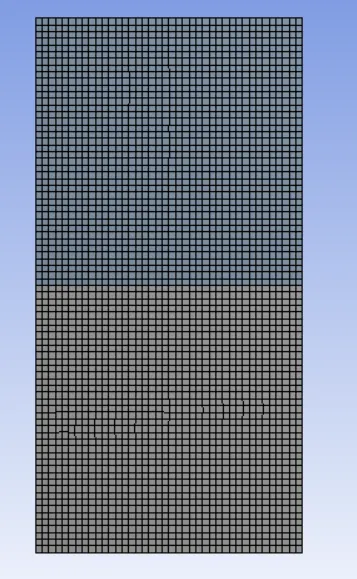 |
 |
| Number of Nodes | 3321 | 13041 |
| Number of Elements | 3200 | 12800 |
We use conformal meshing with a base mesh of 0.5 mm and a refined mesh of 0.25 mm. The mesh is Quadrilateral Dominant.
Calculations:
(a) Atwood Number for Water-Air Interface:
(b) Atwood Number for Water-Custom Fluid Interface:
Results :
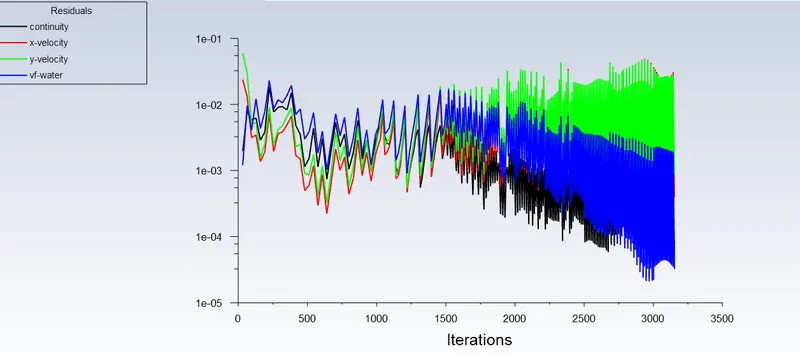
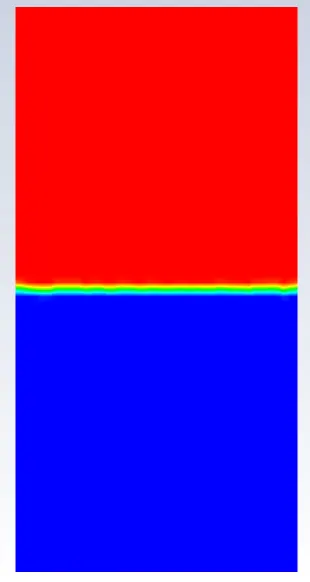
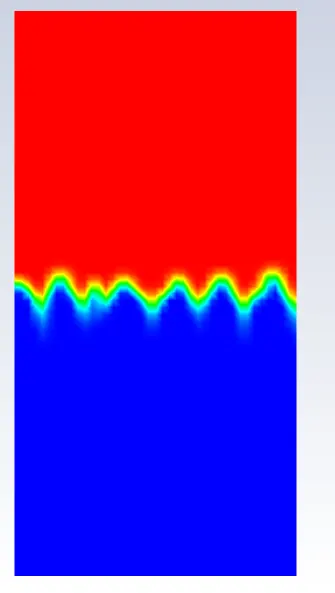
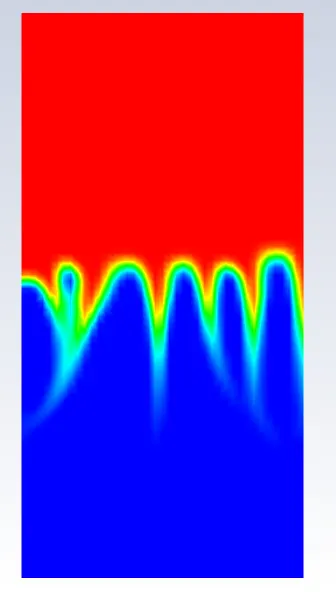
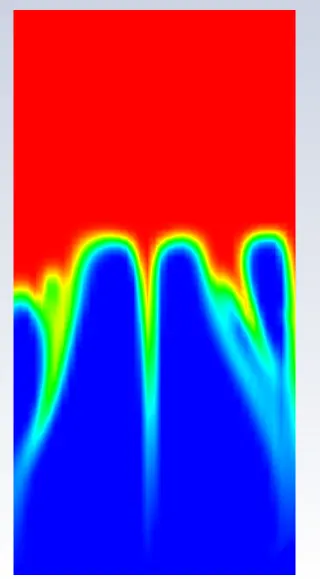
(a)0.5mm Mesh
At = 0.99 (approx)
 |
Animation:
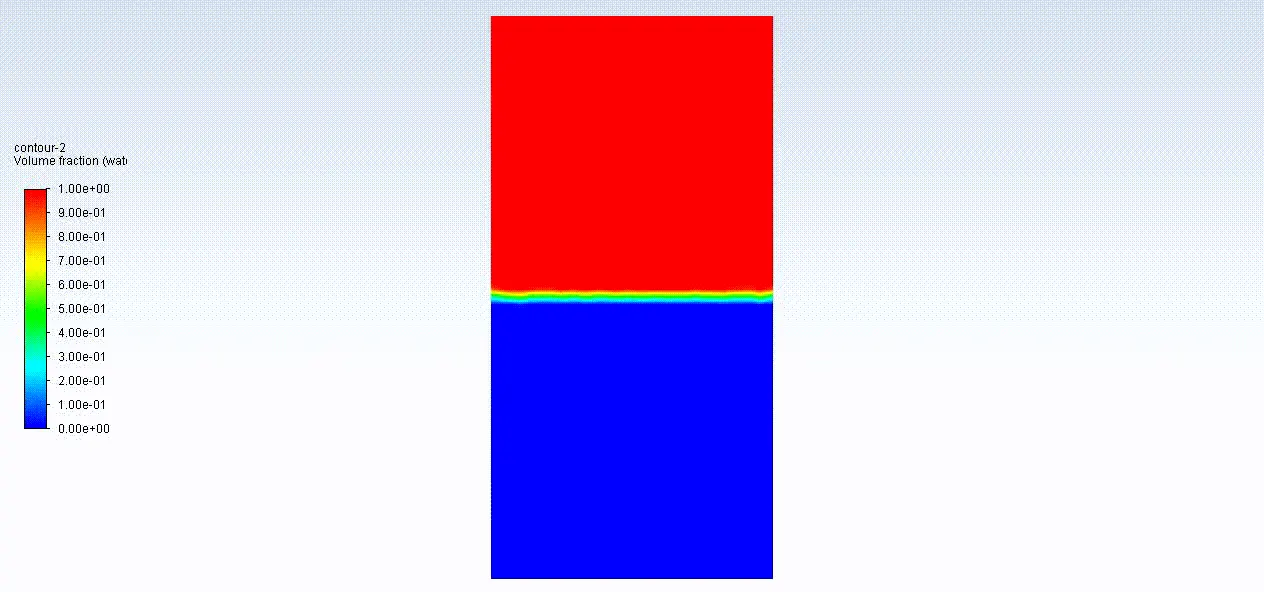
Instability Development :
 |
 |
 |
 |
(b)0.25mm Mesh
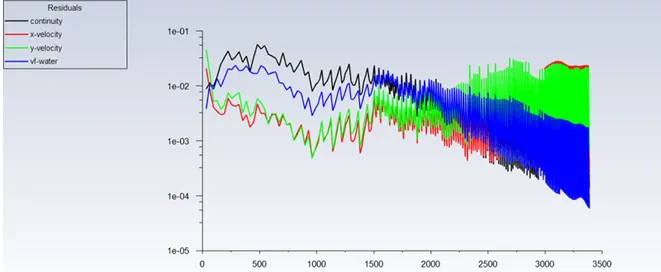
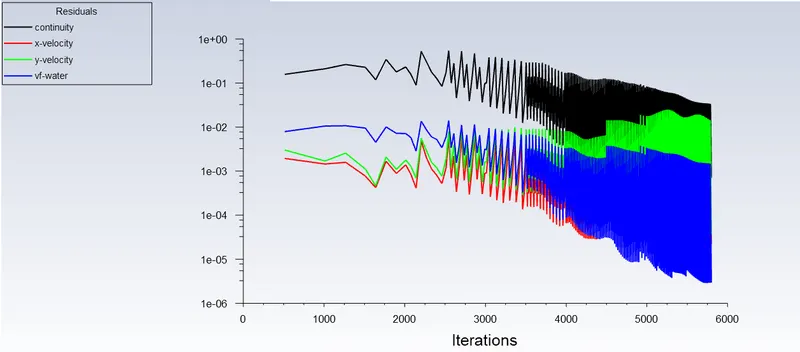
Residuals vs Iterations:
Animation:
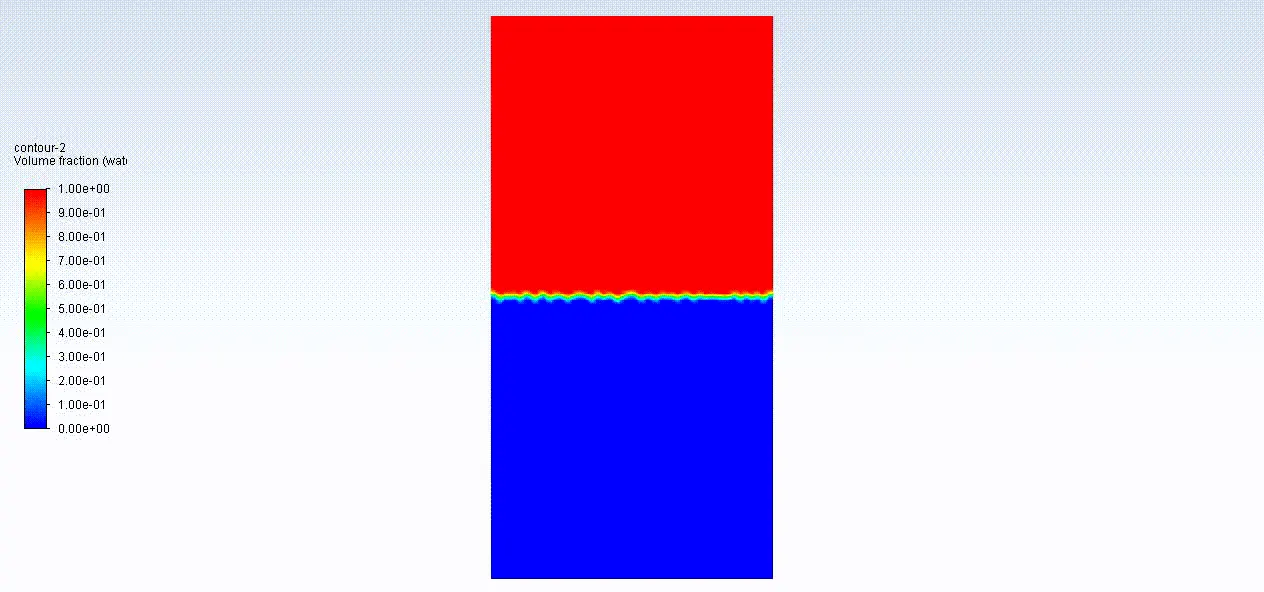
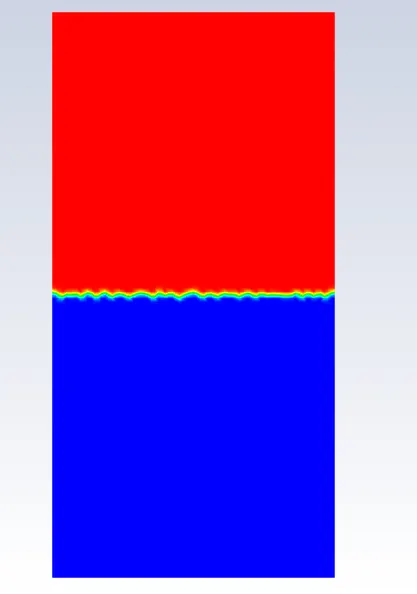
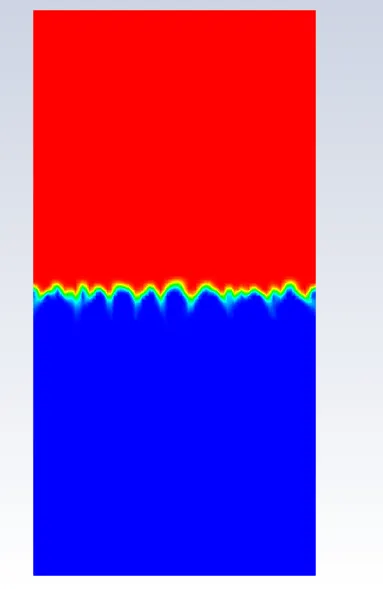
Instability Development :
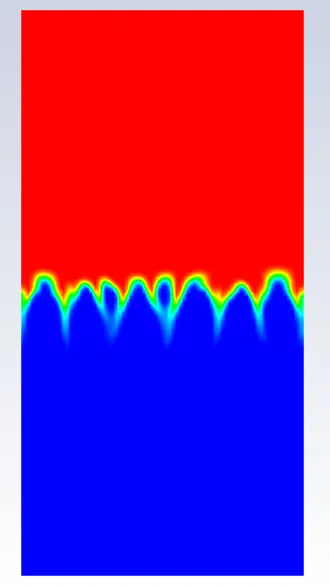
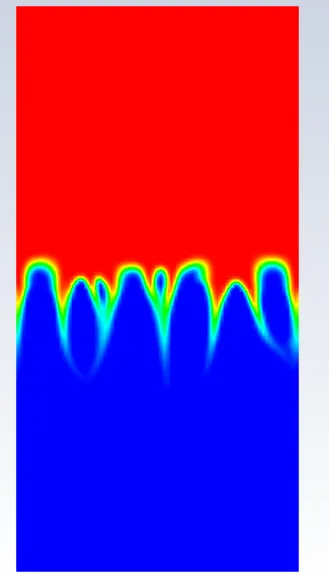
At = 0.99 (approx)
 |
 |
 |
 |
(c) Custom Fluid ()
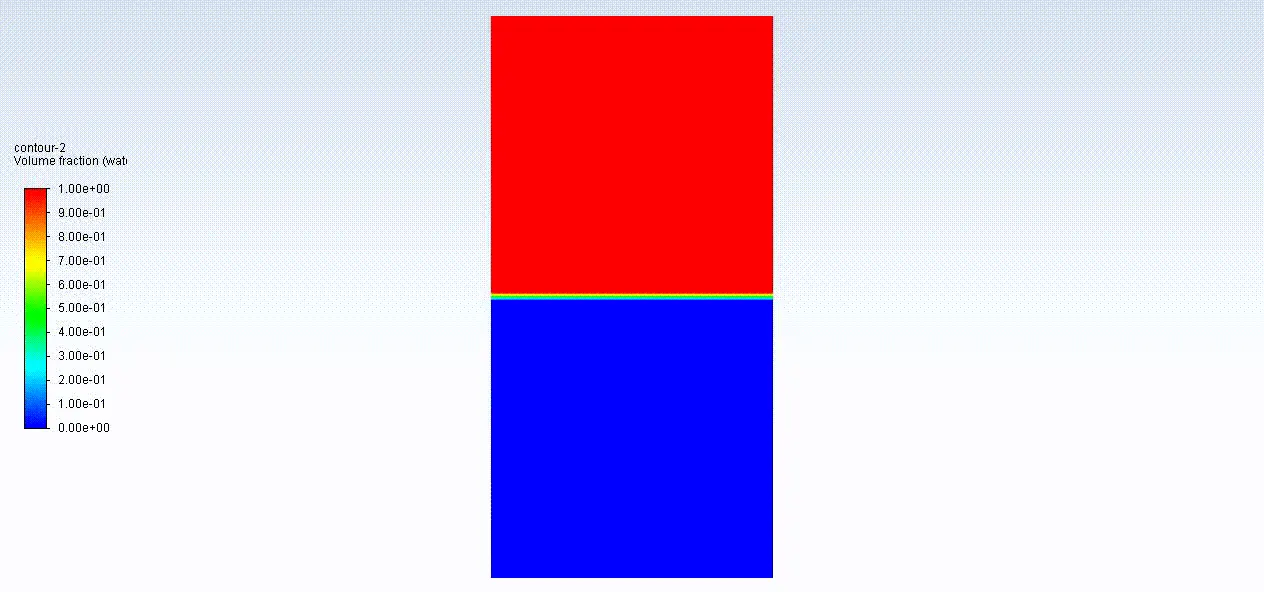
At = 0.4285
 |
Animation :
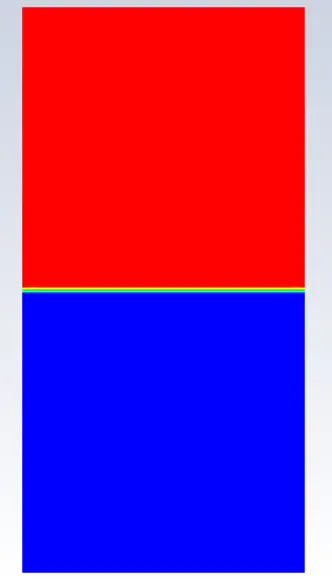
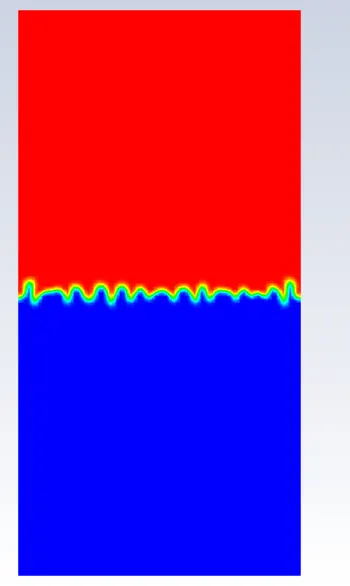
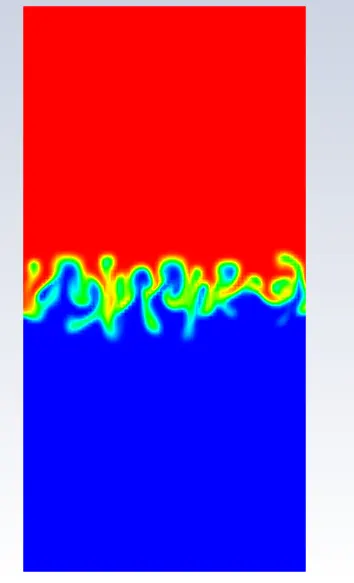
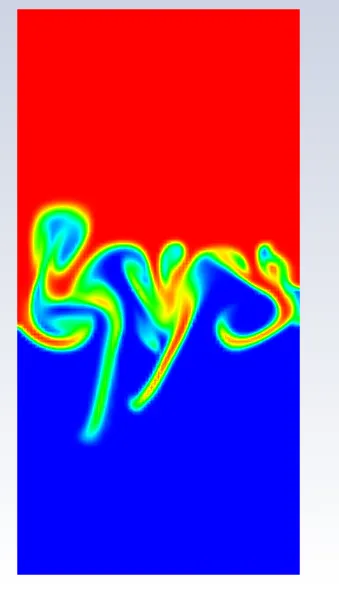
Instabliity Development :
 |
 |
 |
 |
Conclusions :
- As expected we observe a higher growth rate of the fluid thread for a High Atwood Number ( In case of Air-Water Interface , At = 0.99) . The pertubations dont grow much in case of the custom fluid ( At = 0.42)
- In case of a refined mesh , the wavelength of the pertubations increases and as a result we see a much slower growth rate of the fluid thread.
- As expected for the case of At = 0.99 we observe bubble like plumes of the lighter fluid rising up.
- For the case of At = 0.42 We observe finger like projections of the heavier fluid protruding into the lighter fluid.