Project - Vehicular Crash safety Systems
TESLA ELECTRIC CARS:
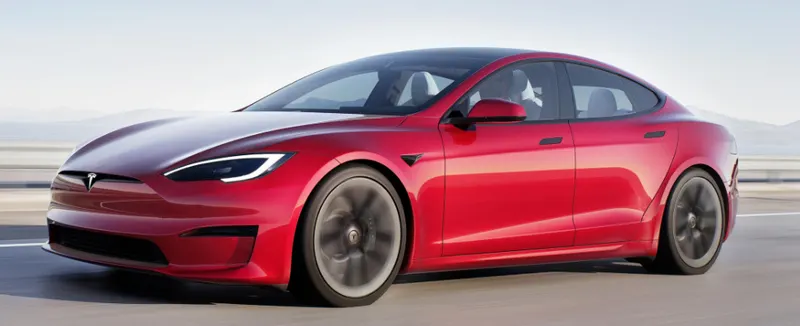
Tesla Motors was formed to develop an electric sports car. Eberhard was Tesla’s chief executive officer (CEO) and Tarpenning its chief financial officer (CFO). Funding for the company was obtained from a variety of sources, most notably PAYPAL cofounder Elon Musk, who contributed more than $30 million to the new venture and served as chairman of the company, beginning in 2004.
In 2008 Tesla Motors released its first car, the completely electric Roadster. In company tests, it achieved 245 miles (394 km) on a single charge, a range unprecedented for a production Electric car. Additional tests showed that its performance was comparable to that of many gasoline-powered sports cars: the Roadster could accelerate from 0 to 60 miles (96 km) per hour in less than four seconds and could reach a top speed of 125 miles (200 km) per hour. The lightweight car body was made of carbon fibre. The Roadster produced no tailpipe emissions, as it did not use an Internal combustion engine. Tesla Motors found that the car attained efficiency ratings that were equivalent to a gasoline mileage of 135 miles per gallon (57 km per litre). The vehicle’s electric motor was powered by lithium-ion cells—often used in laptop-computer batteries—that could be recharged from a standard electrical outlet.
Premises of Electric car:
Tesla is different from other automotive manufacturers, as it follows the strategy of ‘complex coordination.’ This strategy initially targets high-end affluent buyers and subsequently moves into the larger markets with a lower budget. Tesla plans to market Roadster as a low-volume automobile priced at US$109,000. It has designed Model S and Model X for the broader luxury market while aiming for the high-volume segment through Model 3.
The unique aspect of Tesla’s sales strategy is to sell its cars online and through company-owned showrooms as compared to a conventional dealer network that other manufacturers follow. It aims for an e-commerce strategy where customers can customise and order their cars online.
Tesla’s generic competitive strategy is broad differentiation. This generic strategy builds competitive advantage based on the development of products that differentiate the company from other firms in the industry. For example, Tesla Inc.’s products are competitive because they integrate advanced environmentally friendly technology, considering that the vast majority of automobiles today use internal combustion engines. In using this generic competitive strategy, the company broadly attracts all potential customers, who are now increasingly interested in environmentally friendly products. Initially, Tesla used differentiation focus as its generic strategy for competitive advantage. In applying the differentiation focus strategy, the company emphasized the uniqueness of its products, but also focused mainly on early adopters in the high-end market for electric vehicles. These early adopters are affluent customers who have a high tendency to purchase newly introduced products. However, now that the company is already popular and production costs are declining, Tesla’s generic competitive strategy has shifted to broad differentiation. The declining production costs and increasing brand popularity enables the company to broadly target customers in the automobile market.
Tesla Inc. (formerly Tesla Motors Inc.) is an alternative fuel vehicles manufacturer founded in 2003 by Martin Eberhard and Marc Tarpenning in Palo Alto, California, USA. The company produces fully electric vehicles, energy generation and storage systems and also installs and maintains such systems and sells solar electricity. Tesla’s mission statement is ‘to accelerate the world’s transition to sustainable energy’. The electric automaker operates stores and galleries in the US and 35 other countries worldwide and employs more than 70,500 people globally.
In 2020, Tesla achieved operating margin of 6,3% which is the highest in the industry. The electric automaker had an operating cash flow less capex (free cash flow) of USD 2.8 billion during the same period. In the last quarter of 2020 alone, Tesla had USD 4.9 billion increase in cash and cash equivalents. Free cash flow during the same period reached USD 1.9 billion.
Conclusion:
There is no doubt that Tesla is a disruptor of the automotive industry. The company is reinventing the way cars and technology integrate, bringing to its customers a sustainable and energy efficient transportation solution. Considering the current climate scenario in the entire world, we need to reduce emissions and start contributing to climate change. According to the Pew Research Center, 88% of all Americans own a car. Electric vehicles can be a deciding factor for the world’s global warming crisis.
Considering the importance of Tesla’s innovative technology and the impressive popularity of the brand, the company continues to see a huge demand for its product and it needs to improve its logistics and supply chain processes to start delivering its products as expected.
From a management improvement perspective, the company should focus on quality, time, costs, and customer relation measurements so it can track better its data, adjusting production to current levels of supply and demand and stop being over-ambitions. Related to its supply chain, the company could focus on establishing long lasting relationships with its suppliers, reporting properly about demand levels to avoid delays. Tesla also suffers with inventory management due to its limited warehouse space in relation to expected sales. The company should expand its warehouse space to accommodate all expected sales.
Tesla is a fascinating company with unique products and relevant impact to the environment. The company needs to start addressing its inventory and supply chain processes issues if it wants to remain the “most-loved auto brand” in the world (AutoTrader, 2019).