Project
Aim :
To prepare a technical report of simulation of baja all-terrain vehical (ATV) under different condition.
OBJECTIVE:
study the baja ATV model without dashboard.
study the baja ATV model with dashboard.
study the baja ATV model using lookup table without dashboard.
study the baja ATV model using lookup table with dashboard.
INTRODUCTION:
Transmission, which transmits the power from engine to the wheels through the shafts. it consists of 4 types mainly,
- manual transmission
- continuous variable transmission
- semi-automatic transmission
- automatic transmission
CONTINUOUS VARIABLE TRANSMISSION:
A continuous variable transmission (CVT) is a type of automatic transmission that provides more useable power, better fuel economy and a smoother driving experience than the traditional automatic transmission.
continuous variable transmission are also lighter weight when compare to traditional automatic transmission.
A CVT draws top engine power from small engine power, which gives divers quicker acceleration than the automatic transmission because of their greater ability to control the engine speed range continuous produced fewer emissions.
The CVT is a system that makes possible to vary the stepless the transmission ratio without interruption of torque flow. therefore, the infinite number of ratios between a minimum and maximum value are possible it is an automatic, single speed and gearless transmission that can shift through an infinite number of gear ratios. This ability to seamlessly shift through these different gear provide a number of benefits including extremely smooth shift and exceptional fuel economy.
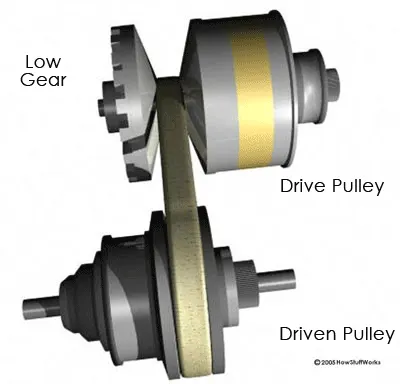
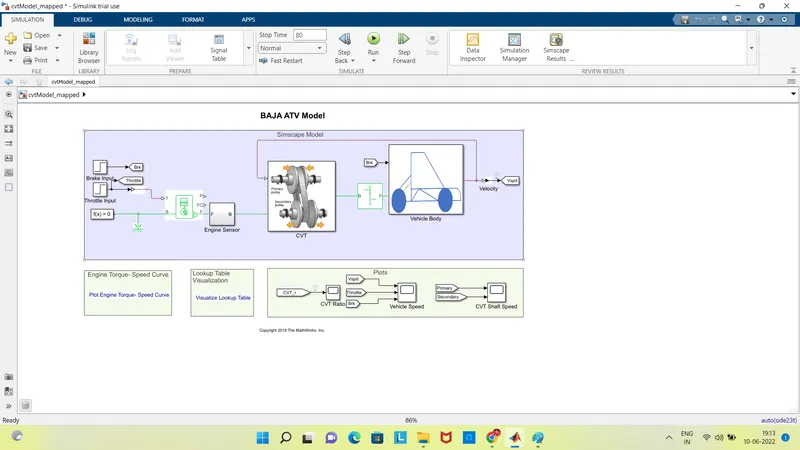
BASIC DETAILS OF THE BAJA ATV MODEL, CVT SUBSYSTEM AND VEHICAL BODY SUBSYSTEM.
STUDY 1
BAJA ATV MODEL:
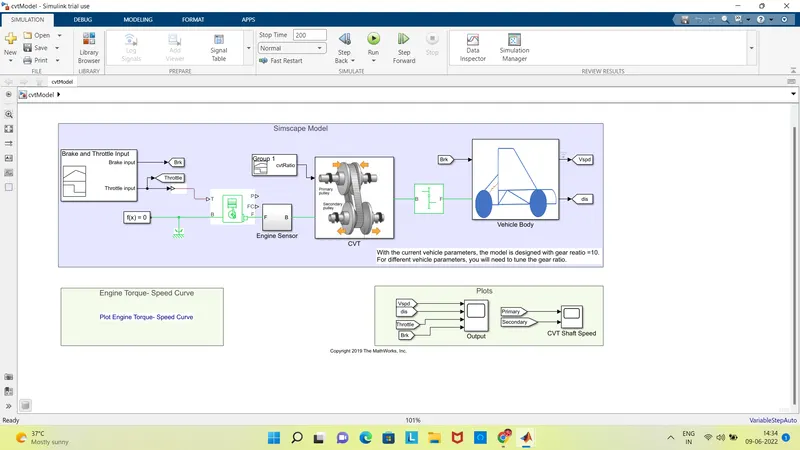
Engine:
A system level model of spark ignition and diesel engine suitable for use a intial stages of modelling when only the basic parameter are available. optional idle speed and red line controllers are incliuded. The throttle input signal T lies between zero and one and specifies the torque demand from the engine as the fraction of the maximum possible torque.
connection of F and B are mechanical rotational conserving ports associated with the engine crankshaft and engine block respectively. connection p and FC are physical signal of output port which describe the engine power and fuel consumption rate are reported.
Input:
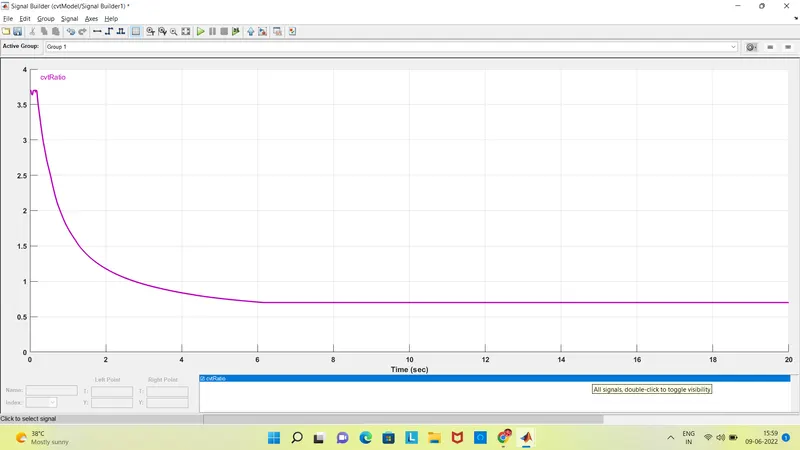
input of cvt gear ratio:
CVT MODEL:
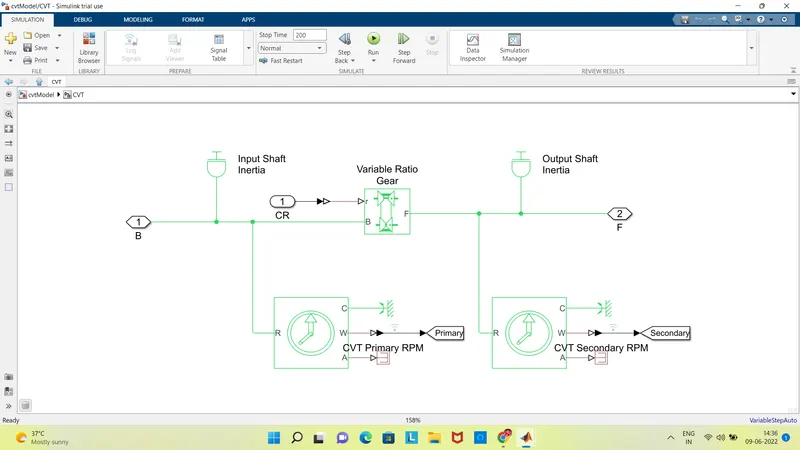
VARIABLE TRANSMISSION RATIO:
The physical signal input r defines the ratio of input to output angular shaft velocities, The connection of base(B) and follower(F) are mechanical rotational conserving ports. specfic the relation between base and follower relation directions with the output shaft rotates parameter.
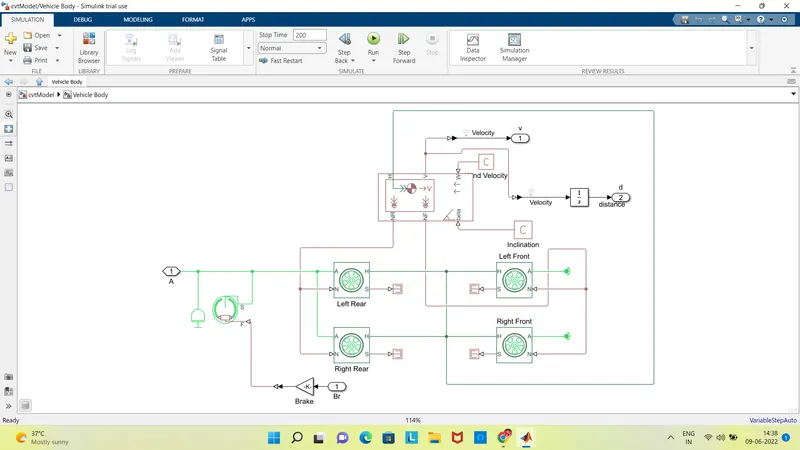
VEHICLE BODY:
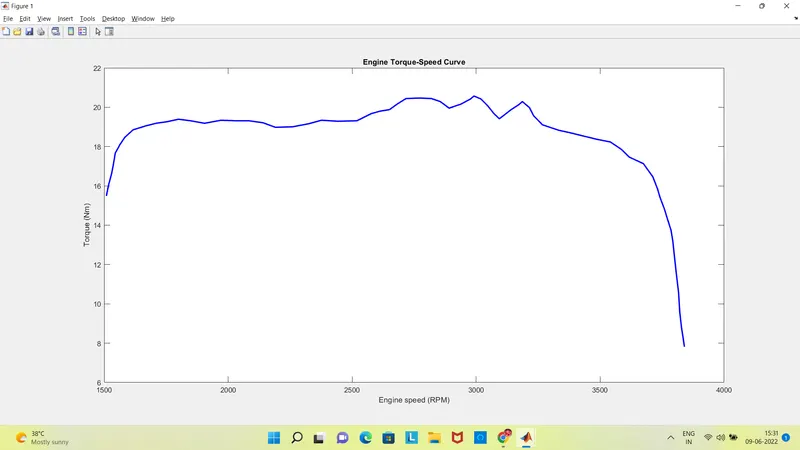
Engine torque- speed cureve
output:
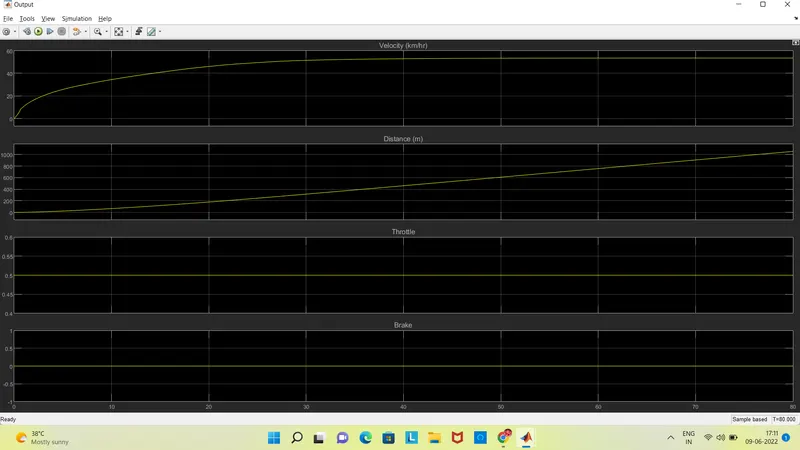
output :
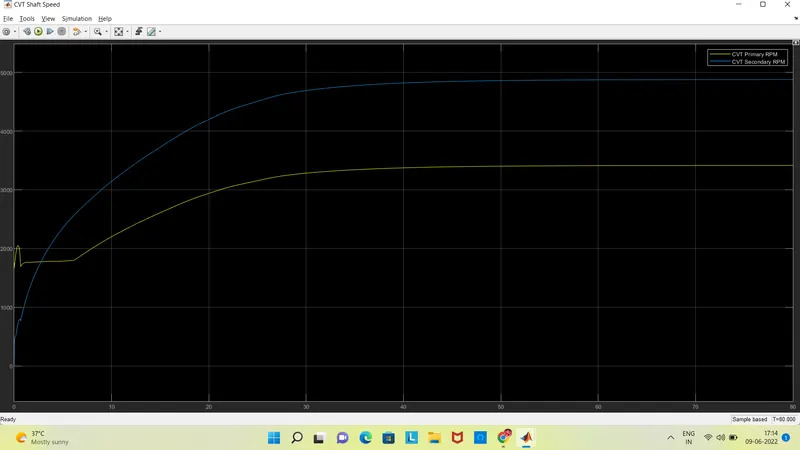
CVT shaft speed
STUDY 2:
study the baja ATV model with dashboard:
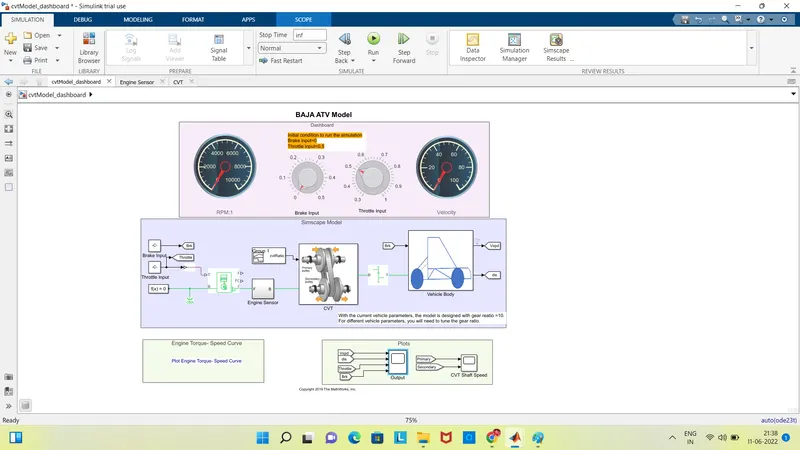
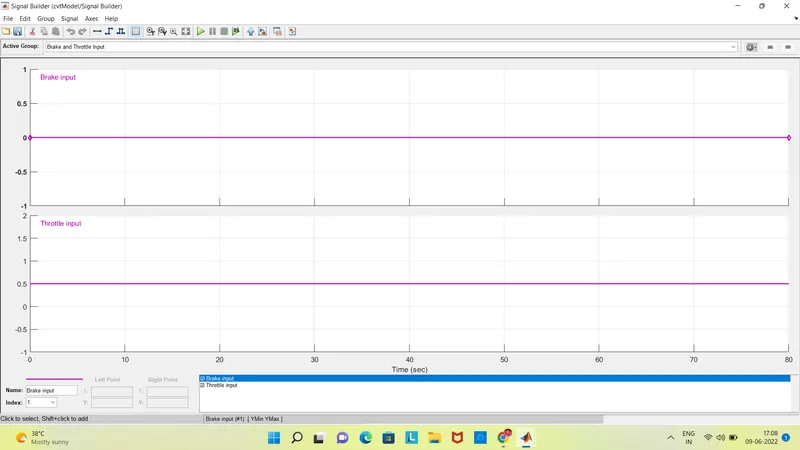
In the model shows the display of dashboard which contains knob to control the input. In this case the input of throttle and brake are not provided using signal builder. A knob is provided to control both the parameter in real- time for the user
Output:
VEHICLE SPEED: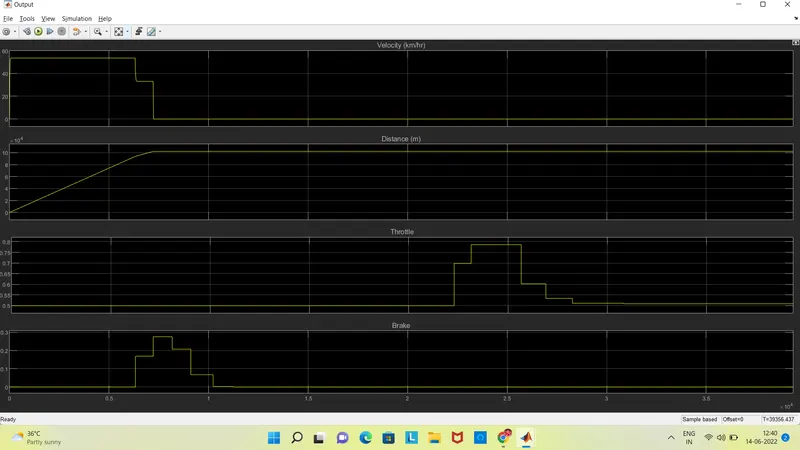
The velocity of the vehicle increased from 0 to 50kmph when the throttle value is 0.5 and brake input value is 0. Once the braking value increases from 0 to 0.4, the velocity of the vehicle decrease to 0. This shows the direct relation of vehicle velocity with respect to brake and throttle input.
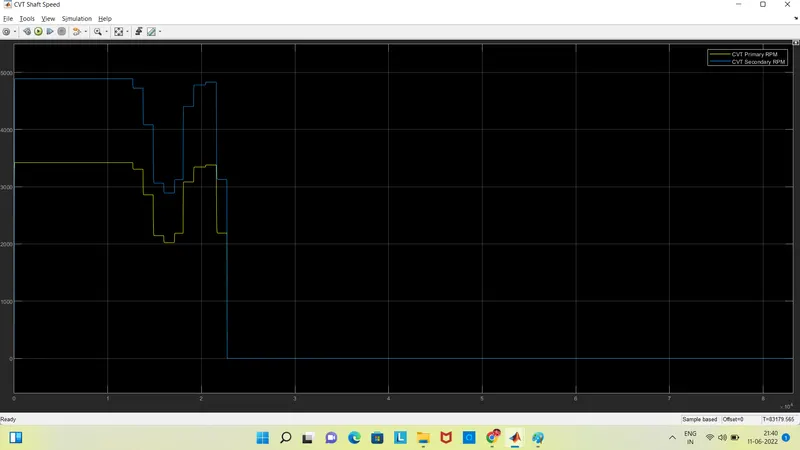
CVT SHAFT RPM:
#CASE 3:
STUDY OF BAJA ATV WITH CVT USING LOOKUP TABLE:
CVT block using lookup table:
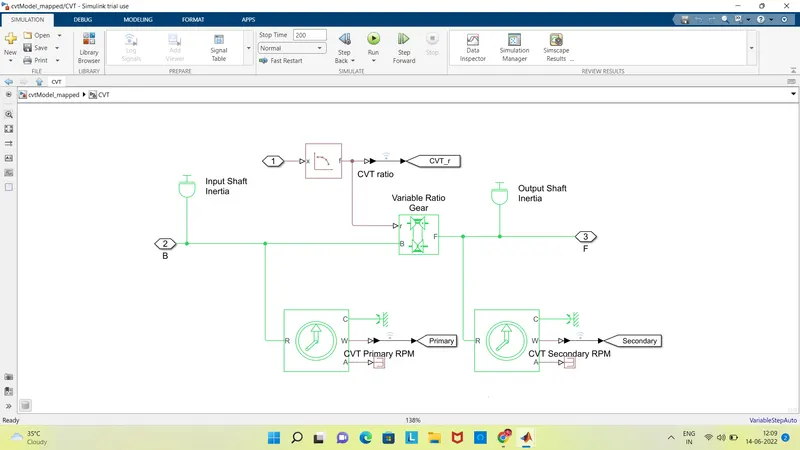
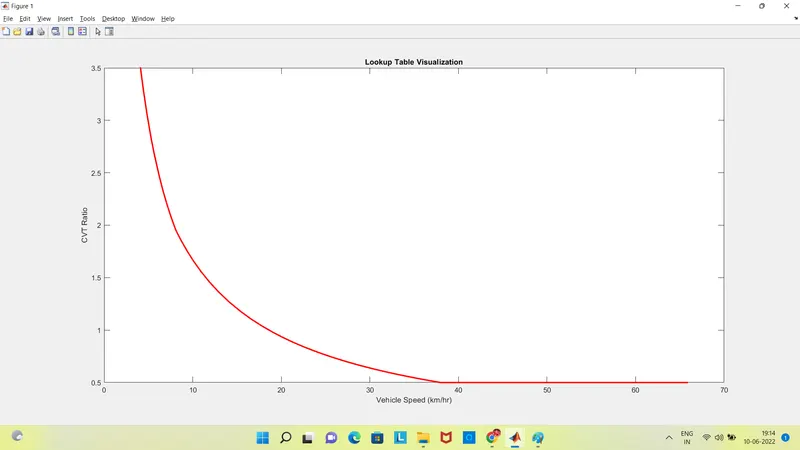
the lookup table is given as the input of variable gear ratio. CVT primary RPM is given as the input of the variable gear and the CVT secondary RPM is the output of the variable gear ratio
LOOKUP TABLE VISUALIZATION:
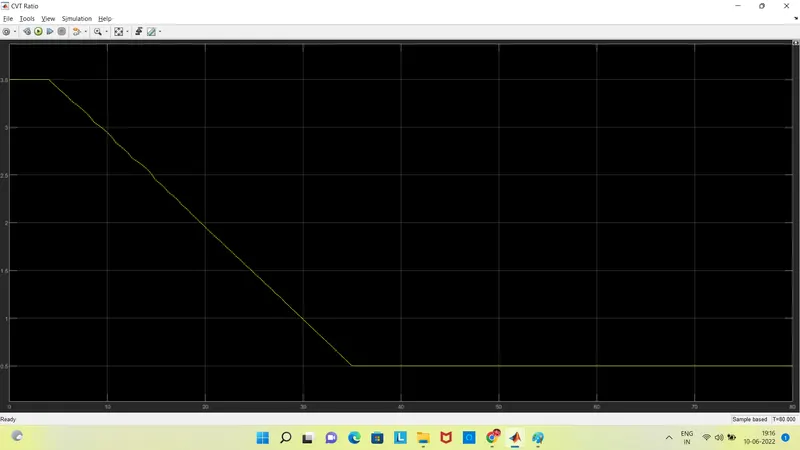
CVT GEAR RATIO:
CVT VEHICLE SPEED:
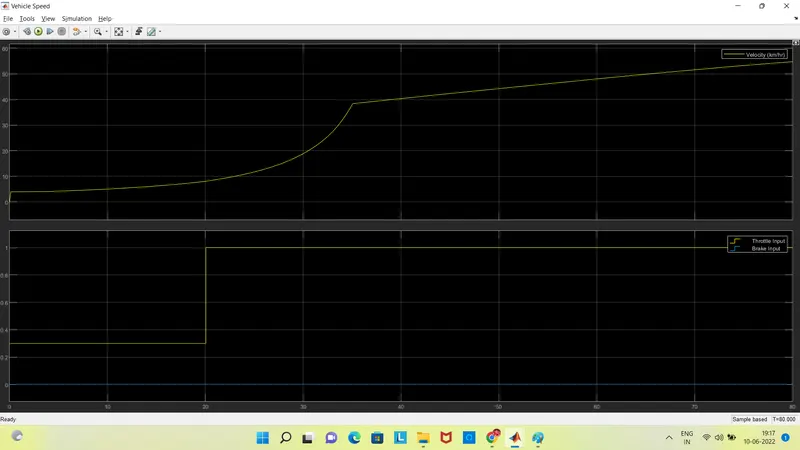
throttle is increases and the velocity of the vehicle also increase . braking shows constant.
CVT SHAFT SPEED:
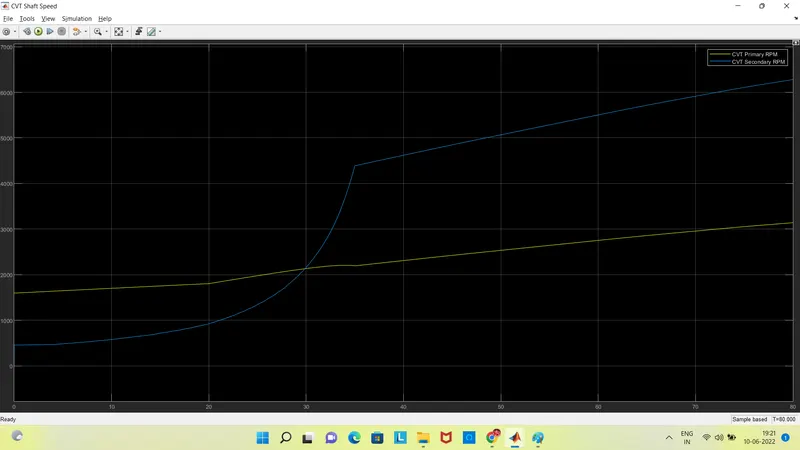
the result of primary and secondary RPM
#CASE 4:
study the baja ATV model using lookup table with dashboard.
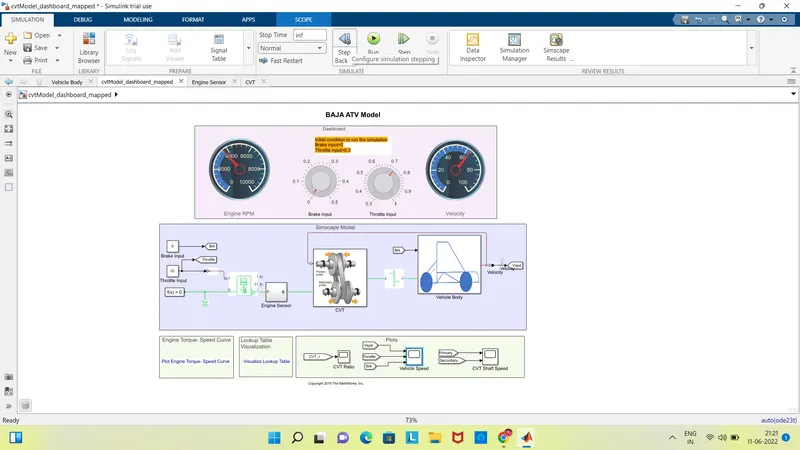
In this model a dashboard is used to control the input parameter brake and throttle.
VEHICLE SPEED:
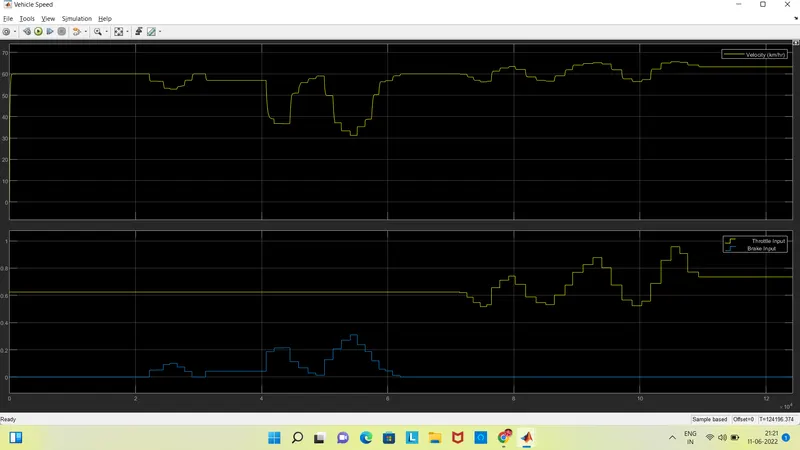
The variation in vehicle velocity can be observed with change in throttle and brake inputs. By increasing the braking value, the velocity of the vehicle decreases. on the other side, By increasing the throttle input the velocity of the vehicle increases.
CVT shaft rpm:
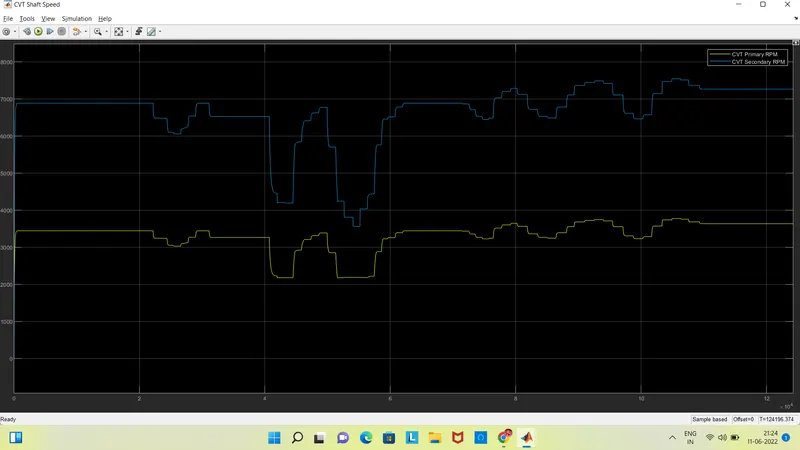
this is the graph indication of primary and secondary shafts with respect to given input parameter.
Result:
successfully analysed 4 different model of BAJA ATV WITH CVT and recorded the output with respect to variations in input of throttle and brake