Project
AIM:
A report carry out a system-level simulation of an all-terrain vehicles used in BAJA.
Objective:
To prepared the full report on BAJA (ATV) model with continous variable transmission (CVT).
Information about all-terrain vehicles used in BAJA
An all-terrain vehicle (ATV), also known as a light utility vehicle (LUV), a quad bike, or simply a quad, as defined by the American National Standards Institute (ANSI); is a vehicle that travels on low-pressure tires, with a seat that is straddled by the operator, along with handlebars for steering control. As the name implies, it is designed to handle a wider variety of terrain than most other vehicles. Although it is a street-legal vehicle in some countries, it is not street-legal within most states, territories and provinces of Australia, the United States or Canada.
By the current ANSI definition, ATVs are intended for use by a single operator, although some companies have developed ATVs intended for use by the operator and one passenger. These ATVs are referred to as tandem ATVs.
The rider sits on and operates these vehicles like a motorcycle, but the extra wheels give more stability at slower speeds. Although most are equipped with three or four wheels, six-wheel models exists and existed historically[3] for specialized applications. Multiple-user analogues with side-by-side seating are called utility terrain vehicles (UTVs) or side-by-sides to distinguish the classes of vehicle. Both classes tend to have similar powertrain parts. Engine sizes of ATVs currently for sale in the United States
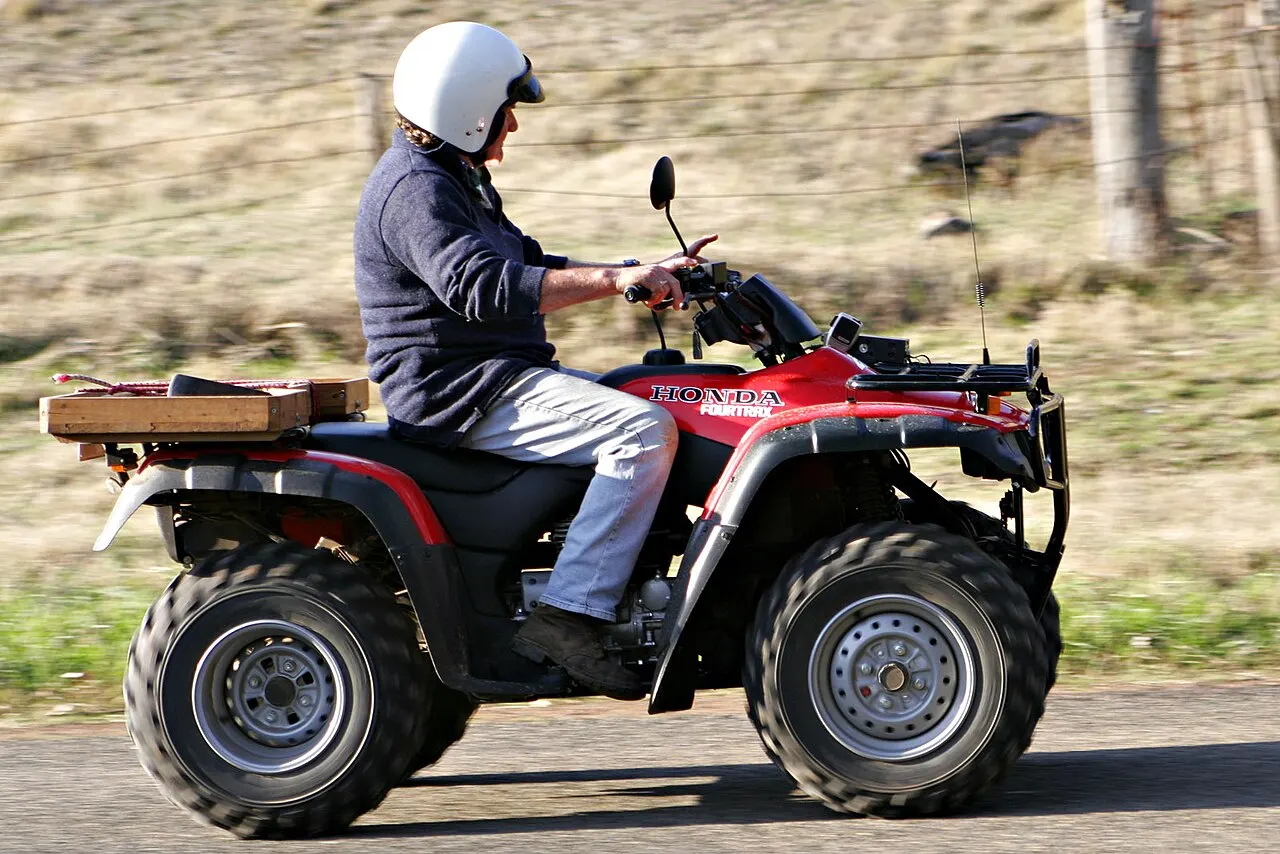
What is ATV?
An all-terrain vehicle (ATV) is defined as a motorized off-highway vehicle designed to travel on four low-pressure or non-pneumatic tires, having a seat designed to be straddled by the operator and handlebars for steering control. ATVs are subdivided into two types as designated by the manufacturer. Type I ATVs are intended by the manufacturer for use by a single operator and no passenger. Type II ATVs are intended by the manufacturer for use by an operator and a passenger, and are equipped with a designated seating position behind the operator. Similarly, riders must also consider the various ATV sizes.
Continuously variable transmission(CVT):
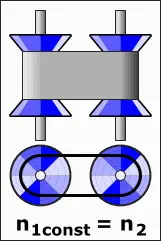
A continuously variable transmission (CVT) is an automatic transmission that can change seamlessly through a continuous range of gear ratios. This contrasts with other transmissions that provide a limited number of gear ratios in fixed steps. The flexibility of a CVT with suitable control may allow the engine to operate at a constant RPM while the vehicle moves at varying speeds.
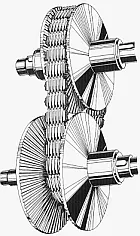
CVTs are used in automobiles, tractors, motor scooters, snowmobiles, bicycles and earthmoving equipment.
The most common type of CVT uses two pulleys connected by a belt or chain; however, several other designs have also been used at times.
BAJA SAE models:
1-ATV model without a dashboard:
Following simulink model show the BAJA ATV using the CTV for the power transmission.
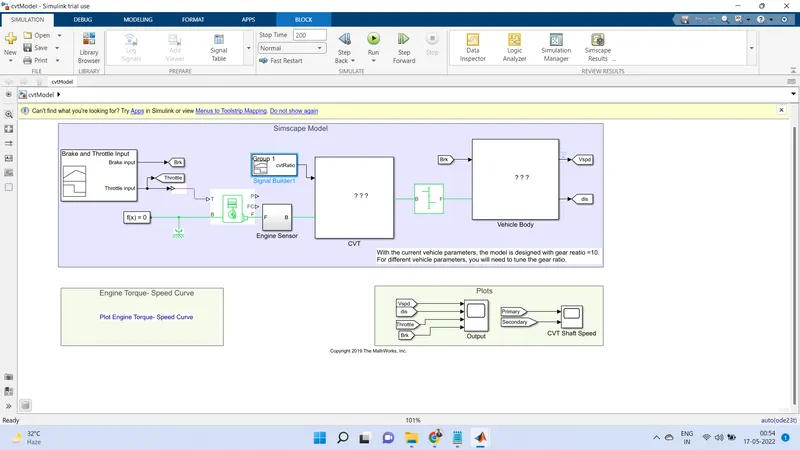
The block used in simulink model are as follows:
A) Signal builder block:
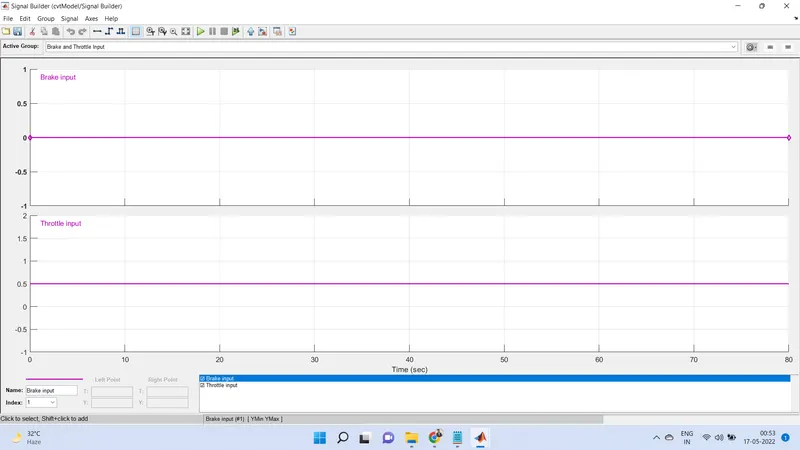
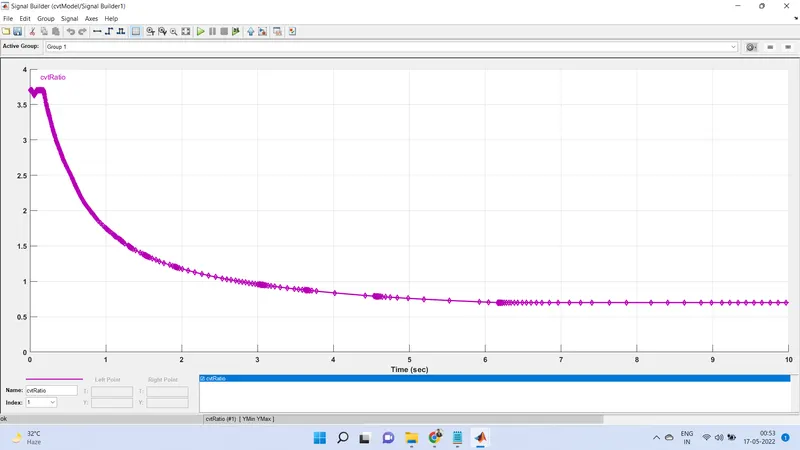
used to create ,edit and input sugnal source of model. in these model we have two signal builder block 1-throttle and brake, 2- CVT ratio input
1-throttle and brake input
2- CVT ratio
B) Generic Engine: This block represented a general internal combustion engine there are 5 port of these block are as follows:-
F & B - connection F B are the mechanical rotational converting port representing the engine block and crank shaft
T- physical input signal port specifyying the normalisation engine throttle level
P-physical out put signal port reporting the engine power
FC-physical out put signal port for the fuel consumption block.
C) CVT block: Represents the continuous variable transmission system. these system having a sub system are as follow:-
1-intertial block
2-variable ratio gear
3- ideal rotational motion sensor
D) vehicle body: Represent the complete vehicle assemby
Subsystem of vehicle body are:
wheel
Double shoes brake
E) Engine sensor:This sensor is used to sense the output values of genric engine to th CVT.
F) simple gear: This block represent the fix ratio gear to gear box. no inertia or complience is modeled in this block , you can optionally include gear meshing and viscous bearing losses.here B is base and F is follower
ATV model with Dashboard:
simulink model of BAJA ATV using the CTV for power transmission using a dashboard.
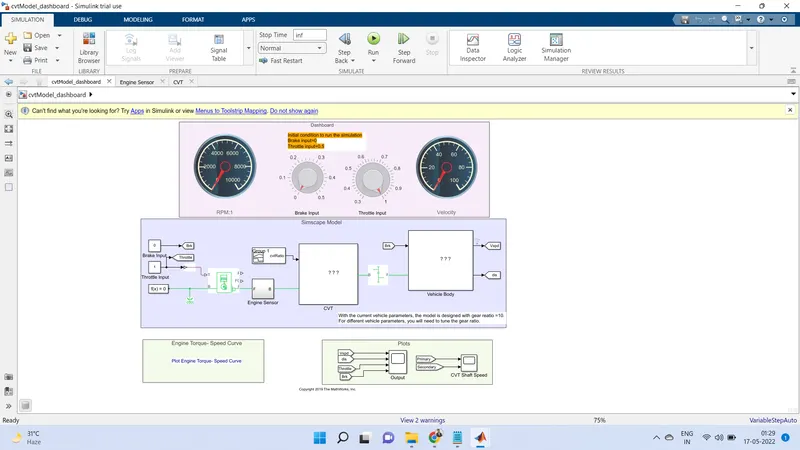
the process is the same as the above model, the only difference is that the input signal provide by the circular gauge instead of signal builder block.
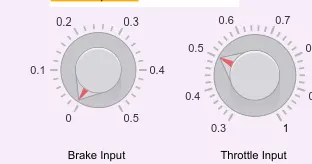
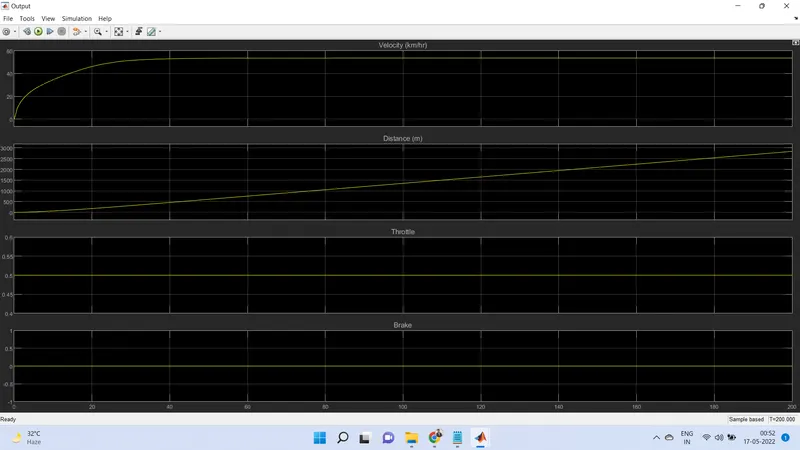
Out put result:- the output result of model are as follow-- the value of brake=0, throttle=0.5
Vehicle-speed curve:
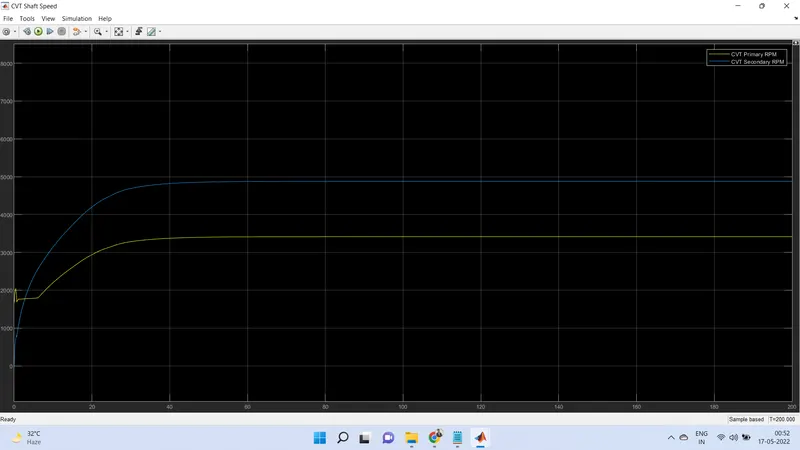
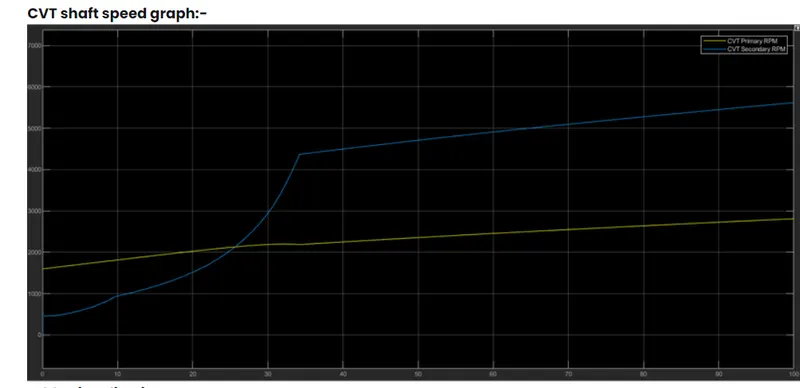
CVT shaft speed graph:
OBservation:
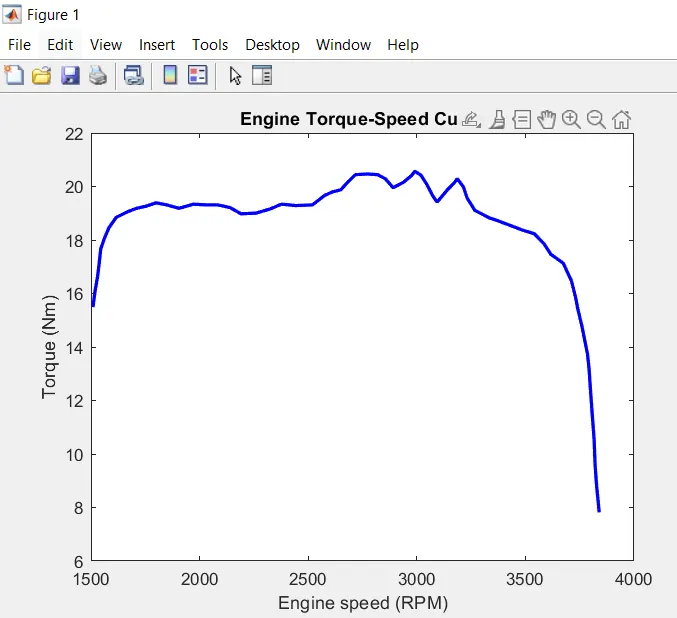
1- the torque is high at start because it require for pickup. but as speer increase then torque reduces.
2-as we see the velocity graph the vehicle speed increase gradually and become constant at certain level.
---------------------------------------------------------------------------------------------------------------------------------------------
ATV with lookup table:
following figure shows the simulink model of BAJA ATV using cvt for power transmission using the the look up table.
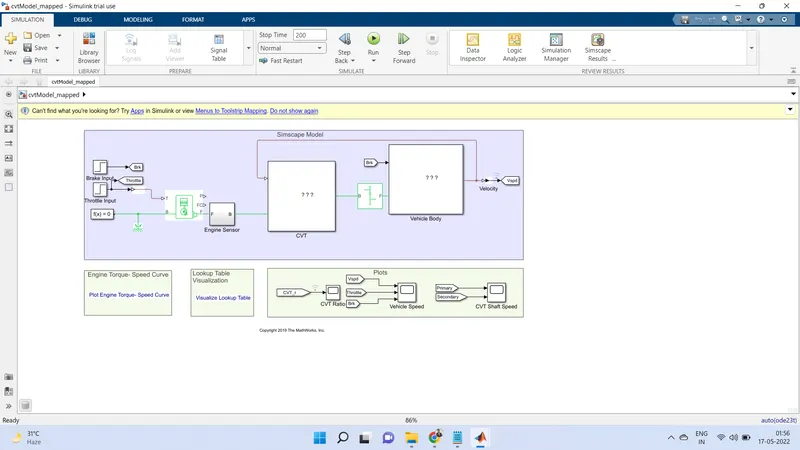
lookup table: Look up table is an array of data which is provide for input and output value. the lookup table generate the output based on input value using one of the methode parameter list. in this model we are using the out put signal from the vehicle bady as input to CVT.
2)ATV model with dashboard:
following figure shows the simulink model of BAJA ATV using cvt for power transmission using a dashboard along with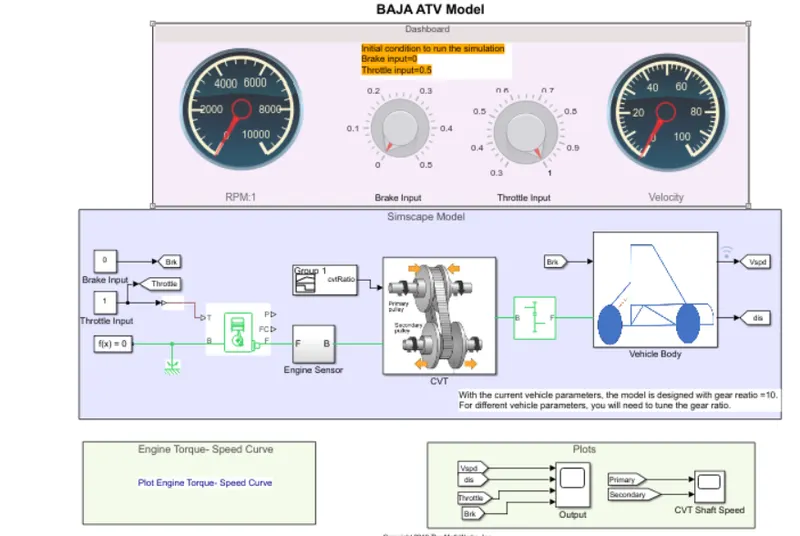 the look up table.
the process is the same as the above model, the only difference is that the input signal provide by the circular gauge instead of signal builder block.the input is knob , the knob can be used to set the value of brake and throttle input as per requirement.
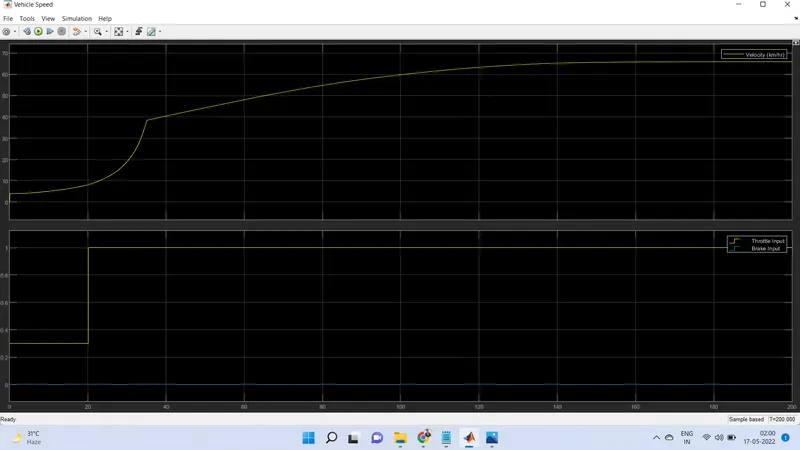
OUTPUT RESULTS:the output results of model with look up tables are as follows:
1- output vehicle velocity, brake and thrttle
lool up table visualization:-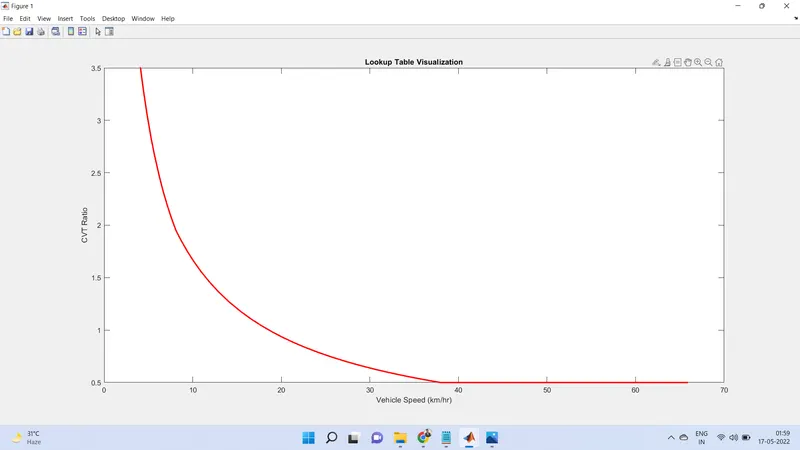
Observation:
1-Using the lookup table, the vehicle speed increase gradually and take some time for constantat certain level as we see vehicle speed compare with model without look up table.
2- there is gradual increase in speed at the secondary gear of the Cvt as initial speed is picked by driving gear.
3-the look up table graph show CVT ratio with respect to out put power at the wheel.