Project
Que 1:Carry out a system-level simulation of an all-terrain vehicle.
Aim:To prepare a technical report explaining the given all-terrain vehicle model properties & to give comments on the results.
All-terrain vehicle:
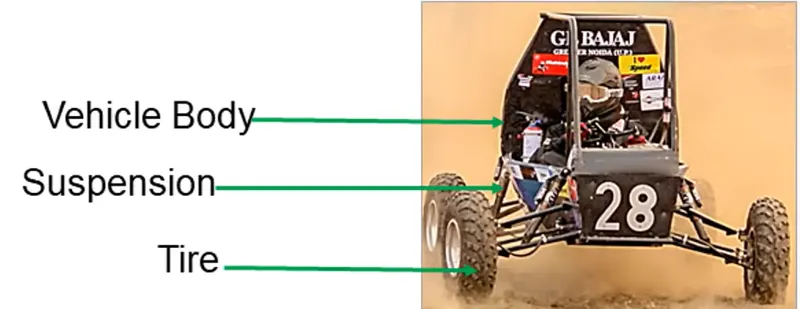
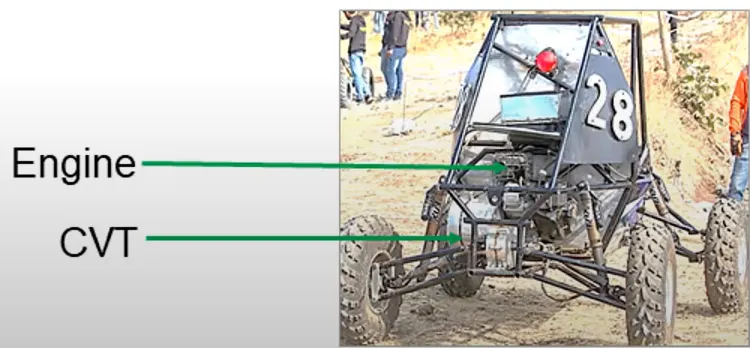 An all-terrain vehicle (ATV) is defined as a motorized off-highway vehicle designed to travel on four low-pressure or non-pneumatic tires, having a seat designed to be straddled by the operator and handlebars for steering control. The power is transferred from engine to the wheel using continuous variable transmission(CVT) which transmit power from engine to the
gearbox and gearbox to the drive shaft and finally drive shaft to the wheel.
Components:
- Vehicle body
- Suspension
- Engine
- Tire
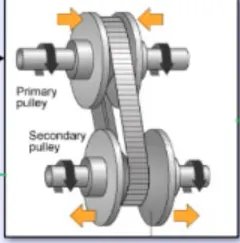
- CVT Continuous variable transmission (CVT) :A continuously variable transmission (CVT) is an automatic transmission that can change through a continuous range of gear ratios.Continuous variable transmission is used to transmit the power from engine to gearbox .It consists of primary and secondary pully.It consists of variator and belt.So when the variator of the primary pully moves outwards,the variator of secondary pully moves inward and its radius increases and so the speed reduces.And when the variator of the primary pully moves inward and the secondary pully moves outward,the radius decreases and speed increases.
-
 Simulink model:
 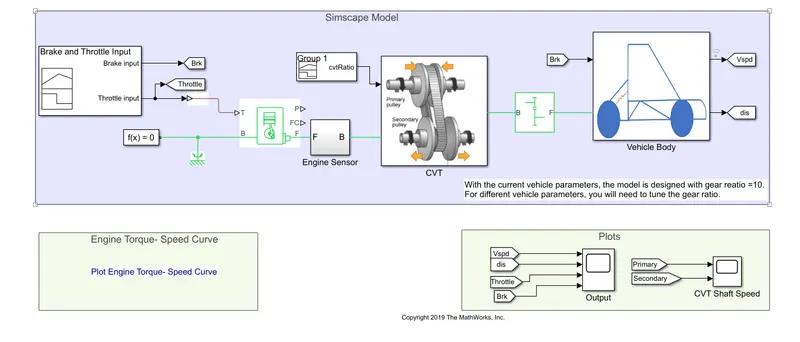 It consists of signal builder ,Engine,CVT and vehicle body. The brake signal and throttle signal are given with the signal builder.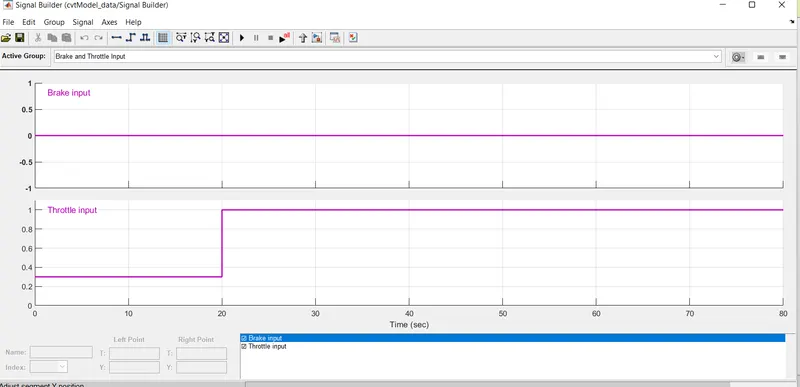
- The brake input is given as zero and the throttle input is varied from 0.3 to 1
- The throttle input is given to the generic engine.
- The generic engine block is connected to engine sensor(it is nothing but an RPM sensor block)
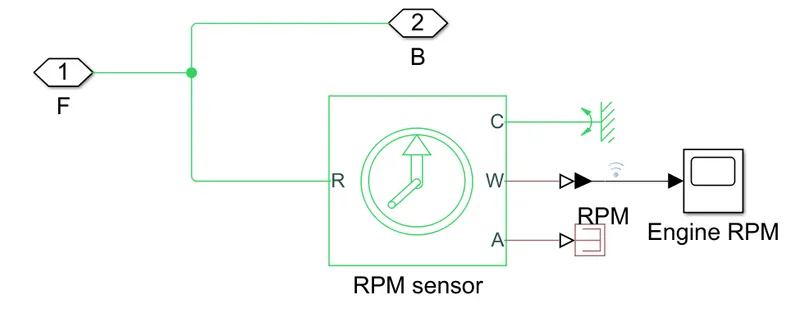
- The output from the rpm sensor is given to the CVT .
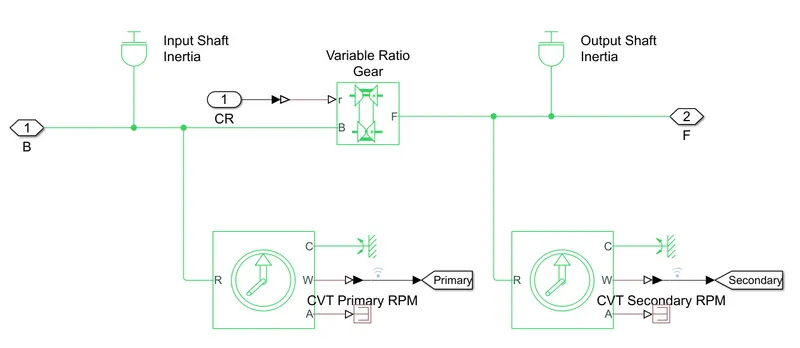
- This is the CVT model.It cosists of the input shaft inertia and output shaft inertia for the primary and secondary pully.
- It consist of the variable gear ratio block to specify the gear ratio.The RPM of the primary and secondary pully are sensed by the RPM sensor.
- The CVT is connected to the vehicle body through simple gear.
- The vehicle body consist of output shaft inertia ,brake ,front and rear wheel and tthe vehicle body block.
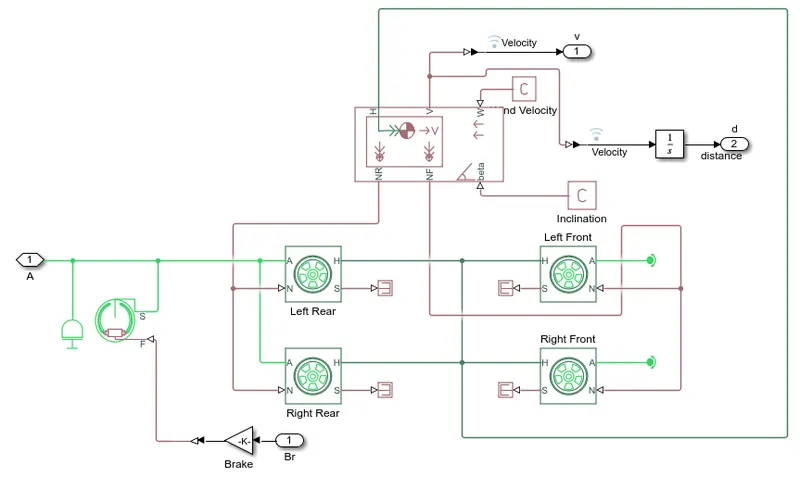
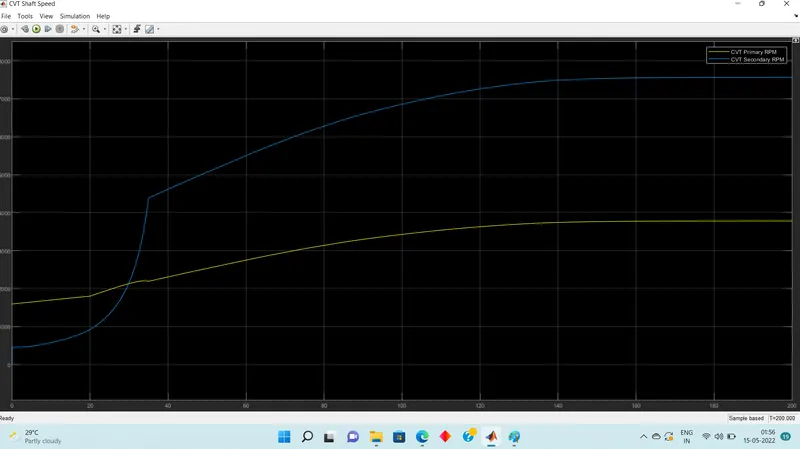
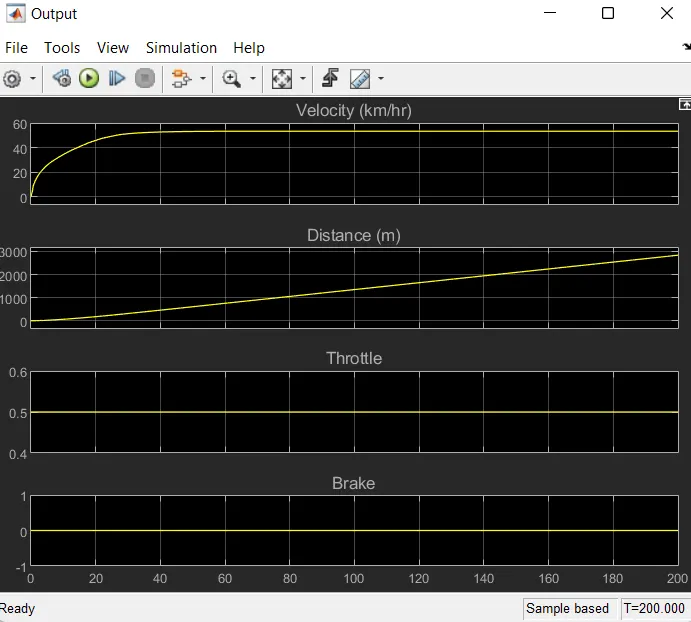
- The velocity,distance ,the speed of the primary and the secondary shaft is analysed using scope.
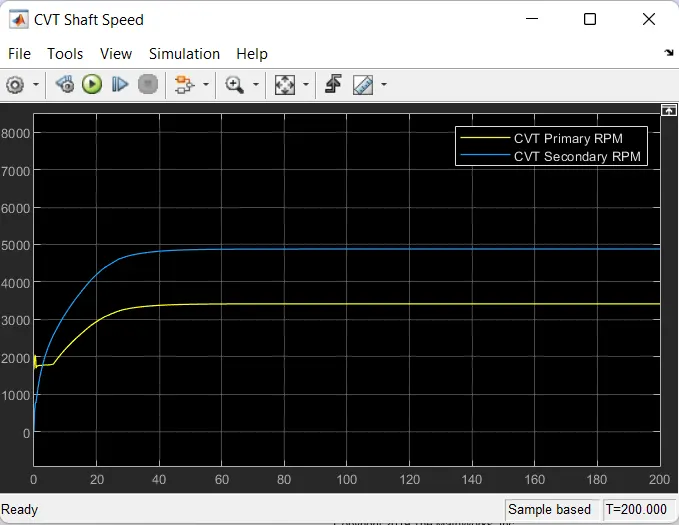
- BAJA AVT with dhashboard:
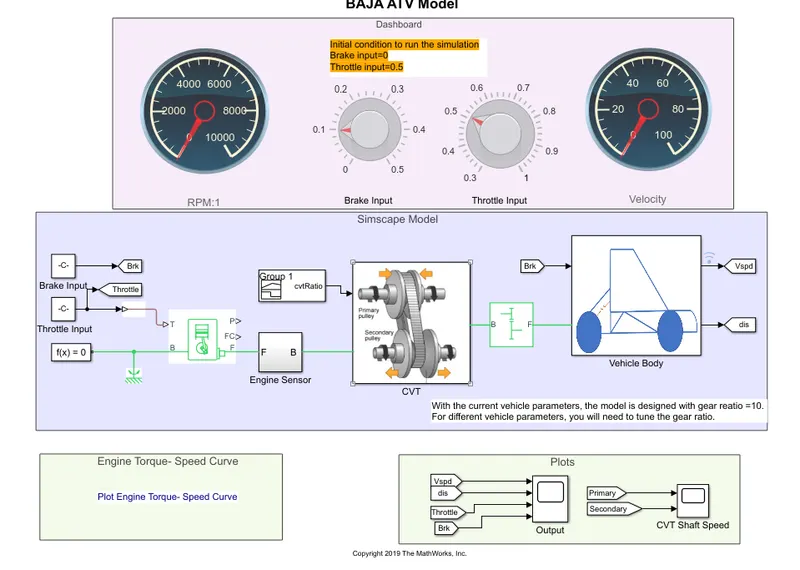
- Here the brake input and the throttle input are given through the constant block.The constant block is connected to the nob for varying the values.
- The circular gauge is connected to the engine sensor to indicated the variation in speed.
- Another circular gauge is connected to the vehicle body to indicate the velocity.
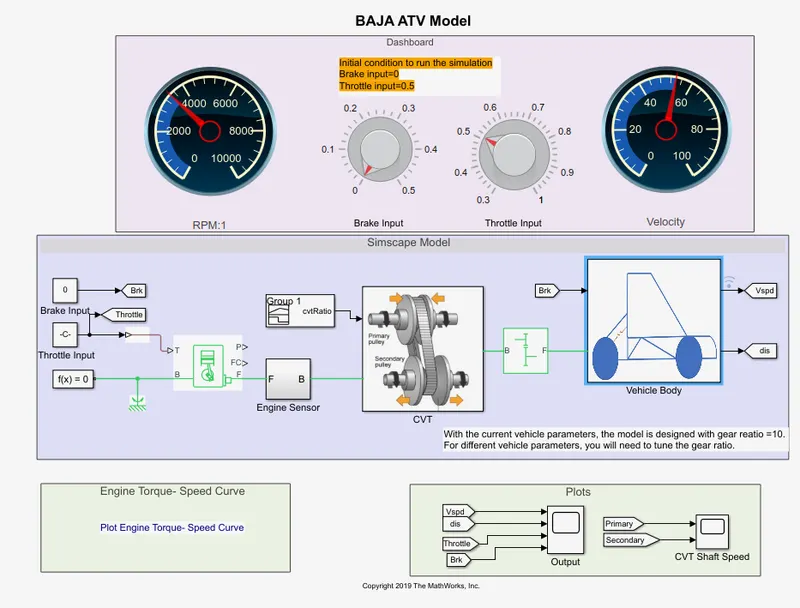
- The brake input is given as zero and throttle input as 0.5
- We can see the variation inthe circular gauge indicating speed and velocity
- The brake is varied between zero to 0.5
- The throttle is varied between 0.3 to 1
- We can see as the throttle input is increased the speed and velocity increases.
- When the brake is increased the speed and velocity decreases.
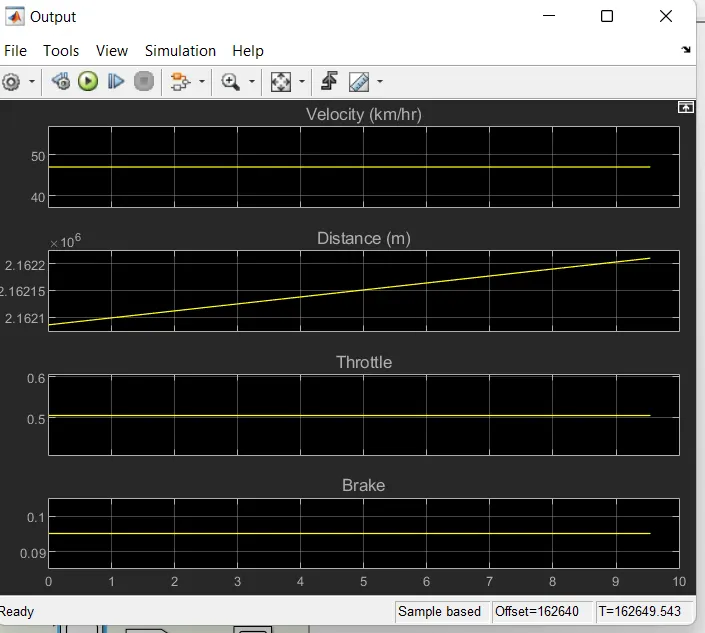
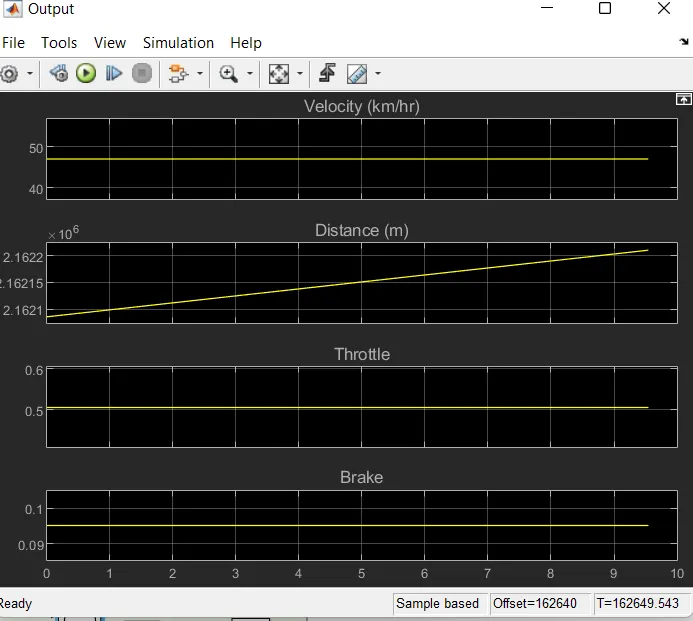
- BAJA AVT WITH LOOKUP TABLE
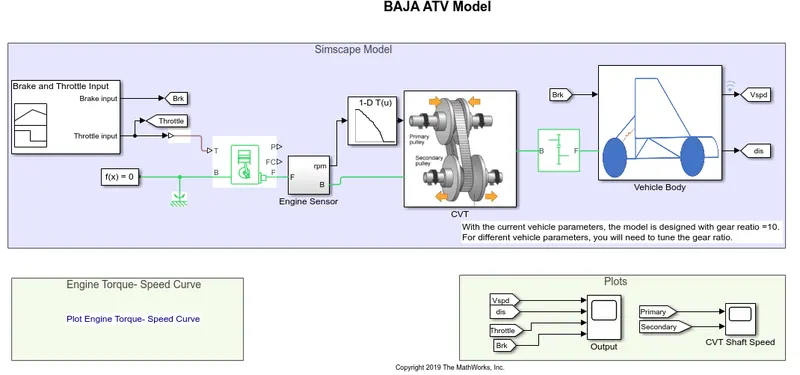
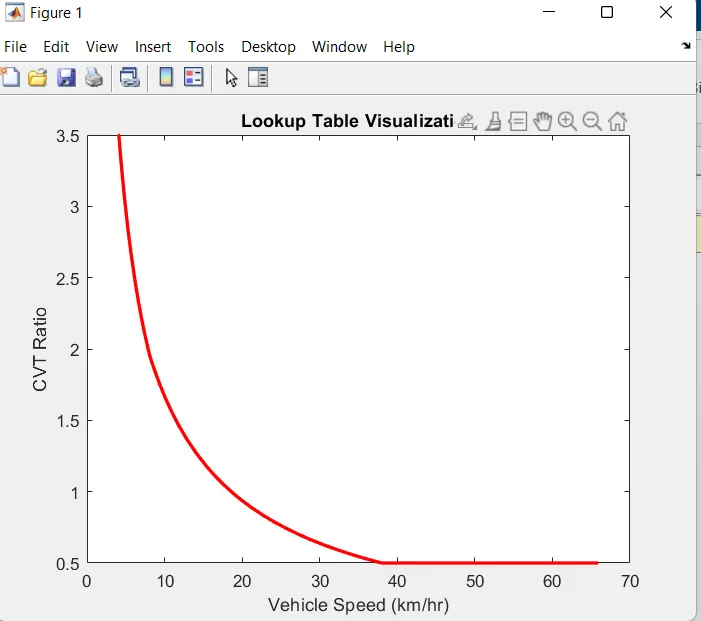
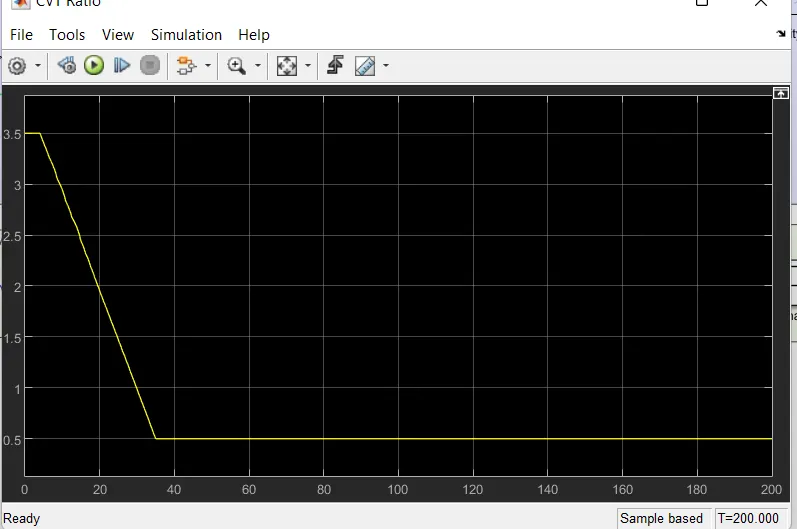
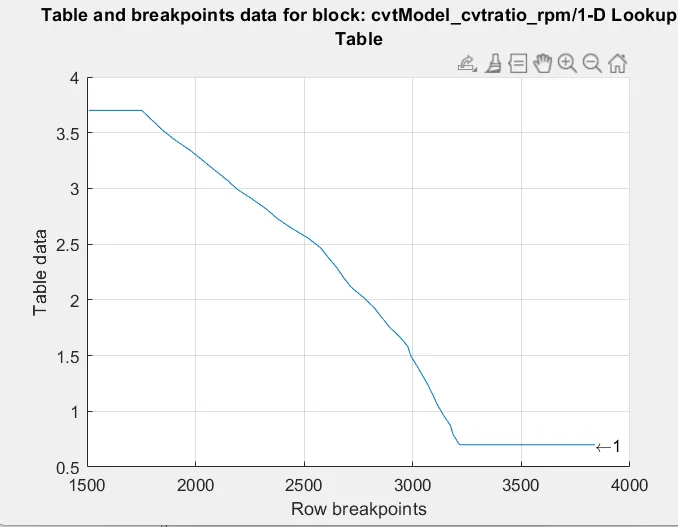
- Here the gear ratio is gven through the lookup table
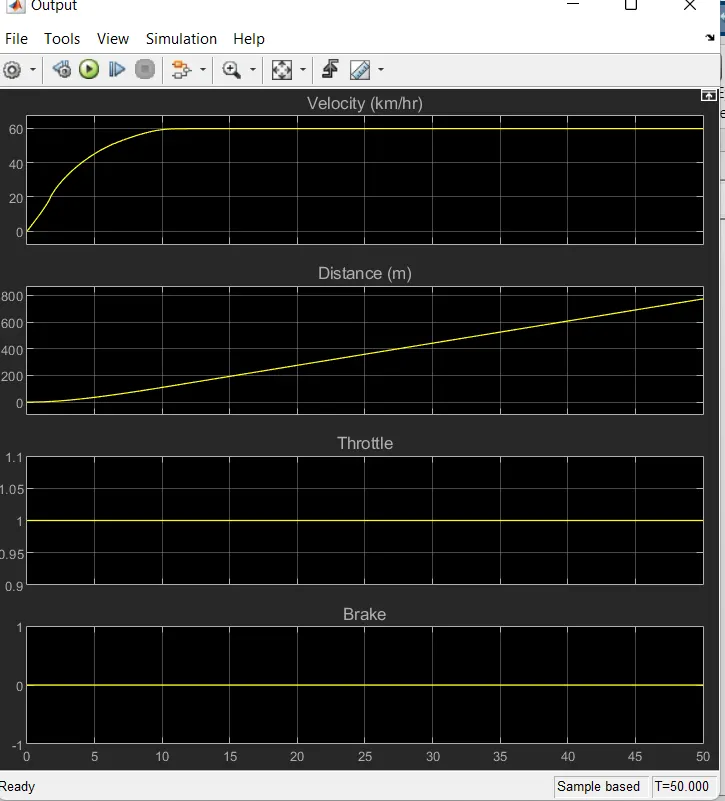
- BAJA AVT MODEL
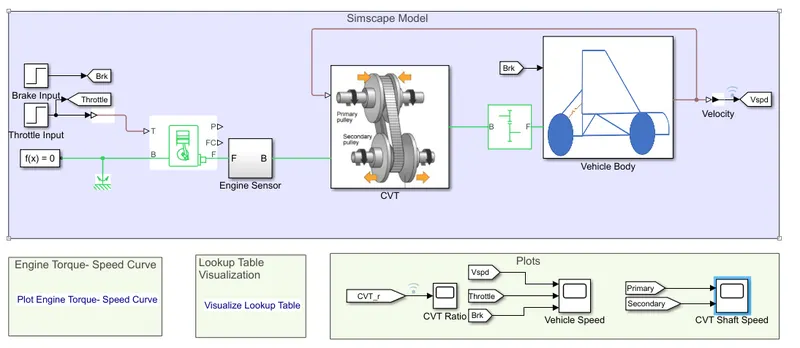
- Here the brake input and throttle inputs are given through a step input.
- In step input the value is varied from zero to fine value of time.
- The throttle input is varied from 0.3 to 1
- The gear ratio is given through the PS lookup table