Project
AIM : We need to study and we need to analyze about the BAJA ATV (All Terrain Vehicle) using simulink.
Objective : Need to prepare a techincal report of BAJA ATV model and also with and without lookup table.
Theorey :
There are 2 types of models
1. ATV
2. CVT
Let us breifely discuss about the ATV model
ATV : ATV referes to All Terrain Vehicles these vehicles are the off road vehicles. It is a motarized tri or quadricycle single seated bike and buggy. the vehicle will be made up of handlebars and with the low pressure tires that are also having the deep threaded structure that will assist when driving over muddy or rockey and also in wet lands. ATV vehicles offer excellent off road compatibility and also they can carry heavy load equipment over the long distances and also, they can also customized for high performance type riding, owing to which they find extensive applications across various types of industries, including sports, entertainment, agriculture, military and defense.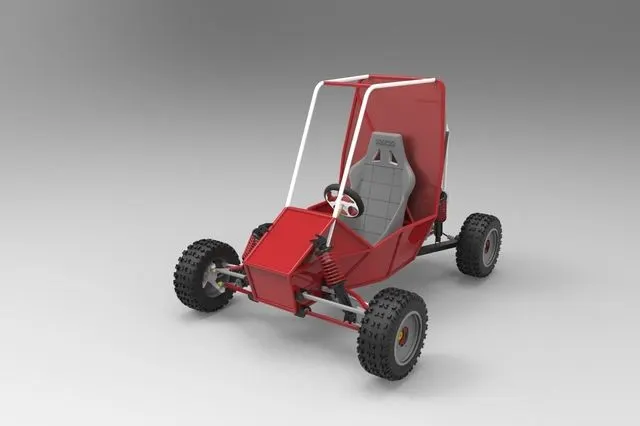
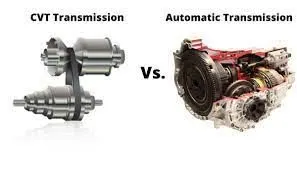
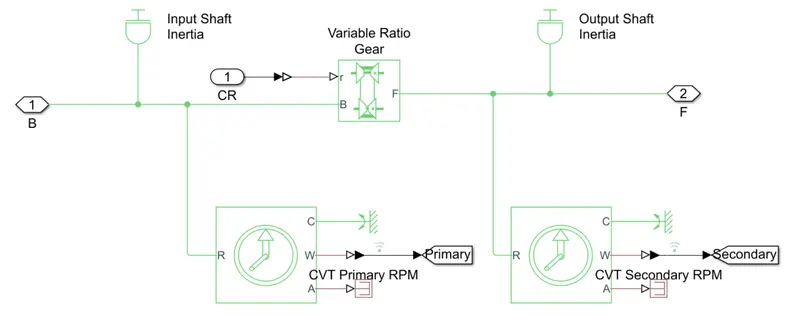
CVT: A CVT is also called as Continuously Variable Transmission it's an automatic but single-speed, and gearless transmission that can automatically shift through an infinite number of gear ratios. A continuously variable transmission (CVT) is a transmission that operates on an ingenious pulley system that automatically varies the transmission ratio, allowing an infinite variability between highest and lowest gears with no discrete steps or shifts.The CVTS provide the more useable power with less better fuel economy with smoother driving experience than when compared to traditional transmissions that will use gearboxes with the fixed number of gear sets to them.
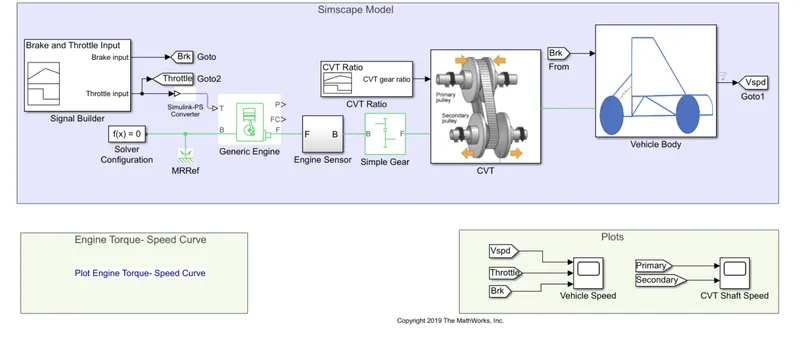
BAJA ATV model without lookup table and without dashboard :
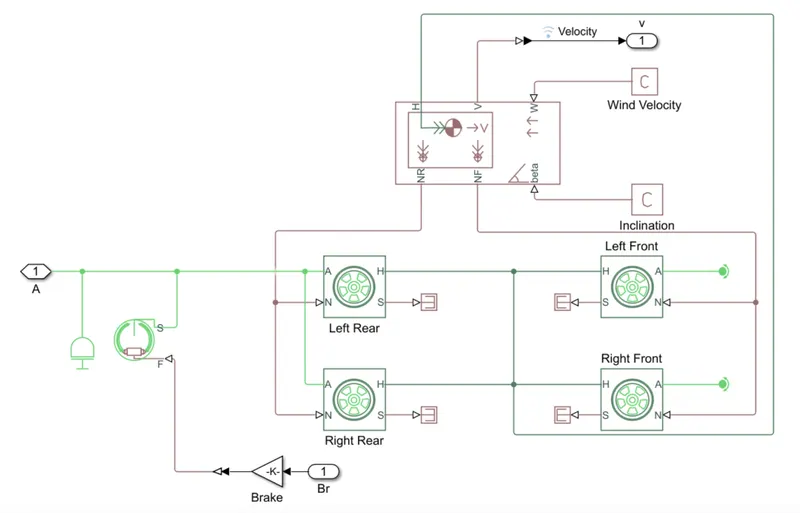
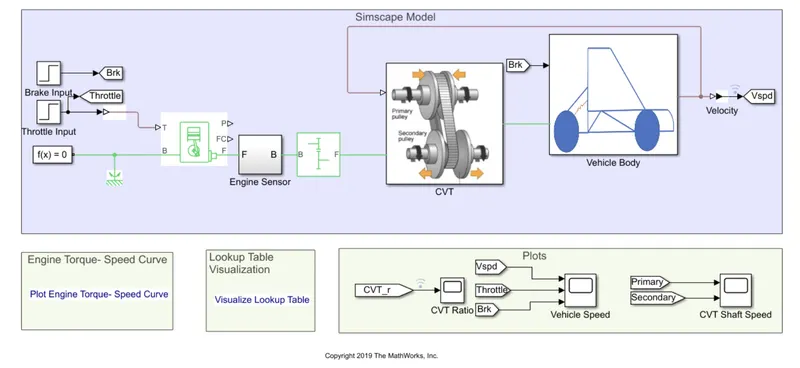
BAJA ATV model without dashboard
Signal Builder :
- The Engine.
- The Fuel System.
- The Ignition System.
- The Electrical System.
- The Exhaust System.
- The Drive Train.
- The Suspension and Steering Systems.
- The Brake System.
Connection H is the mechanical translational type of port associated with horizontal motion of the vehicle. The resulting traction motion are developed by tires should be connected to this port. Connections V, NF, and NR are physical signal output ports for vehicle velocity and front and rear normal wheel forces, respectively. Wheel forces are considered positive if acting downwards. Connections W and beta are physical signal input ports corresponding to headwind speed and road inclination angle, respectively. If the variable mass modeled, the physical signal input ports CG and M are exposed. CG accepts a two-element vector representing the x and y distance offsets from vehicle CG to additional load mass CG. M represents the additional mass. If both variable mass and pitch dynamics are included, the physical signal port J accepts the inertia of the additional mass about its own CG.
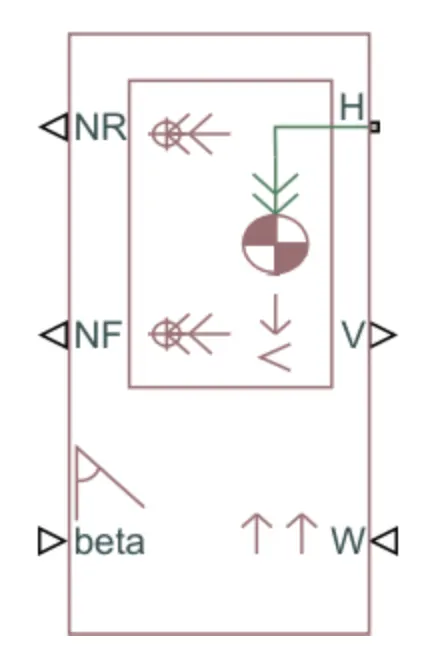
Parameters are:
Mass: 250 kg
Number of wheels per axle: 2
Horizontal distance from CG to front axle: 1 m
Horizontal distance from CG to rear axle: 0.35 m CG height above ground: 0.7 m
Gravitational acceleration: 9.81 m/s^2
Tire :
The Tire FL block models a tire with friction parameterized with the terms of static and kinetic coefficients. The static friction coefficient determines the applied torque which the tire loses traction and begins to slip. The kinetic friction coefficient determines max amount of torque in the tire transmits to the pavement once it begins to slip. The tire regains traction once its relative velocity over the pavement falls below the traction velocity tolerance specified. To increase the fidelity of the tire model, the block enables you to specify properties such as tire compliance, inertia, and rolling resistance. However, these properties increase the complexity of the tire model and can slow down simulation. Consider ignoring tire compliance and inertia if simulating the model in real time or if preparing the model for hardware-in-the-loop simulation.
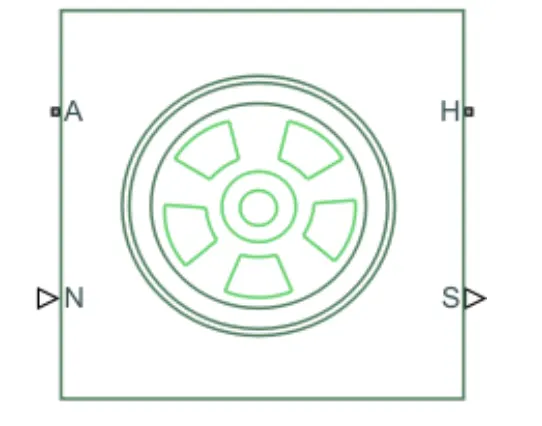
Parameters i.e for all the tyres are:
Parameterize by: Constant Magic Formula coefficients
Magic Formula C coefficient: 1.9
Magic Formula E coefficient: 0.97
Magic Formula B coefficient: 10
Magic Formula D coefficient: 1
Double shoe break : The Double-Shoe Brake block represents a frictional brake with two pivoted rigid shoes that press against a rotating drum to produce a braking action. The rigid shoes sit inside or outside the rotating drum in a diametrically opposed configuration. A positive actuating force causes the rigid shoes to press against the rotating drum. Viscous and contact friction between the drum and the rigid shoe surfaces cause the rotating drum to decelerate. Double-shoe brakes provide high braking torque with small actuator deflections in applications that include motor vehicles and some heavy machinery. The model employs a simple parameterization with readily accessible brake geometry and friction parameters.
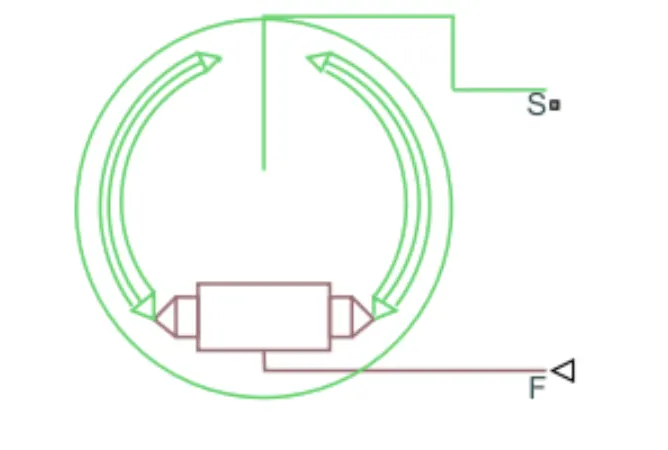
Parameters are:
Drum radius: 150 mm
Actuator location radius: 100 mm
Pin location radius: 125 mm
Pin location angle: 15 deg
Shoe beginning angle: 5 deg
Shoe span angle: 120 deg
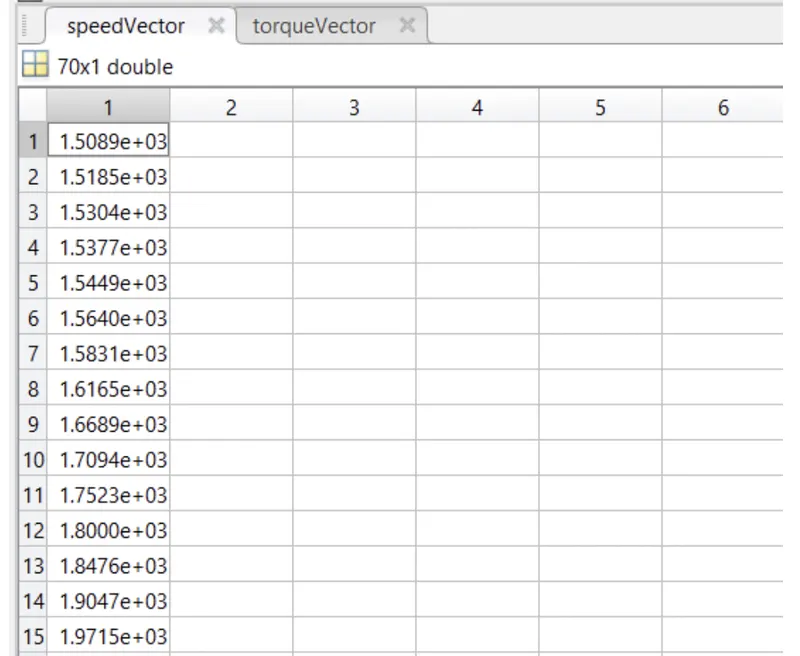
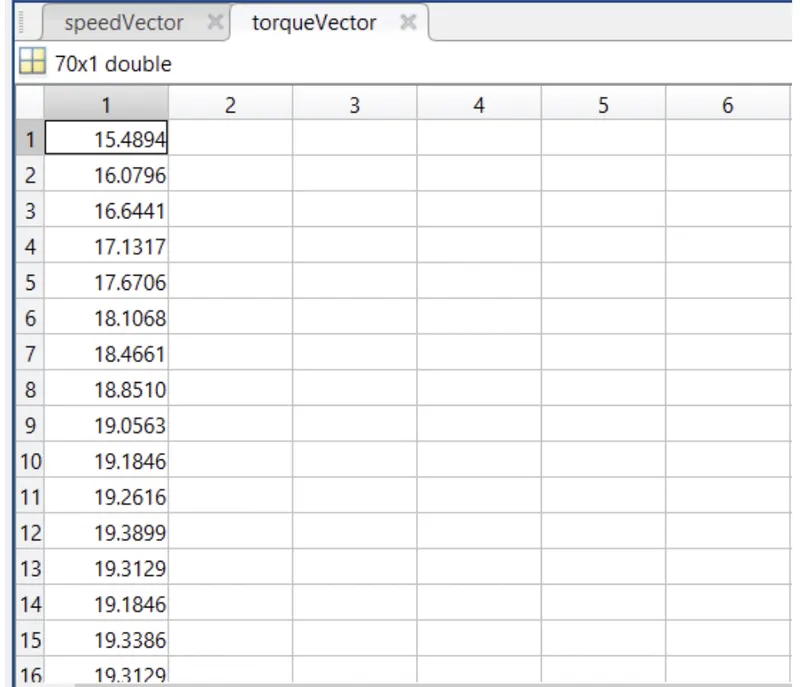
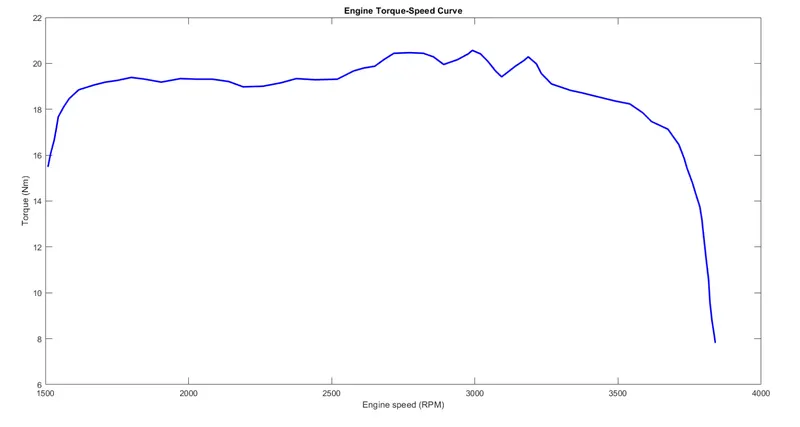
Characteristics of TORQUE vs SPEED :
INPUT
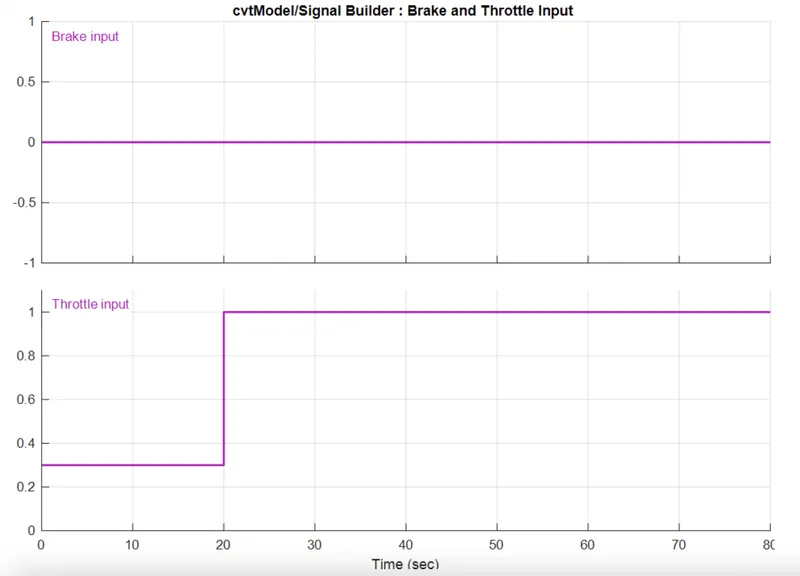
Break & Throttle :
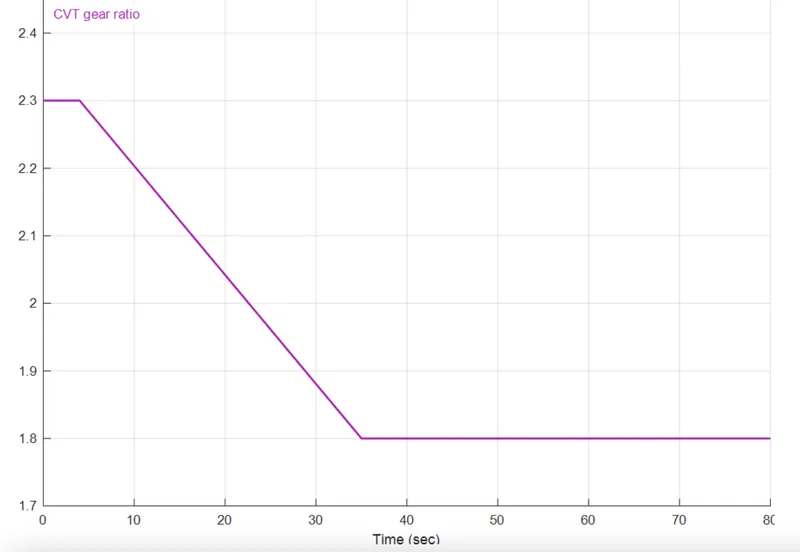
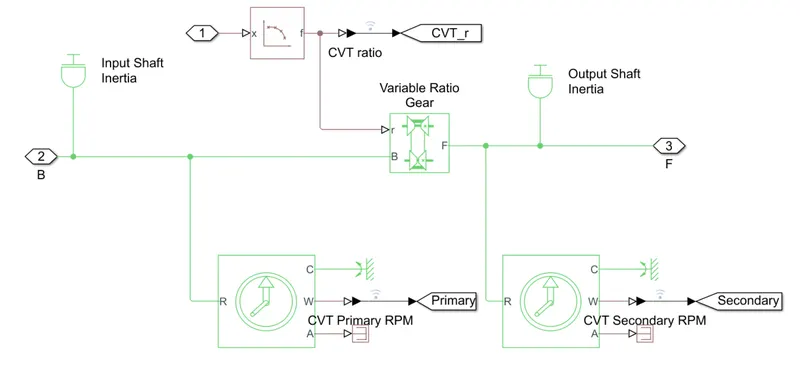
CVT Ratio :
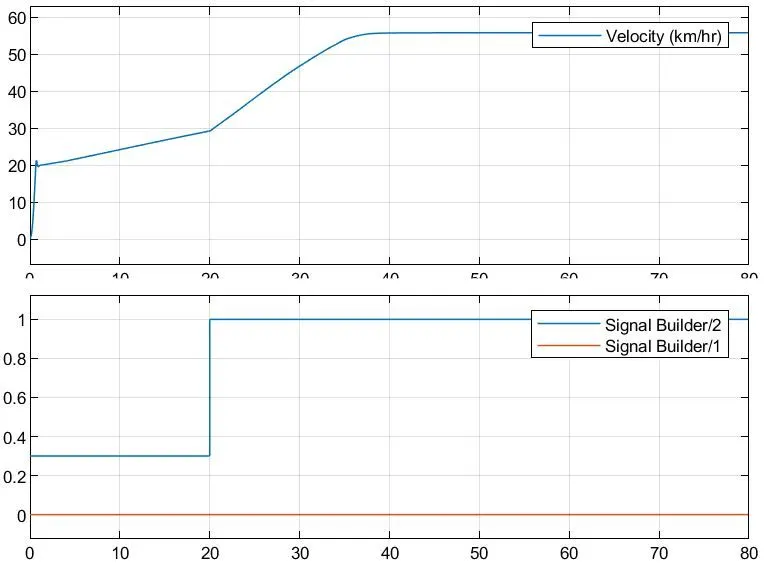
Output values :
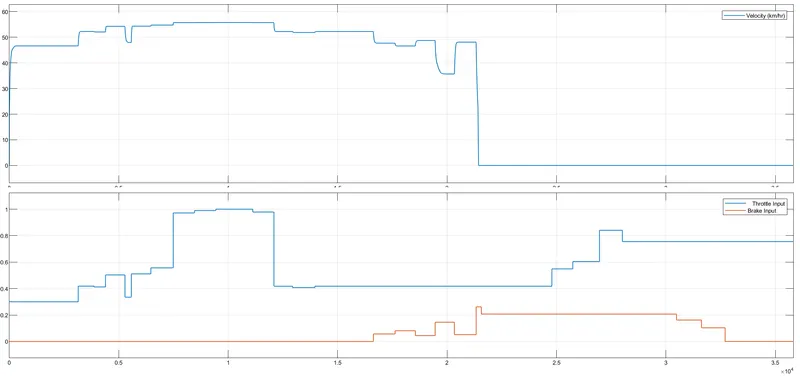
Velocity :
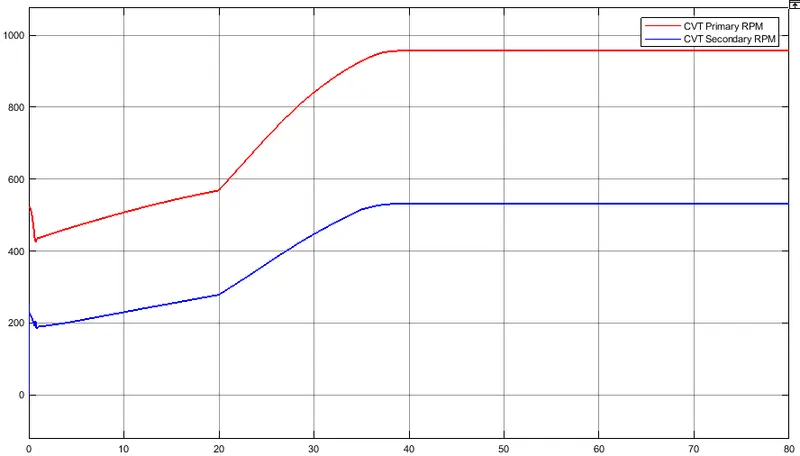
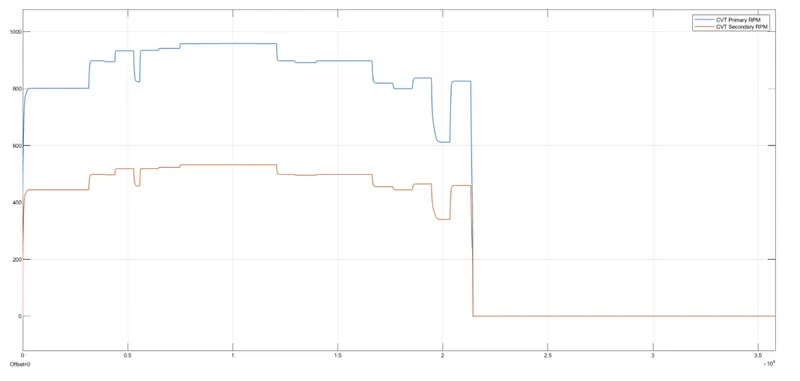
Shaft Speed :
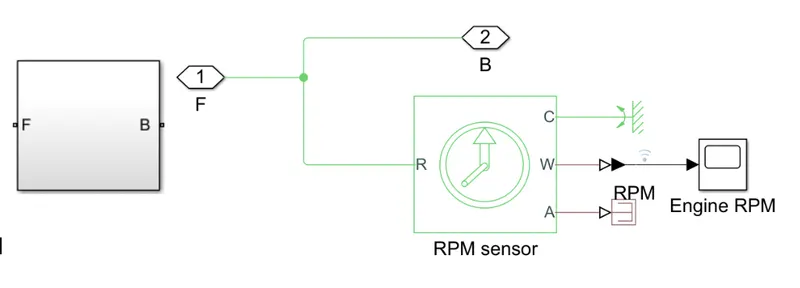
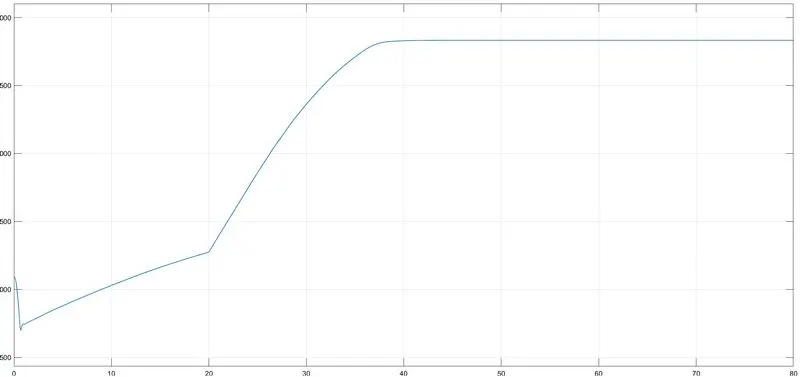
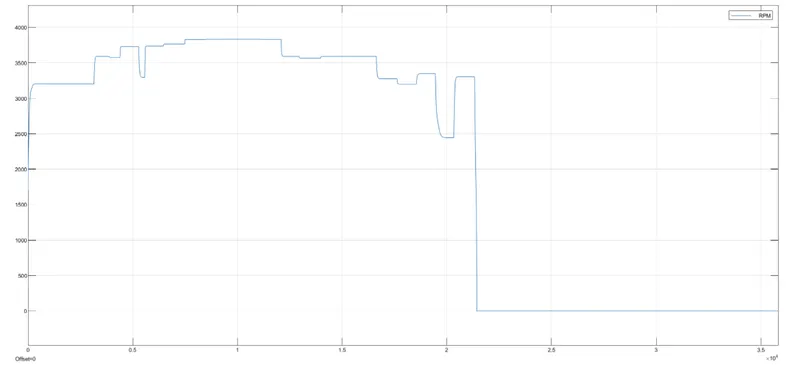
Speed of Engine :
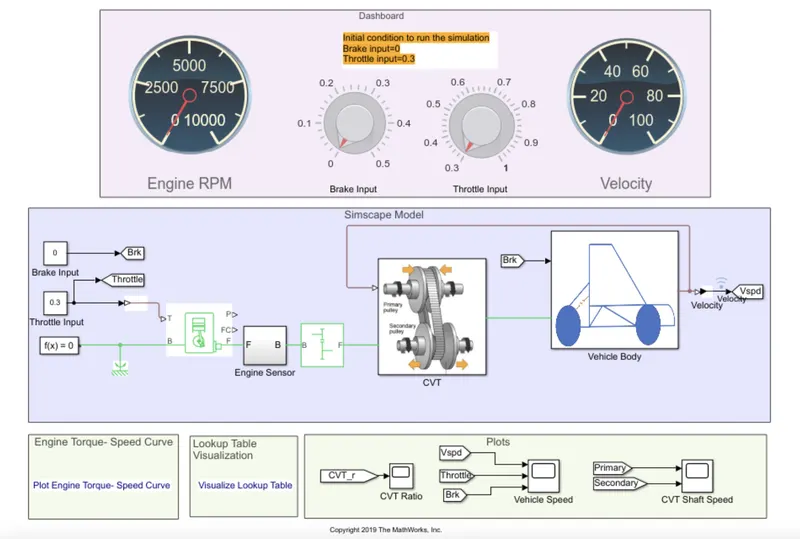
Now let us discuss With Dashboard:
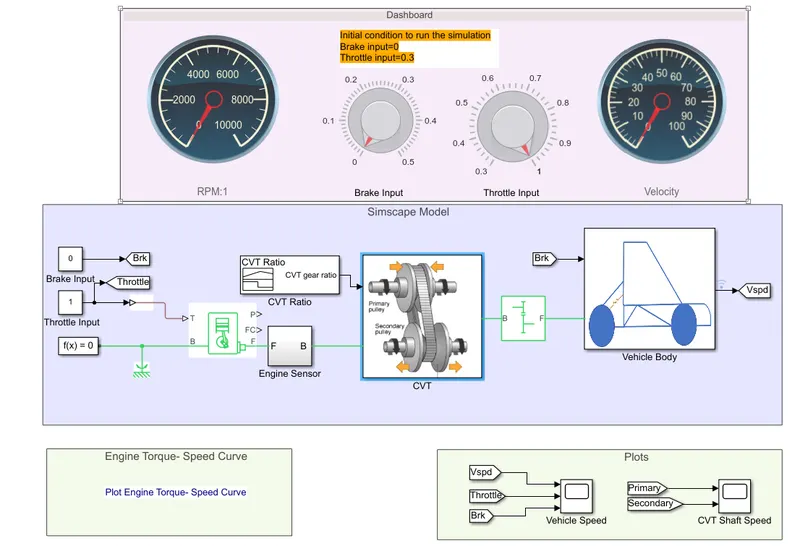
The simulink model for the BAJA ATV model is given below with the dashboard here and the remaining components that we already discussed in the without dashboard unit also.
In the dashboard the
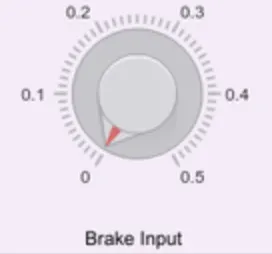
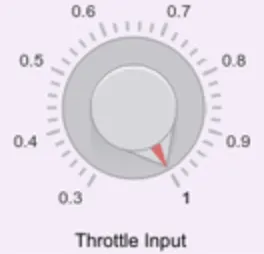
Break input is = 0
Throttle input is = 0.3
The Throttle and the break output should be as follows :
A lookup table is an array of data that maps input values to output values, thereby approximating a mathematical function. Given a set of input values, a lookup operation retrieves the corresponding output values from the table. If the lookup table does not explicitly define the input values, Simulink® can estimate an output value using interpolation, extrapolation, or rounding, where:
-
An interpolation is a process for estimating values that lie between known data points.
-
An extrapolation is a process for estimating values that lie beyond the range of known data points.
-
A rounding is a process for approximating a value by altering its digits according to a known rule.
A lookup table block uses an array of data to map input values to output values, approximating a mathematical function. Given input values, Simulink performs a “lookup” operation to retrieve the corresponding output values from the table. If the lookup table does not define the input values, the block estimates the output values based on nearby table values.
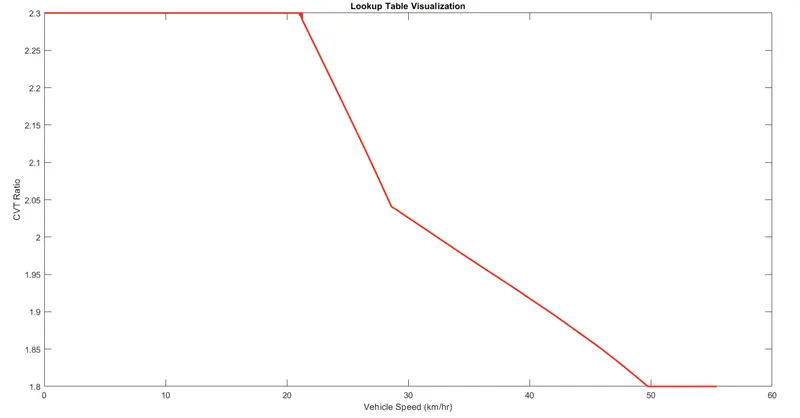
CVT ratio vs vehicle speed ratio
CVT Ratio vs Vehicle Speed:
0 to 20 km/hr, the CVT ratio is constant at 2.3
20 to 30 km/hr, the CVT ratio drops down to 2.03
30 to 50 km/hr, the CVT ratio drops down to 1.8
50 km/hr onwards, the CVT ratio is constant at 1.8
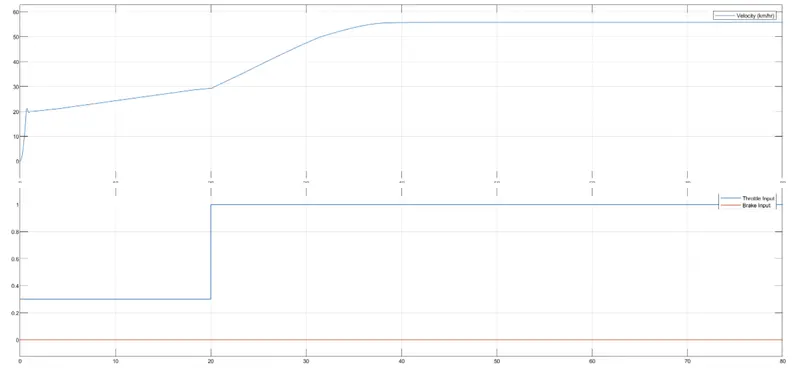
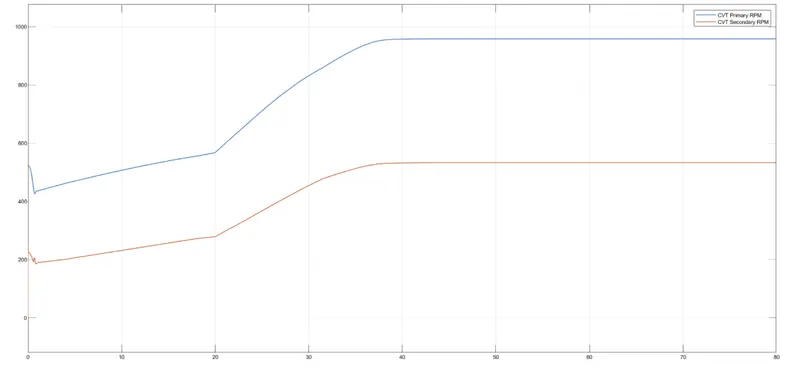
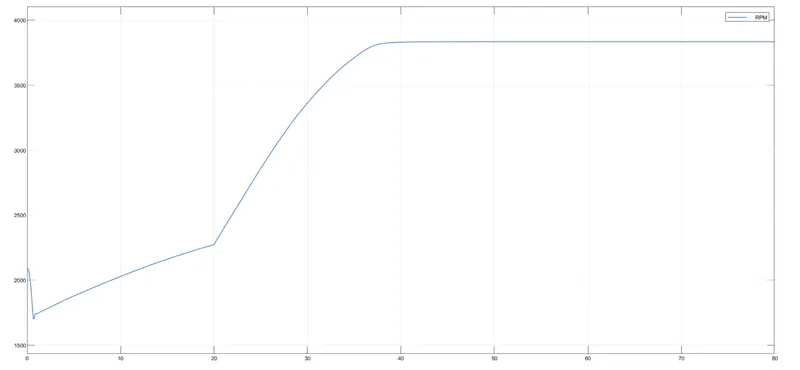
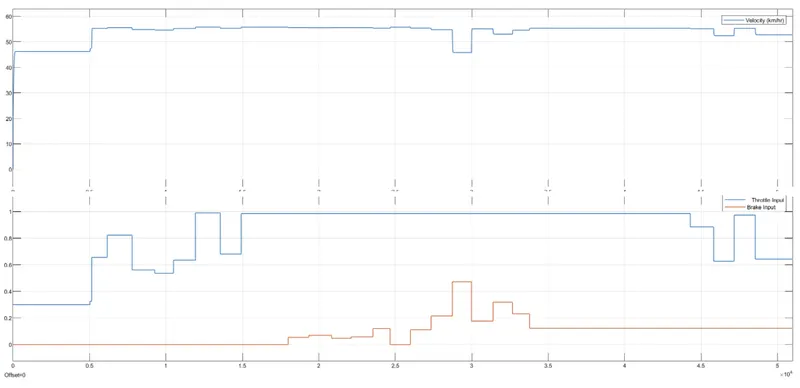
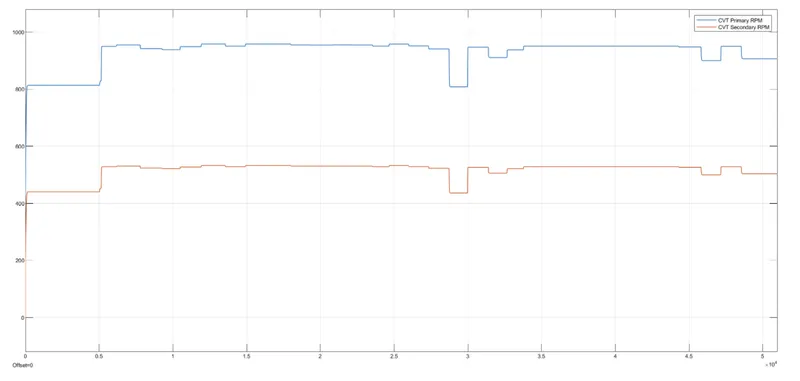
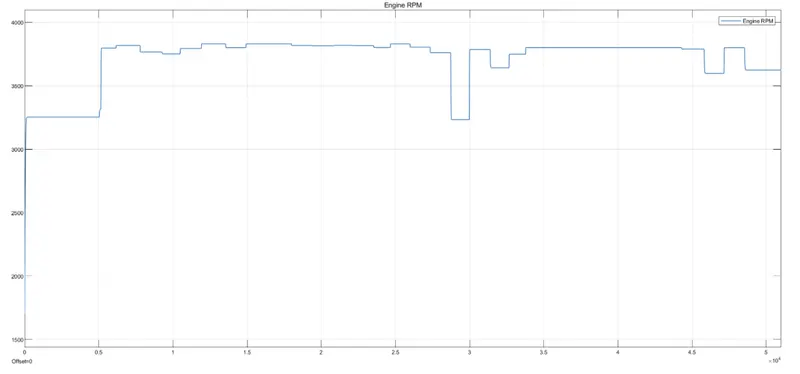
- The speed is zero and the particular breaking resistance.
- Hence the CVT is directly proportional to torque and inversely proportional to the throttle input.
- Here the Speed of primary CVT is greater than the secondary CVT as their shaft diameter is directly proportional.
References :
BAJA ATV model source file in matlab.