Project
Aim: To prepare a technical report on bajaj All terrian vehicle.
Objective: To perform System level simulation and make a technical report explaining the results.
ATV: An all-terrain vehicle (ATV), also known as a light utility vehicle (LUV), a quad bike, or simply a quad; is a vehicle that travels on low-pressure tires, with a seat that is straddled by the operator, along with handlebars for steering control. As the name implies, it is designed to handle a wider variety of terrain than most other vehicles.
CVT: A continuously variable transmission (CVT) is an Automatic transmissions that can change seamlessly through a continuous range of gear ratios. This contrasts with other transmissions that provide a limited number of gear ratios in fixed steps. The flexibility of a CVT with suitable control may allow the engine to operate at a constant RPM while the vehicle moves at varying speeds
Model1:
Simscape model Bajaj ATV with CVT:
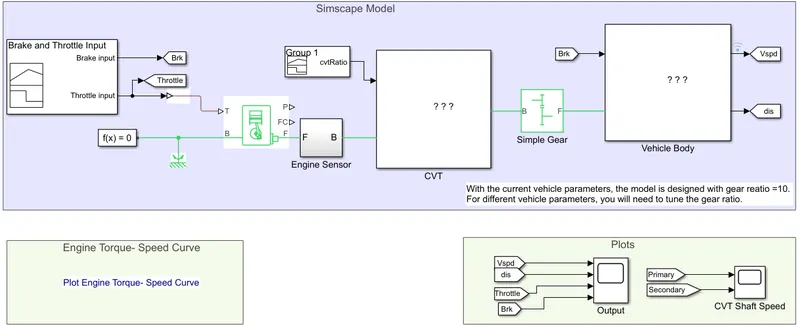
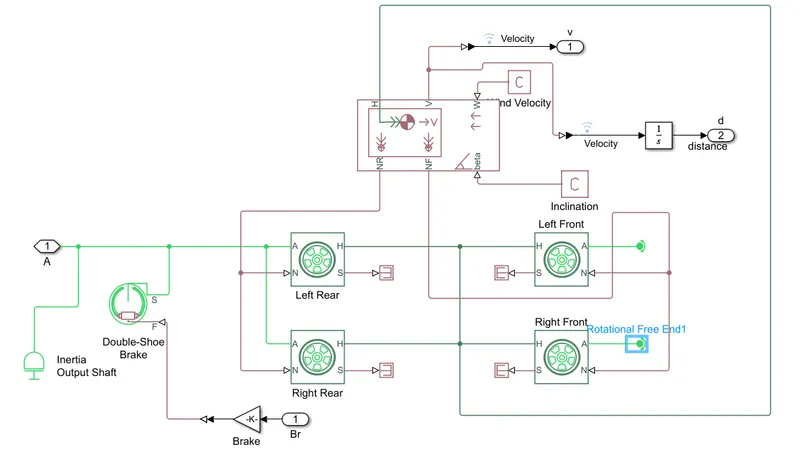
The above shown is a simscape model for Bajaj ATV,in above model it consists of following blocks,
1.Signal builder for Giving Throttle and brake inputs:
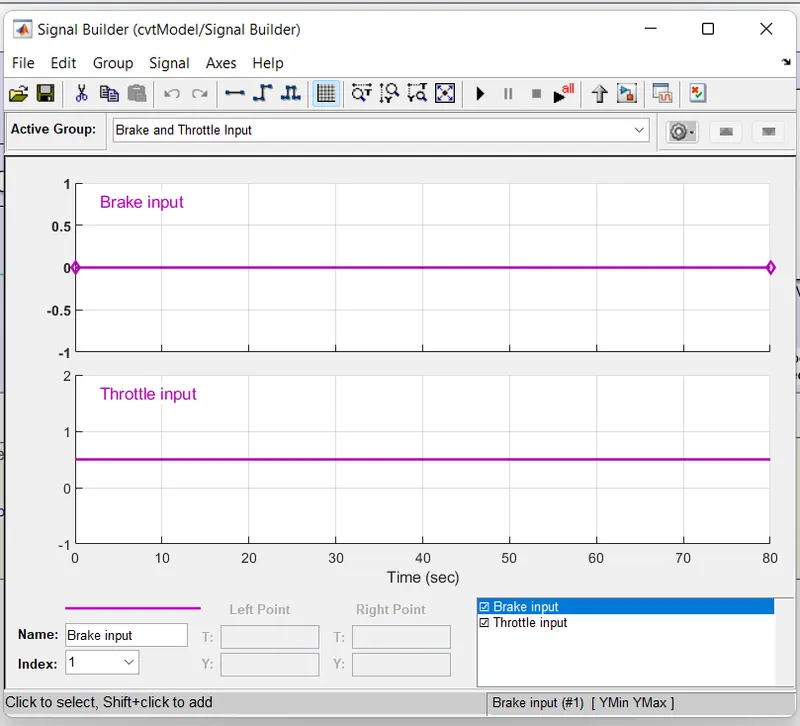
as observed the values for both throttle and brake remain constant for entire simulation, the break is kept unapplied during the simulation and the value of throttle remains constant.
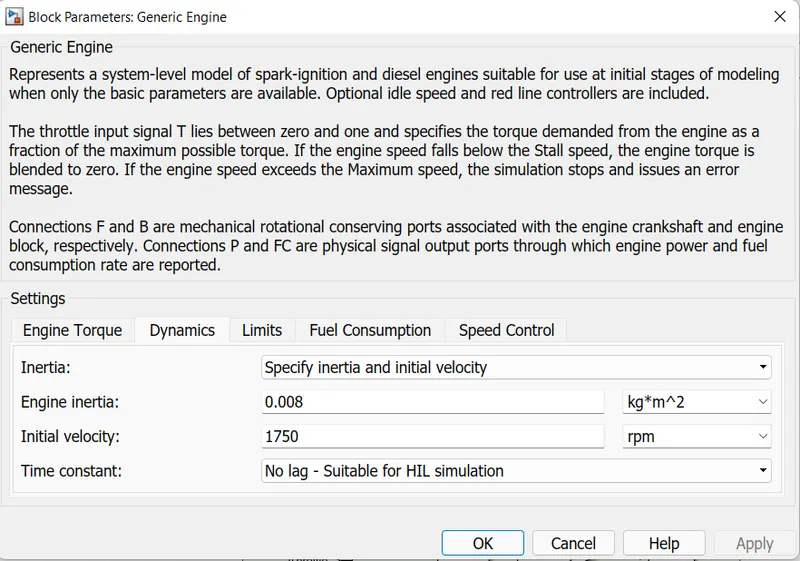
2.Engine block:
Engine block has its ports connected with throttle and mechanical referance block,
3.CVT block:
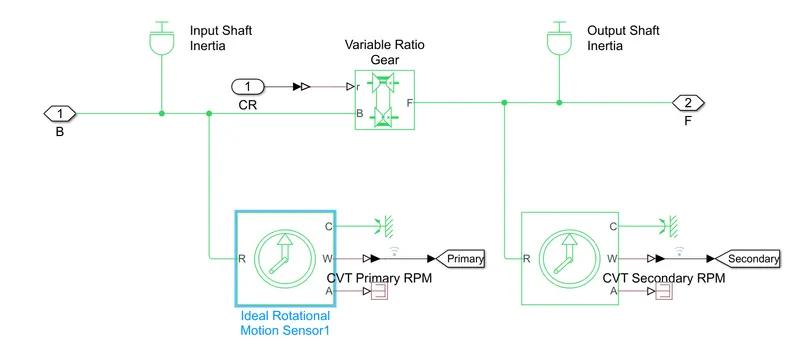
here input shaft is from engine block where output shaft goes to simple gear,there are two ideal rotational sensors places to capture the rpm from input shaft and output shaft.
4.Simple gear:
The gear ratio for the simple gear given is 10
5.Vehicle body:
Graph for primary shaft rpm and secondary shaft Rpm
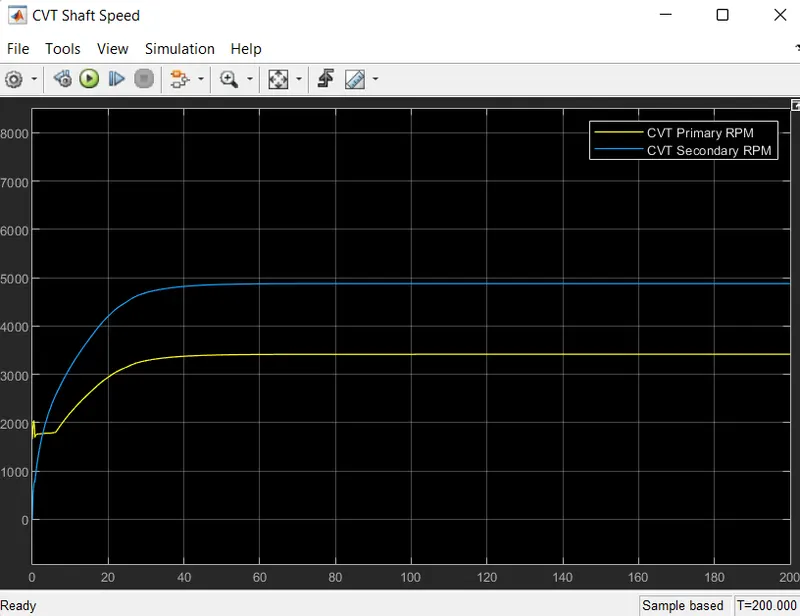
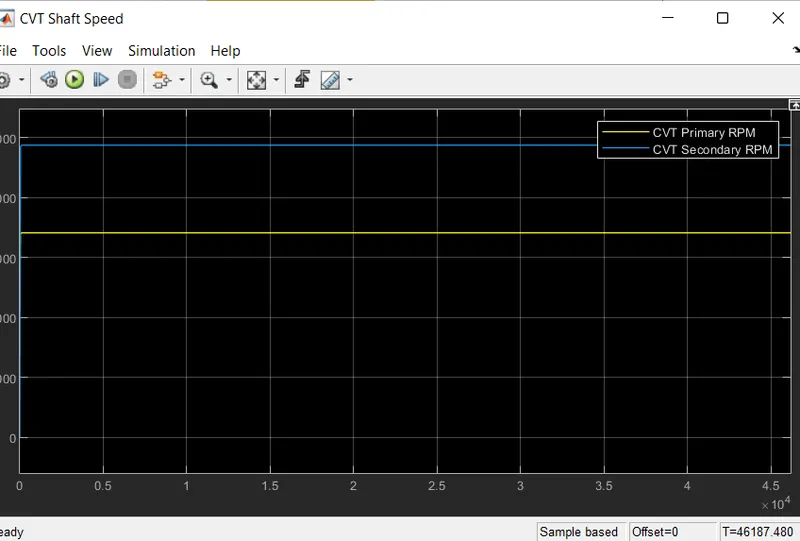
As we can see here the primary shaft rpm is greater than secondary shaft rpm only in start.
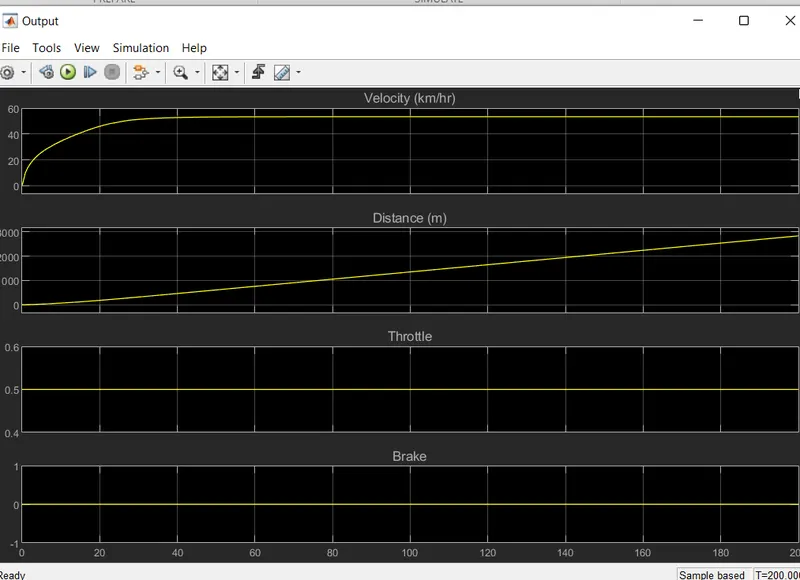
as throttle being constant and brakes applied is zero so the velocity intially increases and then remains constant,the distance has linear increase over the entire simulation.
Model2:
Bajaj ATV with CVT and dashboard:
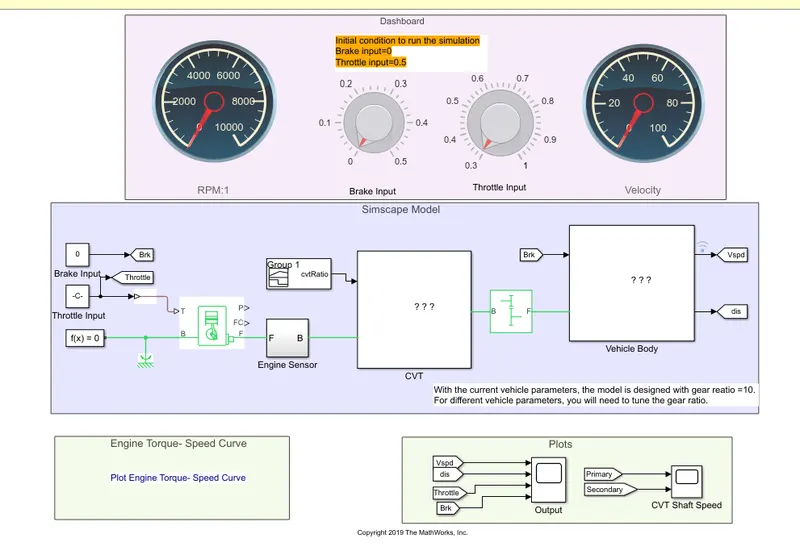
Here model is all similar compared to model 1 except for dashboard, here we can change values of throttle and brake during run time,The velocity guage shown in dashboard is connected to the velocity port inside the vhecile body and RPM guage is connected engine sensor.Results of above model are shown below,
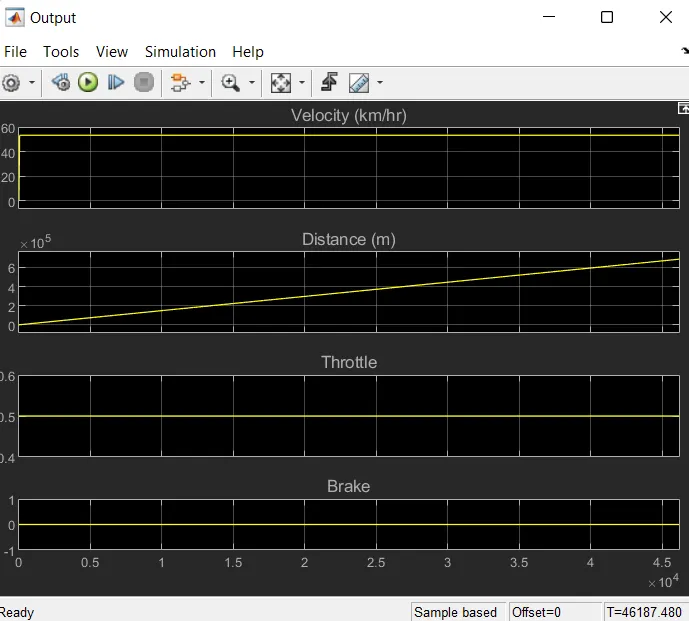
Here there is no gradual increase in speed there is an spike in velocity as throttle is kept ay 0.5 and brake at 0.
outputs for different inputs:
The inputs given were only chnage in the value of break after simulation started, it was given to a value of 0.5.
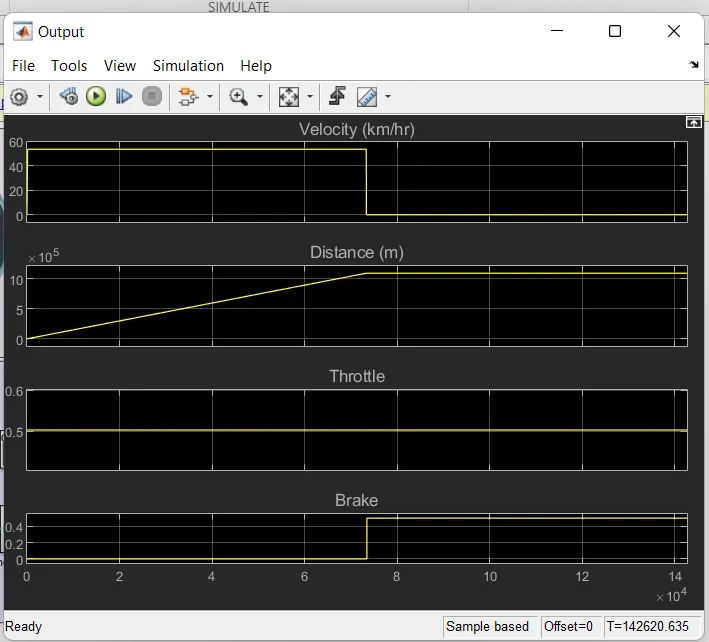
Untill the brake is applied the velocity was constant and distance was linearly increasing keeping throttle constant but when brake is applied the velocity dropped down to zero and distance remained unchanged entire simulation.
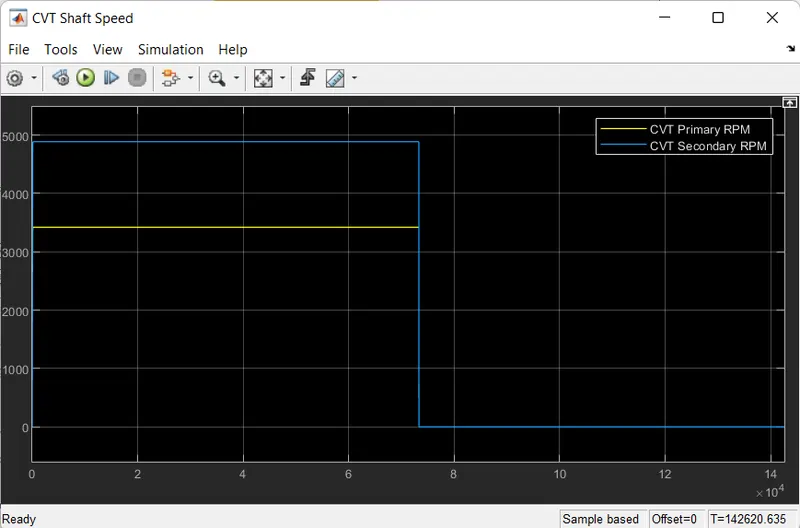
Same happens with the primary and seconday RPM's they both spiked up and remained constant but when break applied both the RPM's got drecreased to zero.
Model 3:
Bajaj ATV with CVT and Lookuptable with dashboard: